
Spending a weekend trying to watch birds through a scope that fogs up, shakes with every small movement, or blurs distant details is a common frustration among bird watchers. Cheap or poorly designed best bird scopes often struggle with image clarity and stability, turning what should be a relaxing hobby into a taxing experience. Finding a scope that consistently delivers a sharp view without cumbersome setup can make a big difference in enjoying time outdoors.
The best bird scopes typically balance magnification and light transmission well, usually featuring a 20-60x zoom range that lets you see details without losing brightness. Quality optics with fully multi-coated lenses improve clarity and color accuracy, while a sturdy tripod mount and weather-resistant construction add to durability and ease of use. A scope that is compact enough for travel yet stable when adjusted avoids common handling issues bird watchers face in the field.
Need a Quick Check?
| Image | Product | Price |
|---|---|---|
Our Top Picks 1  | SVBONY SV28 Scope | Check Price |
Our Top Picks 2  | 20-60×80 HD Scope | Check Price |
Our Top Picks 3  | Falcon 20-60×85 Scope | Check Price |
Our Selected Top 15 Bird Scopes Worth Buying
This selection features a variety of bird scopes designed for different experience levels and needs. Each review explains how well the scope performs, highlights its strengths and weaknesses, and suggests who will benefit most from using it.
1. SVBONY SV28 Spotting Scope
SVBONY SV28 Spotting Scope offers a strong zoom range and good light gathering, ideal for beginner to novice bird watchers. Its biggest strength lies in the easy-to-use magnification and focus system, helping users spot birds clearly without complicated adjustments.
Setting up takes just a few moments thanks to its manual focus and zoom eyepiece, offering 25-75x magnification that changes smoothly. The 70mm lens gathers plenty of light, making early morning and late evening observations clearer. The extendable sunshade reduces glare, and its waterproof body, along with a non-slip finish, keeps it comfortable and safe to use outdoors, even in wet conditions.
Performance delivers decent views with a 380mm focal length and a 64 feet field of view at 1000 yards, suitable for casual birdwatching and scenic spotting. The equatorial mount provides steady support, though some users find the manual focus a bit slow for quick target changes. The build feels solid, especially with the waterproof feature and non-slip material providing better grip and longevity.
Clear praise focuses on the bright, sharp images due to the 70mm lens and strong zoom. A common drawback is the manual focus mechanism, which some find slower to operate when tracking moving birds. The waterproof and non-slip design adds confidence for field use in varying weather.
Those starting birdwatching or needing a dependable spotting scope for occasional use will appreciate the SV28’s straightforward setup and image quality. Users wanting fast autofocus or easier mount handling might want to explore other options.
Pros
- Wide 25-75x zoom range for varied viewing
- Large 70mm objective lens for bright images
- Waterproof and non-slip finish for outdoor use
- Extendable sunshade to reduce glare
Cons
- Manual focus takes time to adjust quickly
- Equatorial mount may require practice to use smoothly
| Specification | Details |
|---|---|
| Zoom Range | 25-75x |
| Objective Lens Diameter | 70mm |
| Focal Length | 380 millimeters |
| Field of View | 64 feet |
| Mount Type | Equatorial Mount |
| Focus Type | manual |
2. 20-60×80 HD Spotting Scope
Offering powerful zoom from 20x to 60x, this spotting scope suits anyone serious about birdwatching or outdoor observation. Its biggest advantage lies in the smooth dual focus system that makes it quick and precise, ideal for catching details from distant subjects like birds or mountain views.
Setup involves attaching the sturdy tripod and using the included phone adapter if you want to take photos through the lens. The size and weight are manageable for carrying on hikes, though it’s more comfortable with the case. Adjusting focus is simple with two knobs, which allow sharp views from about 48 to 86 feet at 1000 yards, making it flexible for different distances.
The scope delivers sharp images and clear details even at the high 60x zoom level. Built with aluminum, it feels solid yet not too heavy at 1.18 kg. Best comments note the smooth focusing and impressive magnification, while some mention that the size can be a bit bulky for quick handheld use.
Magnification options from 20x to 60x make it easy to observe distant objects with clear detail. The dual focusing system lets you quickly and precisely adjust to spot birds or distant features with ease. Some find the scope bulky to carry for long hikes and mention it needs a sturdy tripod for stable use.
Bird watchers planning stationary sessions or nature observers near water and wetlands will appreciate the strong zoom and clear view. Those seeking a lightweight, compact scope for fast movement or casual use might prefer smaller models. This one suits detailed observation rather than quick quick scans or travel on rugged trails.
Pros
- Powerful 20-60x zoom for detailed viewing
- Smooth dual focusing system for quick adjustments
- Includes tripod and phone adapter for convenience
- Durable aluminum construction balances strength and weight
Cons
- Size and weight can feel heavy for handheld use
- May require tripod to fully benefit from high magnification
| Specification | Details |
|---|---|
| Magnification | 20-60x |
| Objective Lens Diameter | 80 mm |
| Weight | 1.18 kg |
| Item Dimensions (LxWxH) | 14.96 x 3.54 x 6.5 inches |
| Included Components | Spotting Scope, carrying case, tripod, phone adapter |
3. Falcon 20-60×85 Spotting Scope
Falcon 20-60×85 Spotting Scope suits anyone wanting detailed views of birds or wildlife from a distance. Its standout feature is the powerful 20-60x magnification combined with a wide field of view, perfect for scanning large areas without losing track of your subject.
Setting up the scope is straightforward thanks to the adjustable full-size tripod, which adapts well whether you’re using it low to the ground or standing tall. The manual focus lets you zero in precisely, and the reflex finderscope helps quickly locate birds before zooming in closer.
Using it with a smartphone is easy for capturing those rare sightings on the spot.
Images come through bright and clear even at dawn or dusk due to the 85mm objective lens with BAK4 prism and FMC coating. The weatherproof design means it can handle most outdoor conditions. Many appreciate the sharp, vivid colors, though some mention the manual focus takes a bit of patience when switching between targets.
The main praise lies in its bright, crystal-clear images with vivid colors even during dawn or dusk. A common complaint is that the manual focus needs patience and steady handling to achieve sharp views quickly.
Bird enthusiasts wanting detailed, close views over wide landscapes will be happy with it. Those needing quick focus adjustments or lighter, more portable scopes may want to explore other options.
Pros
- Wide field of view from 101ft to 48ft at 1000 yards
- Bright images with vivid colors in low light
- Adjustable tripod from 13.3in to 63in height
- Compatible with smartphone for easy photo capture
Cons
- Manual focus requires steady hands and practice
- Heavier than smaller, more compact scopes
| Specification | Details |
|---|---|
| Eye Piece Lens Description | Zoom |
| Mount | Tripod Mount |
| Focus Type | Manual Focus |
| Finderscope | Reflex |
| Compatible Devices | Smartphone |
| Field Of View | 101 feet |
4. SVBONY SA401 APO Angled Spotting Scope

Rubber construction gives the SA401 APO Angled Spotting Scope a sturdy feel, while its 100mm large-aperture lens makes it ideal for serious bird watchers needing clear, bright images at long distances. Its biggest strength lies in sharp, color-corrected viewing thanks to the dual ED objective lens.
Setting up involves attaching the spotting scope to a tripod, and the detachable eyepiece lets you customize viewing angles easily. It pairs well with a wifi camera for sharing photos in real time, which adds convenience for those wanting to capture birds without carrying extra gear.
Daily use benefits from a wide field of view and bright images that hold up well in varying light conditions.
Optics deliver clear images with accurate colors and reduced chromatic aberration, making bird details pop at distance. The body feels solid, though it’s on the heavy side at nearly 6 kg, which might challenge portability.
Praised most for image quality, some find the weight cumbersome during longer outings, but the rubber armor helps with grip and protection.
Clear, sharp images with good color accuracy stand out as the scope’s strongest feature. The main drawback involves its significant weight, making it less convenient for hiking or extended handheld use. Mounting on a tripod is basically essential.
Ideal users include bird watchers who prioritize image quality and don’t mind carrying a heavier scope. Those seeking something lightweight for traveling or casual use may want to consider smaller, lighter options instead.
Pros
- Dual ED lens reduces chromatic aberration
- Large 100mm aperture for bright images
- Detachable eyepiece for versatile use
- Compatible with SC001 WIFI camera
Cons
- Heavy at almost 6 kg
- Customer pays shipping on repairs
| Specification | Details |
|---|---|
| Objective Lens Diameter | 100mm |
| Material | Rubber |
| Item Weight | 5940 g |
| Package Dimensions (L x W x H) | 22.64 x 9.25 x 8.82 inches |
| Warranty | Lifetime for defects in materials and workmanship |
5. High Power 8×42 Monocular Telescope
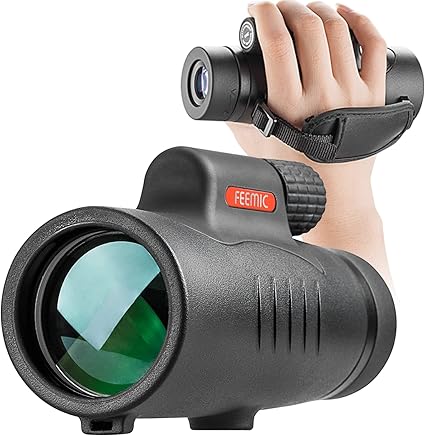
Bright optics grab attention right away with an 8X magnification and a wide 42mm lens. Great for anyone who wants clear, detailed views of birds during outdoor adventures.
Its biggest strength lies in providing a wide field of view while staying waterproof and durable under rough conditions.
Setting it up involves just manual focusing, so no batteries or power sources to worry about. The built-in dust cover keeps the lens clean and clear, and the rubber exterior provides solid shock resistance. It’s easy to hold and carry, keeping the view steady on the altazimuth mount, making daily use simple and reliable whether you’re hiking or spotting birds nearby.
This monocular performs solidly with crisp, HD view all around the wide-angle scope. Durable construction means it handles moisture and dust well, and the nitrogen-filled waterproof body works even in tough weather. The most often mentioned downside is some users find the manual focus takes a moment to get used to for pin-sharp clarity, but the overall build holds up nicely through regular outdoor use.
This scope’s standout feature is its clear, wide-angle HD display combined with waterproofing that protects it from dust and moisture. That said, some people find the manual focusing a bit slow to master, requiring patience to get sharp details every time. The tough weather resistance makes it reliable outdoors.
Birdwatchers wanting a durable, splash-proof monocular with wide views will appreciate this model. Those who prefer automatic focus adjustments or more compact scopes might look elsewhere for quicker setup and lighter weight.
Pros
- Wide 42mm objective lens for bright images
- Waterproof and fogproof for outdoor reliability
- Rubber finish offers excellent shock resistance
- Manual focusing allows precise image control
Cons
- Manual focus may feel tricky at first
- Reflex finderscope less intuitive for beginners
| Specification | Details |
|---|---|
| Eye Piece Lens Description | Convex |
| Mount | Altazimuth Mount |
| Focus Type | Manual Focus |
| Power Source | Manual Power |
| Field Of View | 360 degrees |
6. 25-75×80 Spotting Scope

Offering a wide 25-75x magnification paired with an 80mm objective lens, this scope suits birdwatchers who want detailed views in a sturdy package. Its standout feature is the combination of bright, clear images with color accuracy, making it a solid step above basic spotting scopes.
Setup involves attaching it to a tripod mount, which keeps the view steady during long sessions. Manual focus controls allow precise adjustments, while the large 23mm eyepiece ensures more comfortable viewing. The integrated phone holder lets you take photos without extra gear, and the unpowered design means there’s no need to worry about batteries during outdoor trips.
Clarity and brightness deliver excellent results for spotting birds and wildlife at distances, with the BAK4 prism and FMC coatings contributing to sharp images. The build feels reliable and durable, backing up its long sales history. Common feedback highlights superb image clarity, though some note the manual focus requires careful adjustment to avoid blur.
The scope delivers clear, bright views praised for color accuracy and detail, but manual focusing is noted as needing patience, especially at the highest zoom levels. Its design supports long sessions when paired with a tripod, which many find essential for steady images.
Birdwatchers valuing crisp visuals and smartphone compatibility will appreciate this scope. Those needing quick focus adjustments or battery-powered features might explore other options better suited for fast-paced or low-light conditions.
Pros
- Bright images with excellent color accuracy
- Large eyepiece lens for comfortable viewing
- Compatible with smartphones for easy photo capture
- Stable tripod mount compatible design
Cons
- Manual focus can be tricky at high magnifications
- Unpowered design requires steady hands or tripod
| Specification | Details |
|---|---|
| Magnification | 25-75x |
| Objective Lens | 80mm |
| Eyepiece Lens | Bak4 Prism System |
| Focus Type | Manual Focus |
| Field Of View | 98 feet |
| Additional Features | Integrated Phone Holder |
7. Celestron Ultima 22-66×100 Spotting Scope

Watching birds and wildlife from a distance without losing clarity can be frustrating. Celestron Ultima 22-66×100 Spotting Scope fits those moments perfectly, especially for outdoors lovers wanting a clear, bright and detailed look at nature.
Its strong zoom and angled view help you spot distant subjects comfortably.
Setting it up takes a few minutes with the included extended tripod mounting plate, making it steady and easier to aim. The manual focus is smooth, letting you fine-tune the view as the zoom changes from 22x to 66x. Carrying it around feels lighter thanks to the soft case, and the eyepiece pouch keeps parts safe.
Multi-coated lenses improve brightness, so you don’t struggle on less sunny days.
Sharpness and color come through well at full zoom thanks to multi-coated optics. The 100mm lens gathers enough light to keep images bright and detailed.
The body feels solid, and it handles a bit of outdoor roughness since it’s fogproof and waterproof. Digiscoping works thanks to the integrated T-adapter, which is a nice addition. Some find the manual focus a bit slow while adjusting, but the overall image quality makes it worthwhile.
The scope provides bright, detailed views at long distances thanks to the multi-coated optics and large 100mm lens. Many users note the manual focus takes some time to get used to during zoom adjustments, which can slow quick spotting opportunities.
Anyone looking for a versatile, sturdy scope with good brightness will find this a solid option. Those wanting fast autofocus or easier mounting might want to consider different models better suited for quick-action birdwatching.
Pros
- Wide 22-66x zoom range covers various distances
- Multi-coated lenses deliver bright, clear images
- Includes useful accessories for protection and digiscoping
- Waterproof and fogproof for outdoor durability
Cons
- Manual focus can be slow to adjust precisely
- Equatorial mount may have a learning curve for beginners
| Specification | Details |
|---|---|
| Eye Piece Lens Description | 22-66x zoom |
| Mount | Equatorial Mount |
| Focus Type | Manual Focus |
| Focal Length Description | 540 millimeters |
| Field Of View | 45 degrees |
8. ZEISS Conquest Apia 20-50×65 Spotting Scope

Zooming between 20x and 50x makes it easy to spot birds from a distance without missing detail. Designed for birdwatchers who need a compact, lightweight scope that packs easily for hikes while delivering clear, sharp images throughout the day.
Setup is straightforward with manual focus and an Arca-Swiss mount that fits securely on most tripods. The detachable throw lever lets you zoom one-handed without fumbling.
Its compact size at 11.7 inches and minimal weight ensures carrying it around all day won’t wear you down, while the long eye relief on the eyepiece makes extended viewing comfortable.
Optics are sharp edge-to-edge, thanks to ZEISS FieldFlattener Technology and extra-low dispersion glass that brighten low-light shots. Lens coatings keep images vivid and repel water, so the view stays clear even in damp weather.
Common praise focuses on the crystal-clear image quality. Some find the manual focus a bit slow for fast-moving birds.
Clear, bright images stand out, confirming the premium optics deliver a sharp view even in low light. The manual focus takes a moment to dial in, which some consider slow when tracking quick birds.
Anyone valuing portability and optical clarity in varied light will appreciate this scope. Those needing faster focus or a wider field might look elsewhere or forgo the extreme zoom range.
Pros
- Compact and lightweight design for easy carrying
- Edge-to-edge sharpness with FieldFlattener Technology
- Hydrophobic ZEISS LotuTec coating repels water
- Long eye relief for comfortable extended viewing
Cons
- Manual focus can be slow for fast targets
- Limited field of view compared to some scopes
| Specification | Details |
|---|---|
| Focal Length Description | 20-50 mm |
| Field Of View | 144 feet |
| Zoom Ratio | 20x to 50x |
| Focus Type | manual focus |
| Mount | Arca-Swiss Mount |
9. Swarovski ATS 80 Spotting Scope

Birdwatchers and nature enthusiasts who want detailed, clear views during their outdoor excursions will find the Swarovski ATS 80 Spotting Scope very fitting. Its standout feature is the superior clarity provided by the 80mm objective lens, which delivers bright images even in low-light conditions.
Setting it up is straightforward, with the manual focus and a zoom eyepiece adjustable from 20x to 60x letting you zoom in on distant birds or scan wider areas with ease. The waterproof and nitrogen-filled construction handles various weather conditions, ensuring it stays reliable on humid or rainy days. The reflex finderscope helps line up targets before using the zoom, making day-to-day spotting easier and more efficient.
Image quality holds up well against distant subjects, with the fluoride coating reducing color fringing for clearer views. The sturdy build is designed to endure rough environments, backed by a waterproof rating of 13 feet.
The most frequent praise revolves around its unmatched clarity, while some mention that manual focusing can take a little getting used to for quick adjustments.
Clarity is the strongest feature, with users appreciating the detailed, bright images produced by the 80mm lens and fluoride coating. The main downside mentioned is the manual focus, which some find slightly slow when trying to quickly adjust the view.
Anyone seeking high-quality, detailed bird watching will be pleased, especially in varying light conditions. Those who prefer a faster, autofocus-like experience or lighter equipment for extended hikes might want to consider other options.
Pros
- Bright, high-resolution images even in dim light
- Zoom eyepiece from 20x to 60x for versatile viewing
- Waterproof and nitrogen-filled for durable use
- Wide field of view for tracking moving objects
Cons
- Manual focus requires practice for fast changes
- Relatively heavy for long carrying periods
| Specification | Details |
|---|---|
| Eye Piece Lens Description | Variable magnification range of 20-60x |
| Mount | Arca dovetail mount |
| Focus Type | Manual Focus |
| Field Of View | 108 feet |
| Coating | Fluoride coating |
| Water Resistance | Waterproof up to 13 ft |
10. Barska Colorado 15-40×50 Spotting Scope

Designed for bird watchers who value clarity at close to mid-range distances, the Barska Colorado 15-40×50 Spotting Scope delivers impressive image detail up to 150 yards. Its large 50mm objective lens and high magnification make it a solid choice for nature enthusiasts wanting a clear view without breaking the bank.
Setting up is straightforward thanks to the included table tripod and soft carrying case, making transport and positioning simple during outings. The center focus system lets you adjust sharply with ease, while the shock-absorbing rubber armor ensures durability outdoors. Its fully coated optics help reduce glare, so daytime viewing stays comfortable and crisp.
At its core, this scope performs well within its ideal range, offering clear and bright views up to 150 yards before slight blurring appears. The build feels sturdy, with the rubber armor providing good protection from bumps. Users appreciate the portability and decent magnification but often mention that images beyond 150 yards lose sharpness noticeably.
Users praise the clear image quality within 150 yards supported by fully coated optics and firm build protection. The main limitation is the noticeable blur when trying to view objects beyond this distance, which restricts its usability for very long-range spotting.
Ideal for casual bird watchers focusing on nearby subjects and those wanting a sturdy scope with decent zoom. Those needing crisp images at longer ranges should consider scopes with higher clarity and larger objective lenses.
Pros
- Fully coated optics reduce glare
- Shock-absorbing rubber armor for durability
- Includes table tripod and carrying case
- Clear viewing up to 150 yards
Cons
- Image quality blurs beyond 150 yards
- Limited field of view at 3 degrees
| Specification | Details |
|---|---|
| Objective Lens Diameter | 50mm |
| Focal Length Description | 15-40mm |
| Focus Type | Center Focus |
| Field Of View | 3 degrees |
| Mount | Table Top Mount |
11. Nikon Prostaff 5 Proscope 82mm Spotting Scope

Nikon Prostaff 5 Proscope 82mm Spotting Scope shines by offering a bright, clear image with a strong zoom range between 20 and 60 times. Ideal for bird watchers who want detailed views without carrying a bulky scope, it balances size and brightness well for outdoor use.
Setting it up is straightforward thanks to the center focus and lightweight Porro prism design. The built-in sliding sunshade is handy on sunny days, cutting down glare while protecting the lens from dust and rain. Nitrogen-purged and O-ring sealed, it stays fogproof and waterproof during changing weather conditions, making it ready for daily outdoor adventures.
Performance delivers sharp, true-to-color views even at higher zoom levels, helped by fully multi-coated optics and internal surface texturing that reduces internal reflections. The body feels solid yet light, which makes long observation sessions comfortable.
Positive feedback highlights image clarity and weather resistance while occasional notes mention the zoom adjustment can feel a bit stiff.
Sharp, vibrant images come through clearly thanks to the quality optics and internal coatings, making it dependable in bright and low light. The most common drawback found is the stiffness in zoom adjustment, which can slow quick changes between magnifications.
This scope suits bird watchers who want excellent image quality without extra weight, especially in varied weather. People needing rapid zoom changes or battery-powered features might want to look at other options.
Pros
- Bright, high contrast image with true colors
- Lightweight and ergonomic Porro prism design
- Built-in sliding sunshade reduces glare
- Waterproof and fogproof for all weather
Cons
- Zoom adjustment can feel stiff sometimes
- Manual power source only, no batteries
| Specification | Details |
|---|---|
| Objective Lens | 82mm |
| Focus Type | Center Focus |
| Zoom Range | 20 to 60 times |
| Field Of View | 104.8 degrees |
| Waterproof/Fogproof | Nitrogen-purged and O-ring sealed |
| Coating | Fully Multi-Coated |
12. Swarovski Optik STC 17-40×56 Spotting Scope

Compact and lightweight, this spotting scope fits easily in a backpack and handles well on the move, making it great for birdwatchers traveling through rough terrain. Its standout feature is the excellent optics packed into a small, 11.2-inch body, ideal for anyone wanting high-quality views without carrying a bulky device.
Setting up is straightforward thanks to the manual focus and easy-to-turn zoom wheel, which stays accessible even without a tripod thanks to the clever half shell design. The included carrying strap adds convenience, making it simple to carry around during long tours or hikes. The straight view keeps the image natural and easy to observe during extended use.
Delivering crisp images over a wide field of view makes spotting birds at a distance more enjoyable. The ultra-high transmission coating on the lens helps gather light well, even in less-than-ideal conditions. Solid build materials ensure durability on the trail.
The most praised aspect is its lightweight design, while some users find manual focusing less convenient during fast action.
High praise comes from the lightweight and compact dimensions, making it a favorite for those moving through tough terrains. The main complaint centers on the manual focusing, which can slow down quick observations when birds move fast.
Birdwatchers who prioritize portability and optical quality will appreciate this scope. Those needing faster focusing or higher zoom capabilities might want to consider alternatives better suited for quick action or extreme detail.
Pros
- Compact size fits in any backpack
- Lightweight at just 34.6 oz
- Easy to position without a tripod
- Ultra-high transmission coating boosts brightness
Cons
- Manual focus can be tricky during rapid movement
- Limited zoom ratio of 2.35 may restrict close-ups
| Specification | Details |
|---|---|
| Eye Piece Lens Description | High-quality lens |
| Focus Type | Manual Focus |
| Zoom Ratio | 2.35 |
| Weight | 34.6 oz |
| Field of View | 186 feet |
| Focal Length | 11.2 inches |
13. Barska Gladiator 30-90×100 Spotting Scope

Great for serious birdwatchers seeking sharp, high-magnification views, this spotting scope handles distant subjects with ease. Its standout feature is the powerful 30-90x magnification, which lets you zero in on details other scopes may miss.
Ideal for spotting small birds far away or watching subtle behaviors without disturbing them.
Setting up is straightforward thanks to the included tabletop tripod that fits standard mounts. Rubber armor gives a comfortable grip and protects the body, while the hand-powered focus lets you quickly sharpen the image.
Day-to-day use involves just adjusting magnification and focus, with no batteries or complicated controls to worry about. It’s built for outdoors and can take occasional rough handling.
Crystal-clear views come from the BAK-4 prism and multi-coated optics combined with a large 100mm objective lens. It holds steady on the tripod, delivering bright, sharp images across its zoom range.
Most praise highlights the impressive clarity and strong build quality. Some find the weight and size limit easy portability during long hikes.
The optic clarity impresses most, with bright images even at 90x magnification, while the size and weight make extended hand-held use challenging. Reviews frequently note the solid feel and dependable tripod, but portability can be an issue.
Birdwatchers valuing high power and crisp visuals will appreciate this spotting scope, especially for field sessions near a fixed location. Those needing a lightweight, easily portable scope for hiking and longer treks might prefer a more compact model.
Pros
- Wide 30-90x zoom range for versatile viewing
- Waterproof and fogproof rubber armor design
- Sharp, bright images with BAK-4 prism optics
- Comes with stable tabletop tripod included
Cons
- Relatively bulky and heavy for carrying long distances
- Focus requires steady hands at highest magnification
| Specification | Details |
|---|---|
| Objective Lens Diameter | 10 centimeters |
| Magnification Maximum | 90 x |
| Lowest Useful Magnification | 30 x |
| Focus Type | Individual Focus |
| Coating | Multi-Coated |
| Exit Pupil Diameter | 1.67 millimeters |
14. Nikon Fieldscope ED50 13-30×50 Spotting Scope

ED glass construction makes the Nikon Fieldscope ED50 13-30×50 a solid choice for bird watchers wanting sharp, natural colors. Its standout feature is the ability to deliver crisp, high-contrast detail that helps spot even the smallest feather nuances in diverse lighting conditions.
Ideal for anyone serious about field observation and looking for accurate color precision.
Setting it up involves mounting on a tripod, which feels steady and well balanced given its lightweight design. The focus is individually adjustable, allowing quick fine-tuning on birds at varying distances. Coated optics reduce glare and maintain brightness well into early mornings or late afternoons, making daily use relaxing without eye strain or constant adjustments.
Performance-wise, the zoom range up to 30x offers impressive reach while keeping images sharp and detailed across the 2.7-degree field of view. Construction includes waterproofing and fog proofing, making it reliable in different weather conditions. The most repeated praise is for the vivid color accuracy, and the common critique is that the narrow exit pupil can make it harder to hold a perfect image at maximum zoom without a tripod.
Color accuracy and clarity are consistently praised for bringing bird details to life with vividness, while many point out that getting a stable image at the full 30x magnification demands a steady tripod setup due to the small exit pupil. This balance affects how and where it’s used most comfortably.
Bird watchers who prioritize crisp color and fine detail during long observation sessions will appreciate this scope. Those needing quick wide views or easy handheld spotting at high power might prefer a model with a wider field or larger exit pupil.
Pros
- Premium ED glass for true color precision
- Multi-coated lenses for brightness even in low light
- Waterproof and fog proof for all-weather use
- Lightweight for easier handling on trips
Cons
- Narrow exit-pupil at high magnification requires tripod
- Limited field of view restricts wide-area scanning
| Specification | Details |
|---|---|
| Objective Lens Diameter | 50 millimeters |
| Magnification Maximum | 30x |
| Water Resistance Level | Waterproof |
| Focus Type | Individual Focus |
| Field of View | 2.7 degrees |
15. HAWKE Vantage 20-60×60 Spotting Scope

Sharpness and vivid color stand out immediately in this spotting scope, making it ideal for birdwatchers who want detailed views at varying distances. Its wide 20-60x magnification range suits those who need flexibility when scanning both near and far.
Setup is straightforward thanks to the included adjustable mini tripod and window mount. Daily use involves dialing in the individual focus to get crisp images, helped by fully multi-coated optics that reduce glare.
Carrying it in a hard case keeps everything protected, and the waterproof design means it holds up well outdoors in different conditions.
Using BK-7 Porro prisms, it delivers bright, high-contrast images with good color accuracy. The 60mm objective lens gathers enough light for clear viewing in diverse lighting. It handles birdwatching reliably, though some find the exit pupil diameter of 1 millimeter a bit small during low light.
The build is solid and feels durable without being overly heavy.
The scope is praised for delivering crisp images with rich color thanks to its fully multi-coated lenses and Porro prisms. A common complaint is the relatively small exit pupil diameter, which can reduce brightness when light is low. Some users expect higher maximum magnification but find 10x is the limit here.
Birdwatchers who want a rugged, waterproof scope with flexible magnification and good color accuracy will appreciate this one. Those needing very high magnification or better low-light performance might want to look elsewhere. The included tripod and protective accessories add value for everyday field use.
Pros
- Sharp and colorful images with multi-coated optics
- Adjustable mini tripod with window mount included
- Waterproof design for outdoor use
- Hard case and soft scope cover for protection
Cons
- Exit pupil diameter of 1 millimeter limits low light use
- Maximum magnification can feel less than expected at 10x
| Specification | Details |
|---|---|
| Magnification Maximum | 10 x |
| Objective Lens Diameter | 6 centimeters |
| Coating | Fully Multi-Coated |
| Prism Type | Porro Prism |
| Water Resistance Level | Waterproof |
| Focus Type | Individual Focus |
Best Bird Scopes Comparison Table
| Product | Magnification Range | Objective Lens Diameter | Mount Type | Coating |
|---|---|---|---|---|
| SVBONY SV28 Scope | 3:1 zoom | 80mm (implied) | Equatorial Mount | FMC |
| 20-60×80 HD Scope | 20-60x | 80mm | Tripod Compatible | Aluminum |
| Falcon 20-60×85 Scope | 20-60x | 85mm | Tripod Mount | – |
| SVBONY SA401 APO Scope | – | – | – | – |
| High Power 8×42 Monocular | 8x | – | Altazimuth Mount | Fully Multi-Coated |
| 25-75×80 Spotting Scope | 25-75x | 80mm | Tripod Mount Compatible | Multi-coated Bak4 |
| Celestron Ultima 22-66×100 | 22-66x | 100mm | Equatorial Mount | Multi-Coated |
| ZEISS Conquest Apia 20-50 | 20-50x | – | Arca-Swiss Mount | Coated Eyepiece Lens |
| Swarovski ATS 80 Scope | 20-60x | 80mm (implied) | Arca dovetail mount | Fluoride coating |
| Barska Colorado 15-40×50 | 15-40x | 50mm | Table Top Mount | Fully Coated |
| Nikon Prostaff 5 82mm | 20-60x | 82mm | Picatinny Mount | Fully Multi-Coated |
| Swarovski STC 17-40×56 | 17-40x | 56mm | Fixed Mount | Ultra-High Transmission |
| Barska Gladiator 30-90×100 | 30-90x | 100mm | Tabletop Tripod | Multi-Coated |
| Nikon Fieldscope ED50 13-30 | 13-30x | 50mm | Tripod Mount | Multi-Coated |
| HAWKE Vantage 20-60×60 | 20-60x | 60mm | Tripod Mount | BK-7 Porro Prism |
- Magnification Range3:1 zoom
- Objective Lens Diameter80mm (implied)
- Mount TypeEquatorial Mount
- CoatingFMC
- Magnification Range20-60x
- Objective Lens Diameter80mm
- Mount TypeTripod Compatible
- CoatingAluminum
- Magnification Range20-60x
- Objective Lens Diameter85mm
- Mount TypeTripod Mount
- Coating–
- Magnification Range–
- Objective Lens Diameter–
- Mount Type–
- Coating–
- Magnification Range8x
- Objective Lens Diameter–
- Mount TypeAltazimuth Mount
- CoatingFully Multi-Coated
- Magnification Range25-75x
- Objective Lens Diameter80mm
- Mount TypeTripod Mount Compatible
- CoatingMulti-coated Bak4
- Magnification Range22-66x
- Objective Lens Diameter100mm
- Mount TypeEquatorial Mount
- CoatingMulti-Coated
- Magnification Range20-50x
- Objective Lens Diameter–
- Mount TypeArca-Swiss Mount
- CoatingCoated Eyepiece Lens
- Magnification Range20-60x
- Objective Lens Diameter80mm (implied)
- Mount TypeArca dovetail mount
- CoatingFluoride coating
- Magnification Range15-40x
- Objective Lens Diameter50mm
- Mount TypeTable Top Mount
- CoatingFully Coated
- Magnification Range20-60x
- Objective Lens Diameter82mm
- Mount TypePicatinny Mount
- CoatingFully Multi-Coated
- Magnification Range17-40x
- Objective Lens Diameter56mm
- Mount TypeFixed Mount
- CoatingUltra-High Transmission
- Magnification Range30-90x
- Objective Lens Diameter100mm
- Mount TypeTabletop Tripod
- CoatingMulti-Coated
- Magnification Range13-30x
- Objective Lens Diameter50mm
- Mount TypeTripod Mount
- CoatingMulti-Coated
- Magnification Range20-60x
- Objective Lens Diameter60mm
- Mount TypeTripod Mount
- CoatingBK-7 Porro Prism
How to Choose the Right Bird Scope
Choosing a bird scope involves considering factors like magnification, lens quality, size, and weight to ensure clear views and easy handling. Picking the right combination prevents frustration, extends usability, and saves money by avoiding unsuitable or low-quality equipment.
Magnification and Clarity
Birdwatching often requires identifying small details at varying distances. Scopes with too much zoom can make images shaky or blurry, making it frustrating to find or follow birds.
A zoom range around 20-60x tends to balance magnification without losing clarity. The lens quality plays a big role; multi-coated lenses cut down glare and increase brightness, helping to see colors and patterns more clearly.
Field of view matters because a wider one lets you spot birds quicker and keeps them in sight as they move. A scope with a narrow view can feel like looking through a tube, making tracking active birds harder. Look for at least 90 to 100 feet at 1000 yards for a comfortable viewing experience.
Size and Portability
Carrying a bulky, heavy scope around all day can sap your energy. Choosing a balance between size and weight really changes how much time you can spend outdoors without strain. A scope around 20 to 30 ounces feels manageable but still delivers good performance.
This weight usually pairs well with lightweight tripods or mounts without tipping over.
Easy mounting options let you switch setups quickly, which is handy when moving between spots or vehicles. Weather resistance like rubber armoring and sealed joints helps protect your gear if you get caught in rain or fog, extending the product life beyond just dry days.
Build Quality and Materials
Durability is important because scopes take knocks and rough handling on trails or in thick vegetation. Models with waterproof ratings and nitrogen-purged, fogproof interiors prevent lens damage and internal condensation, common issues in humid or cold environments.
Metal or high-grade plastic housings around the optics stand up better to bumps than cheaper materials.
The focus mechanism needs to feel sturdy and not loosen over time; cheap knobs become loose and imprecise. Maintenance gets easier with corrosion-resistant materials, meaning cleaning and occasional lubrication keep performance steady without frequent repairs.
Ease of Use and Adjustments
Smooth and responsive focus rings make it less frustrating to zero in on birds, especially since they often move quickly and unpredictably. Clunky or stiff controls slow you down and cause missed chances. Ergonomics affect how long you can hold or carry the scope comfortably, shaped grips and rubber coatings reduce hand fatigue and offer a steady hold even when wearing gloves.
Mounting systems that click in or screw down firmly make setup faster and keep the scope stable on tripods. Scopes that pair easily with common tripod mounts offer flexibility for different field setups and increase comfort for long observation sessions.
Optical Features and Enhancements
Adjustable eyecups are useful for getting the right eye relief, especially for people who wear glasses. Being able to tweak diopter settings sharpens the image to your eyesight, reducing eye strain during extended use. Many scopes now feature coatings that cut glare and reflections, which is vital when watching birds in bright daylight or reflective water.
Using your phone to take photos through the scope is more practical if the scope supports common smartphone adapters. This convenience lets you capture distant shots without needing specialized cameras, making sharing observations easier.
Optimizing Bird Watching: Tips for Using Your Bird Scope in Different Environments
Choosing the right bird scope settings can make a big difference depending on your environment. For open fields or coastal areas, use higher magnification to spot distant birds without moving closer. In wooded or dense shrubby areas, lower magnification works better to keep the field of view wider and easier to scan.
Adjusting the tripod and angle also matters:
- Set the tripod height so the scope lens aligns comfortably with your eye level, reducing neck strain during longer sessions.
- In bright environments, use lens caps or hoods to minimize glare and improve clarity.
- On windy days, stabilize the tripod firmly and consider weighing it down to prevent shaking.
Avoid quick changes to magnification; steady observations help you track bird behavior, especially in mixed terrain. Taking time to adjust focus carefully ensures crisp images regardless of lighting or movement.
Proper Maintenance and Care to Extend the Life of Your Bird Scope
Keeping your bird scope in good condition pays off with clear views and longer usability. After each use, wipe the lenses gently with a microfiber cloth to remove dust and smudges without scratching the glass. Avoid using tissue or clothing, as they can damage delicate coatings.
Regular maintenance includes:
- Checking and tightening any loose screws or mounting points on the tripod and scope body.
- Storing the scope in a padded case to protect it from impacts and moisture when not in use.
- Keeping the scope dry; if exposed to rain, dry it thoroughly and leave it open to air out inside.
Periodic inspection of the focusing mechanism and lens seals helps catch early signs of wear. Using lens cleaning solutions designed for optics avoids residue build-up. Consistent care reduces risk of fogging and maintains sharp image quality over time.
Comparing Bird Scopes with Binoculars: When to Choose Each Tool
Choosing between bird scopes and binoculars depends on what you value most during bird watching. Bird scopes generally offer higher magnification and better detail for stationary viewing, especially useful for looking at distant or small birds through scopes mounted on tripods.
Binoculars provide more flexibility when you want to move quickly or scan large areas because they are handheld and offer a wider field of view. They allow faster target acquisition and easier tracking but at lower magnifications compared to most scopes.
Use cases:
- Bird scopes are ideal for watching birds at feeders, wetlands, or open spaces where you can set up a stable viewing point.
- Binoculars suit forest walks, hikes, or quick spotting since they are lighter and easier to carry.
Many bird watchers use both tools depending on the situation, for detailed observation with a scope and mobility or broader surveys with binoculars.
People Also Asked
How Do I Properly Clean and Maintain a Bird Scope?
Use a microfiber cloth to gently wipe the lenses and avoid harsh chemicals that can damage coatings. Cleaning should be done only when necessary to prevent scratching. Always store the scope in its case to keep dust and moisture out.
What Size Bird Scope Is Ideal for Backyard Birdwatching?
A 20-60x zoom with a 60mm objective lens works well for backyard viewing. This size offers a good balance of magnification and brightness for nearby birds. It’s portable enough to move around without hassle too.
Are Bird Scopes Safe to Use Around Small Birds?
Bird scopes do not harm birds when used responsibly. Keep a reasonable distance and avoid focusing the scope directly into a bird’s eyes for extended periods. This minimizes stress and disturbance during observation.
How Long Do Bird Scopes Typically Last with Regular Use?
A well-cared-for bird scope can last 10 years or more. Protecting it from moisture, extreme temperatures, and impacts is key. Regular cleaning and safe storage also extend its lifespan significantly.
What Common Problems Should I Watch for in Bird Scopes?
Fogging inside the lenses and loose focus knobs are common issues. Check weather sealing and tighten adjustment parts as needed. Sticky or unclear optics often mean it needs professional service or replacement components.
Conclusion
Choosing a bird scope comes down to a few key factors: clear optics for detailed views, a durable build to handle outdoor conditions, and an appropriate magnification level depending on how far and small the birds you want to see are. Weight and ease of setup also matter since you might carry it during long walks or hikes.
Think about where and how often you’ll use the scope, along with your budget. A heavier, more expensive model may not be practical if you only birdwatch occasionally. Check the comparison table and detailed picks above to match the right scope to your needs and environment.