
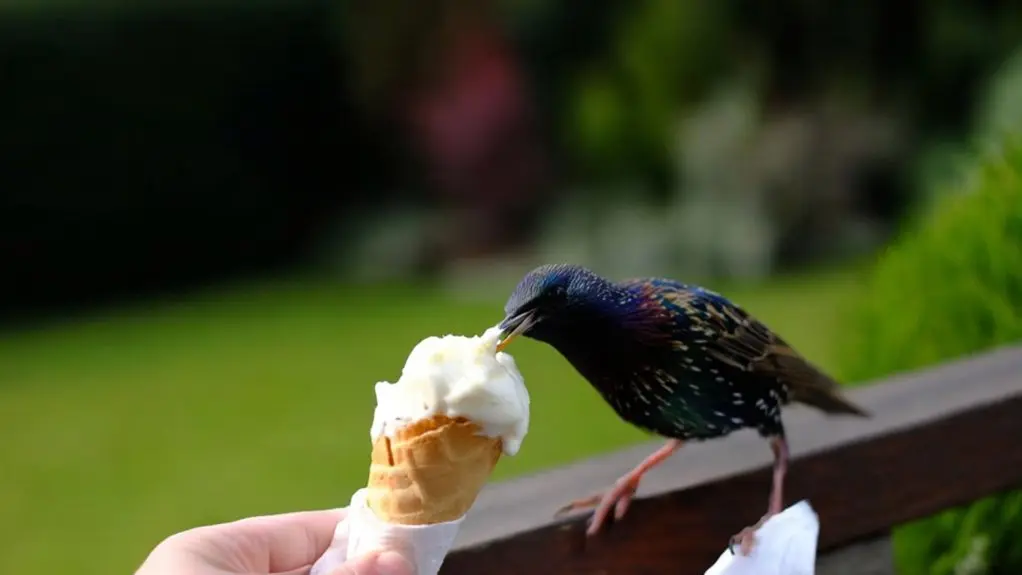
You shouldn’t give ice cream to birds because its high sugar and dairy content can disrupt their digestion and metabolism. Birds lack the enzyme needed to digest lactose, which may cause diarrhea and discomfort.
Artificial ingredients and preservatives in ice cream also pose health risks, including toxicity and allergic reactions. Even small amounts can lead to long-term problems.
Understanding these risks helps you make safer choices for your bird’s health and well-being. It’s always better to stick with foods that are natural and safe for them.
Is Ice Cream Safe for Parrots?
Although ice cream might seem like a harmless treat, it’s not safe for parrots due to its high sugar content, dairy, and artificial additives.
Parrots lack the enzyme lactase, making them unable to digest dairy properly. This can disrupt their hydration and cause digestive issues like diarrhea.
Excess sugar and preservatives in commercial ice cream further compromise their health. Poor hydration negatively affects feather coloration, since well-hydrated parrots maintain vibrant, healthy feathers.
Artificial ingredients may also interfere with nutrient absorption, which impacts feather quality.
Experts strongly discourage sharing ice cream with parrots because it poses more risks than benefits.
If you want to offer a frozen treat, consider homemade versions without sugar or additives. Just always prioritize your parrot’s hydration and nutritional needs to support their overall well-being and feather coloration.
Harmful Ingredients in Ice Cream for Birds
When you offer ice cream to birds, you expose them to harmful ingredients that their bodies aren’t equipped to handle. These substances can negatively impact bird hydration and feather health, which are really important for their survival and well-being.
Key harmful ingredients include high sugar levels that disrupt metabolism and cause dehydration, artificial preservatives that can lead to digestive upset and allergic reactions, and flavorings and colorings that might irritate their digestive tract.
High sugar, preservatives, and artificial additives in ice cream can harm birds’ digestion and overall health.
There’s also the risk of potential bacterial contamination, which poses infection risks. Plus, dairy components aren’t suitable for birds since many lack lactase, causing imbalances in their system.
All these elements interfere with normal physiological functions and can lead to obesity, diarrhea, and poor feather condition.
How Dairy in Ice Cream Affects Parrot Digestion
Since parrots lack the enzyme lactase, they can’t properly digest lactose, the sugar found in dairy products like ice cream. Without this digestive enzyme, lactose stays undigested in their gastrointestinal tract, which can lead to symptoms like diarrhea and bloating.
This kind of digestive upset messes with the parrot’s ability to absorb nutrients efficiently and can compromise their overall nutritional balance.
On top of that, repeated exposure to dairy might cause long-term health issues by interfering with the absorption of essential vitamins and minerals.
So, when you think about it, giving parrots dairy-based ice cream is just asking for digestive distress and nutritional imbalance.
To keep their digestive health in check, it’s best to avoid feeding parrots any dairy-containing products.
This way, you’re preventing potential gastrointestinal problems that come from not having the right digestive enzymes.
Risks of Sugar and Artificial Sweeteners in Ice Cream
Beyond the challenges parrots face with dairy, the sugar and artificial sweeteners in ice cream pose additional risks. These substances can negatively impact your bird’s health in several ways. High sugar levels disrupt energy balance and may lead to obesity.
Sugar and artificial sweeteners in ice cream disrupt energy balance and pose serious health risks to parrots.
Artificial sweeteners, such as xylitol, are toxic and can cause liver failure. Additionally, flavor additives and colorings raise concerns because these chemicals often contain harmful preservatives. Even small amounts can accumulate adverse effects over time.
Key risks include:
- Digestive issues from excessive sugar intake
- Toxicity from artificial sweeteners like xylitol
- Disruption of natural energy metabolism
- Harmful flavor additives and preservatives
- Colorings concerns that may provoke allergic or toxic reactions
Is a Small Taste of Ice Cream Dangerous for Parrots?
You might be wondering if giving your parrot a small taste of ice cream is risky. Well, a tiny bite probably won’t cause immediate harm.
However, ice cream contains lactose and a lot of sugar, which can upset your bird’s digestion and might lead to bigger problems like obesity over time.
Health Risks Overview
How dangerous is a small taste of ice cream for your parrot? While a tiny lick may not cause immediate harm, it can still introduce several health risks. Ice cream’s high sugar and fat content can negatively affect your parrot’s feather coloration by disrupting nutrient absorption.
Parrot psychology might also be impacted, as unhealthy treats can alter behavior and feeding habits.
Consider these risks:
- High sugar and fat contribute to obesity and liver issues
- Dairy is indigestible, risking digestive upset
- Artificial additives may harm overall health
- Repeated exposure can degrade feather coloration
- Unnatural treats may interfere with natural behavior
To protect your parrot’s health, avoid ice cream entirely and choose safer, natural alternatives designed specifically for birds. It’s really better to stick with treats that are made for them. Your parrot will thank you!
Lactose Intolerance Effects
Although a small taste of ice cream might seem harmless, it poses significant risks for parrots due to their lactose intolerance. Parrots lack lactase, the enzyme needed to digest lactose in dairy products, making even minimal exposure to ice cream potentially dangerous.
Consuming lactose can cause digestive upset, including diarrhea and abdominal discomfort, which may lead to dehydration and a weakened immune system.
This distress can interfere with essential behaviors such as feather grooming, impairing the bird’s ability to maintain feather health. Additionally, gastrointestinal discomfort may reduce a parrot’s energy, negatively affecting its flight behavior and overall activity.
Because ice cream contains high lactose levels, it increases the risk of bacterial infections or fungal growth in the digestive tract.
Safe Sharing Guidelines
While a small taste of ice cream mightn’t cause immediate harm to parrots, you should understand that their inability to digest lactose poses significant health risks. Dairy and sugar in ice cream can upset their digestive system, potentially leading to diarrhea.
To keep your parrot safe while sharing treats, consider these guidelines: avoid commercial ice cream with artificial ingredients and high sugar levels. Instead, offer homemade, unsweetened, dairy-free frozen treats.
Also, keep an eye on any changes in your bird’s vocalizations and feather grooming after introducing new foods. It’s a good idea to limit treat quantities to prevent digestive distress.
If you notice any unusual behaviors or symptoms, don’t hesitate to consult a vet. Following these steps helps ensure your parrot stays healthy without compromising its natural behaviors or well-being.
Safe Treat Alternatives to Ice Cream for Your Parrot
Since traditional ice cream contains dairy and sugars that can harm parrots, you should offer safe and nutritious alternatives to satisfy your bird’s treat cravings.
Fresh fruits like berries, mango, and banana provide essential vitamins and antioxidants.
Vegetables such as carrots, broccoli, and sweet potatoes offer fiber and crunch, supporting beak health.
Occasionally, unsalted nuts and seeds deliver healthy fats, while small amounts of cooked, unseasoned lean meats supply protein.
Commercial bird-safe treats made from natural ingredients can also be a reliable option.
Maintaining parrot toy safety and regular cage cleaning tips are essential to prevent contamination from treat residues.
Always remove uneaten food promptly to avoid bacterial growth.
This helps ensure your parrot’s environment stays hygienic and safe while enjoying these alternatives.
How to Share Treats Safely With Your Parrot
When sharing treats with your parrot, you first need to make sure the food is safe and good for their digestive system. It’s really important to understand how birds behave and to use some basic parrot training principles. This will help you introduce new treats smoothly.
Always do your research and double-check that any human foods you want to offer are safe. Give only small amounts and try to avoid dairy or anything with artificial ingredients. Natural options, like fresh fruits or veggies, are usually your best bet.
Keep an eye on how your parrot reacts to these new treats. If they seem upset or uncomfortable, it’s a good idea to stop. And if you’re ever unsure, talking to an avian vet can give you personalized advice on what treats work best.
Toxic Foods to Avoid Alongside Ice Cream
Sharing treats like ice cream with your parrot might seem harmless, but it poses significant health risks. Ice cream contains sugar, artificial ingredients, and dairy, all of which conflict with bird dietary restrictions.
Parrots lack the enzyme needed to digest lactose, making dairy products unsuitable.
Parrots cannot digest lactose, so dairy products are harmful and should be avoided in their diet.
Also, ingredients such as chocolate and caffeine, sometimes found in ice cream, are highly toxic to birds. These substances can cause digestive issues like diarrhea and lead to metabolic problems.
Understanding parrot nutrition essentials means recognizing that avoiding foods with sugar, dairy, and artificial additives is vital.
To protect your bird’s health, you should steer clear of these toxic foods alongside ice cream.
Prioritizing safe, species-appropriate foods ensures your parrot’s well-being and prevents avoidable health complications.
Why Natural Diets Keep Parrots Healthy and Happy
Although parrots can adapt to various foods, providing a natural diet rich in fresh fruits, vegetables, and seeds delivers the essential nutrients their bodies require for a strong immune system and overall health.
This diet supports their natural behaviors, including bird vocalizations and flight behavior, by maintaining energy and cognitive function. Avoid processed foods like ice cream to prevent digestive issues and obesity.
A natural diet mimics wild feeding habits, promoting longevity and vitality.
Key benefits include:
- Enhanced immune response
- Improved digestive health
- Sustained energy for flight behavior
- Clearer, more frequent bird vocalizations
- Reduced risk of nutrient deficiencies
Frequently Asked Questions
Can Birds Develop Allergies From Eating Ice Cream?
You won’t find true allergies in birds from ice cream, but bird nutrition experts warn that dietary restrictions matter.
Ice cream’s dairy and sugar can cause digestive upset, mimicking allergy symptoms and harming your bird’s health. So, it’s best to keep ice cream away from your feathered friends. They just aren’t built to handle those ingredients.
How Does Ice Cream Affect a Bird’s Behavior?
When you offer ice cream, imagine a bird’s fluttering nerves as sugar spikes disrupt its behavior. Ice cream ignores bird dietary restrictions and bird hydration needs, causing hyperactivity, irritability, or lethargy. This can really throw off their natural activity patterns.
Birds aren’t built to handle sugary treats like ice cream. So, even though it might seem like a fun snack, it’s actually messing with their system. They might get anxious or just tired out, which isn’t good for them at all.
Are There Any Frozen Treats Safe for Birds?
You can safely offer frozen treats like unsweetened berries or chopped vegetables. Just be sure to respect bird dietary restrictions and avian digestive health.
Avoid sugar, dairy, and artificial additives to prevent digestive upset and keep your bird feeling great.
It’s all about maintaining ideal bird well-being while giving them a cool, tasty snack!
Can Ice Cream Cause Long-Term Health Issues in Birds?
Ice cream acts like a storm disrupting your bird’s diet, causing nutritional imbalance. Regular consumption can lead to obesity, digestive issues, and metabolic disorders. These problems threaten your bird’s long-term health and reduce its overall lifespan.
What Should I Do if My Bird Accidentally Eats Ice Cream?
If your bird accidentally eats ice cream, keep a close eye on how it’s digesting the food. Birds process dairy differently than mammals, so it’s important to watch for any signs of discomfort or upset.
Go ahead and remove any remaining ice cream and offer your bird some fresh water. This can help flush out their system a bit.
If you notice anything unusual or just to be safe, give your vet a call right away. They can guide you on the best next steps to keep your feathered friend healthy.
Conclusion
You shouldn’t give your parrot ice cream, as its dairy, sugar, and artificial ingredients can harm their digestion and overall health. Even a small taste poses risks, much like a tiny spark can start a wildfire.
Instead, opt for safe, natural treats to support your bird’s well-being. By understanding these dangers and choosing wisely, you’ll help keep your parrot healthy, happy, and thriving on a diet suited to their unique needs.