
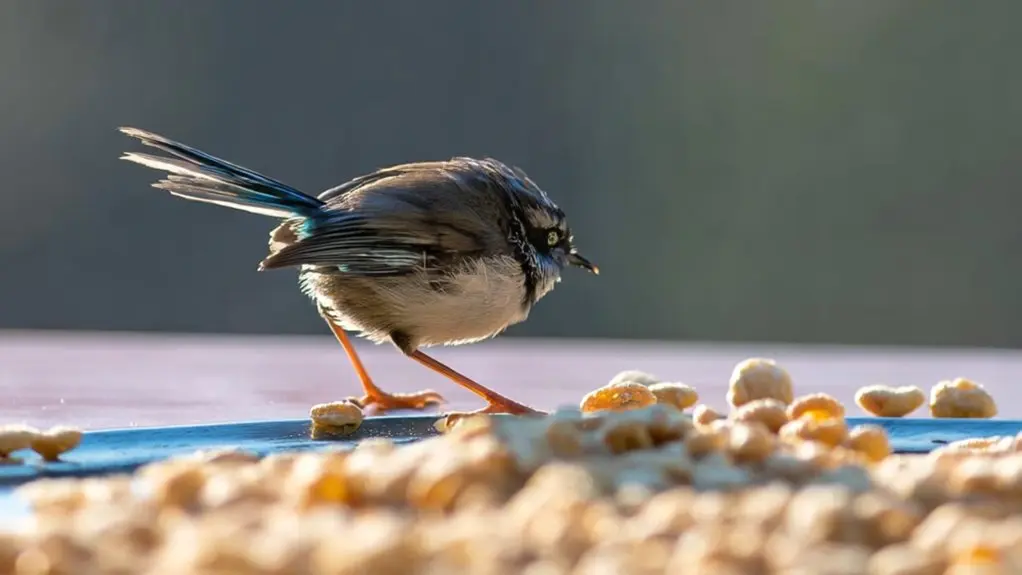
You can offer birds plain Cheerios occasionally, but stick to unsweetened, low-salt varieties to avoid health risks like obesity, dehydration, and digestive issues. Avoid flavored or honey nut types, as added sugars, artificial ingredients, and preservatives can harm birds.
Break them into small pieces and serve only as a treat, not a regular diet staple. Different bird species tolerate Cheerios differently, so understanding proper feeding practices and safer alternatives can help guarantee their well-being.
Are Cheerios Safe for Birds to Eat?
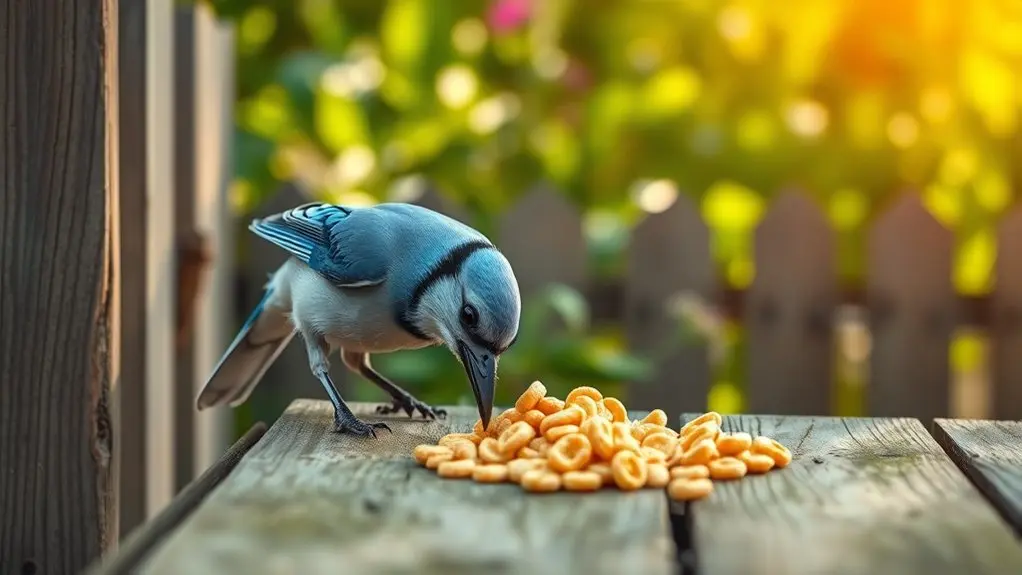
Although Cheerios are made from whole grains that support bird digestion, you should only offer them to your bird in moderation. While whole grains benefit digestive health, Cheerios often contain added sugars and artificial ingredients that can negatively affect your bird’s well-being.
Cheerios contain whole grains but also added sugars and artificial ingredients, so offer them to birds sparingly.
Excessive consumption may lead to obesity, dehydration, and disrupt natural bird behavior.
When birds frequent nesting sites, their dietary intake influences energy levels vital for activities like nest building and chick rearing. Feeding your bird plain, unsweetened whole-grain cereals in controlled amounts ensures you complement, not replace, a balanced diet.
Always monitor feeding frequency and quantity to avoid health complications.
What Nutrients Do Cheerios Offer?
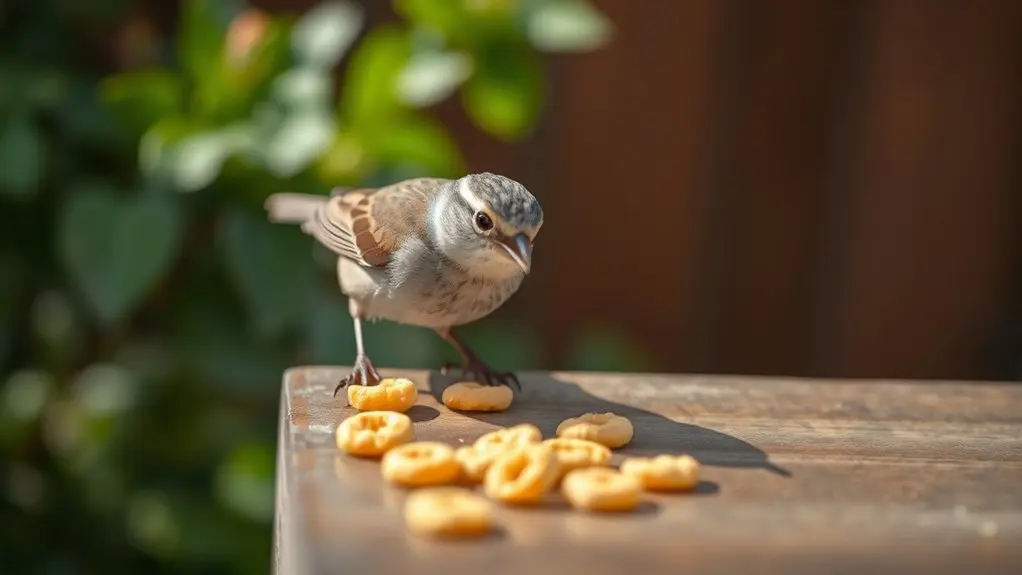
Because Cheerios are primarily made from oats, they provide a valuable source of soluble fiber and complex carbohydrates that support digestive health and sustained energy release.
When considering bird nutrition and cereal preferences, Cheerios offer several essential nutrients beneficial for birds in moderation. These include:
- Soluble fiber and complex carbohydrates for digestive function and energy.
- Essential vitamins such as iron, vitamin B6, and folic acid, which aid metabolic processes.
- Trace minerals like calcium, magnesium, and zinc that support bone strength and immune response.
- Added nutrients during manufacturing that enhance overall nutritional value.
While Cheerios contain added sugars and processed ingredients that may reduce their health benefits, understanding their nutrient profile helps you assess how they fit into a bird’s dietary needs.
How to Feed Cheerios to Birds Safely
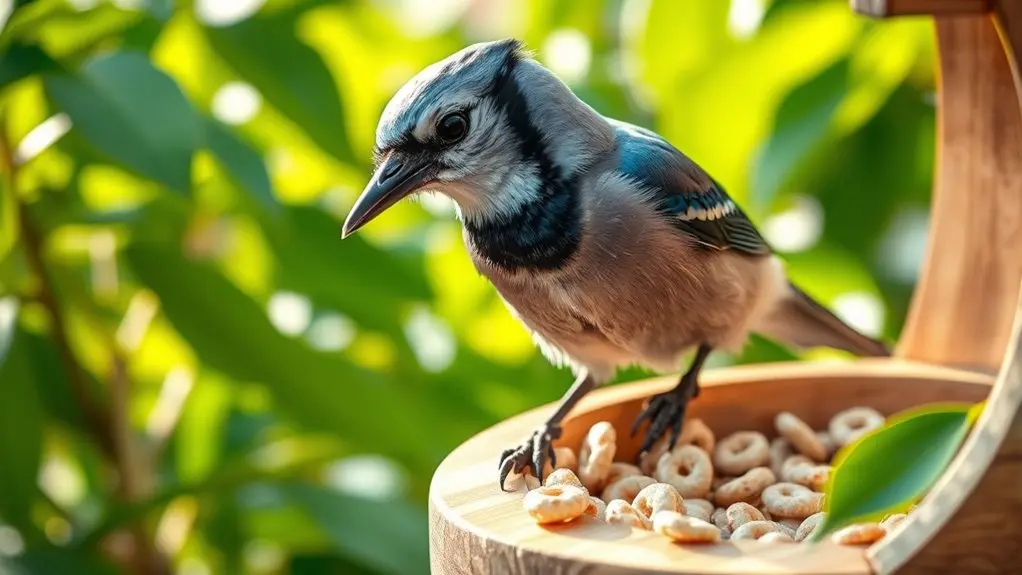
When you’re feeding Cheerios to birds, it’s best to stick with plain, unsweetened varieties. Crumble them into small pieces—that way, you help reduce any choking risks.
Also, think of Cheerios as just an occasional treat. You don’t want your birds getting too much processed stuff or sugar.
Keep an eye on your feathered friends after they’ve had some Cheerios.
And one more thing—avoid soaking Cheerios in milk since that can cause digestive issues.
Preparing Cheerios Properly
If you want to feed Cheerios to birds safely, you should select plain, unsweetened whole-grain varieties that contain no added sugar or artificial ingredients. Different bird breeds have varying dietary needs, so consider their size and feeding schedules when preparing Cheerios.
To guarantee safe and appropriate feeding, follow these steps:
- Offer Cheerios as an occasional treat, not a staple, respecting regular feeding schedules.
- Break larger Cheerios into smaller pieces for small bird breeds to prevent choking.
- Avoid soaking Cheerios in milk or dairy products to prevent digestive issues like diarrhea.
- Monitor birds’ reactions and promptly remove any uneaten Cheerios to prevent mold growth.
This careful preparation supports birds’ health and complements their natural diet effectively. It’s a simple way to make sure your feathered friends enjoy their snack safely.
Moderation And Safety
Although Cheerios can serve as a fun treat for birds, you should feed them sparingly to avoid potential health issues. Due to processed ingredients and added sugars, frequent feeding disrupts natural bird behavior and may cause obesity or digestive problems.
Stick to plain, unsweetened, whole grain Cheerios, avoiding varieties with artificial additives.
Never soak Cheerios in milk, as dairy can trigger diarrhea in wild birds.
Monitor feeding frequency carefully; offer Cheerios only occasionally to maintain dietary balance.
Observe the bird’s response to ensure no adverse effects.
Prioritize natural seeds, fruits, and vegetables as the primary diet to support health and normal bird behavior.
Which Birds Can Eat Cheerios?
Since many bird species have different dietary needs, you should carefully consider which birds can safely eat Cheerios. During bird migration and nest building, energy demands rise, so offering appropriate foods is essential. Cheerios can supplement diets of certain birds but must be given thoughtfully.
Small to medium birds like parrots, cockatiels, and finches can eat Cheerios in moderation. Wild birds such as blue jays, orioles, and woodpeckers may enjoy unsweetened whole-grain Cheerios occasionally.
Seed and fruit eaters like canaries and lovebirds can include Cheerios in a varied diet.
Larger birds like pigeons and doves can have small amounts to avoid overeating.
Avoid feeding Cheerios to nectar feeders like hummingbirds, whose specialized diets exclude cereals.
Are Cheerios Good for Parrots?
You might be wondering if Cheerios are a good snack for your parrot. Well, it’s important to remember that many Cheerios have added sugars and salt, which aren’t great for your bird’s health.
That said, plain, unsweetened Cheerios can be given every now and then, but only in small amounts. If your parrot eats them too often, it could lead to obesity and other health problems.
Nutritional Benefits Overview
How beneficial are Cheerios for parrots from a nutritional standpoint? Cheerios, made primarily from whole grain oats and wheat, offer some fiber and nutrients that can support bird digestion and nutrient absorption when given sparingly. However, their value is limited compared to natural foods.
Consider these points:
Whole grains in Cheerios provide modest fiber, aiding digestion. Added sugars and artificial ingredients may hinder nutrient absorption. Plain Cheerios have lower sugar content, making them a safer occasional treat.
Cheerios shouldn’t replace a balanced diet rich in fresh fruits, vegetables, and seeds. While Cheerios contribute minor nutritional benefits, they should only complement, not substitute, a varied diet optimized for your parrot’s digestive health and nutrient uptake.
Potential Health Concerns
Why should you be cautious about feeding Cheerios to your parrot? Cheerios contain added sugars, artificial ingredients, and processed grains that can negatively affect bird feather health and overall well-being.
Regular consumption may lead to obesity and digestive issues, compromising your parrot’s vitality.
Additionally, some cereals have high salt content, which can be toxic to birds if ingested frequently. While occasional feeding of plain, whole-grain Cheerios might be safe, they should never replace a balanced diet rich in natural, unsweetened cereals like oats or bran flakes.
Moreover, leftover Cheerios can contribute to poor cage cleanliness, increasing the risk of bacterial growth and respiratory problems.
Prioritizing natural foods ensures your parrot maintains excellent health and vibrant feathers without compromising hygiene.
Which Cheerios Should You Avoid?
Which Cheerios varieties pose risks to birds’ health? During bird migration and nest building, birds need ideal nutrition, so avoiding certain Cheerios is really important. You should steer clear of:
- Honey Nut Cheerios because they’ve high sugar and artificial additives.
- Varieties with added sugar, honey, or artificial flavors that can mess with metabolism.
- Flavored Cheerios containing high salt levels, which could cause dehydration.
- Cereals with artificial dyes, since they might trigger allergic reactions or hyperactivity.
Processed Cheerios with preservatives and synthetic ingredients are also risky for birds’ health.
Offering only plain, unsweetened Cheerios is the best way to support birds during critical times like migration and nest building.
Avoid these risky varieties so you don’t accidentally harm wild or pet birds that depend on you for safe food.
What Ingredients in Cheerios Are Harmful to Birds?
Although Cheerios may seem like a harmless snack for birds, several ingredients commonly found in these cereals can pose serious health risks. Added sugars in Cheerios, especially in varieties like Honey Nut Cheerios, can disrupt birds’ metabolism and promote obesity.
Cheerios may appear safe but added sugars, especially in Honey Nut varieties, can harm birds’ metabolism and cause obesity.
Artificial ingredients, including colors, flavors, preservatives, and sweeteners, may cause digestive distress or toxicity. Additionally, components such as malted barley extract and caramelized sugar syrup further increase the risk of adverse effects.
While plain Cheerios contain minimal salt, cereals with higher salt content can lead to dehydration and kidney strain in birds.
To protect avian health, it’s essential to recognize that these artificial ingredients and added sugars compromise birds’ well-being.
How Often Should You Feed Cheerios to Birds?
When feeding Cheerios to birds, you should treat them as an occasional treat rather than a staple in their diet. Proper feeding frequency is essential to maintain a balanced bird diet and avoid health risks.
Generally, offering Cheerios once or twice a week is safe for most wild and pet birds.
Overfeeding can introduce harmful processed ingredients and added sugars. So, it’s best to keep it in moderation.
Keep these guidelines in mind:
- Limit feeding frequency to one or two times per week.
- Provide only a small handful or a single cereal loop per session.
- Monitor the bird’s health and digestive response regularly.
- Adjust feeding frequency if any adverse effects appear.
Moderation ensures Cheerios remain a safe, supplementary snack within the bird diet. Just remember, it’s all about balance!
Better Cereal Alternatives for Birds
Because Cheerios contain processed ingredients and added sugars, you should consider healthier cereal alternatives that provide essential nutrients without harmful additives. These alternatives support ideal bird digestion and have a longer cereal shelf life without preservatives.
Opt for organic, unsweetened muesli, whole-grain bran flakes, raw oats, or plain puffed rice. Avoid cereals with artificial colors, added sugars, or preservatives to prevent digestive issues.
| Cereal Type | Nutritional Benefit | Shelf Life |
|---|---|---|
| Organic Muesli | Fiber, vitamins | Moderate |
| Whole Grain Bran | High fiber, low sugar | Long |
| Raw Oats | Essential nutrients | Long |
| Puffed Rice | Low salt, light fiber | Moderate |
Selecting cereals with minimal processing ensures safer bird consumption and promotes healthy digestion. It’s a simple way to keep your feathered friends happy and healthy!
Frequently Asked Questions
Can Cheerios Cause Allergies in Birds?
Yes, Cheerios can cause allergies in birds because of the artificial additives that affect their nutrition and safety.
It’s best to avoid feeding them processed cereals. Birds can be sensitive, and these foods might trigger respiratory or skin issues.
That can seriously compromise their health. So, sticking to natural, bird-friendly foods is always a safer bet.
How Do Birds Digest Cheerios Compared to Their Natural Diet?
Birds digest Cheerios more slowly than natural foods because Cheerios lack fiber and enzymes essential for bird nutritional needs.
You should offer Cheerios only as treats, not as a primary diet to support their digestive health.
It’s best to stick to their natural foods most of the time to keep their digestion running smoothly.
Can Feeding Cheerios Affect a Bird’s Behavior?
Sudden sugary snacks sometimes spook social songbirds. You must monitor bird nutrition and bird safety closely, as overfeeding Cheerios can cause hyperactivity.
It can disrupt natural behaviors and even risk allergic reactions. This can impact your bird’s overall well-being. So, keep an eye on how much you’re feeding them.
Are There Any Seasonal Considerations for Giving Birds Cheerios?
You should adjust Cheerios feeding based on seasonal bird diets. In winter, offer unsweetened Cheerios sparingly as supplemental calories.
Follow winter feeding tips to avoid overfeeding and support birds when natural food sources decline. This way, you help birds stay healthy without disrupting their natural eating habits.
Can Baby Birds Safely Eat Cheerios?
You might think Cheerios are harmless, but baby birds can’t safely eat them during critical times like bird migration or nest building.
Their delicate digestive systems need specialized, soft foods to thrive and develop properly. So, it’s really best to avoid giving them Cheerios altogether. Baby birds need the right nutrition to grow strong and healthy.
Conclusion
You can offer Cheerios to birds in moderation, but remember they’re just a small piece of the puzzle in a balanced diet. While Cheerios provide some nutrients, they lack essential vitamins and may contain ingredients harmful to certain species. Think of Cheerios as a sprinkle of variety, not the main course.
Always prioritize natural, bird-safe foods and consult reliable sources to guarantee your feathered friends stay healthy and thriving. It’s all about keeping things balanced and safe for your birds.