
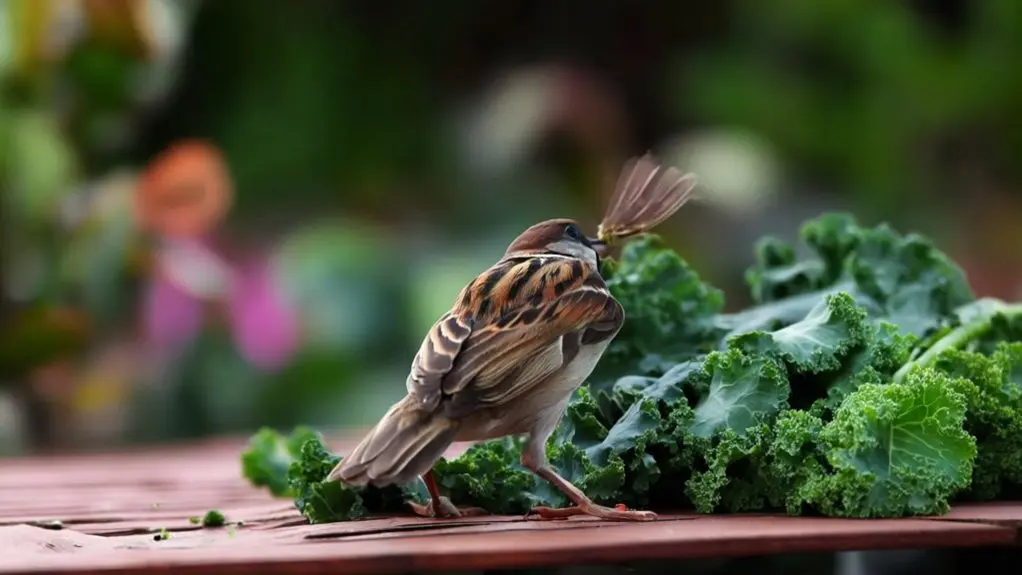
You can safely feed your bird kale in moderation, offering small, chopped portions 2-3 times weekly to provide vitamins A, C, calcium, and antioxidants that support immune and feather health.
Serve it raw or lightly steamed to maximize nutrients while reducing oxalates. Avoid overfeeding to prevent calcium binding and digestive issues.
Rotate kale with other leafy greens for dietary balance. Different species benefit uniquely, and careful preparation ensures safety.
Keep exploring to discover ideal serving methods and alternatives.
Is Kale Healthy for Birds?
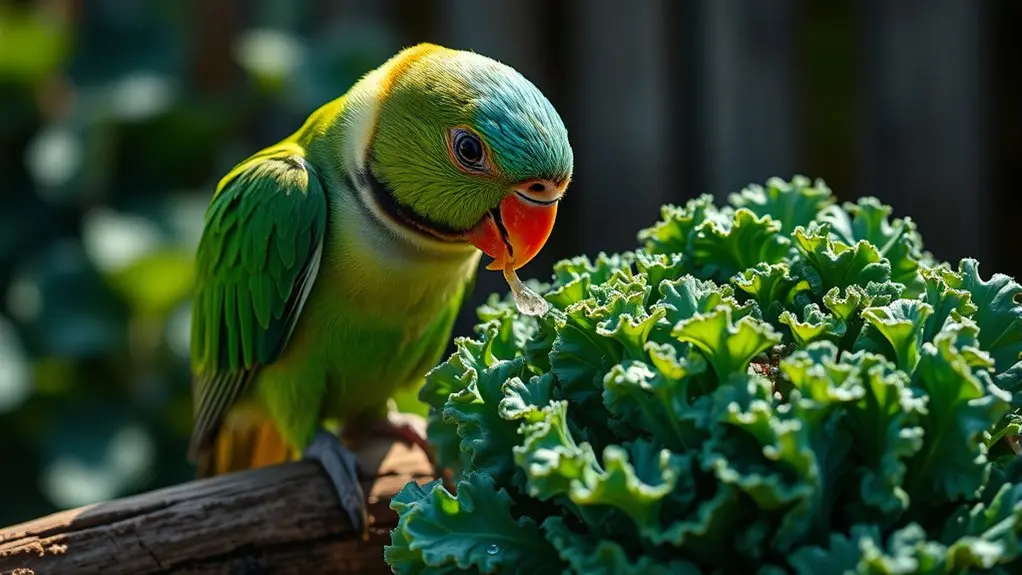
Although kale is packed with essential nutrients like vitamin A and calcium that benefit birds, you need to feed it in moderation and prepare it properly to guarantee those nutrients are absorbed effectively.
Kale cultivation results in a leafy green rich in vitamins but also containing oxalic acid, which can interfere with calcium absorption in birds. To comply with bird dietary restrictions, you should either lightly cook kale to reduce oxalic acid or offer it raw in limited amounts.
Cooking decreases oxalate levels, improving calcium uptake while slightly reducing some nutrients. Including kale as part of a varied diet supports feather condition and overall health without risking toxicity.
Always consider your bird’s specific dietary needs and the balance of nutrients when introducing kale into their regimen. It’s all about finding the right balance to keep your feathered friend happy and healthy.
How Often Should You Feed Kale to Your Bird?
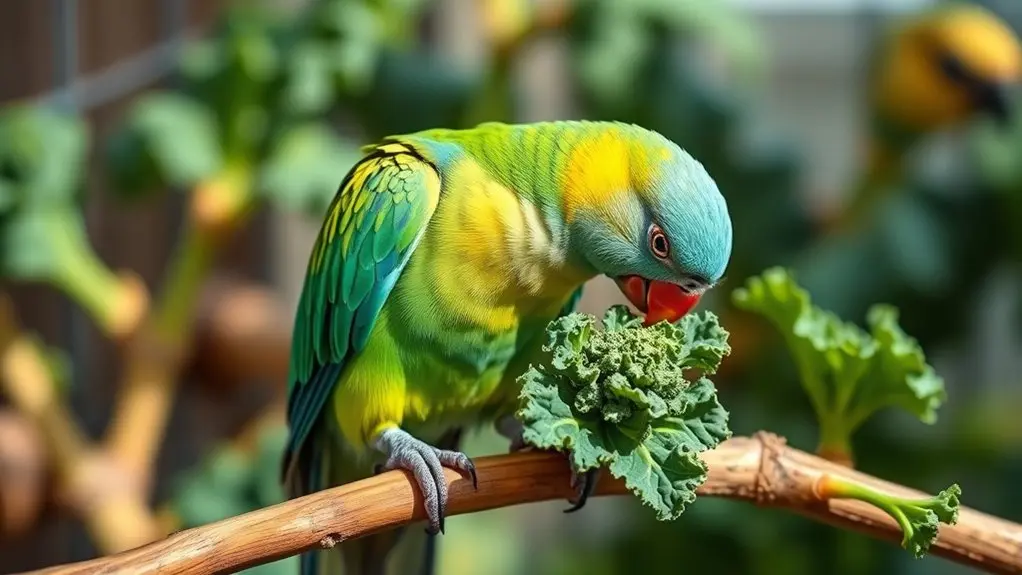
You should feed your bird small, chopped portions of kale a couple of times a week to keep things safe and balanced nutritionally.
For smaller birds, it’s especially important not to give more than a few leaves at a time.
And don’t forget to mix up your bird’s diet so they don’t end up relying too much on kale—variety is key to their overall health.
Feeding Frequency Guidelines
How often should you feed kale to your bird to guarantee best health? Incorporating kale into your bird diet a couple of times a week works well. It ensures variety without risking nutritional imbalance.
Kale, as a green vegetable, offers valuable nutrients. But feeding it too frequently or in excess can cause digestive issues and disrupt dietary balance. If your bird enjoys kale, providing it once weekly in leaf form is acceptable.
Remember to keep portions small, only a few leaves per feeding session, especially for small birds. This helps prevent potential digestive discomfort.
Balancing kale with other foods in your bird’s diet maintains ideal health.
Portion Size Recommendations
When determining the appropriate portion size of kale for your bird, consider feeding small, chopped amounts two to three times per week to maintain a balanced diet.
For small birds, limit each serving to no more than three small leaves. You can also offer kale leaves once weekly if your bird enjoys the texture.
Kale should never be the sole vegetable; pairing it with other greens supports best bird digestion and prevents nutrient imbalances.
Rotate kale regularly with other leafy vegetables to guarantee nutritional variety and reduce health risks.
Proper kale storage is crucial. Keep it fresh and dry to preserve nutrients and prevent spoilage, which can affect bird digestion negatively.
Following these guidelines helps you provide safe, nutritious kale portions tailored to your bird’s needs.
What Nutrients Does Kale Provide to Birds?
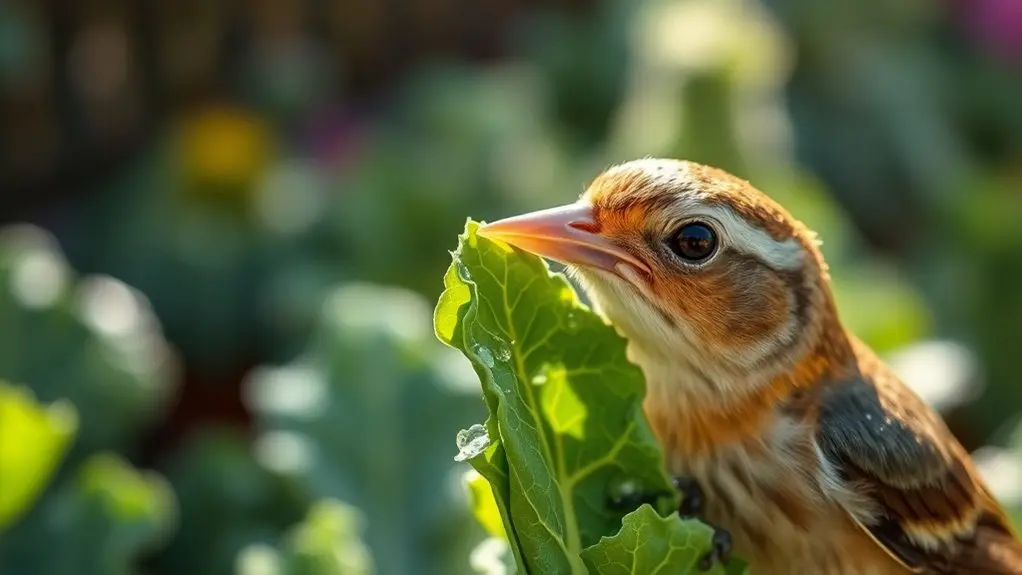
Although kale is often celebrated for its nutritional benefits in human diets, it also provides essential nutrients that support birds’ health. In bird nutrition, kale contributes vital vitamin A, which enhances immune function and feather quality. It supplies calcium, essential for bone strength and eggshell production, supporting diet balance.
Kale supports birds’ health by providing vitamin A for immunity and calcium for strong bones and eggshells.
Additionally, kale offers antioxidants such such as quercetin and kaempferol, which help reduce oxidative stress and promote cellular health. Its dietary fiber aids digestion and maintains gut function, an important aspect of nutrient absorption.
Kale also contains vitamin C, potassium, and folate, which collectively contribute to overall nutritional balance.
Incorporating kale thoughtfully into your bird’s diet can enhance their health without compromising diet balance. It’s a great way to make sure your feathered friend gets a well-rounded diet that supports their wellbeing.
Raw or Cooked Kale: What’s Best?
Since raw kale retains more nutrients and fiber, it generally provides greater nutritional benefits to birds compared to cooked kale. Raw kale preserves higher levels of antioxidants, which support birds’ immune systems and overall health.
However, cooking kale reduces oxalic acid, a compound that can inhibit calcium absorption. This potentially enhances mineral uptake.
Light steaming or blanching also decreases phytate content, making nutrients more bioavailable and aiding bird digestion.
Still, overcooking depletes essential vitamins and antioxidants, so gentle cooking methods are preferable if you opt for cooked kale.
Whether raw or lightly cooked, serve kale in small, manageable pieces to accommodate birds’ digestive capabilities. This helps contribute to a balanced diet.
How to Prepare Kale Safely for Your Bird
To prepare kale safely for your bird, you should first wash it thoroughly to eliminate pesticides, dirt, and other contaminants. Proper preparation supports your bird’s health, aiding in feather grooming and providing nutrients beneficial during bird nesting phases.
Thoroughly washing kale ensures your bird stays healthy, supporting feather care and providing essential nutrients during nesting.
Follow these steps:
- Chop or shred kale into small, manageable pieces to make it easier for your bird to eat, especially if it’s a smaller species.
- Serve kale raw to keep all the nutrients intact, or lightly steam it to reduce oxalic acid and help your bird absorb more calcium.
- Avoid adding any seasoning, salt, oils, or sauces, as these can be harmful to birds.
What Are the Risks of Feeding Too Much Kale?
While kale offers valuable nutrients for your bird, feeding it in excessive amounts can lead to several health risks. Overconsumption disrupts nutritional balance, mainly because kale has high oxalic acid content. This acid binds calcium and reduces its absorption.
That can actually increase the risk of calcium deficiency, which isn’t good for your bird’s health. On top of that, too much kale might cause digestive upset and nutrient overload, especially in small or sensitive species.
If you keep overfeeding kale for a long time, it could lead to kidney and bladder issues from oxalate buildup. Plus, if your bird’s diet relies too much on kale without variety, it raises the chances of other nutritional deficiencies and related health problems.
How to Mix Kale With Other Veggies for a Balanced Diet
Although kale provides essential nutrients, you should combine it with a variety of other vegetables to guarantee your bird receives a balanced diet. Mixing kale with carrots, bell peppers, and leafy greens ensures a broader nutrient spectrum. Incorporating flavor combinations and texture diversity stimulates your bird’s curiosity and acceptance.
Consider these key steps:
- Rotate kale with greens like spinach or dandelion to prevent nutritional imbalances and support gut health.
- Add fruits such as berries or apple slices to enhance flavor combinations and vitamin intake.
- Chop all vegetables into manageable sizes and serve fresh for easy consumption and maximum nutrient absorption.
Tips to Help Your Bird Enjoy Kale
You can encourage your bird to accept kale by offering it in different textures. Try giving it finely chopped or whole leaves, or mix it with other vegetables.
Serving kale raw or lightly steamed can also make it tastier and boost its nutritional value.
Plus, with consistent, repeated exposure over time, your bird will become more familiar with it and more willing to enjoy this nutritious green.
Encouraging Kale Acceptance
Because birds may initially hesitate to try kale, offering it in various forms, such as shredded, chopped, or whole leaves, can stimulate their interest and increase acceptance. You can use bird training techniques and cage enrichment to make kale more appealing. Here are three effective strategies:
- Demonstrate eating kale openly or mix small amounts into familiar foods to spark curiosity and encourage trial.
- Incorporate kale into foraging toys or activity trays within the cage, promoting natural exploration and engagement.
- Present kale repeatedly without pressure, allowing your bird to acclimate gradually to its taste and texture.
Serving Kale Creatively
How can you make kale more appealing and enjoyable for your bird? Start by using a creative presentation. Finely chop or shred kale into small, manageable pieces. This makes it easier for your bird to eat and more appealing.
Try combining kale with other colorful vegetables or fruits. Creating vibrant, colorful combinations can enhance the flavor and encourage your bird to accept it more readily.
You can also vary kale’s texture by offering it raw or lightly steamed. This can stimulate your bird’s curiosity and keep mealtime interesting.
Incorporate kale into foraging activities by hiding small pieces in toys or enrichment trays. This promotes your bird’s natural feeding behaviors and adds some fun to their day.
Try rotating presentation styles over time. This helps build familiarity and makes your bird more willing to try kale regularly.
These simple methods support dietary diversity and engagement, making kale a beneficial and enjoyable addition to your bird’s diet.
Which Bird Species Benefit Most From Kale?
Which bird species gain the most nutritional advantage from kale? Parrots, especially Amazon parrots and cockatoos, benefit greatly from kale’s rich vitamin A and calcium. These nutrients support feather vibrancy and immune health.
Parrots like Amazon parrots and cockatoos thrive on kale’s vitamin A and calcium for vibrant feathers and strong immunity
When designing a bird enclosure, including fresh kale can encourage natural foraging. This positively influences parrot communication by reducing stress and promoting social interaction.
Here are the top species that benefit most from kale:
- Amazon parrots and cockatoos: enhanced feather quality and immune support
- Budgerigars and small parrots: improved nutrition and fiber intake in moderation
- African greys and macaws: diverse diet enrichment fostering foraging behaviors
Best Leafy Green Alternatives to Kale for Birds
You can offer your bird nutrient-rich leafy greens like dandelion, spinach, and pak choy as great alternatives to kale. These greens are packed with vitamins and minerals that your feathered friend will appreciate.
It’s also a good idea to include a variety of greens such as collard and turnip. Mixing things up helps keep your bird’s diet balanced and interesting, so they don’t get bored with the same old leaves.
Just make sure to focus on safe options that are low in oxalates. This is important because it supports your bird’s overall health and helps with calcium absorption.
Nutrient-Rich Leafy Greens
Why settle for only kale when there are several nutrient-rich leafy greens that can enhance your bird’s diet? Leafy greens like spinach, dandelion greens, and collard greens offer excellent nutritional value and support various health aspects for birds.
Here are three top alternatives to contemplate:
- Dandelion greens are rich in calcium and vitamins A, C, and K. They help boost immune and skeletal health.
- Collard greens provide calcium and antioxidants similar to kale. They aid overall nutrition.
- Spinach contains iron and magnesium. Just feed it sparingly because of oxalic acid, which may reduce calcium absorption.
Including these leafy greens makes sure your bird gets a diverse range of essential nutrients beyond what kale alone can provide. It’s a simple way to keep their diet interesting and healthy!
Variety For Dietary Balance
Although kale is a popular choice, offering your bird a variety of leafy greens like dandelion, spinach, and pak choy guarantees a balanced intake of essential nutrients. Seasonal green rotations prevent nutrient imbalances and support diverse gut bacteria, enhancing digestive health.
Supplementary dietary options minimize risks from compounds such as oxalic acid found in spinach, ensuring safety and nutritional breadth.
| Leafy Green | Key Nutrients | Benefit |
|---|---|---|
| Dandelion | Calcium, Vitamin K | Supports bone health |
| Spinach | Iron, Vitamin A | Promotes oxygen transport |
| Pak Choy | Vitamin C, Folate | Boosts immune function |
Incorporate these greens regularly for ideal avian nutrition and wellbeing.
Safe Greens To Offer
When selecting leafy greens for your bird, choosing safe alternatives to kale is essential to provide balanced nutrition without exposing them to harmful compounds. You want to include bird calcium sources and supplement their seed diet with nutrient-rich greens that are low in oxalic acid.
Here are three excellent options:
- Dandelion greens, spinach, and bok choy provide essential vitamins and minerals while avoiding high oxalate levels found in kale.
- Parsley, cilantro, and basil add flavor and vitamins, enhancing dietary variety without toxicity risks.
- Radicchio and arugula offer antioxidants and diverse textures, supporting overall health.
Avoid toxic greens like raw rhubarb and tomato leaves. Introduce new greens gradually to monitor your bird’s tolerance and maintain a balanced diet alongside seed supplementation.
Frequently Asked Questions
Can Baby Birds Eat Kale Safely?
Yes, you can safely feed baby birds small amounts of cooked kale varieties to support bird nutrition. Introduce it gradually and offer in moderation.
Make sure to combine it with other foods to guarantee balanced nutrient intake and avoid digestive issues. It’s all about variety and balance when it comes to their diet.
Does Kale Affect Bird Droppings or Digestion?
Long before smartphones, you’d notice kale’s nutritional benefits support the bird digestion process by adding fiber. But too much kale can disrupt droppings and calcium absorption. So, feed it in moderation to keep digestion balanced.
Can Kale Cause Allergies in Birds?
Yes, kale can cause allergies in birds, especially if pesticide residues are present. While kale offers birds nutritional benefits, you should introduce it gradually and keep an eye out for any reactions.
If you notice symptoms like itching or swelling, it’s best to stop feeding kale right away. Just watch your bird closely when trying new foods to keep them safe and happy.
Is Kale Suitable for Outdoor Wild Birds?
Yes, kale offers nutritional benefits like vitamins and antioxidants for outdoor wild birds. You should follow bird feeding guidelines by providing small, fresh portions.
Make sure to offer a variety of foods and avoid overfeeding to support their natural diet and health. Keeping their meals balanced helps them stay healthy and happy.
How Should Kale Be Stored for Bird Feeding?
Don’t just toss kale anywhere. Use proper kale preparation and storage techniques. Keep it rinsed, dried, and stored in a perforated bag inside your fridge’s crisper.
Make sure to avoid ethylene-producing fruits nearby. This helps maintain the kale’s freshness for bird feeding. It’s a simple way to keep your greens in great shape.
Conclusion
You can confidently offer kale to your bird, imagining those vibrant green leaves packed with vitamins boosting their health. But don’t overdo it. Balance kale with other veggies to create a colorful, nutrient-rich feast.
Whether raw or lightly cooked, prepare it safely to support digestion. Different bird species benefit uniquely, so tailor their diet thoughtfully.
By mixing and matching greens, you’ll keep your feathered friend thriving with every crunchy, leafy bite.