
You might wonder if birds can get human head lice, but they simply can’t. Human head lice are highly species-specific parasites that need the exact conditions of the human scalp to survive and reproduce.
Birds have their own lice adapted to feathers, making cross-infestation biologically impossible. While bird mites may bite humans briefly, they don’t cause long-term lice problems.
Understanding these differences clears up common myths and shows why proper identification and management really matter.
What Makes Head Lice Different From Bird Lice?
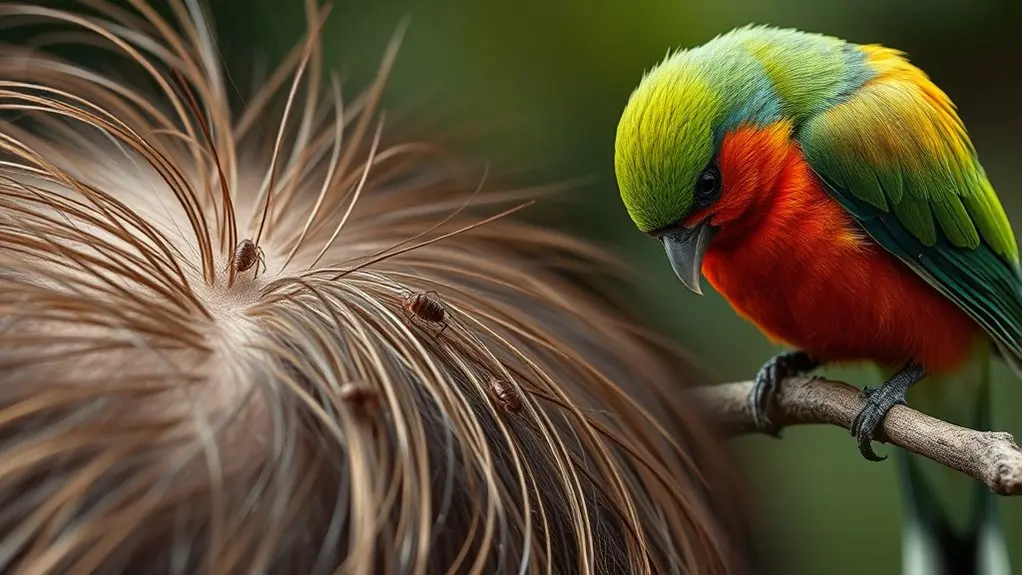
Although both human head lice and bird lice belong to parasitic groups, they differ quite a bit in species specificity and where they live. You’ll find human head lice (Pediculus humanus capitis) only on the scalp. Their habitat is super specialized for feeding on human blood.
On the other hand, bird lice mostly infest feathers and feed on skin debris instead of blood. This difference shows how these parasites behave differently depending on the host species.
Human head lice can’t survive or reproduce on birds because their needs are tailored to humans. Similarly, bird lice can’t make a home on human hair or scalp.
And while some bird mites might bite humans for a short time, they don’t act like human head lice, which stick around permanently on their specific hosts.
How Can You Identify Head Lice or Poultry Parasites?
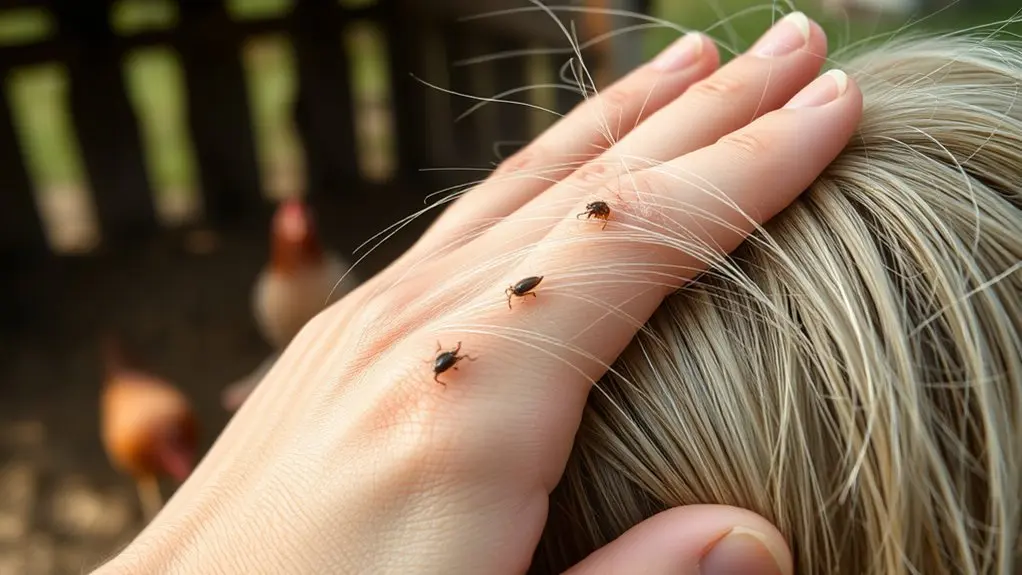
You can tell if someone has head lice by looking for tiny nits stuck close to the scalp. Sometimes, you might even see live lice crawling on the hair strands.
When it comes to poultry parasites, it’s a bit different. You want to check the birds’ feathers and skin for lice or mites since these parasites don’t affect humans.
A good tip is to focus your inspection on the usual spots—like the scalp for head lice, and the head, neck, and vent areas for poultry parasites. That way, you’re more likely to catch any signs of infestation early on.
Spotting Lice Eggs
When inspecting for lice eggs, or nits, focus closely on the hair strands or feather shafts near the scalp or skin. These small, oval-shaped eggs are firmly cemented in place.
Lice eggs on humans typically appear as white, yellow, or brown specks attached near the scalp. They remain immobile and tightly fixed.
In birds, you’ll find lice eggs embedded in feather quills or scattered among feather detritus and bird bedding. They’re often more dispersed than human nits.
Using good lighting and a fine-tooth comb really helps in spotting nits and distinguishing them from loose debris.
The firm attachment of lice eggs to hair or feathers is different from other particles. So, careful observation of their location and how well they stick helps you identify lice presence accurately.
Just take your time and look closely.
Differentiating Mites And Lice
Identifying lice eggs firmly attached to hair or feathers helps differentiate lice from other parasites like mites. Head lice eggs, or nits, are cemented close to the scalp in humans, whereas poultry lice eggs stick to feather bases. This attachment is a key sign that you’re dealing with lice.
In contrast, feather parasites such as northern fowl and red poultry mites don’t cement their eggs to feathers or skin. Their eggs are usually unattached or laid in the environment instead. So, if you see eggs loosely placed or around the area rather than stuck on, it’s likely mites.
Mites might bite humans temporarily but they can’t survive or reproduce on the human scalp. This is different from host-specific head lice, which live and reproduce right there.
Bird migration helps spread poultry parasites but doesn’t help with human lice transmission.
For accurate identification, look closely for eggs firmly attached to hair or feathers along with live lice. This helps you tell lice apart from mites, which don’t have those attached eggs or the same residency habits. It’s all about knowing where and how the eggs are laid and whether the parasite sticks around.
Checking Common Infestation Areas
Where should you look to detect head lice or poultry parasites most effectively? To identify infestations accurately, focus on specific areas and signs related to feather health and bird grooming.
For head lice, part hair with a fine-tooth comb and inspect the scalp, especially behind the ears and at the nape of the neck. Look closely for moving lice or nits attached near the skin.
When it comes to birds, examine their feathered areas carefully, particularly around the head and body. Visible poultry lice can affect feather health, so keep an eye out for them.
Also, watch the bird’s grooming behavior. Excessive preening or damaged feathers might be a sign of parasites causing discomfort.
Don’t forget to check the chicken coop and bedding too. Mites or lice often live off the host, so these areas can reveal hidden infestations.
This targeted approach helps you detect parasites precisely and tells human head lice apart from poultry parasites effectively.
How Do Bird Mites Affect Humans?
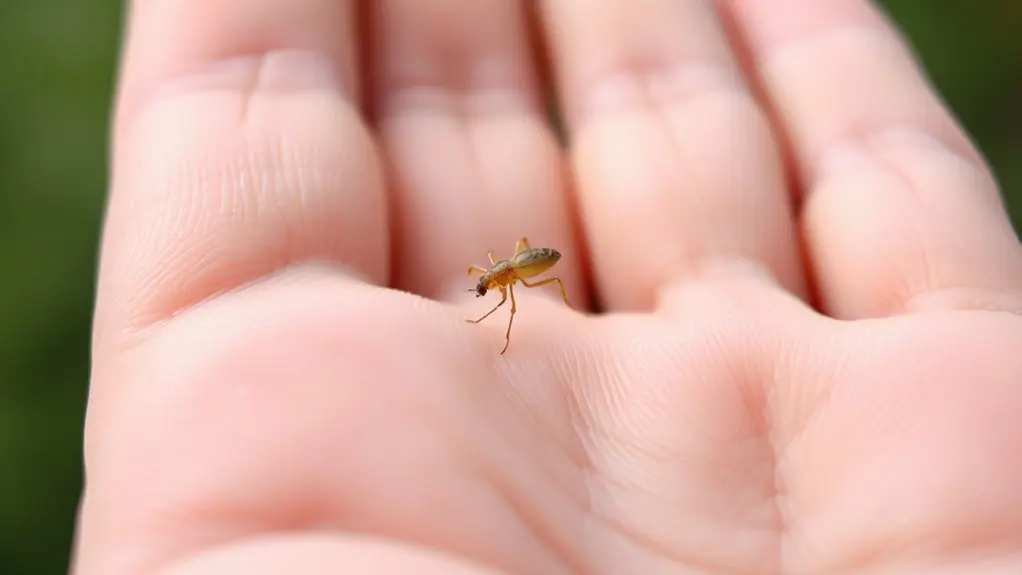
Although bird mites primarily infest birds, they can bite humans and cause itchy, red rashes, especially on the arms, neck, and torso. Bird mites feed temporarily on human skin, but they don’t infest or reproduce on people. They need bird hosts to complete their life cycle, so their presence on humans is only temporary.
When bird mites bite, they trigger skin reactions like irritation and redness, which can be quite uncomfortable. Because their bites look a lot like other insect bites or dermatitis, it’s easy to misdiagnose them.
If you suspect bird mites, it’s important to get a professional inspection, especially if you’re near bird nests or poultry areas where these mites gather. Knowing the difference helps you treat the symptoms properly and avoid unnecessary treatments.
Why Can’t Birds Host Human Head Lice?
Because human head lice have evolved to feed exclusively on human blood, they can’t infest birds. You should understand that the bird feather structure and lice habitat differences create an unsuitable environment for human head lice.
Specifically, human head lice are highly species-specific and adapted solely to the human scalp. Bird feathers lack the warm, oily conditions necessary for lice survival and reproduction.
Plus, the physical structure of feathers prevents lice from attaching or moving effectively.
Bird lice species differ biologically, too. They’re adapted exclusively to avian hosts and can’t survive on humans.
So, the biological makeup of human head lice and their habitat preferences make birds unsuitable hosts or carriers.
This really reinforces how strict these parasites are about sticking to their own species.
What Are Common Misconceptions About Head Lice and Bird Lice Transmission?
You might think that lice found on birds could infest humans, but actually, lice are very species-specific. So, they won’t jump from birds to people.
It’s also good to know the difference between lice and mites because they’re completely different creatures with their own behaviors and places they live. Knowing this helps clear up why bird lice don’t spread to human head lice.
Lice Species Specificity
When considering lice infestations, it’s important to understand that human head lice (Pediculus humanus capitis) are highly species-specific and can’t infest birds or other animals. Misconceptions about lice transmission often come from seeing bird lice on poultry or pet birds, but these lice are different species adapted only to their avian hosts.
To clarify: human head lice feed solely on human blood and can’t survive on birds. Bird lice, like feather lice, don’t feed on human blood or scalp tissue.
Lice transmission between species is biologically unlikely because of this host specificity.
If you want to prevent bird lice, focus on avian hygiene, which is unrelated to human lice control. Understanding these points helps you avoid confusion and apply the right lice transmission and bird lice prevention measures.
Mite Versus Lice Differences
Although bird lice and mites are often confused, they differ quite a bit in biology and behavior. This really affects how they interact with humans. Bird lice are feather parasites that stick to birds and do best in bird nesting environments. They simply can’t survive or reproduce on human scalps.
On the other hand, bird mites sometimes bite humans but don’t set up permanent infestations. A lot of people mistakenly think bird lice or mites jump directly from poultry or wild birds to humans, causing long-term head lice problems. But usually, when people talk about infestations linked to bird lice, they’re actually dealing with bird mites, which are just temporary feeders.
What Should You Do If You Suspect Head Lice After Handling Birds?
Since lice are highly species-specific parasites, handling birds doesn’t pose a risk for acquiring human head lice. Bird feather lice specialize in bird hosts and have grooming behaviors unique to them. They can’t survive on humans.
If you suspect head lice after contact with birds, here are some steps you can take:
- Thoroughly examine your scalp and hair under bright light. Use a fine-tooth comb to check for live lice or nits.
- Avoid applying any bird-specific treatments or pesticides to your scalp. These are unsafe and won’t work for humans.
- If you find lice, start the right human head lice treatment. This usually means medicated shampoos and regular combing.
- Keep an eye on symptoms and repeat treatments as needed until you’re sure the lice are completely gone.
This way, you’ll manage the situation safely and effectively, no matter if you’ve been around birds or not.
Frequently Asked Questions
Can Lice From Other Animals Infest Humans or Birds?
You won’t get lice from birds or animals because lice are species-specific. Bird feather health depends on avian grooming habits, which prevent cross-infestation. This keeps lice adapted to their unique hosts without transferring between humans and birds.
How Long Do Bird Mites Survive Without a Bird Host?
Imagine tiny invaders lurking, waiting in shadows. Bird mites survive without a host for 2 to 3 weeks, depending on temperature and shelter.
Avian grooming disrupts them, which is essential for feather health. But they persist, always seeking blood meals to reproduce.
Are There Any Health Risks From Bird Lice to Humans?
You won’t face health risks from bird lice transmission since they can’t survive on humans.
To prevent bird lice, maintain clean environments for birds and manage their habitats effectively. This way, bird lice prevention remains straightforward and effective.
Can Human Head Lice Jump From One Person to Another?
You can’t rely on bird behavior for lice transmission methods here; human head lice don’t jump. They crawl and spread only through close, direct head-to-head contact or sharing personal items between people, not by flying or jumping.
What Treatments Are Safe for Birds With Lice Infestations?
You should use veterinarian-approved insecticidal shampoos or bird-safe permethrin sprays for lice treatment. These products are designed specifically to be safe for birds and effective against lice.
Maintaining good avian hygiene is key to preventing lice infestations. Regularly cleaning coops with safe disinfectants helps keep the environment lice-free.
Also, make it a habit to inspect your birds promptly for any signs of lice. Early detection makes treatment much easier and helps keep your birds healthy.
Conclusion
In conclusion, you can’t catch human head lice from birds because each species hosts lice uniquely adapted to its biology. Think of lice as specialized keys fitting only specific locks. Human head lice won’t open a bird’s feathers, nor will bird lice latch onto your scalp.
If you suspect lice after handling birds, focus on human-specific treatments. Understanding these differences helps you avoid unnecessary worry. It also guarantees you address the right issue effectively.