
You can’t neuter birds like mammals because their reproductive organs sit deep inside their bodies, which makes surgical removal risky and complicated. Even castration often doesn’t change behaviors since some tissue might stick around or grow back.
Hormonal treatments can help suppress behaviors for a while, but they’re not permanent fixes. Managing aggression through training and enriching their environment is usually safer and works better.
If you want to learn about surgical options, behavior limits, and ethical concerns, there’s a lot more important info to explore.
Why You Can’t Neuter Birds Like Mammals
Although neutering is common in mammals, you can’t apply the same approach to birds because their reproductive organs lie deep within their coelomic cavity and are closely intertwined with major blood vessels. This unique aspect of bird anatomy makes surgical neutering highly risky and technically challenging.
Unlike mammals, birds lack external genitalia, so you can’t simply remove or alter reproductive parts without invasive procedures. Instead, hormonal therapy is often used to manage reproductive behaviors temporarily, such as reducing egg-laying or breeding drive, rather than providing a permanent solution.
Given the complexity of avian internal structures and the risks involved, surgical neutering remains rare. Hormonal approaches serve as the safer, more practical alternative to control reproduction in birds.
Bird Anatomy and Neutering Risks
Understanding why birds can’t be neutered like mammals requires a closer look at their unique anatomy and the risks involved in surgery. Bird reproductive organs, including testes, lie deep within the coelom near critical structures. This makes surgical access highly invasive.
Surgical challenges include delicate blood vessels that are prone to hemorrhage and the necessity for precise dissection through muscle and fat. Even advanced laser surgery reduces but does not eliminate these risks. Because of these complexities, neutering is rarely performed unless medically necessary.
| Factor | Details |
|---|---|
| Organ Location | Testes near kidneys, deep within coelom |
| Surgical Access | Difficult; covered by muscle and fat |
| Blood Vessel Delicacy | High risk of hemorrhage |
| Laser Surgery | Reduces bleeding risk but still risky |
| Usage | Reserved for specific health issues |
Surgical Options: Vasectomy and Castration Explained
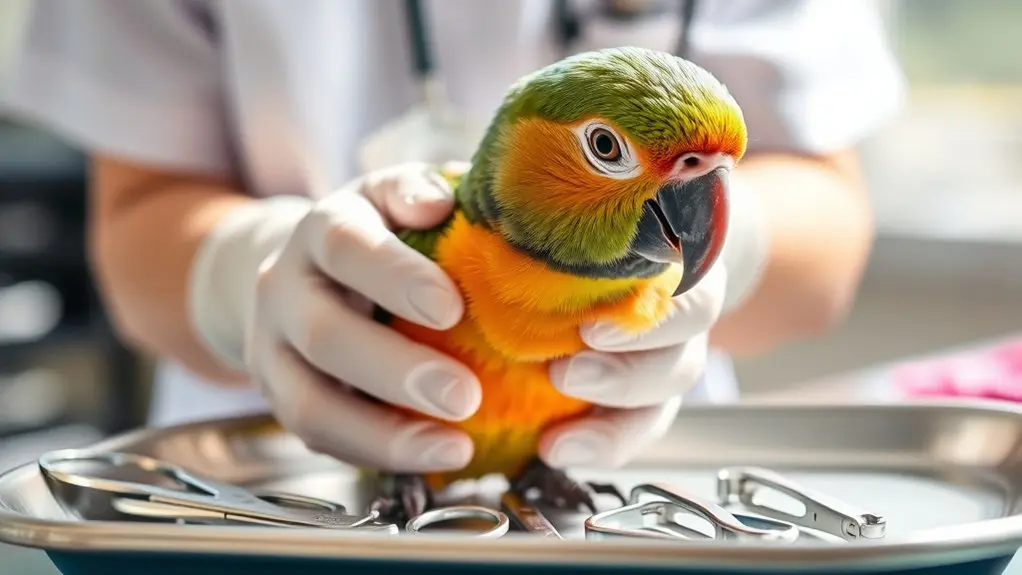
When you consider surgical options for controlling avian fertility, vasectomy and castration stand out as the primary methods. Each has distinct impacts on reproductive function and hormone levels.
Vasectomy involves cutting both ductus deferens to block sperm transport, but it preserves hormone levels and typical behaviors. This procedure uses techniques like endoscopy or cloacal protrusion. If done properly, the risks are minimal.
Vasectomy blocks sperm transport while preserving hormones and behavior, using minimally risky techniques like endoscopy or cloacal protrusion.
On the other hand, castration removes the testes, which eliminates fertility and significantly reduces hormone-driven behaviors.
Unlike genetic modification or less invasive methods like feather trimming, these surgeries offer direct but different approaches to fertility control. Vasectomy is a good choice for young adult males who need to retain their hormones.
Castration, however, changes the hormonal balance.
Understanding these options will help you choose the best method for your bird’s health and behavioral needs. It’s all about picking what works best for your situation.
Limits of Castration for Changing Bird Behavior
Because bird testes lie deep within the coelom and residual tissue can persist or regrow, castration often fails to produce significant changes in behaviors like crowing, aggression, or mating instincts. This is especially true if it’s done after these behaviors have already developed.
The hormonal influence driving these behaviors stays active because the removal of testicular tissue is often incomplete or the tissue can regrow. So, castration doesn’t have a big impact on adult bird behavior.
Early castration, also called caponization, might reduce some sexual behaviors by stopping hormonal surges. But it’s invasive and rarely done just to change behavior.
Hormonal Treatments for Bird Neutering and Behavior
Although surgical neutering in birds has its limitations, hormonal treatments offer a good alternative for managing certain behaviors. Hormonal implants like deslorelin can temporarily suppress unwanted actions such as crowing and territorial aggression in male birds.
These implants don’t physically change reproductive organs, so their effects are reversible and controllable.
You should know that hormonal therapy needs to be repeated because its ability to control behavior only lasts for a limited time. It’s not a permanent sterilization method.
While the costs can add up over time, many still prefer hormonal implants for short-term management.
This is especially true in places where surgical procedures are legally restricted.
Legal Restrictions on Bird Neutering and Ownership
You should know that bird ownership laws can be quite different depending on where you live. For example, species like Quakers are banned in certain places, like California.
When it comes to bringing birds into a new area, there are usually importation and quarantine rules to follow. This often means you’ll need permits and have to stick to specific protocols.
Also, the rules about neutering birds aren’t the same everywhere. Surgical neutering is rarely allowed, and hormonal treatments are regulated based on local laws. So, it’s important to check what’s permitted in your own jurisdiction.
Regional Bird Ownership Laws
Managing regional bird ownership laws requires understanding specific legal restrictions on exotic species and neutering practices.
For example, in California, owning Quaker parrots is illegal due to concerns about their impact on native ecosystems and avian migration patterns. Authorities want to protect local wildlife because disruptions in feather coloration and behavior could affect species identification and ecological balance.
Laws vary widely. Some regions restrict surgical neutering because of safety risks and limited veterinary expertise. Many areas also prohibit importing or rehoming certain parrots to safeguard agriculture and native habitats.
As a bird owner, you need to navigate these regulations carefully. Make sure you stay compliant while keeping conservation priorities in mind. Staying informed about regional statutes helps protect both your feathered companion and the environment.
Importation And Quarantine Rules
Regional laws set the stage for understanding the complexities of importing and quarantining birds, especially when dealing with exotic species. When you import birds, you must follow strict quarantine protocols and obtain veterinary certifications to prevent disease spread.
Some regions, like California, ban ownership of exotic birds such as Quakers. During quarantine, feather trimming and dietary adjustments help manage bird welfare. If import restrictions or ownership laws hinder neutering or acquisition, rehoming legally permitted birds is advisable.
| Region | Import Requirement | Quarantine Duration | Ownership Restriction | Care Considerations |
|---|---|---|---|---|
| California | Veterinary certificate | 30 days | Exotic bans | Feather trimming |
| Australia | Official permits | 14-21 days | Strict exotic limits | Dietary adjustments |
| EU | Health certificates | 21 days | Varies by country | Feather trimming |
| USA (general) | USDA approval | 10-30 days | State-dependent | Dietary adjustments |
Legal Status Of Neutering
How do legal frameworks impact the practice of neutering pet birds? In many regions, such as California, laws strictly prohibit surgical neutering due to ecological concerns and health risks. Instead, you’ll find hormonal treatments used under veterinary supervision. These treatments are temporary and regulated.
Legal restrictions also extend to bird ownership, with species like Quakers banned to protect agriculture. While feather trimming and beak modification are commonly permitted for behavioral management, they don’t replace neutering.
Internationally, ownership laws vary widely, often requiring quarantine and vet certification. Given these constraints, you might consider rehoming as a lawful alternative in strict jurisdictions.
Always check local regulations before attempting any surgical or hormonal interventions to ensure compliance and your bird’s well-being.
Managing Bird Aggression Without Surgery
You can manage bird aggression effectively by using targeted behavioral training and making their environment more enriching. When you focus on the root causes and offer stimulating toys, safe spaces, and plenty of natural light, it helps reduce stress and those triggers that lead to aggression.
Getting to know your bird’s behavior patterns is key. Tools like the ABC model can really help with this.
Once you understand what’s going on, you can use positive reinforcement strategies that encourage lasting change—all without needing surgery.
Behavioral Training Techniques
Although bird aggression can be challenging, you can manage it effectively without resorting to surgery by using targeted behavioral training techniques. Start by incorporating feather grooming and flight training to build trust and reduce stress.
Then, follow these steps:
- Use positive reinforcement to reward calm, non-aggressive behavior consistently.
- Teach your bird to associate handling with treats, minimizing fear-induced aggression.
- Gradually desensitize your bird to aggression triggers through controlled exposure.
- Monitor for underlying stressors or health issues that might provoke aggressive responses.
With a bit of patience and consistency, these techniques can really help your bird feel more comfortable and less aggressive.
Just take it one step at a time, and you’ll see progress.
Environmental Enrichment Benefits
When birds experience a well-enriched environment, their natural behaviors emerge, markedly reducing stress-related aggression. Providing access to bird flight spaces and climbing structures supports physical activity and encourages feather grooming. This is essential for both health and stress relief.
Supplementing natural sunlight with UV light helps regulate circadian rhythms. It lowers cortisol levels linked to aggression.
Introducing destructible toys made from natural materials stimulates foraging instincts, which reduces boredom-driven hostility.
Tailoring enrichment to your bird’s species-specific needs enhances mental stimulation and social harmony. This minimizes territorial disputes.
Addressing Aggression Causes
Since aggression often stems from underlying stressors or environmental factors, managing these elements can dramatically reduce hostile behaviors without resorting to surgery. Bird hormone fluctuations contribute to aggression, but you can address this through effective behavioral modification and environmental adjustments.
Consider these steps:
- Identify and remove aggression triggers to lower stress and hormone-driven reactions.
- Implement positive reinforcement training to reduce fear-based aggression and improve handling.
- Provide environmental enrichment and safe spaces to promote calm and mental stimulation.
- Manage social dynamics by separating or rehoming aggressive birds to prevent escalation.
Consulting an avian behaviorist or veterinarian helps pinpoint causes and tailor non-invasive plans.
When Surgery Is Necessary: Medical Conditions in Birds
Surgery becomes necessary in birds primarily to address serious medical conditions like testicular disease, cancer, or cloacal prolapse. These interventions target health issues that could otherwise impair your bird’s ability to maintain essential behaviors such as bird flight and feather grooming.
For example, testicular surgery is complex due to the testes’ deep placement within the coelom and risks like bleeding or tissue regrowth. Similarly, cloacal prolapse often demands surgical correction, like cloacopexy, especially when conservative treatments fail.
Your veterinarian will thoroughly assess your bird’s overall health before recommending surgery, focusing on improving quality of life rather than altering behavior or hormonal patterns.
Understanding these medical necessities can help you make informed decisions about your bird’s care when surgery is the only viable option.
Ethical and Practical Reasons to Avoid Bird Neutering
You should understand that bird neutering carries significant surgical risks because their reproductive anatomy is quite complex. This raises serious ethical concerns about the stress and pain the bird might experience during and after the procedure.
On top of that, behavioral issues like aggression and nesting often stick around even after surgery, so the effectiveness of neutering can be pretty limited.
That’s why it’s usually better to focus on non-surgical management strategies. These options tend to be safer and more practical for both you and your bird.
Surgical Risks And Ethics
Although bird neutering might seem like a straightforward solution to behavioral challenges, it carries significant surgical risks due to the intricate anatomy and the close proximity of reproductive organs to critical blood vessels and organs. You should consider these key points before proceeding:
Surgical complications are common, making neutering a risky choice compared to less invasive methods like feather trimming or environmental adjustments.
Ethical concerns arise since neutering doesn’t address root behavioral issues and may unnecessarily compromise welfare.
Genetic modification remains experimental and ethically fraught, unlike behavioral management techniques.
Many vets and laws restrict routine neutering, emphasizing animal safety and ethical standards.
Ultimately, you’ll find safer, more effective alternatives that respect both health and ethics.
Behavioral Challenges And Limitations
Why might neutering fail to resolve common behavioral issues in birds? Many behaviors, like aggression, crowing, or nest-building, are deeply rooted in hormonal influences and don’t always respond well to surgery.
Plus, the anatomy of birds makes neutering tricky and risky. Because of these health risks, the potential benefits often don’t outweigh the dangers. So, neutering rarely turns out to be a reliable way to manage these behaviors.
There are also ethical concerns since invasive surgery puts birds at unnecessary risk without any guaranteed improvement. Instead of neutering, it’s better to look at other strategies.
Things like environmental enrichment and targeted training can tackle the root causes of unwanted behaviors more effectively and safely. This way, you’re respecting the bird’s well-being and recognizing the limits of surgery in changing their behavior.
Alternatives to Surgery for Safe and Responsible Bird Care
When managing bird behavior, exploring alternatives to surgery can offer safer and more responsible solutions. You can effectively address behavioral challenges while preserving bird flight and feather coloration by focusing on non-invasive methods.
Consider these four strategies:
- Use positive reinforcement training to reduce unwanted behaviors without risking surgical complications.
- Modify the environment by enriching habitats and providing safe spaces to decrease stress-related issues.
- Adjust diet and guarantee exposure to natural sunlight, which can naturally regulate hormonal behaviors.
- Consult avian behaviorists or veterinarians to develop customized plans prioritizing training and environmental changes.
These approaches maintain your bird’s health and crucial qualities. They avoid the temporary scope and risks of chemical or hormonal treatments and help preserve your bird’s natural abilities and appearance.
Frequently Asked Questions
How Long Do Birds Typically Live After Neutering Procedures?
You’ll find birds typically live their full natural lifespan after neutering, as feather coloration and nesting behavior remain largely unaffected. Proper care keeps them healthy, letting genetics and environment govern longevity, not the surgery itself.
Can Neutering Affect a Bird’s Vocal Abilities or Singing?
Neutering rarely affects bird vocalization or singing behavior since these rely on the brain and hormones beyond reproductive organs.
You’ll find your bird’s singing remains consistent. Vocal skills typically stay intact despite hormonal changes from neutering.
Are There Specific Bird Species More Prone to Reproductive Health Issues?
You’ll find parrots and cockatoos more prone to egg binding and hormonal imbalance, which cause serious reproductive issues. Understanding these species’ risks helps you manage their health effectively and prevent complications linked to reproduction.
These birds need extra attention because their reproductive systems can be a bit tricky. Knowing what to watch for makes a big difference in keeping them healthy. So, staying informed is key when caring for these feathered friends.
What Dietary Changes Support Birds After Hormonal Treatments?
You should enhance bird nutrition with dietary supplements rich in calcium and vitamin D. Focus on fresh vegetables and pelleted feed.
Limit sugary treats, and guarantee hydration to support your bird’s recovery after hormonal treatments effectively. Taking these steps can really make a difference in how your bird bounces back.
How Can I Tell if My Bird Is Experiencing Reproductive Distress?
Nearly 30% of birds with hormonal imbalance show feather plucking. You’ll notice increased aggression, excessive preening, or abnormal nesting.
Keep an eye out for swelling near the vent and changes in appetite or behavior. These signs can help you spot reproductive distress early.
If you notice any of these symptoms, it’s a good idea to consult with a vet to get your bird checked out. Early attention can make a big difference!
Conclusion
You might think neutering birds is a simple fix for behavior issues, but it’s not that straightforward. Unlike mammals, birds’ anatomy and hormones make traditional neutering risky and often ineffective.
Instead, focus on behavioral training and environmental management to keep your bird healthy and happy. Surgery is rarely necessary and should only be considered for serious medical conditions.
Understanding these limits helps you provide the best, safest care for your feathered friend. It’s all about knowing what works best for your bird’s unique needs.