
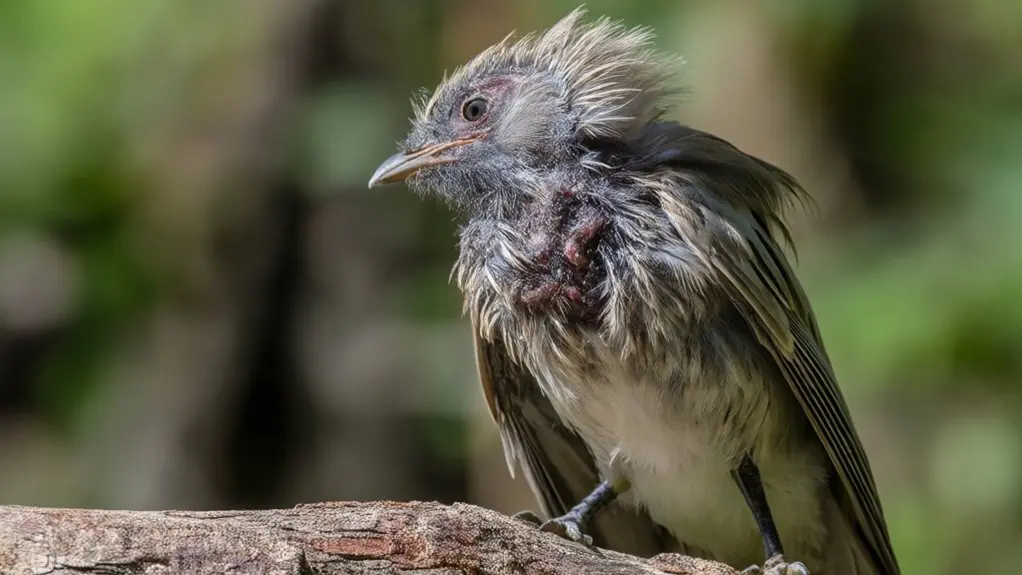
Yes, birds can get mange, a parasitic skin condition caused by Sarcoptidae mites that burrow into their skin. This leads to irritation, excessive scratching, feather loss, and weakened immunity. When birds have mange, they become more vulnerable to infections.
Mange spreads rapidly through close contact and contaminated nests, especially in crowded urban environments. Diagnosing mange requires a microscopic examination of skin scrapings. Treating it usually involves acaricides and disinfecting the nests to stop the mites from coming back.
It’s important to understand how mange affects different bird species and how to manage it. That way, you can help protect birds more effectively. Taking these steps makes a big difference in their health and wellbeing.
What Is Mange? How It Affects Birds
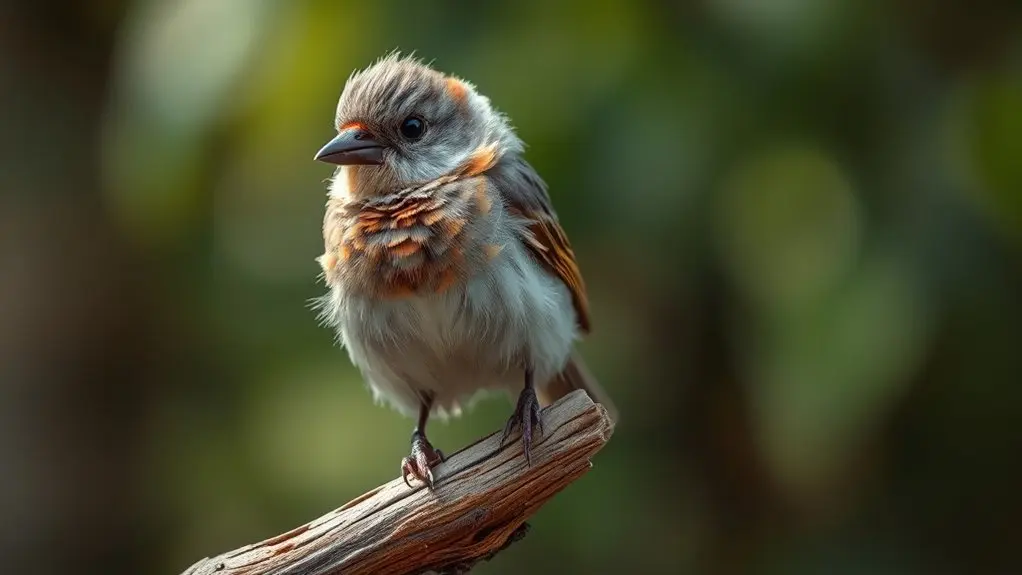
Although mange primarily affects mammals, birds can also contract this skin disease caused by parasitic mites. Mange results from mites, particularly from the Sarcoptidae family, burrowing into the bird’s skin, causing irritation, lesions, and hair loss.
Mange, caused by parasitic Sarcoptidae mites, burrows into birds’ skin, leading to irritation and feather loss.
When you observe birds with mange, you’ll notice excessive scratching, feather loss, and crusty skin patches, all of which indicate compromised bird health.
The infestation negatively impacts feather condition, reducing insulation and flight capability. You should be aware that mange weakens the bird’s immune system, increasing vulnerability to secondary infections and impairing its ability to forage effectively.
Mange spreads rapidly through close contact or shared nesting sites, posing a significant risk to bird populations.
Understanding these effects helps you monitor and protect bird health more effectively. So, if you see birds showing these signs, it’s important to take action to help them.
Keeping an eye out can make a big difference in their well-being.
How Do Mites Cause Mange in Birds?
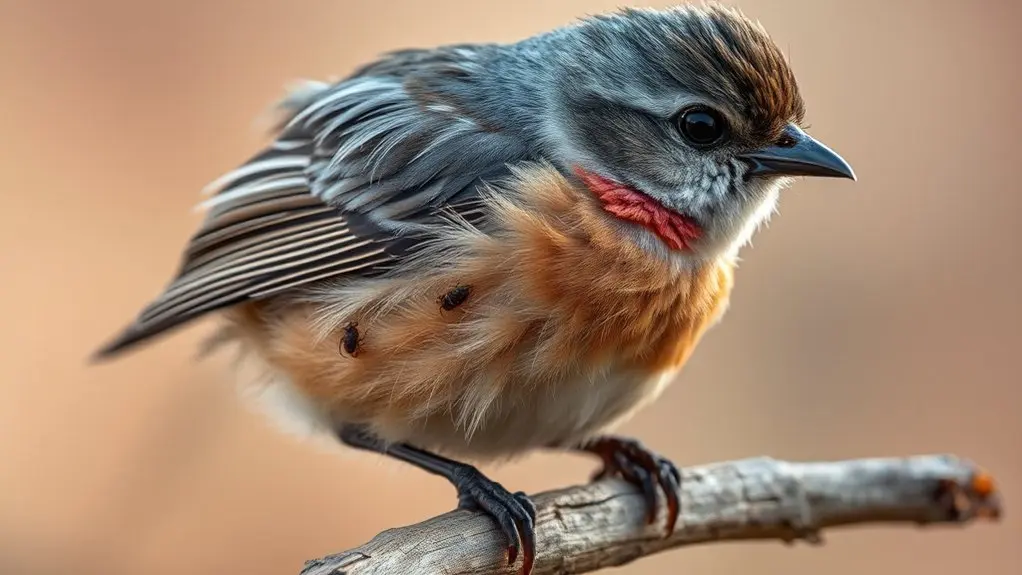
Mites cause mange in birds by burrowing directly into the skin, where they feed and reproduce. This skin penetration starts a chain reaction of symptoms because of the mite lifecycle, which includes rapid reproduction and continuous skin invasion.
As mites multiply, they trigger an immune response that leads to intense itching and discomfort.
Here’s how mites cause mange in birds:
- Mites penetrate the outer skin layers, embedding themselves to feed and lay eggs.
- The mite lifecycle progresses within the skin, causing escalating irritation and damage.
- The bird’s immune system reacts, leading to feather loss, scaly lesions, and increased scratching.
Knowing this process helps you spot early signs and step in before the infestation gets worse.
Which Bird Species Are Most Susceptible to Mange?
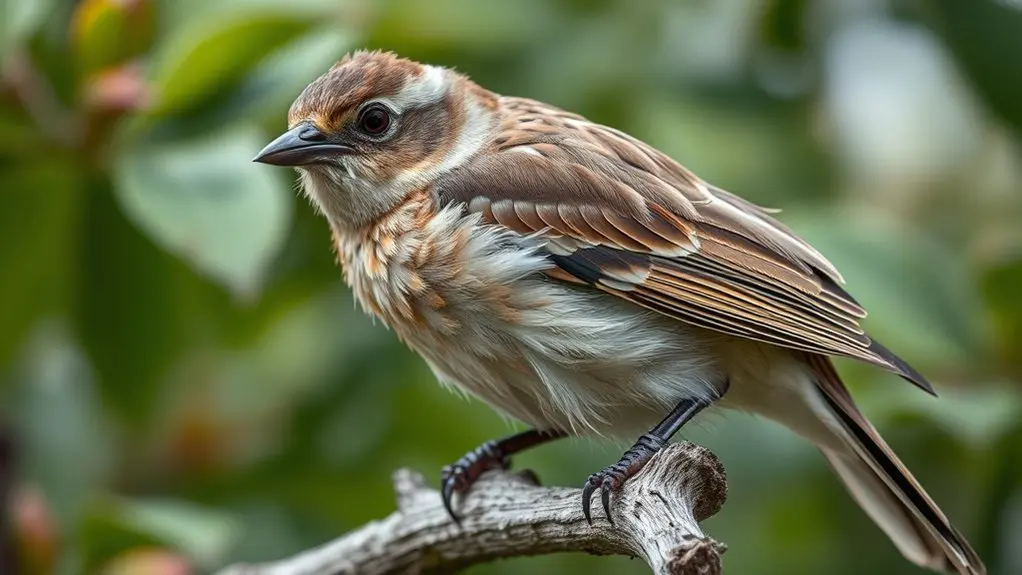
When you observe bird populations in dense urban or coastal areas, you’ll notice that species like pigeons, starlings, and gulls are especially vulnerable to mange. Their dense bird nesting and frequent social contact promote mite transmission. Also, flight behavior that involves communal roosting increases exposure risk.
| Bird Species | Susceptibility Factors |
|---|---|
| Pigeons | Dense nesting, urban crowding |
| Starlings | Colonial nesting, social behavior |
| Gulls | Molting periods, coastal habitat |
Urban birds, such as house sparrows, also show increased mange cases due to limited natural remedies and crowded conditions. Gulls’ immune systems weaken during molting, which raises their susceptibility. Knowing these susceptibility patterns really helps when you’re trying to monitor and manage mange outbreaks efficiently.
What Are the Signs of Mange in Urban and Pet Birds?
Recognizing the signs of mange in urban and pet birds allows you to identify infestations early and take appropriate action. Mange primarily causes skin irritation and feather damage, which show up as visible symptoms you can keep an eye on.
Key signs include excessive scratching and preening, leading to feather damage and bald patches. You might also notice crusts, scabs, or sores on the affected skin areas, which indicate irritation.
Dull, ruffled feathers are another clue, and in severe cases, you could see lethargy, weight loss, or secondary infections. These indicators help you tell mange apart from other conditions.
Catching mange early is really important because if it goes untreated, the skin irritation and feather loss can get worse. This weakens the bird’s overall health.
How Does Mange Spread Among Birds?
Because mange thrives in close-contact environments, it spreads primarily through direct interaction between infected and healthy birds or via contaminated nests and roosting sites. The mite lifecycle plays a vital role, as mites reproduce rapidly on the host, increasing infestation risks within flocks.
Mange spreads through close contact and contaminated nests, with rapidly reproducing mites heightening flock infestation risks.
These mites can survive for several weeks off-host in nests, enabling transmission when healthy birds occupy these areas.
Social behaviors like flocking and communal nesting further facilitate spread. Overcrowded or stressed bird populations are particularly vulnerable, as shared perches and nesting sites become hotspots for mite transfer.
Feather loss often results from the mites’ activity, weakening affected birds.
Understanding how mange spreads helps in managing risks and protecting both wild and captive bird populations from severe infestations. It’s important to keep an eye on bird habitats and reduce overcrowding whenever possible to keep mange at bay.
How Is Mange Diagnosed in Birds?
Although diagnosing mange in birds requires careful examination, veterinarians mainly rely on skin scrapings viewed under a microscope to detect mites. Understanding the mite lifecycle is really important because spotting different developmental stages helps confirm the infestation. Diagnostic techniques include both clinical and laboratory approaches to ensure accuracy.
To diagnose mange effectively, here’s what you can expect:
- Clinical observation of feather loss, crusty lesions, and skin inflammation.
- Microscopic examination of skin scrapings or impression smears to reveal mites or their eggs.
- Skin biopsies, when necessary, to detect mites embedded in skin tissue.
What Are the Best Treatments for Mange?
Once a mange infestation is confirmed through diagnostic methods, selecting the appropriate treatment becomes the priority. Effective mite eradication typically involves topical medicated dips or sprays containing acaricides like ivermectin or selamectin.
Confirming mange prompts urgent treatment, often using topical acaricides like ivermectin or selamectin for effective mite control.
For severe cases, veterinarians may prescribe oral ivermectin tablets.
Environmental treatment is essential. Thoroughly cleaning and disinfecting nests, roosts, and surrounding areas helps eliminate residual mites and prevents re-infestation.
Additionally, managing the bird’s stress and enhancing its overall health can support its immune response against mites.
You should always consult a qualified veterinarian to develop tailored treatment options specific to your bird’s condition.
Timely and precise intervention ensures effective mite eradication and improves recovery outcomes.
How Can You Prevent Mange and Protect Birds?
To prevent mange and protect birds, you should regularly inspect nests and roosting sites for mites or skin irritation. Keeping an eye on feather health and bird hygiene is key to reducing the risk of infestation and disease spread.
Try using bird-safe deterrents and physical barriers to keep mites away from nesting areas. Also, make sure to maintain proper sanitation by clearing away organic debris around urban habitats since these can harbor mites.
If you find any infested nests or bedding, remove and dispose of them properly to stop mites from spreading.
And if you notice any signs of mange, don’t wait—apply veterinarian-approved treatments right away.
These steps help keep bird hygiene in check and support healthy feathers, which ultimately protects bird populations from mange outbreaks.
Frequently Asked Questions
Can Mange in Birds Be Transmitted to Humans?
You won’t catch mange from birds, as bird health mites rarely pose zoonotic risks. These mites can’t survive or reproduce on humans, making transmission highly unlikely. So, you don’t need to worry about getting mange from birds.
How Long Does It Take for Birds to Recover From Mange?
Imagine feathers slowly regrowing as you treat mange; you’ll see recovery in 4 to 8 weeks. Your bird’s immune response plays a vital role, so maintaining feather health and proper treatment guarantees a steady healing process.
It’s all about giving your feathered friend time and care. With patience, those feathers will come back strong and healthy. Just keep up with the treatment and watch your bird bounce back.
Are There Natural Remedies Safe for Treating Mange in Birds?
You can use natural remedies like neem oil cautiously, but always prioritize bird safety by consulting a veterinarian first. Proper nutrition and cleanliness support healing.
Essential oils require careful dilution to avoid toxicity when treating mange. So, it’s really important to be careful with how you use them. When in doubt, ask a pro!
Can Wild Birds Recover From Mange Without Intervention?
You might think wild birds quickly recover from mange, but without intervention, feather health often deteriorates.
That said, with proper nest hygiene and favorable conditions, mild cases can improve naturally.
Still, severe infestations usually need treatment to get better.
Does Mange Affect Bird Behavior or Migration Patterns?
Yes, mange affects bird behavior and migration patterns by compromising bird health. It causes weakness and discomfort, leading to migration disruption, altered flight ability, and changes in social interactions.
All of these factors ultimately impact migration success and timing. So, when birds are dealing with mange, their usual patterns can get pretty messed up.
Conclusion
You should know that mange affects up to 10% of wild bird populations, highlighting its importance. Identifying and treating mange early is essential to protect birds from severe health impacts.
By understanding how mites spread and recognizing symptoms promptly, you can help prevent outbreaks. Taking preventive measures and seeking veterinary care guarantees birds stay healthy and thrive.
Stay vigilant. Your awareness plays a critical role in controlling mange in both urban and pet birds.