
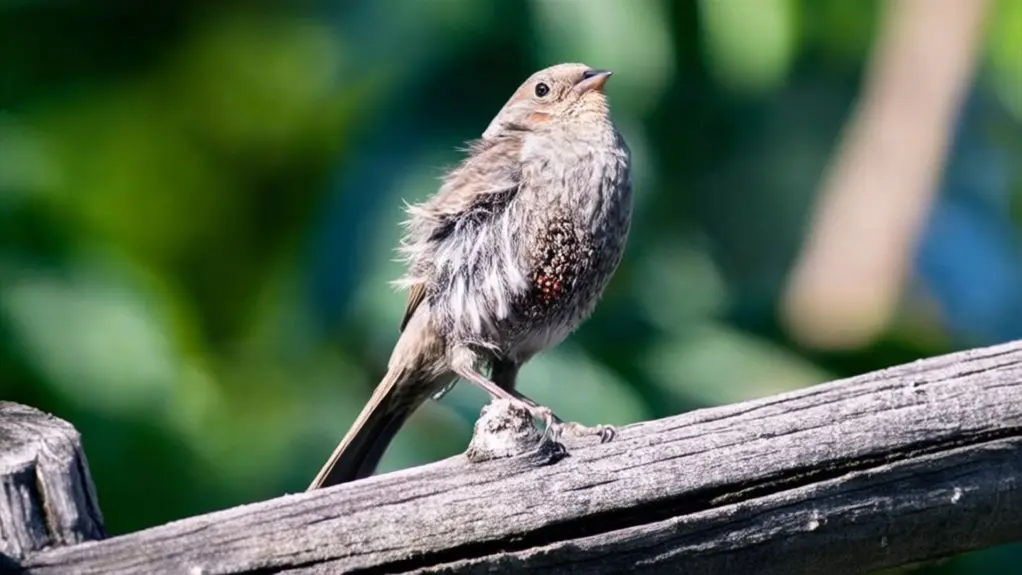
Yes, birds can get ringworm, a fungal infection that affects their skin, feathers, and nails. You might notice circular or scaly patches, feather loss, and skin irritation. This usually shows up on the head, beak, and wattles.
The fungus spreads through direct contact or contaminated environments. It can be risky for both birds and humans, so it’s important to be careful.
Treating ringworm involves antifungals and keeping everything really clean. If you want to know more about the signs, risks, and treatments, keep reading this important health topic.
What Is Ringworm and Can Birds Get It?
Although ringworm is commonly mistaken for a worm infestation, it’s actually a fungal infection known as dermatophytosis that affects the skin, feathers, and nails of birds.
Birds usually get this infection through direct contact with infected animals or contaminated environments, like cages and perches.
Birds often catch ringworm from direct contact with infected animals or dirty cages and perches.
Keeping your bird’s cage clean is super important to reduce fungal spore buildup and lower the risk of infection.
Along with that, feeding your bird a balanced diet helps boost their immune system, making it easier for them to fight off fungal pathogens.
If you think your bird might’ve ringworm, it’s best to get a diagnosis confirmed through a fungal culture or by examining the affected tissue under a microscope.
Starting antifungal treatment quickly, along with thorough cleaning, helps stop the infection from spreading among your birds.
What Ringworm Looks Like on Birds
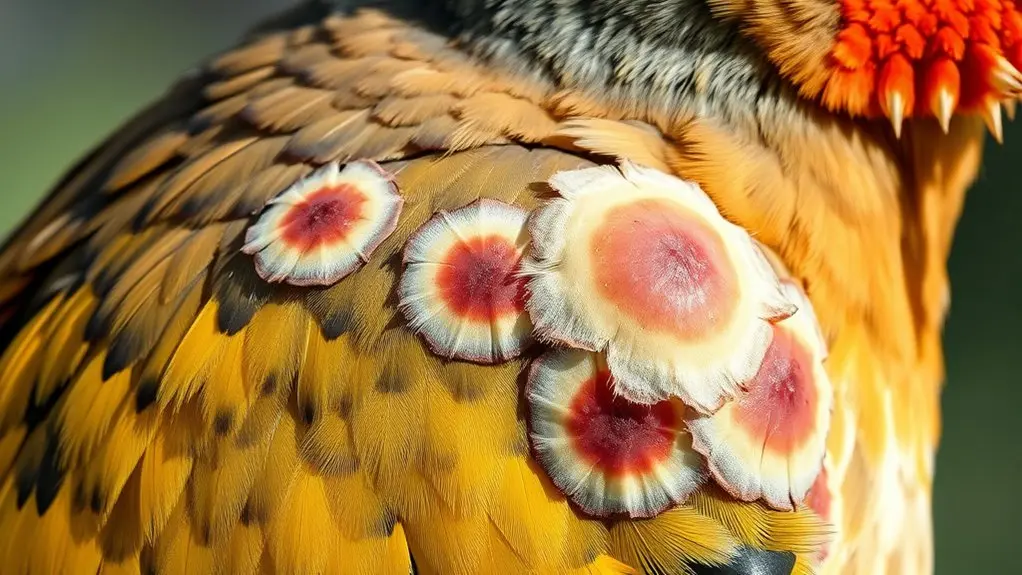
You’ll notice ringworm on birds as circular or irregular patches where feathers are missing, often with crusty, scaly skin. These spots can cause some mild itching and irritation, though symptoms might be different depending on the bird.
Keep an eye especially on areas like the comb and wattles. That’s where you might see white, powdery spots or scabs starting to form.
Common Skin Lesions
When examining common skin lesions on birds, ringworm stands out because of its distinctive appearance. You’ll often see circular or irregular patches of feather loss accompanied by scaling and crusting. White, powdery spots or crusty scabs usually show up on the head, wattle, or other exposed skin areas.
The affected skin might look reddened, inflamed, and itchy. Feather breakage often happens around the edges of the lesions. These signs can look like bacterial infections, but ringworm is actually fungal in origin.
Keeping your bird’s nutrition on point is important because it supports their immune system. A strong immune system helps your bird fight off infections more effectively.
Just as important is keeping the cage super clean to cut down on fungal spores in the environment, which helps prevent these lesions from developing.
Catching these lesions early means you can get your bird treated sooner, which reduces discomfort and stops the infection from spreading. It’s a good idea to keep an eye on both the lesion’s characteristics and the bird’s surroundings to manage ringworm well.
Feather Loss Patterns
If you notice circular or irregular patches of feather loss on your bird, especially with a clear edge and crusted or scaly skin, ringworm may be the cause. These lesions often begin as small bald spots that enlarge and sometimes merge, leading to more extensive feather loss.
You might also observe dandruff or a powdery residue on affected areas, indicating compromised feather health.
Changes in your bird’s preening habits can worsen these patterns, as affected birds may struggle to maintain normal feather condition.
Key features of feather loss in ringworm include:
- Distinct, well-demarcated bald patches with crusting
- Redness and inflammation at lesion margins
- Subtle dullness or patchiness without obvious baldness
Keeping an eye on these signs helps you catch ringworm’s impact on feather health early.
Itching And Irritation
Although ringworm primarily causes feather loss, it also triggers significant itching and irritation in birds. You’ll notice affected birds exhibiting increased scratching, rubbing, or even feather plucking due to skin discomfort. The circular lesions often appear red, flaky, or crusty, reflecting the fungal infection’s impact on the feather condition and surrounding skin.
This altered bird behavior signals irritation and may lead to secondary injuries or infections if untreated.
| Symptom | Bird Behavior |
|---|---|
| Circular hairless patches | Scratching and pecking at lesions |
| Red, flaky skin | Increased rubbing or feather plucking |
| Itching sensation | Restlessness and discomfort |
Keep an eye out for these signs—they help you catch ringworm early and protect your bird’s health effectively.
Common Areas on Birds Where Ringworm Appears
Because ringworm thrives on exposed skin, you’ll most commonly find lesions on the bird’s head, including the comb, wattle, and facial areas. The infection often causes featherless patches that disrupt normal feather patterns, especially on the scalp and crown.
You might also notice beak crusts and powdery lesions around the eyes and beak skin.
Key affected areas include:
- Head regions: comb, wattle, facial skin with disrupted feather patterns
- Periorbital and beak zones exhibiting crusts and scaling
- Occasionally, the vent or underside, particularly if contaminated environments are involved
Lesions typically remain localized but can extend if untreated, affecting both feathered and bare skin.
How Ringworm Spreads Among Birds and Humans
You can catch ringworm from birds mostly by touching them directly if they’re infected, or by coming into contact with things they’ve used, like cages and bedding. The fungi that cause ringworm are pretty tough—they can stick around in the environment for months.
This means the risk of spreading the infection goes up, especially in places where birds and people are close together, like on poultry farms or in homes with pet birds.
Transmission Routes Between Species
When you handle birds or their environments without proper precautions, you risk contracting ringworm through direct skin contact with infected animals or contaminated objects. Transmission happens mainly through contact with fungal spores that stick around on surfaces like cages, bedding, and grooming tools.
Bird grooming behaviors can spread spores among birds. Plus, poor avian nutrition may weaken their immune defenses, making them more likely to get infected.
Key transmission routes include:
- Direct contact during bird grooming or handling
- Exposure to contaminated surfaces and tools
- Shared living or breeding environments that help spores move around
To minimize cross-species transmission, you need to disinfect all equipment and living spaces regularly.
Knowing these routes helps you take effective biosecurity steps to protect both birds and humans from ringworm infections.
Risk Factors For Spread
Although ringworm can spread through various means, certain risk factors substantially increase its transmission among birds and humans. Direct contact with infected birds or contaminated cages makes it easier for the fungus to spread, especially when cage hygiene is poor. Young, stressed, or immunocompromised birds with suboptimal nutrition are more vulnerable.
The fungi can persist on surfaces, which ups the chances of indirect transmission. Humans can catch ringworm by coming into contact with contaminated feathers or skin. Keeping cages clean and providing good nutrition helps reduce both susceptibility and environmental contamination.
| Risk Factor | Impact on Spread |
|---|---|
| Poor Cage Hygiene | Fungal persistence on surfaces |
| Direct Bird Contact | Immediate transmission between birds |
| Compromised Immunity | Increased susceptibility in birds |
| Suboptimal Nutrition | Weakens bird immune defense |
| Human Contact | Cross-species infection risk |
Preventing Cross-Species Infection
Because ringworm spreads through direct contact with infected birds or contaminated environments, preventing cross-species infection requires strict hygiene and management practices. You must focus on maintaining impeccable cage hygiene to eliminate fungal spores persisting on bedding, cages, and tools.
Also, supporting bird nutrition enhances immune defenses, which reduces their susceptibility to infection.
To minimize transmission, implement these key measures:
- Regularly clean and disinfect cages, feeders, and perches with antifungal agents.
- Isolate infected birds promptly to prevent contact with healthy flock members.
- Practice thorough handwashing after handling birds or cleaning their habitats to protect yourself.
Signs of Ringworm Infection in Pet Birds
If your pet bird develops circular or irregular patches of feather loss accompanied by crusty or scaly skin, it may be showing signs of ringworm infection. You might also notice reddened, inflamed skin with flaky debris, especially on the comb or head.
Infected birds often scratch or peck affected areas, which can make the irritation worse. Sometimes, the symptoms can be subtle, like dull plumage or slight skin abnormalities without clear feather loss.
Monitoring your bird’s diet and keeping the cage very clean are really important to help recovery and prevent the infection from spreading.
| Symptom | Description |
|---|---|
| Feather loss | Circular or irregular patches |
| Skin condition | Crusty, scaly, reddened, flaky |
| Behavioral signs | Scratching, pecking at lesions |
Catching it early makes managing the infection much easier.
How to Diagnose Ringworm in Birds
Recognizing the signs of ringworm in your bird is only the first step; confirming the diagnosis requires specific procedures. You should begin with a thorough visual exam of skin shedding and affected bird feathering, noting lesion severity and distribution.
A Wood’s lamp can provide quick screening but isn’t conclusive since not all dermatophytes fluoresce. For accurate diagnosis, collect samples of feathers or skin flakes and submit them for fungal culture, which is the definitive test despite its lengthy turnaround.
You can also use microscopic analysis to detect fungal elements quickly or PCR testing to precisely identify the dermatophyte species.
It’s a good idea to consider environmental factors and potential infection sources during your assessment.
Laboratory confirmation is essential to differentiate ringworm from other dermatoses and guide further management effectively. So, don’t rely on just one method—combining approaches gives you the clearest picture.
How to Treat Ringworm in Birds
You’ll want to apply topical antifungal medications like miconazole or clotrimazole directly to the affected areas.
If the infection is more severe, your vet might prescribe systemic treatments, such as itraconazole.
It’s really important to thoroughly clean and disinfect your bird’s environment to get rid of any fungal spores and help prevent reinfection.
On top of that, supportive care—like clipping the feathers around the lesions—can make the medication work better and help your bird recover faster.
Antifungal Medication Options
How do you effectively treat ringworm in birds? You rely on specific antifungal options and follow established treatment protocols to make sure you get good results.
Topical therapies like miconazole or clotrimazole creams are usually your first choice for localized infections.
If the case is more severe or widespread, oral antifungals such as itraconazole or terbinafine are typically prescribed.
Another option is enilconazole spray or dip, which works well as a topical treatment for avian dermatophyte infections.
Treatment usually lasts between 4 to 8 weeks, depending on how bad the infection is and how well the bird responds to therapy.
The main antifungal medication options include:
- Topical creams: miconazole, clotrimazole
- Oral agents: itraconazole, terbinafine
- Topical spray/dip: enilconazole
Sticking to these protocols helps ensure you manage ringworm in birds effectively and with targeted care.
Environmental Cleaning Importance
Why is environmental cleaning essential when treating ringworm in birds? Thorough environmental cleaning eliminates fungal spores, preventing reinfection and promoting recovery.
You need to establish strict cleaning schedules to regularly wash and disinfect cages, perches, bedding, and tools using antifungal solutions like diluted bleach or commercial fungicides.
Adhering to effective disinfection protocols ensures removal of organic debris and replacement of contaminated substrates, markedly reducing the fungal load.
It’s critical to maintain this routine frequently during active infection and continue post-treatment to eradicate spores completely.
Additionally, controlling ventilation and humidity levels supports environmental hygiene by limiting fungal proliferation.
Supportive Care Measures
When treating ringworm in birds, what supportive care measures can enhance recovery and prevent recurrence? Beyond applying topical antifungals like miconazole, you should focus on nutritional support and stress reduction to boost the bird’s immune defense. Clipping feathers near lesions improves medication efficacy and fungal load reduction.
Maintaining an environment with appropriate humidity and minimal stressors helps support healing. It’s really about creating the best conditions for your bird to fight off the infection.
Key supportive care measures include providing immune-boosting supplements such as vitamin A and probiotics for enhanced resistance. You’ll also want to ensure regular cleaning and disinfection of the habitat to prevent reinfection.
Reducing environmental and handling stress is important too, as it helps optimize immune function.
When you implement these measures alongside antifungal treatment, you’re giving your bird the best chance for a rapid recovery and a decreased risk of ringworm coming back.
How to Prevent Ringworm in Your Bird’s Environment
Although ringworm is a common fungal infection in birds, you can greatly reduce the risk by keeping their environment clean and well-ventilated. Regularly disinfect cages, perches, and accessories with antifungal solutions. Make sure to replace soiled bedding and cage decorations promptly.
Good ventilation is key because it controls humidity, which helps stop fungal growth. Try to avoid overcrowding your birds and quarantine any new or sick ones. Feeding your bird a balanced diet also supports their immune health and works hand in hand with keeping their environment clean.
| Prevention Step | Action Required | Frequency |
|---|---|---|
| Cage & Accessories | Clean with antifungal disinfectant | Weekly |
| Bedding & Toys | Remove soiled items | Bi-weekly |
| Ventilation | Ensure airflow, reduce humidity | Continuous |
| Bird Interaction | Limit contact, quarantine new birds | As needed |
| Diet & Environment | Provide balanced diet and clean decor | Daily |
Ringworm Risks Between Birds and Humans
Since ringworm is a contagious fungal infection, you should understand the risks it poses not only to your birds but also to yourself and others in close contact. The fungus can transfer via direct contact with infected lesions or contaminated surfaces. This is especially true during routine feather grooming or handling.
Ringworm spreads through direct contact with infected birds or contaminated surfaces, especially during grooming or handling.
Bird migration can spread the fungus across regions, increasing environmental contamination.
You should be aware that humans, particularly children and immunocompromised individuals, are more vulnerable to infection. The fungus can survive on cage materials and perches, which helps indirect transmission.
Close contact without proper hygiene, like not washing your hands after cleaning cages, increases the risk of spreading it between species.
Promptly treating infected birds and disinfecting their environments reduces transmission risks. This protects both avian and human health.
When Should You Take Your Bird to the Vet?
If you notice any circular or irregular patches of feather loss, dandruff, redness, or skin lesions on your bird, you should promptly schedule a veterinary examination. These symptoms may indicate ringworm or other dermatological issues that need a professional diagnosis. It’s important to act quickly when you see these signs.
Seek immediate care if your bird is itching, scratching, or seems uncomfortable. If the lesions persist or get worse despite using topical treatments, it’s time to see the vet. Proper diagnosis is key to stopping the infection from spreading to other pets or family members.
Also, keep an eye out for signs of secondary bacterial infection, like swelling or pus. Taking good care of your bird’s nutrition and keeping their cage clean helps boost their immune system and lowers the risk of infection.
Early veterinary intervention makes a big difference in managing the problem and keeping your bird healthy.
Frequently Asked Questions
Can Ringworm Cause Permanent Damage to a Bird’s Feathers?
Yes, ringworm can cause permanent feather damage if untreated. It can lead to chronic skin irritation and weakened feather follicles.
You need to diagnose and treat it early to prevent lasting harm to your bird’s feathers and skin integrity. Acting quickly really makes a difference.
Are Certain Bird Species More Susceptible to Ringworm?
Of course, bird species don’t audition for ringworm roles, but susceptibility factors like dense environments and keratin-rich skin make parrots and pigeons prime candidates.
You’ll find immunity and hygiene dramatically influence their vulnerability, too.
How Long Does Ringworm Typically Last in Birds?
Ringworm typically lasts 4 to 12 weeks in birds, depending on the species and how the infection spreads.
You’ll need consistent antifungal treatment along with regular environmental cleaning to stop it from spreading.
This approach helps ensure your bird fully recovers from the infection.
Can Ringworm Reoccur After Treatment in Birds?
Like a shadow that lingers, ringworm infection can reoccur in birds if you don’t maintain feather health and thoroughly disinfect environments.
Prevent infection recurrence by completing treatment and controlling fungal spores in their habitat consistently. It’s all about staying on top of things and keeping their space clean. That way, you help your feathered friends stay healthy and happy.
Do Natural Remedies Work for Treating Bird Ringworm?
Home remedies and herbal treatments might soothe your bird’s skin but won’t reliably eliminate ringworm.
You shouldn’t depend on them alone. Veterinary-prescribed antifungal medications and proper sanitation ensure effective treatment and prevent recurrence.
Conclusion
Don’t underestimate ringworm. It’s not just a minor itch but a contagious fungal menace that can spread rapidly between your birds and even to you. If left unchecked, it can wreak havoc on their skin and feathers. This causes discomfort and potential health complications.
Stay vigilant by spotting symptoms early, maintaining strict hygiene, and seeking prompt veterinary care. Protect your feathered friends and yourself from this microscopic invader before it spirals out of control.