
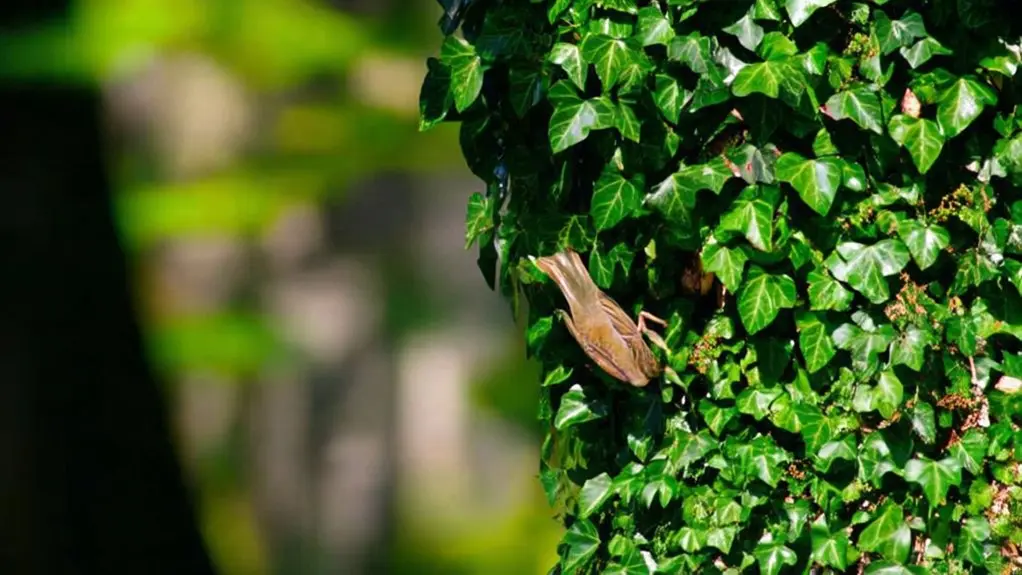
You can’t get poison ivy from birds because they don’t develop rashes from it. Their skin lacks the receptors needed to react to urushiol, the oily resin in poison ivy that triggers allergic responses in humans. Birds’ immune systems simply don’t recognize urushiol as a threat, allowing them to safely eat the plant’s berries and nest among its vines.
It’s pretty interesting when you think about it. This unique interaction shows some important ecological roles and benefits that go beyond what you might expect. Birds help spread the seeds, and they get a safe place to nest too. Nature’s way of working together, right?
What Is Poison Ivy?
Although poison ivy often appears harmless, it contains urushiol, an oily resin that triggers allergic skin reactions in humans.
Poison ivy may seem harmless but contains urushiol, an oily resin causing allergic skin reactions in people.
For accurate poison ivy identification, note its characteristic clusters of three leaflets, which vary from shiny to dull depending on the season. The plant grows as a vine with hairy aerial roots or as a low shrub.
Its leaves shift to red, orange, or yellow in fall, aiding seasonal recognition. Understanding these traits helps you avoid contact and assess environmental impact.
Poison ivy also influences bird habitat impact; its dense growth provides shelter and food sources for various bird species.
Recognizing poison ivy’s physical features is essential for studying its ecological role and minimizing human allergic reactions.
Why Poison Ivy Affects Humans But Not Birds
Because poison ivy produces urushiol oil specifically as a defense mechanism against certain mammals, humans experience allergic reactions when exposed, while birds remain unaffected. This oil triggers immune responses in mammals, but birds’ physiology lacks the specific receptors that cause such reactions.
During bird migration, many species consume poison ivy berries without harm, relying on these fruits as an energy source. Additionally, birds’ nesting habits often bring them into contact with poison ivy plants, yet they don’t suffer adverse effects from the plant’s oils.
This difference highlights a coevolutionary adaptation: poison ivy deters mammals but allows birds to disperse its seeds safely. Understanding this distinction clarifies why poison ivy’s toxicity is mammal-specific, protecting the plant while supporting avian species during migration and nesting periods.
How Poison Ivy’s Urushiol Oil Causes Rashes in Humans But Not Birds
When urushiol oil from poison ivy contacts human skin, it binds to proteins and triggers an immune hypersensitivity reaction, leading to the characteristic itchy rash. This happens because human skin receptors help urushiol get absorbed, allowing the chemical to modify skin proteins.
Your immune system then sees these changed proteins as foreign invaders. That kicks off a chemical immunity response, which causes inflammation and dermatitis.
In contrast, birds don’t have the specific skin receptors needed for urushiol absorption. So, the oil can’t penetrate their skin or feathers.
Their immune systems don’t recognize urushiol as a threat, which means they don’t have an allergic reaction. This difference in skin receptors and immune response explains why urushiol causes rashes in humans but leaves birds unaffected.
Why Birds Don’t Get Rashes From Poison Ivy Exposure
The absence of specific skin receptors in birds prevents urushiol, the irritant oil in poison ivy, from binding to their skin or feathers. This key difference explains why you won’t see birds suffering from poison ivy rashes. Their avian immunity operates through several mechanisms.
First, birds lack urushiol-sensitive skin receptors, which blocks allergic reactions. Then, their feathers act as a physical barrier, protecting them from direct oil contact.
Birds don’t have urushiol-sensitive receptors, and their feathers shield them from poison ivy oil.
On top of that, their immune systems don’t recognize urushiol as a threat.
Also, the chemical makeup of bird skin differs from that of mammals, making them less sensitive.
Together, these factors mean birds neither develop rashes nor experience irritation from poison ivy exposure.
It’s pretty amazing how their biology works. This resilience shows how avian immunity and feather protection uniquely safeguard birds from urushiol’s effects, which is very different from how humans react.
Can Birds Eat Poison Ivy Berries Safely?
Although poison ivy’s urushiol oil irritates human skin, birds can safely consume its berries without any adverse effects. Unlike humans, birds are immune to urushiol, allowing poison ivy berries to serve as a vital winter food source in their diet, especially in coastal regions.
These berries are a natural component of poison ivy’s reproductive cycle and don’t trigger allergic reactions or skin irritation in birds. Incorporating poison ivy berries into their diet poses no health risks, enabling various bird species to rely on them during scarce food periods.
So, poison ivy berries actually contribute beneficially to the bird diet, supporting avian nutrition without harmful consequences.
You can confidently observe that birds eating poison ivy berries experience no negative effects, confirming the safety of this food source in their natural diet.
How Birds Interact With Poison Ivy in the Wild
Because birds remain unaffected by poison ivy’s urushiol oil, they interact with the plant primarily as consumers of its berries, especially during winter months when alternative food sources dwindle. You’ll observe that during bird migration, species rely on these berries for sustenance.
Birds rely on poison ivy berries as a crucial food source during winter and migration.
Additionally, poison ivy often provides materials for nest building, as birds use flexible vines and leaves without harm.
In the wild, your observations might include:
- Birds feeding on ripe poison ivy berries during scarce food periods.
- Utilization of poison ivy vines in constructing nests.
- No adverse effects noted despite close contact with the plant.
- Increased berry consumption coinciding with migratory stopping points.
These interactions highlight poison ivy’s ecological role in supporting avian survival during critical life stages. It’s pretty fascinating how such a plant, often seen as a nuisance to humans, plays a vital part in the lives of birds.
Common Myths About Birds and Poison Ivy Debunked
Understanding how birds interact with poison ivy sets the stage for addressing widespread misconceptions about these interactions. Contrary to popular belief, birds aren’t harmed by poison ivy; they don’t experience allergic reactions to urushiol oil, the compound toxic to humans.
During bird migration, many species consume poison ivy berries without adverse effects, using them as a reliable food source.
Additionally, birds’ nesting habits often bring them into contact with poison ivy plants, yet they neither absorb nor react to the plant’s toxins.
Even when poison ivy is burned, the resulting smoke, harmful to humans, poses no threat to birds.
These facts debunk myths suggesting birds can get poisoned or harmed by poison ivy, highlighting their unique biological adaptations to coexist safely with this plant.
Precautions for Pet Owners Handling Poison Ivy Near Birds
When you handle poison ivy near your birds, it’s really important to take proper precautions. This helps prevent transferring urushiol oil to yourself or your pets. Birds are immune to poison ivy, but human skin contact with the oil can cause serious reactions. So, you want to be careful.
Here are some steps to follow when removing poison ivy around your bird habitat:
- Wear gloves and long sleeves to keep your skin covered.
- Avoid burning poison ivy near birds because the smoke is toxic and harmful to breathe in.
- Wash your hands and clothes thoroughly with soap and water right after you’re done handling the plant.
- Make sure the bird habitat doesn’t have any contaminated tools or debris before you go back to it.
Taking these simple steps keeps both you and your birds safe while dealing with poison ivy.
Why It’s Important to Know Birds Are Immune to Poison Ivy
You should know that birds are naturally immune to poison ivy, which means they can interact with the plant without any allergic reactions. It’s pretty interesting when you think about it!
Because of this immunity, birds can safely eat poison ivy berries, especially during the colder months when other food sources are scarce.
Understanding this helps you see just how important poison ivy is in supporting wildlife. Plus, it plays a key role in keeping the ecosystem balanced.
Birds’ Natural Immunity
Although poison ivy poses a significant allergic threat to humans due to urushiol, birds don’t experience the same sensitivity because their skin lacks the receptors that trigger this reaction. This natural immunity is essential for several reasons.
Birds safely consume poison ivy berries, aiding seed dispersal during bird migration. They brush against poison ivy while nest building without allergic reaction. Their droppings spread seeds, supporting poison ivy’s ecological role in coastal habitats.
Plus, this immunity allows birds to access a crucial food source that’s unavailable to many other species. It’s pretty amazing how nature works, right?
Safe Wildlife Interactions
Because birds are immune to poison ivy’s urushiol oil, they can interact with the plant without risk of harm. This immunity allows birds to safely consume poison ivy berries, which are an important food source during winter and migration periods.
Understanding this fact helps you avoid unnecessary concern when you see birds near poison ivy patches.
During bird migration, access to these berries can support their energy needs. Plus, nesting habits often bring birds into close contact with poison ivy without any adverse effects.
It’s pretty amazing how birds don’t develop allergic reactions or skin irritation from poison ivy.
Knowing this lets you appreciate their natural behaviors without fear. This knowledge also promotes safe wildlife interactions by reducing human interference.
It supports bird conservation efforts in habitats where poison ivy is common.
Ecological Role Awareness
While poison ivy poses risks to humans, its relationship with birds reveals a fundamental ecological dynamic that deserves your attention. Birds’ immunity to poison ivy allows them to safely consume its berries, supporting key ecological functions you should understand.
First, poison ivy provides essential winter food sources that sustain native bird populations during scarce seasons. It also facilitates bird migration by supplying energy-rich nourishment essential for long flights.
Plus, it enhances pollination opportunities indirectly, as birds disperse seeds to diverse habitats.
On top of that, poison ivy supports biodiversity by thriving in poor soils and coastal environments, creating resilient habitats.
Knowing birds aren’t affected by poison ivy toxin highlights the plant’s ecological value. This awareness helps you appreciate its role in maintaining healthy ecosystems, despite its toxicity to humans.
Frequently Asked Questions
Can Poison Ivy Affect Other Wildlife Besides Birds and Humans?
You won’t see poison ivy toxicity affecting most wildlife besides humans, as deer and small mammals tolerate it well.
Birds safely consume its berries, supporting bird habitat safety and ecological balance without harm from urushiol. So, it’s really only humans who need to watch out for this plant.
How Can Poison Ivy Be Safely Removed From Bird Habitats?
Think of poison ivy removal as carefully untangling a thorny knot in bird habitat safety. You’ll want to wear protective gear to keep yourself safe while working around the plants.
Uproot the poison ivy during its growth phase for the best results. Applying safe herbicides sparingly can help control the spread without harming the environment.
Don’t forget to clean your tools after each use. This protects both the birds and the surrounding ecosystem from any unintended damage.
Do Birds Help in Spreading Poison Ivy Plants?
Yes, during bird migration, you’ll see birds aiding plant dispersal by consuming poison ivy berries and carrying sticky seeds on feathers. This natural process effectively spreads poison ivy across diverse habitats.
It’s pretty interesting how these birds play a role in moving plants around. By spreading poison ivy, they actually influence ecosystem dynamics in different areas. Nature has its own ways of keeping things connected!
What Should You Do if a Bird With Poison Ivy Oil Lands on You?
If a bird with poison ivy oil contaminates your skin via its feather, immediately wash the area with soap and water.
Try not to touch your face because that could spread the urushiol oil or even cause you to ingest it by accident.
Just be careful and take action right away to avoid any irritation or rash.
Are There Any Birds That Avoid Poison Ivy Altogether?
Yes, some birds avoid poison ivy altogether, especially during bird migration when exposure to poison ivy toxins could be harmful. These species instinctively steer clear of areas with high urushiol concentrations to minimize risk.
It’s like they just know to stay away. Avoiding poison ivy helps them stay safe and healthy during their long journeys. So, you’ll find these birds choosing safer spots instead.
Conclusion
You might think birds could suffer from poison ivy like humans do, but they don’t. Urushiol, the oil that causes rashes in humans, simply doesn’t affect their skin or digestive systems.
While you should still avoid direct contact with poison ivy to protect yourself and pets, it’s good to know that birds safely eat the berries and interact with the plant without any harm. This highlights an important ecological relationship.
Knowing this helps you appreciate nature’s complexity without unnecessary worry. So, no need to stress about birds getting sick from poison ivy—they’re built to handle it just fine.