
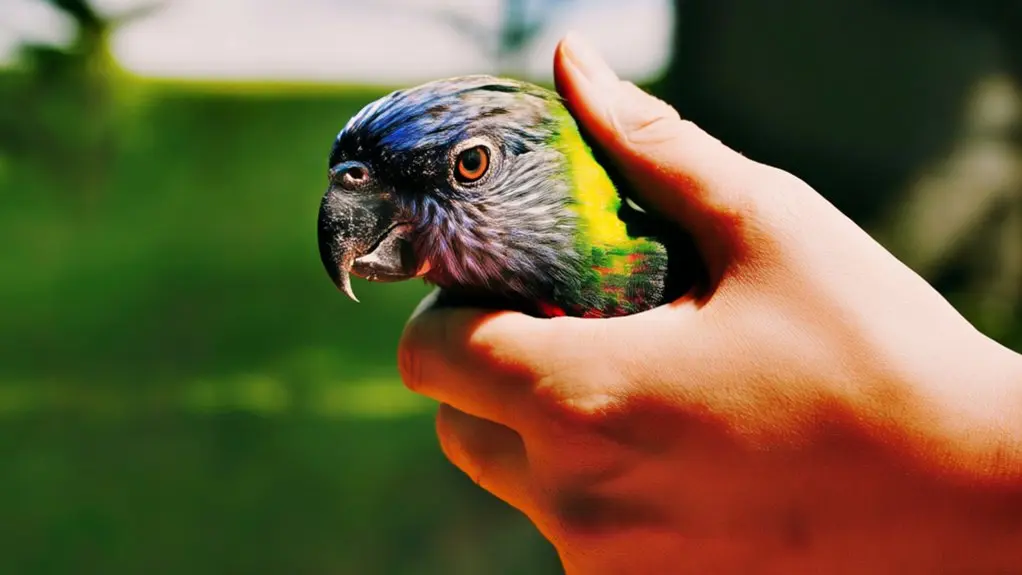
You won’t usually pass pink eye (conjunctivitis) to your bird because the germs causing it tend to be specific to each species. Birds mainly get conjunctivitis from their own bacteria, viruses, or fungi, not human ones.
Still, good hygiene and clean environments reduce any risk and support your bird’s eye health. If your bird shows eye issues, early care is key.
Understanding how conjunctivitis affects birds can help you protect their health better.
Can Birds Catch Conjunctivitis From Humans?
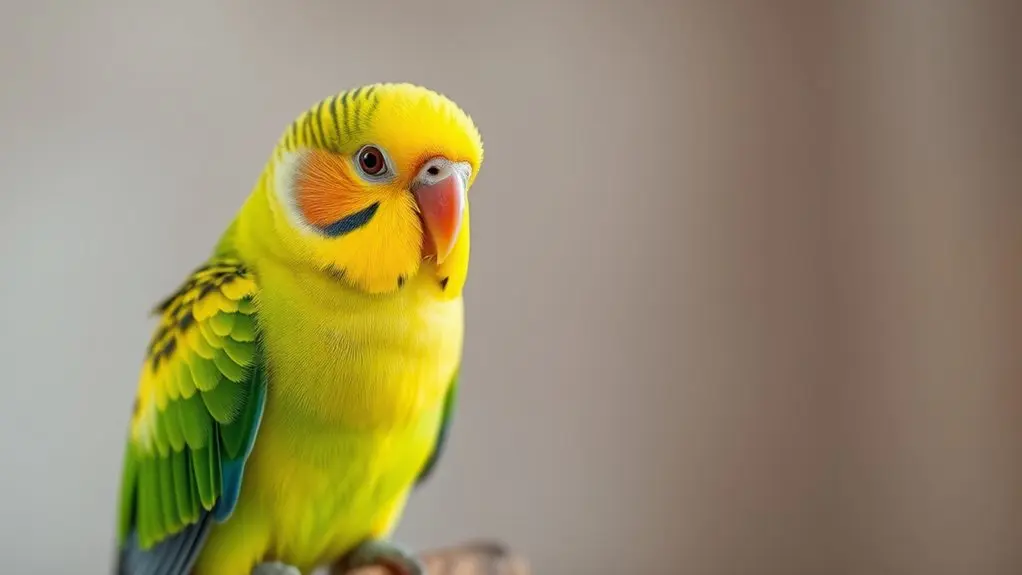
Although it’s natural to worry about transmitting infections to your pet bird, birds typically don’t catch conjunctivitis, or pink eye, directly from humans. The pathogens responsible for conjunctivitis tend to be species-specific, which limits cross-species transmission between humans and birds.
While zoonotic risks exist for some diseases, conjunctivitis is rarely transmitted this way.
Most bird conjunctivitis cases arise from avian-specific bacteria, viruses, environmental irritants, or trauma, rather than human infections. However, maintaining proper hygiene and avoiding direct contact with your bird’s eyes reduces any potential risk of transmitting infectious agents.
If your bird develops conjunctivitis, it’s more likely due to its own environment or health rather than human-derived infection. Understanding these dynamics helps prevent unnecessary worry about zoonotic conjunctivitis transmission.
Common Causes of Conjunctivitis in Birds
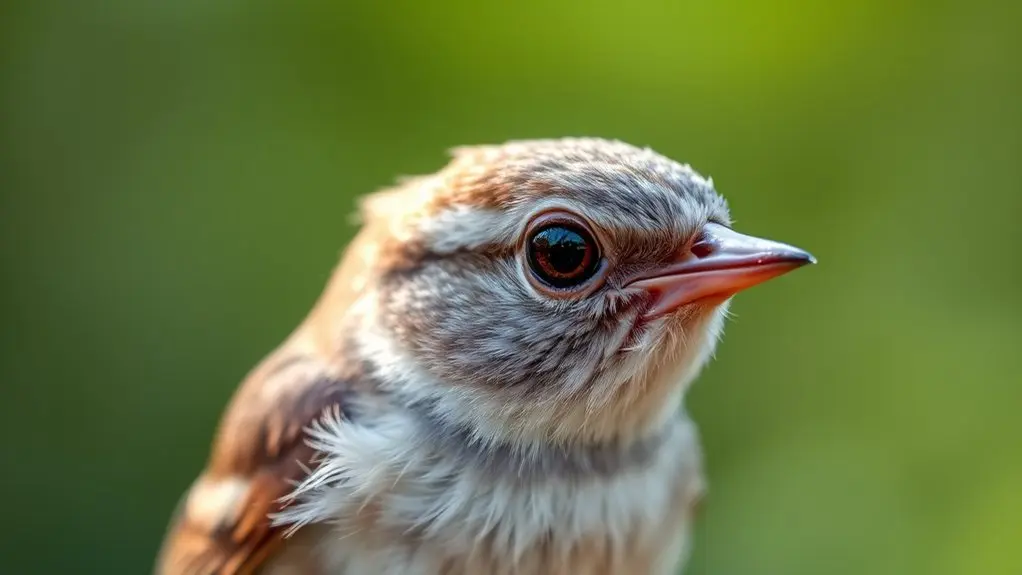
While human-to-bird transmission of conjunctivitis is uncommon, birds frequently develop this condition due to a variety of other factors. Bacterial infections, including Chlamydia and Staphylococcus species, are primary causes.
Viral agents like avian poxvirus can also induce conjunctivitis, often alongside systemic symptoms.
Viral agents such as avian poxvirus may cause conjunctivitis with accompanying systemic signs.
Fungal infections, such as Candida species, typically affect immunocompromised or stressed birds.
Parasitic infestations, like mites or protozoa, irritate the eyes and cause inflammation.
Trauma from physical injuries or chemical exposure further contributes to the problem.
Bird grooming habits can inadvertently spread pathogens to the eyes.
Also, nesting habits expose birds to environmental irritants and infectious agents.
Understanding these causes helps you see that conjunctivitis in birds arises from complex interactions rather than direct human contact.
How Bird-Specific Eye Infections Spread
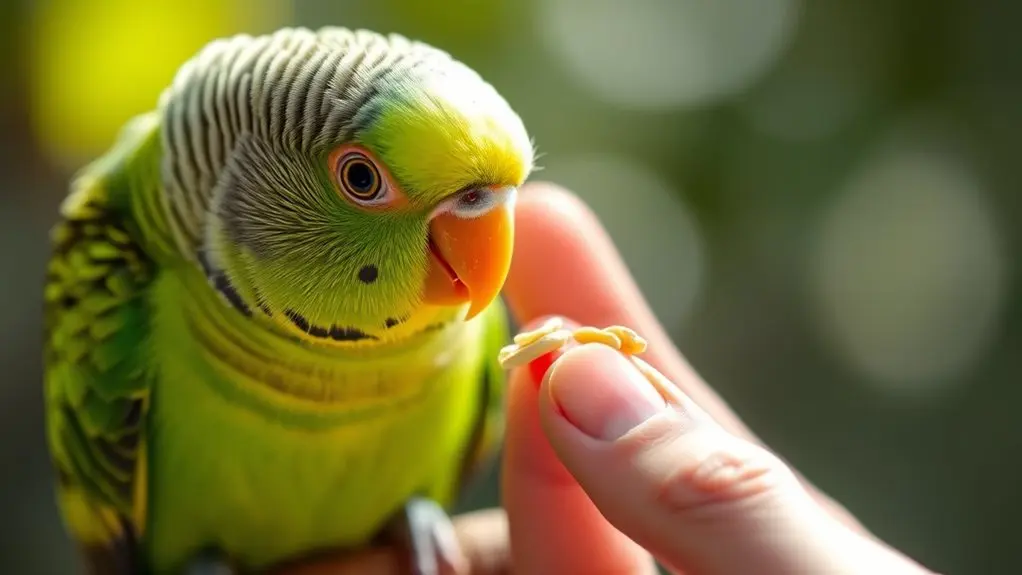
Because bird-specific eye infections often involve pathogens adapted to avian hosts, they primarily spread through direct contact with contaminated surfaces or infected birds. You should understand that genetic susceptibility plays a role in how birds respond to these infections. Some species or individuals may be more vulnerable due to their genetic makeup.
Environmental factors also considerably influence transmission. Poor cage hygiene or exposure to contaminated materials increases infection risk. Unlike humans, birds rarely contract these infections from people because many pathogens are species-specific.
To prevent spread, you need to disinfect cages regularly and avoid contact with infected birds’ eyes or secretions. Fungal and parasitic infections typically arise from environmental exposure rather than direct transmission.
Symptoms of Conjunctivitis in Birds
Understanding how bird-specific eye infections spread sets the foundation for recognizing their clinical signs. When conjunctivitis affects your bird, you’ll notice symptoms linked to bird eye anatomy and bird vision health. Look for thick, crusted discharge that can be white, tan, or cloudy.
Redness and swelling around the eye are typical indicators. Birds may blink rapidly, squint, or rub their eyes due to irritation. You might also observe lethargy or a loss of appetite as the infection worsens.
| Symptom | Description |
|---|---|
| Discharge | Thick, crusted, white/tan/cloudy |
| Redness & Swelling | Around the eye, indicating inflammation |
| Behavioral Changes | Squinting, head shaking, lethargy |
Close monitoring guarantees timely detection of complications. So, keep an eye on your feathered friend and don’t hesitate to consult a vet if you notice these signs.
Diagnosing Conjunctivitis in Birds
When you’re diagnosing conjunctivitis in birds, it all starts with a thorough physical exam and taking a good look at their environment. You want to understand any factors that might be contributing to the problem.
Then, you’ll use some diagnostic tests to get a clearer picture. Things like checking the tears, doing fluorescein staining, and taking cytology swabs can help spot infections or injuries.
All these steps work together to pinpoint the underlying cause, so you can choose the best treatment moving forward.
Examination Techniques
Although diagnosing conjunctivitis in birds can be challenging, a thorough physical examination provides critical information. You should carefully assess bird eye anatomy, noting redness, swelling, discharge, or cloudiness, which are signs of conjunctival inflammation.
Evaluating aviary hygiene also helps identify environmental contributors to infection.
You can perform tear tests and fluorescein staining to detect corneal or conjunctival damage. Measuring intraocular pressure assists in distinguishing conjunctivitis from other ocular diseases.
Cytology using swabs reveals bacterial, fungal, or parasitic agents causing inflammation.
If necessary, diagnostic imaging like X-rays or ultrasound evaluates deeper eye or head structures.
Diagnostic Testing Methods
Because accurately diagnosing conjunctivitis in birds relies on identifying the underlying cause, you’ll need to employ various diagnostic testing methods. Begin with tear tests, fluorescein staining, and intraocular pressure measurements to assess ocular health.
Swabbing the affected eye for cytology helps detect bacterial, fungal, or parasitic infections. You might also consider pupil dilation and advanced imaging like X-rays or ultrasound to evaluate structural abnormalities.
Blood tests can reveal systemic infections or nutritional deficiencies contributing to inflammation.
Keep in mind that genetic predisposition and environmental factors, such as exposure to irritants or allergens, can influence susceptibility.
A thorough veterinary evaluation integrating these diagnostic tools ensures you pinpoint the precise cause of conjunctivitis, allowing for an effective treatment plan tailored to your bird’s specific condition.
How to Prevent and Treat Conjunctivitis in Birds
To keep your bird from getting conjunctivitis, it’s important to maintain good hygiene and keep their living space clean.
Also, make sure they’re eating a diet that’s rich in vitamin A—it really helps support their eye health.
If you ever notice your bird’s eyes looking irritated or if there’s any discharge, don’t wait—take them to a vet as soon as possible so the infection can be treated properly.
One more thing: try to avoid sharing personal items and be careful not to touch your bird’s eyes directly. This can help lower the chances of the infection spreading.
Prevention Strategies
How can you effectively prevent conjunctivitis in your bird? Focus on bird behavior and environmental factors to reduce infection risks. Regularly wash your hands before handling your bird to avoid transferring bacteria or viruses.
Try to minimize direct contact with your bird’s eyes and face to prevent pathogen transmission. It’s important to keep their living space clean and dust-free to limit exposure to fungi, parasites, and airborne irritants that can trigger eye infections.
Pay attention to your bird’s natural behaviors and make sure its habitat supports good hygiene. Reducing stress is key because it can compromise their immunity.
Also, provide a balanced diet rich in vitamin A to support both eye and immune health.
If you notice any signs of eye inflammation, don’t wait—seek prompt veterinary care to manage potential conjunctivitis early and prevent things from getting worse.
Effective Treatment Options
When should you seek treatment for conjunctivitis in your bird to guarantee the best outcome? At the first sign of eye discharge or redness, consult a veterinarian immediately. Prompt diagnosis and treatment prevent permanent damage.
Treatment typically involves topical antibiotics like tetracycline or bacitracin. You should also consider nutritional support with vitamin A to boost your bird’s immune system. Monitoring bird behavior is essential; lethargy or eye rubbing signals discomfort.
Environmental factors such as irritants or unclean cages should be eliminated to promote recovery.
| Treatment Aspect | Description | Key Benefit |
|---|---|---|
| Antibiotics | Tetracycline or bacitracin | Effective bacterial control |
| Hygiene | Hand washing before handling | Prevents transmission |
| Environmental Control | Clean cage, avoid irritants | Reduces eye inflammation |
Frequently Asked Questions
Can Birds Transmit Pink Eye to Humans?
Yes, birds can transmit pink eye caused by bacteria like Chlamydia psittaci.
When you observe bird vocalizations or nesting behaviors, take precautions. Close contact increases your risk of acquiring zoonotic conjunctivitis infections. So, it’s a good idea to be careful around them.
Are Certain Bird Species More Prone to Eye Infections?
You’ll see some birds, like fragile parrots, bear delicate eye anatomy making them more prone to infections. Their bird immune defenses vary, so species with weaker immunity or stress often face higher risks of conjunctivitis.
It’s kind of like how some people get sick more easily than others. Stress and a weak immune system can really up the chances of eye problems in birds too.
Do Wild Birds Commonly Suffer From Conjunctivitis?
You won’t see wild birds commonly suffering from conjunctivitis, despite their bird nesting habits and feather coloration. Environmental factors cause occasional cases, but infections remain rare.
This is especially true when you compare wild birds to domesticated birds that receive direct human care. So, while it might seem like wild birds would get it more often, they actually don’t.
Can Environmental Allergies Cause Pink Eye in Birds?
You might see a bird’s eyes swell not from infection but allergy triggers like pollen. Bird immune responses cause irritation resembling pink eye, yet it’s non-infectious.
This condition usually improves with environmental changes and veterinary-prescribed antihistamines. So, if your bird’s eyes look red or swollen, it might just be allergies rather than an infection.
Is Pink Eye Contagious Among Different Bird Species?
Pink eye isn’t usually contagious among different bird species because pathogens target specific birds. When you manage bird grooming and feather health carefully, you reduce cross-species transmission risks. This keeps infections largely species-specific and controllable.
Conclusion
You might wonder if your pink eye could jump to your feathered friend. Here’s the truth: birds don’t catch conjunctivitis from humans. Their infections come from different bacteria or viruses unique to avian species.
But imagine the risk if you overlook signs in your bird. If left untreated, it can worsen quickly. So, vigilance is key.
Spot symptoms early, get a proper diagnosis, and act promptly. Your careful attention can make all the difference in their eye health.