
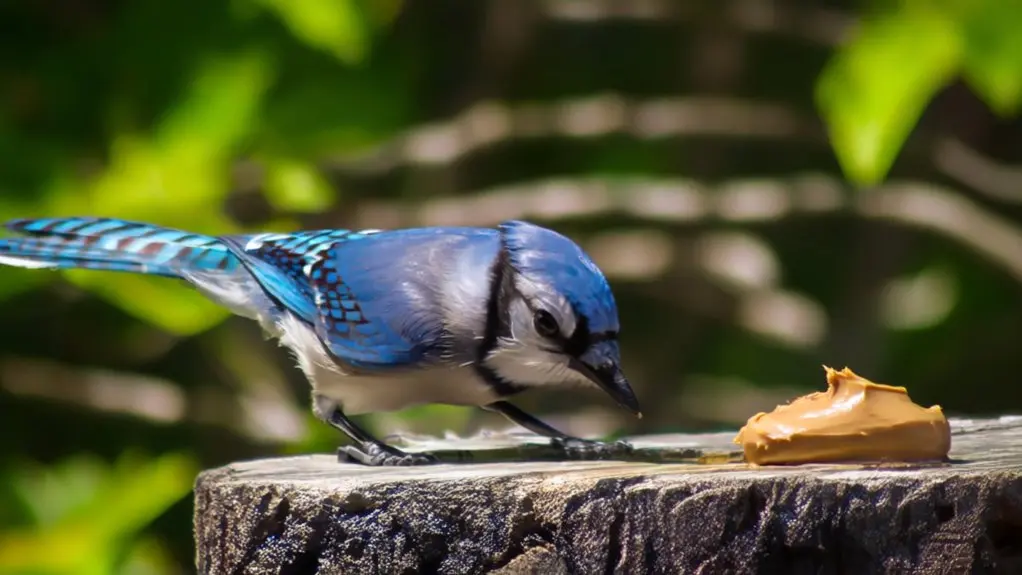
Yes, birds can get Salmonella from peanut butter if it’s contaminated or spoiled. The bacteria often enter through improper storage, mold growth, or expired products. Infected birds might show subtle signs like lethargy, ruffled feathers, or unusual droppings, though many appear healthy.
To protect your birds, use natural peanut butter, store it in a cool and dry place, and clean feeders regularly. Understanding how contamination happens helps you keep feeding stations safe and your birds healthy. There’s more to learn about preventing risks, so staying informed is key.
How Do Birds Get Salmonella From Peanut Butter?
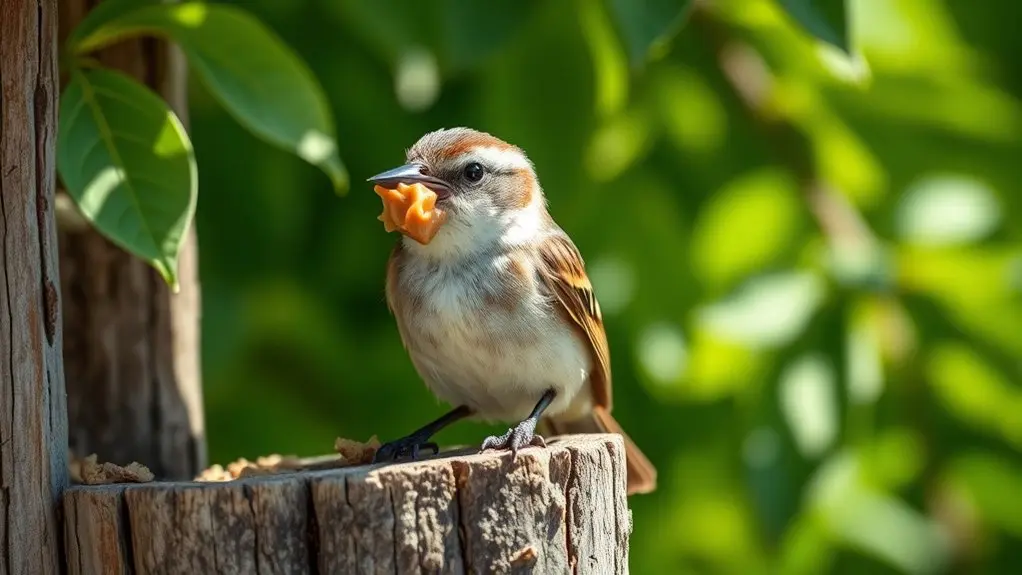
Although peanut butter is a popular treat for wild birds, you should know that it can harbor Salmonella bacteria if contaminated. Birds consume peanut butter as part of their diet, attracted by its high fat and protein content.
Peanut butter, loved by wild birds for its nutrients, can harbor harmful Salmonella if contaminated.
However, if the peanut butter becomes spoiled, moldy, or contaminated, often due to improper storage or expired products, Salmonella can survive and infect birds.
When birds eat contaminated peanut butter or come into contact with tainted feeder surfaces, they risk ingesting the bacteria. This can disrupt their bird diet balance and negatively affect feather health, leading to illness or weakened immunity.
To protect wild birds, it’s essential to provide fresh, uncontaminated food and clean feeders regularly. This way, you ensure their diet supports ideal health and vibrant feathers.
Why Can Peanut Butter Harbor Salmonella Bacteria?
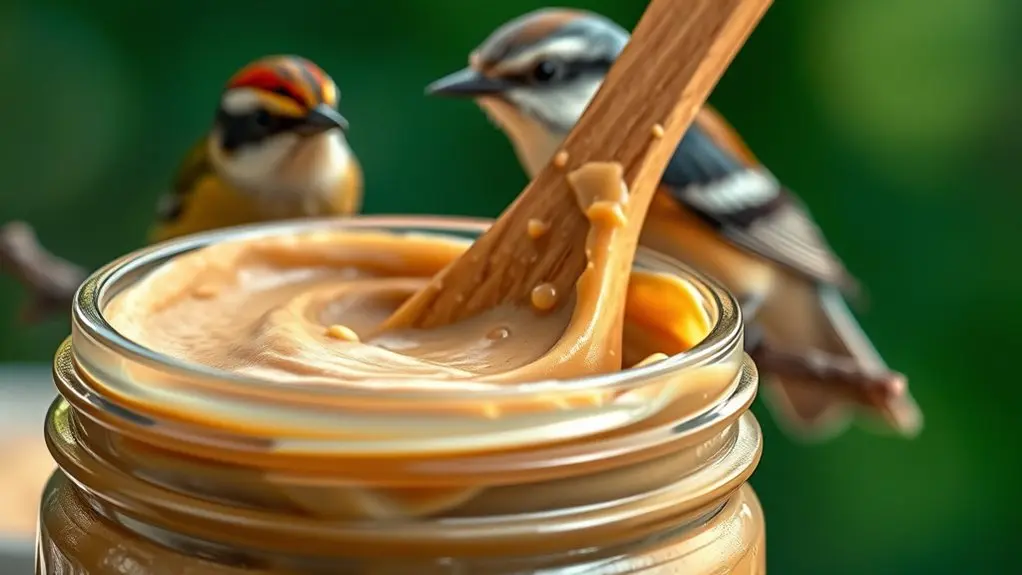
Because peanut butter contains high fat and low moisture, it provides an environment where Salmonella bacteria can survive if contamination occurs. During peanut farming, Salmonella can enter through infected soil, water, or improper handling, which makes hygiene critical at every stage.
If storage hygiene isn’t maintained during processing or packaging, bacteria can persist and multiply. Contaminated raw peanuts processed alongside clean batches risk cross-contamination, further spreading Salmonella into peanut butter.
Since the bacteria can survive in this unique environment, it’s essential to enforce strict cleanliness protocols throughout peanut farming, harvesting, and production.
Understanding these risks helps you appreciate why peanut butter, despite its texture and composition, can harbor Salmonella and pose a threat to birds if contaminated.
How to Spot Salmonella Infection in Your Birds
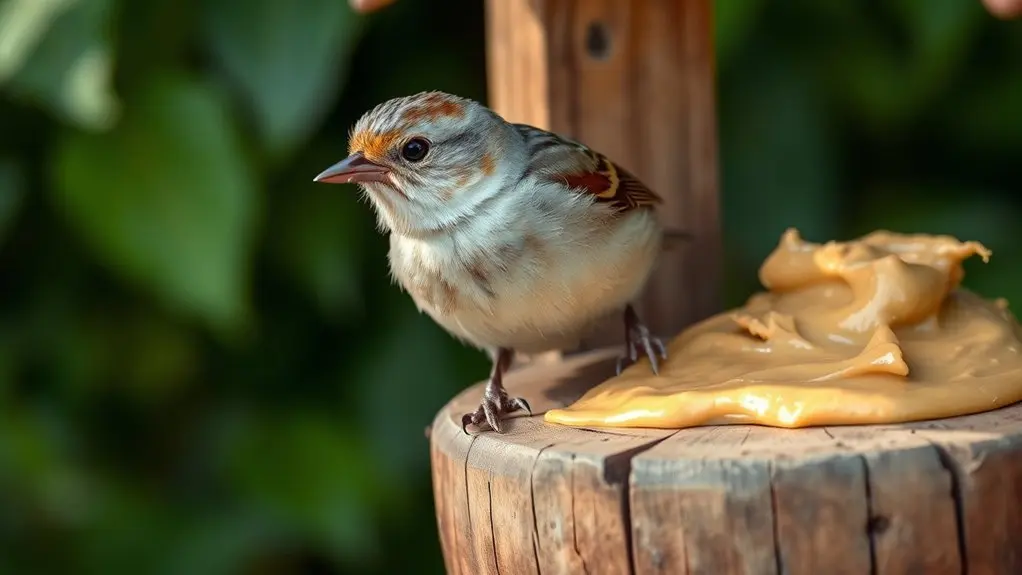
You mightn’t notice any signs when your birds carry Salmonella because they often don’t show symptoms.
But keep an eye out for changes like diarrhea, looking tired or sluggish, or droppings that seem unusual. These could be signs that something’s wrong.
To be sure it’s Salmonella, you’ll need to get lab tests done on fecal samples or cloacal swabs, which helps confirm the diagnosis accurately.
Symptoms Of Infection
When birds contract Salmonella, they may not always show obvious signs, which makes early detection a bit tricky. You might notice changes in feather coloration or disruptions in nesting habits. These can be clues that the bird is stressed or not feeling well.
Infected birds often look lethargic, with ruffled feathers and less activity than usual. Diarrhea and dehydration are pretty common. Younger or immunocompromised birds tend to show symptoms more clearly.
Since these signs can overlap with other diseases, it’s really important to keep a close eye on their behavior.
| Symptom | Description | Impact |
|---|---|---|
| Feather Coloration | Dull or ruffled feathers | Indicates poor health |
| Activity Level | Lethargy or decreased movement | Reflects weakness |
| Appetite | Loss of interest in food | Leads to malnutrition |
| Droppings | Abnormal consistency or color | Suggests digestive issues |
| Nesting Habits | Disrupted or abandoned nests | Sign of severe distress |
Diagnosing Salmonella In Birds
Noticing symptoms like lethargy, diarrhea, or changes in appetite can raise suspicion of Salmonella infection in birds, but these signs alone don’t confirm the diagnosis. Some infected birds may appear healthy or carry the bacteria without any symptoms.
So, relying on visible changes such as altered feather coloration or unusual behavior during bird migration isn’t enough.
To accurately diagnose Salmonella, laboratory testing is essential. This includes bacterial cultures from cloacal swabs or tissue samples.
If you see unusual bird mortality or signs of systemic illness like swollen joints, it’s important to seek veterinary testing promptly.
Understanding these diagnostic limits helps you protect your birds effectively. It’s good to remember that Salmonella’s impact can vary widely across different bird populations and conditions.
Which Types of Peanut Butter Are Safest for Birds?
Although many peanut butter varieties are available, natural or organic options with minimal additives are safest for birds. You should carefully check peanut butter ingredients, opting for those containing only peanuts and perhaps a pinch of salt. Avoid products with added sugars, preservatives, or artificial ingredients, as these can harm birds and disrupt proper bird feeding etiquette.
Crunchy peanut butter is preferable because its texture provides extra nutrients and mental stimulation for birds. Steer clear of low-fat or reduced-fat varieties, since birds need the full fat content to stay healthy.
By selecting pure, natural peanut butter, you support birds’ well-being and reduce risks associated with contaminated or inappropriate foods.
How Should You Store Peanut Butter to Keep It Safe?
Selecting the right type of peanut butter for birds is only part of ensuring their safety; how you store it plays a big role in preventing contamination and spoilage.
Store peanut butter in a cool, dry place away from direct sunlight to avoid rancidity. Always keep the jar tightly sealed after use, and use clean utensils to prevent bacteria from getting in.
Keep peanut butter cool, dry, sealed, and use clean utensils to prevent spoilage and contamination.
If you live in a warm or humid climate, refrigeration can help extend the shelf life of natural peanut butter.
Before you add it to your peanut butter recipes or change your bird feeding schedule, be sure to check for signs of spoilage like mold, off smells, or oil separation.
Proper storage doesn’t just keep peanut butter fresh—it also lowers the risk of Salmonella. That way, your feathered friends stay healthy and safe.
How to Serve Peanut Butter to Birds Without Risk
When you serve peanut butter to birds, taking careful steps can minimize health risks like Salmonella contamination. To safely offer this treat while preserving its nutritional benefits, follow these tips:
Smear peanut butter on clean tree bark or stuff it inside log feeders, making sure the surfaces are mold-free. You can also mix peanut butter with birdseed or cornmeal to create less sticky treats. These alternatives help reduce waste and make it easier for birds to eat.
Use small amounts in homemade suet or inside specialized feeders to avoid contamination and spoilage. Always avoid expired or moldy peanut butter, and keep an eye out for any signs of spoilage at feeding stations.
That way, you’re keeping the birds safe and happy!
How to Keep Peanut Butter Feeders Clean and Safe
Keeping peanut butter feeders clean and safe is essential to protect birds from harmful bacteria and mold. To maintain a healthy bird diet, clean your feeders thoroughly with soap and water at least once a month.
Disinfect them using a diluted bleach solution (9 parts water to 1 part bleach), making sure to soak or scrub all surfaces, then rinse well.
Let feeders dry completely before refilling with fresh peanut butter to prevent mold growth. It’s a good idea to monitor feeders regularly for signs of spoilage, especially during warm or humid weather.
Also, store leftover peanut butter in a cool, dry place and never use expired or rancid product.
Adjust feeding frequency based on season and bird activity to minimize contamination risks and support a safe feeding environment.
Which Bird Species Eat Peanut Butter?
Although many bird species enjoy a variety of foods, several are particularly drawn to peanut butter for its rich protein and fat content. Understanding which birds eat peanut butter helps you support their nutrition, especially during critical times like bird migration and nesting.
Here are four bird species commonly attracted to peanut butter:
- Woodpeckers, including species that rely on cavity-nesting, use peanut butter as an energy boost.
- Nuthatches, which often forage in woodland habitats, benefit from this high-fat food.
- Chickadees, known for their insectivorous diet, supplement with peanut butter during scarce winters.
- Blue jays, which migrate seasonally, seek peanut butter to sustain their energy.
How to Recognize and Respond to Salmonella Risks in Bird Feeding
You mightn’t always see clear signs when birds are carrying Salmonella, so it’s really important to pay attention to any subtle changes in their behavior.
Keeping your feeders clean is a big part of preventing the spread. Also, make sure to use fresh, uncontaminated peanut butter and disinfect feeding stations regularly to keep things safe.
If you do notice any sick birds around, it’s best to remove the food sources right away and reach out to wildlife experts. This way, you’re helping protect both the birds and yourself.
Identifying Contamination Signs
When feeding birds peanut butter, watch closely for signs that indicate Salmonella contamination, such as mold growth, a sour or rancid smell, or separation of oils. Bird feed contamination isn’t always visible, but peanut butter spoilage can be detected by these key indicators.
You should inspect peanut butter for any discoloration or mold before offering it to birds. Also, sniff for off odors that suggest rancidity or bacterial growth.
Observe if the peanut butter’s oils have separated unusually, signaling spoilage. And don’t forget to regularly replace old or suspect peanut butter to minimize infection risk. It’s better to be safe than sorry!
Safe Feeding Practices
Recognizing signs of spoiled peanut butter is an essential step, but knowing how to safely feed birds and respond to potential Salmonella risks goes beyond just inspection. Pay close attention to bird behavior. Sudden changes like lethargy or avoidance of feeders might signal contamination.
Environmental factors such as humidity and temperature can speed up spoilage. So, regularly clean and disinfect feeders using a bleach solution—9 parts water to 1 part bleach—to reduce bacterial buildup.
Always discard moldy or rancid peanut butter and wash your hands thoroughly after handling feed to minimize infection risk.
If you notice mold or suspect contamination, clean feeding areas right away. By combining careful observation with proactive hygiene and maintenance, you help protect both birds and yourself from Salmonella exposure effectively.
Responding To Illness
Although wild birds often carry Salmonella without showing symptoms, you should stay alert for signs of illness and act quickly to reduce risks. During bird migration and when feeding birds in urban areas, infection can spread fast.
To respond effectively, watch for lethargy, ruffled feathers, or unusual behavior in visiting birds. Clean and disinfect feeders and baths at least once a month to help stop Salmonella from growing.
Also, if you find any sick or dead birds, remove them safely and notify wildlife authorities right away.
And don’t forget to wash your hands thoroughly after handling feeders or birds—that’s important to keep yourself safe. Taking these steps can really help protect both you and the birds.
Frequently Asked Questions
Can Humans Get Salmonella From Handling Bird Peanut Butter Feeders?
Yes, you can get Salmonella from handling bird peanut butter feeders if hygiene slips. Bird health impacts bacterial resistance, so wash your hands, wear gloves, and clean feeders thoroughly to protect yourself and prevent spreading harmful bacteria.
It’s pretty easy to forget how important these simple steps are, but they really make a difference. Just a little care goes a long way in keeping both you and the birds safe. So, don’t skip on the cleaning and hand-washing!
Is Homemade Peanut Butter Safer for Birds Than Store-Bought?
You’ll find homemade peanut butter safer for bird dietary needs, as you control ingredients and reduce harmful additives. Proper hygiene lowers contamination risk compared to some peanut butter types, making it a healthier option for your feathered friends.
Plus, when you make it yourself, you can avoid added salt, sugar, or preservatives that birds don’t need. It’s all about giving them the best without any extras that might cause harm. So, homemade is usually the way to go if you want to keep your birds happy and healthy.
How Often Should I Replace Peanut Butter in Outdoor Feeders?
If you follow feeding schedules like replacing nuts every 2-3 days in hot weather, you’ll prevent spoilage. Nut replacement weekly in cooler climates guarantees birds stay safe and healthy while enjoying fresh peanut butter.
Keeping an eye on the weather helps a lot. When it’s hot, things can go bad faster, so changing the peanut butter often is a smart move. Cooler days mean you can wait a bit longer, but fresh food is always best for our feathered friends.
Can Other Nut Butters Also Cause Salmonella in Birds?
Yes, other nut butters can cause Salmonella in birds if they are contaminated. You should make sure to store nut butters properly to avoid this risk.
Also, keep in mind that birds have sensitive digestion. Choosing pasteurized nut butters can help reduce the chance of infection.
Taking these steps will help keep your feathered friends safe and healthy.
Are There Natural Additives to Prevent Bacteria in Peanut Butter?
You can find natural preservatives like rosemary extract and vitamin E in peanut butter, which help with bacterial growth inhibition. However, they don’t guarantee complete safety, so proper storage and hygiene are essential to protect your birds.
It’s great that these natural additives can slow down bacteria, but they’re not a magic fix. So, always keep your peanut butter stored properly and handle it with clean hands to keep your birds safe and healthy.
Conclusion
You might think peanut butter is a bird’s dream treat, but it can be a sneaky source of salmonella if not handled right. By choosing safe peanut butter, storing it properly, and keeping feeders spotless, you’re protecting your feathered friends from illness.
Stay vigilant for signs of infection and act promptly. With just a little care, you can safely enjoy feeding birds without turning your backyard into a bacterial battleground.