
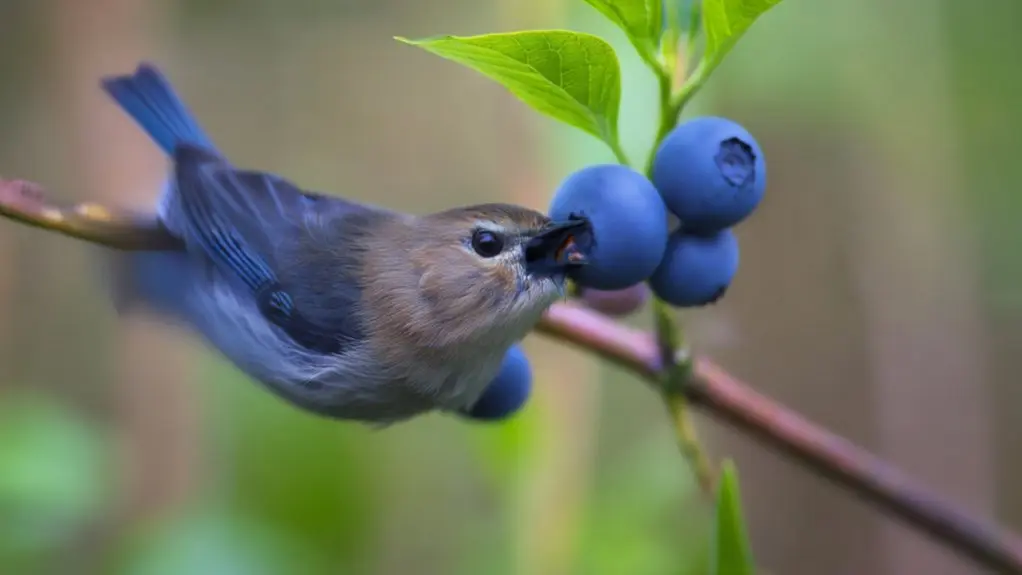
Yes, you can safely offer your bird fresh, pesticide-free blueberries in moderation. These berries provide antioxidants, vitamins C and K, minerals, and fiber that support immune health and cellular protection.
But remember, too many blueberries might cause digestive upset, weight gain, or allergic reactions. So, portion control is really important.
Make sure to serve clean, properly sized berries that suit your bird’s species. This helps avoid any health risks.
Keep watching closely because there’s more to understand about feeding blueberries wisely.
Are Blueberries Safe and Healthy for Birds?
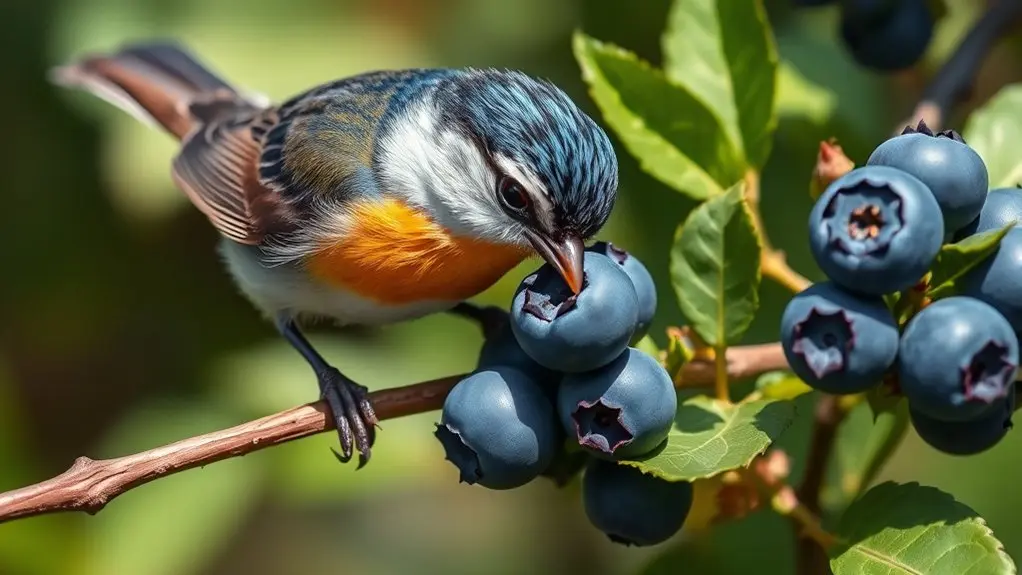
Although you might wonder about offering blueberries to birds, these fruits are both safe and beneficial when given properly. Blueberry cultivation has expanded to meet both human and wildlife needs, providing a reliable source of nutrition during critical periods, such as bird migration patterns.
When you provide ripe, pesticide-free blueberries, you’re offering a low-risk treat rich in antioxidants like anthocyanins, which support immune function. Birds, including native songbirds and parrots, readily consume these berries without adverse effects.
Just guarantee thorough washing and moderate portions to prevent digestive upset.
Observing birds during migration reveals their selective feeding behavior, often favoring antioxidant-rich fruits like blueberries to maintain energy and health. This practice aligns with natural foraging habits, confirming blueberries as a safe, healthy dietary supplement.
What Nutrients Do Blueberries Provide to Birds?
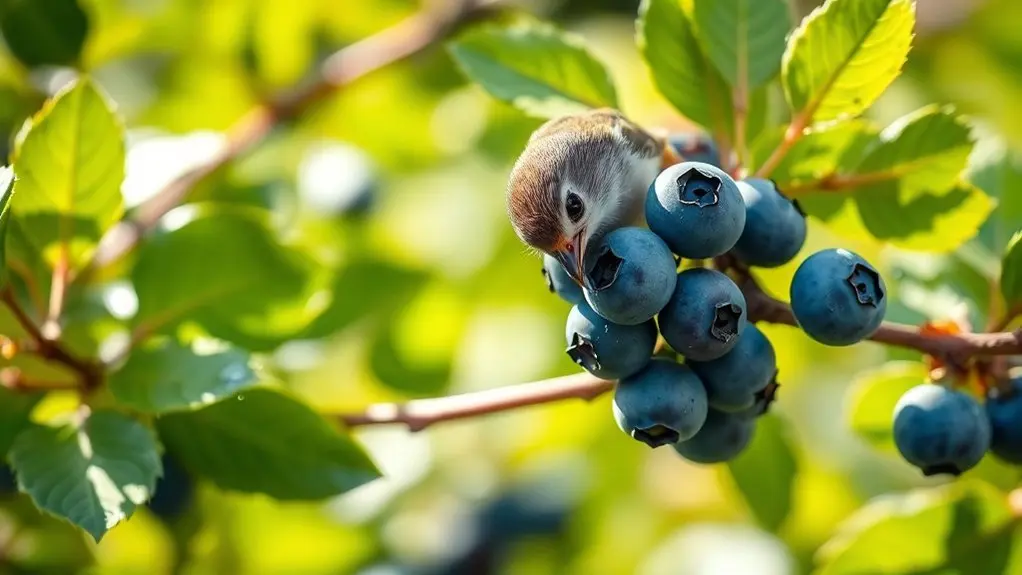
Because birds require a range of nutrients to support their high metabolic demands, blueberries serve as a valuable dietary component by supplying antioxidants, vitamins, minerals, fiber, and natural sugars.
Blueberry cultivation has enhanced fruit availability, aligning well with bird dietary preferences for nutrient-rich foods.
Cultivating blueberries increases fruit supply, perfectly matching birds’ needs for nutrient-dense nourishment.
The anthocyanins in blueberries act as antioxidants, protecting birds’ cells from oxidative stress.
Essential vitamins like C and K bolster immune function and aid blood clotting.
Minerals such as manganese and potassium are critical for metabolic processes and muscle function.
Additionally, dietary fiber supports digestive health, while natural sugars like fructose and glucose offer a rapid energy source.
Preparing and Serving Blueberries Safely
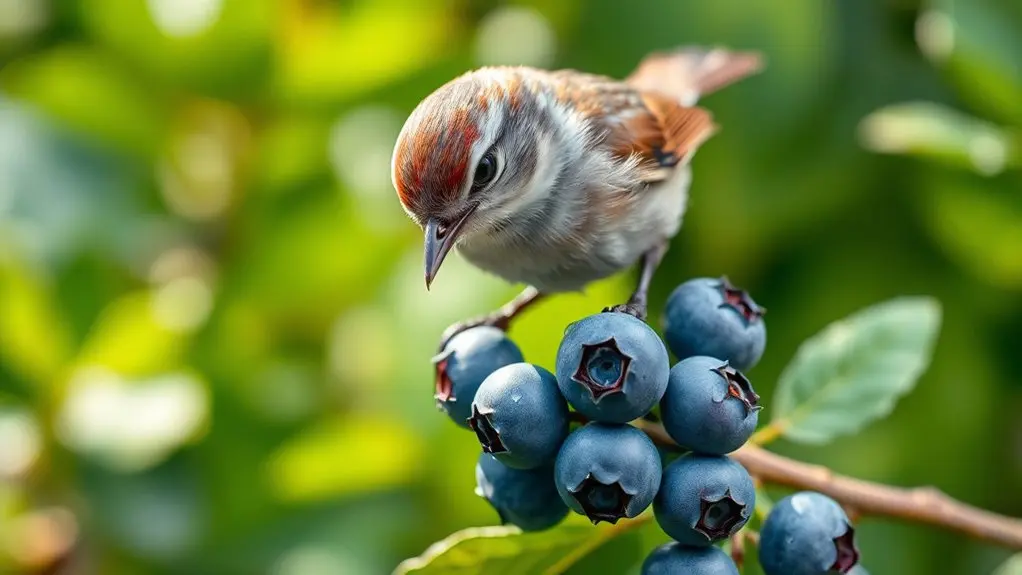
You’ll want to wash ripe blueberries thoroughly to get rid of any pesticides and contaminants before offering them to birds.
Depending on the size of the bird, you can serve the berries whole, halved, or cut into smaller pieces.
Using shallow dishes or skewers helps minimize the risk of choking.
And don’t forget to remove any uneaten berries promptly—this prevents spoilage and keeps the feeding area safe and clean.
Cleaning And Preparation
How can you guarantee blueberries are safe and nutritious for the birds you want to feed? Begin by thoroughly rinsing the berries under running water to eliminate dirt, pesticides, and chemical residues common in blueberry cultivation.
Inspect each berry carefully, removing stems, leaves, and any damaged or moldy fruit to prevent health risks during bird foraging.
Choose ripe, organic blueberries whenever possible, as they lack harmful chemical sprays and offer peak nutrition.
Present the cleaned berries in shallow dishes or skewered arrangements to reduce choking hazards and facilitate easy consumption.
Remember to remove any uneaten blueberries within a few hours to avoid spoilage, mold growth, and pest attraction.
This precise cleaning and preparation method ensures a safe, beneficial feeding experience for wild and captive birds alike.
Serving Methods And Storage
When preparing blueberries for birds, washing them thoroughly under cold water removes pesticides and contaminants that could harm your feathered visitors. Depending on the bird species and their digestion capabilities, serve blueberry cultivars whole, halved, or cut into smaller pieces. Fresh blueberries offer ideal nutrients but should be served immediately and removed within hours to prevent spoilage.
Frozen blueberries retain most nutrients after thawing. Dried or freeze-dried unsweetened berries need cool, dry storage to avoid mold. Make sure to keep them away from humidity to keep them fresh.
| Blueberry Form | Preparation |
|---|---|
| Fresh | Washed, served soon |
| Frozen | Thawed before use |
| Dried | Unsweetened, stored cool |
| Freeze-dried | Stored dry, avoid humidity |
| Serving size | Adjust to bird size |
How Many Blueberries Can Your Bird Eat Daily?
Although blueberries offer valuable nutrients, you need to monitor the quantity your bird consumes daily to maintain its health.
In a typical bird enclosure, medium-sized parrots can safely eat 6 to 12 blueberries per day, adjusted for size and activity level. Smaller birds require fewer berries, usually 1 to 3 daily.
Blueberries should make up only 10-15% of the overall diet to avoid excessive sugar intake. Considering seasonal availability, fresh blueberries are best, but you can adapt amounts depending on what’s accessible.
Start by offering larger quantities to observe your bird’s reaction, then reduce to appropriate levels.
This careful approach ensures your bird benefits from blueberries’ nutritional value without risking health issues linked to overfeeding. It’s all about finding the right balance to keep your feathered friend happy and healthy.
Signs Your Bird Loves or Dislikes Blueberries
Monitoring your bird’s reaction to blueberries goes beyond just tracking how much they eat. It involves carefully watching their behavior and physical responses. Birds that enjoy cultivated blueberries often show enthusiasm, leaving little waste behind and sometimes staining their feet with juice.
This kind of behavior is similar to what you might see during bird migration when they are very selective about their food. On the other hand, if your bird is reluctant or refuses to eat the berries, or shows signs of discomfort, it probably means they dislike or are sensitive to them.
| Signs Your Bird Loves Blueberries | Signs Your Bird Dislikes Blueberries |
|---|---|
| Eager consumption, minimal waste | Reluctance or refusal to eat |
| Bright, colorful droppings | Lethargy or signs of discomfort |
| Stained feet from blueberry juice | Ignoring or dropping the berries |
Keeping track of these signs helps you support your bird’s health and preferences in a thoughtful, scientific way.
Risks and Side Effects of Blueberries
When you start giving blueberries to your bird, it’s a good idea to watch out for any allergic reactions, since different species can react differently.
Also, remember that blueberries contain natural sugars, which might affect your bird’s metabolism if they eat too many.
Eating too many blueberries can sometimes cause digestive problems like diarrhea, so it’s best to offer them in moderation to keep your bird healthy.
Potential Allergic Reactions
When introducing blueberries into a bird’s diet, be aware that some individuals may show allergic reactions such as itching, swelling, or respiratory distress. These signs can indicate allergic dermatitis or other immune responses triggered by specific compounds in blueberries.
Respiratory reactions, although less common, may manifest as labored breathing or sneezing, signaling sensitivity.
It’s essential to observe your bird closely after offering blueberries for the first time. Birds with pre-existing allergies need cautious, gradual introduction with veterinary oversight.
If you notice any itching, swelling, or respiratory symptoms, discontinue blueberries immediately to prevent worsening reactions.
Early detection and intervention help maintain your bird’s health and comfort while allowing safe dietary variety. So, keep an eye out and don’t hesitate to reach out to your vet if something seems off.
This way, you can enjoy feeding your bird blueberries safely!
Sugar Content Concerns
How much sugar is too much for your bird when feeding blueberries? Blueberries contain natural sugars like fructose, glucose, and sucrose, which come from the cultivation processes that make them sweeter.
According to bird dietary guidelines, these sugars can cause weight gain and metabolic issues if not carefully managed.
You should limit blueberries to 10-15% of your bird’s total diet to avoid health risks such as obesity, diabetes, and fatty liver disease. Birds with pre-existing conditions need even stricter monitoring to prevent blood sugar spikes.
Excessive sugar intake may also cause digestive upset and disrupt metabolic balance.
While blueberries offer nutritional benefits, following bird dietary guidelines helps you minimize sugar-related risks. This way, you support your bird’s overall health without giving up the advantages of this cultivated fruit.
Risks Of Overconsumption
Balancing blueberry intake is key to preventing adverse effects in birds. While blueberries offer antioxidants and nutrients, overconsumption can cause excessive sugar intake. This might lead to weight gain or blood sugar spikes during bird migration.
Relying heavily on blueberries, especially those from intensive blueberry cultivation, may displace essential nutrients. This can cause dietary imbalances that aren’t good for birds.
You should also watch for gastrointestinal upset, like diarrhea or loose droppings. These often happen from eating too many berries.
High antioxidant levels might interfere with medications or existing health issues. Plus, some birds can develop allergic reactions or sensitivities if they eat large quantities.
To support bird health, moderate blueberry feeding is essential. It’s important to consider their natural diet and how cultivated blueberries affect their seasonal foraging behavior.
Storing and Handling Blueberries for Birds
Although blueberries are nutritious treats for birds, proper storage and handling are essential to preserve their quality and guarantee safety. After blueberry cultivation, store fresh blueberries in breathable containers within the refrigerator to inhibit mold growth and maintain freshness.
Before feeding, thoroughly wash berries under running water to remove pesticides and residues, ensuring safe bird foraging. If using frozen blueberries, keep them sealed and thaw before offering to maintain texture and prevent digestive issues.
Regularly inspect all stored berries for spoilage signs, such as mold or off odors, discarding any compromised fruit. For dried blueberries, maintain them in airtight containers in cool, dry environments to preserve nutrient integrity.
These careful practices support birds’ health while optimizing the nutritional benefits derived from blueberries. It’s a simple way to keep your feathered friends happy and healthy!
Pet Bird Species That Benefit Most From Blueberries
When selecting blueberries for your pet birds, consider the species’ size and dietary needs to guarantee safe and beneficial consumption. Different species metabolize nutrients uniquely, which influences how blueberries support their health and even enhance their bird color.
Large parrots like macaws, cockatoos, and Amazons use the antioxidants in blueberries to maintain their vibrant plumage. Medium parrots such as African greys, conures, and eclectus benefit from the vitamins that help boost their immune function.
Small birds, including budgerigars, lovebirds, and parrotlets, gain essential nutrients and mental enrichment from moderate blueberry intake. Softbills like canaries and finches enjoy tiny blueberry pieces as a tasty, vitamin-rich supplement.
Make sure to follow blueberry cultivation tips to ensure the fruit is safe and retains its nutrients. This way, you’ll optimize the benefits for your pet bird species.
Including Blueberries in a Balanced Bird Diet
Understanding which pet bird species benefit most from blueberries sets the stage for incorporating this fruit thoughtfully into their diets. When including blueberries, you should consider bird behavior to monitor acceptance and avoid overfeeding.
Blueberries provide antioxidants, vitamins, and fiber but contain natural sugars, so limit them to 10-15% of daily intake.
Blueberries offer antioxidants, vitamins, and fiber but should be limited to 10-15% of your bird’s daily diet.
Proper preparation involves washing berries thoroughly, especially given the agricultural practices in blueberry cultivation that may leave residues.
Serve fresh berries in manageable portions alongside a balanced diet of pellets, vegetables, and other fruits to optimize nutrition.
Adjust blueberry portions based on species, size, age, and health to maintain dietary balance.
Observing your bird’s response ensures blueberries enhance their diet without disrupting nutritional needs or behavior patterns.
Frequently Asked Questions
Can Wild Birds Eat Blueberries Safely?
Yes, wild birds can safely eat blueberries, which align with their dietary habits during bird migration. These berries provide essential nutrients and antioxidants, supporting energy needs crucial for long flights and overall health in various habitats.
Birds really benefit from the natural sugars and vitamins in blueberries. They give a nice energy boost that helps them keep going on those long journeys. Plus, blueberries are easy for birds to find and eat, making them a great snack in the wild.
Do Blueberries Affect Bird Breeding or Nesting Behavior?
You won’t see blueberries rewriting bird song changes or altering bird migration patterns. While nutrients support health, blueberries don’t directly affect breeding or nesting behavior.
They act more like background notes than the main melody in birds’ reproductive cycles. So, while they’re a nice treat, they’re not game-changers when it comes to how birds raise their young.
Are Blueberry Plants Toxic to Birds?
You won’t find blueberry plants toxic to birds; their safe cultivation aligns with bird dietary preferences favoring berries over leaves.
Just make sure to avoid pesticides in blueberry cultivation to protect avian health. This supports natural, nutritious feeding behaviors in both wild and captive birds.
How Do Blueberries Compare to Other Berries for Birds?
You’ll find blueberries, favored in bird dietary preferences, offer higher antioxidant levels than many berries. Blueberry cultivation yields nutrient-rich fruit, making them a superior choice for birds seeking immune support and moderate sugar intake.
Birds really seem to prefer them, and it’s easy to see why. The antioxidants help keep birds healthy, and the sugar content is just right—not too much, not too little. So, if you’re thinking about what berries to offer, blueberries are definitely a top pick.
Can Baby Birds Eat Blueberries?
You’ll notice baby birds digest mashed blueberries slowly, but their bird digestion handles antioxidants well. Offering small, fresh berries supports nutritional benefits like vitamins, boosting growth and immunity.
Just introduce them gradually. Watch carefully for any digestive upset.
Conclusion
You might be surprised to learn that blueberries contain over 15 different nutrients beneficial to birds, including antioxidants and vitamins C and K. By offering these berries in moderation, around 2 to 3 small blueberries daily, you provide a healthy supplement without risking digestive upset.
Observing your bird’s reaction helps guarantee they enjoy and tolerate blueberries well. With proper preparation and portion control, blueberries can be a scientifically sound addition to your bird’s balanced diet.