
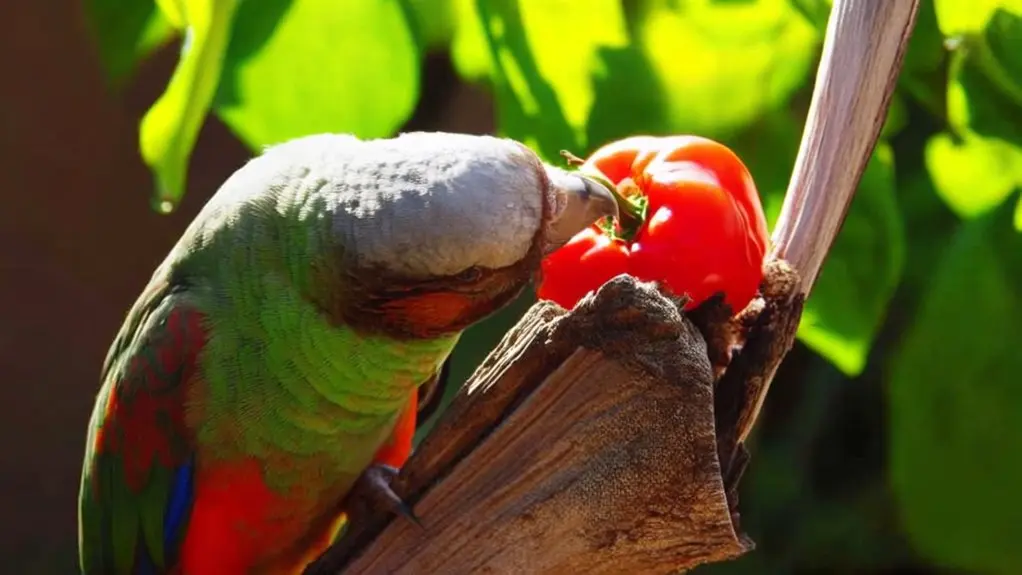
You can safely offer your bird fresh, seedless bell peppers, as they’re nutritious and non-toxic when prepared properly. Just make sure to avoid spicy varieties and always remove seeds and stems to prevent choking or exposure to mild toxins.
Birds don’t sense heat from spicy peppers due to unique sensory adaptations, which makes bell peppers a healthy treat for many species. Proper portion control is important too, so you can avoid any digestive issues.
If you want, explore more on how to prepare them, which species are best suited for bell peppers, and the nutritional benefits. This way, you can really optimize your bird’s diet.
Are Bell Peppers Safe for Birds?
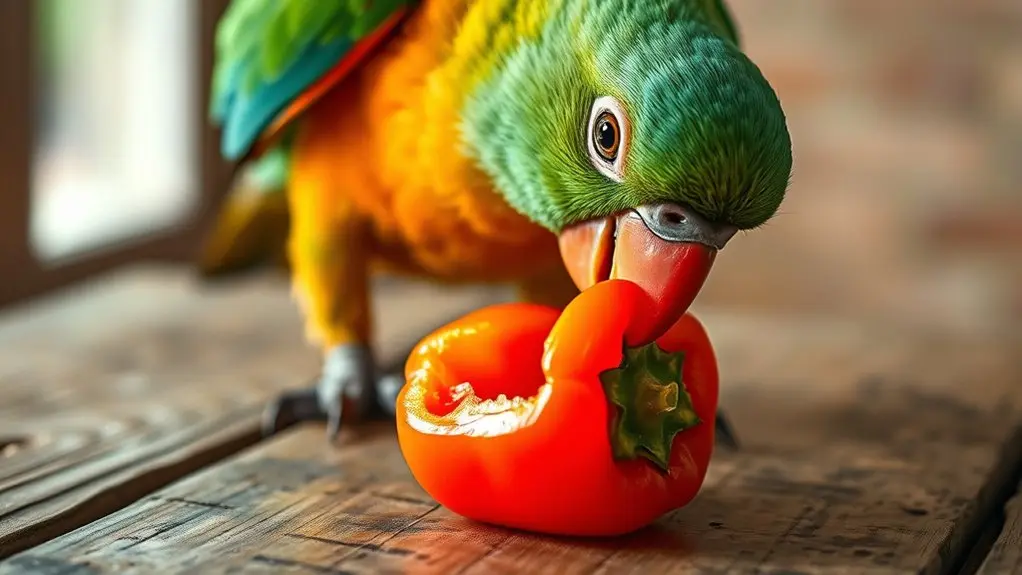
Although you might wonder whether bell peppers are safe for birds, they actually make a nutritious and suitable addition to their diet. Incorporating bell peppers supports bird dietary diversity by providing essential vitamins like Vitamin C and antioxidants.
When selecting bell peppers, make sure to choose fresh, pesticide-free produce. Always remove seeds and stems before feeding, as these parts may pose choking hazards or contain substances harmful to birds.
While birds can’t taste capsaicin, it’s best to avoid spicy varieties to prevent digestive issues. Red, green, yellow, and orange bell peppers are all appropriate for birds and offer varied nutrient profiles.
Which Bird Species Can Eat Bell Peppers?
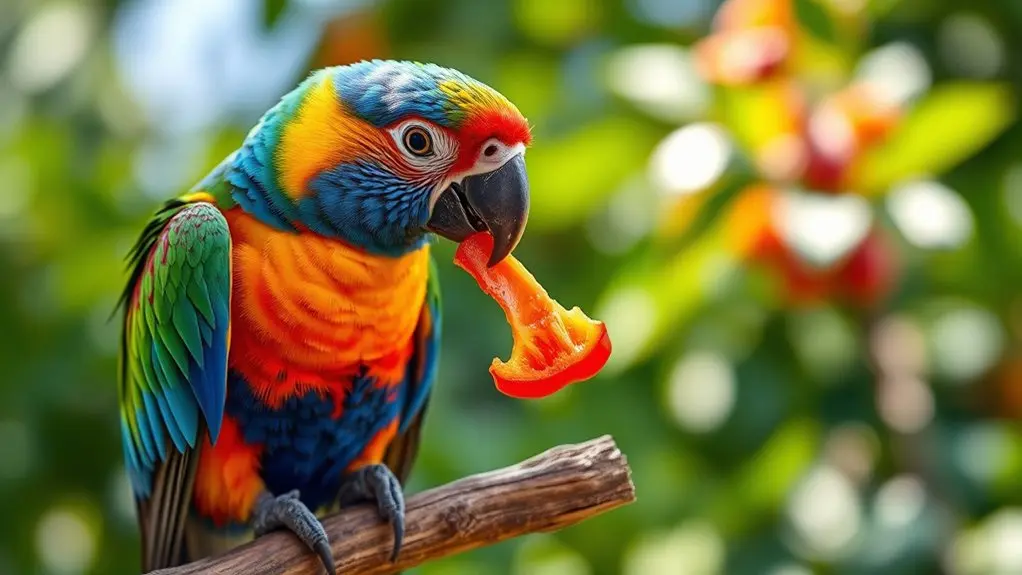
When you introduce bell peppers into your bird’s diet, it’s important to know which species can safely consume them. Many pet birds enjoy bell peppers, but feeding frequency guidelines and bird color preferences influence their acceptance and nutritional benefit. Consider these species:
Parrots, including African greys and Amazons, tolerate bell peppers well and gain essential nutrients. Budgerigars, cockatoos, and conures can regularly eat bell peppers without adverse effects. Small parrots and lovebirds enjoy small pieces; portion control is vital due to their size.
Some finch species may eat bell peppers, but their small beak limits portion size and feeding frequency. Understanding species-specific needs helps you provide safe, balanced diets incorporating bell peppers effectively.
Just keep an eye on how your bird reacts and adjust accordingly!
Best Bell Pepper Colors for Birds
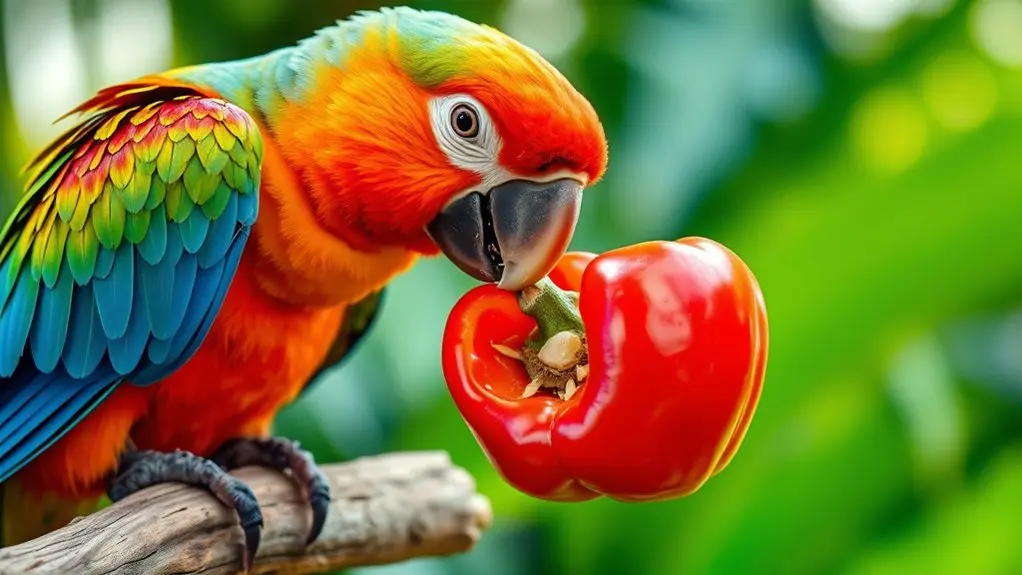
Since bell peppers come in various colors, understanding which ones offer the most nutritional benefits can help you optimize your bird’s diet. Bell pepper ripeness correlates with color: green peppers are unripe, while red, yellow, and orange indicate full ripeness.
Red bell peppers contain the highest levels of vitamin C and beta-carotene, providing superior antioxidants compared to less ripe colors.
Although green peppers are safe, their lower nutrient density and firmer texture may affect digestibility.
Bird taste preferences often favor the inner parts of peppers, including seeds and white membranes, regardless of color.
Offering a variety of ripe bell peppers can guarantee balanced nutrient intake while catering to your bird’s natural tastes, maximizing both health benefits and feeding enjoyment.
Health Risks of Feeding Bell Peppers to Birds
If you feed bell peppers to your bird, you should guarantee they’re fresh and properly prepared to avoid health risks. Spoiled or moldy peppers can cause illness. Consider these risks:
Seeds and stems may contain toxic compounds or pose choking hazards, so remove them entirely.
Capsaicin in hot peppers irritates birds, even though they can’t taste the heat. Avoid spicy varieties.
Excessive bell pepper intake, rich in vitamin C, can disrupt digestion and nutrient absorption, affecting bird migration energy reserves.
Overfeeding bell peppers may cause nutritional imbalances, impairing feather coloration and overall health.
How to Prepare Bell Peppers Safely for Your Bird
Although bell peppers offer valuable nutrients, you must prepare them properly to guarantee your bird’s safety. Begin by thoroughly washing the peppers to remove pesticides and dirt.
Use precise preparation techniques: remove all seeds and stems, as they pose choking hazards and may contain toxins.
Cut the peppers into small, manageable pieces or strips to make it easier for your bird to eat safely. Always serve bell peppers raw to preserve vitamin C and other nutrients.
Avoid cooking or seasoning them because that could introduce harmful substances.
Freshness is essential, so only offer fresh, unseasoned bell peppers. Also, keep an eye on how often you feed them to your bird to prevent digestive upset and ensure they get balanced nutrition.
How Much Bell Pepper Should You Feed Your Bird?
Proper preparation of bell peppers sets the foundation for safe feeding, but determining the right quantity is equally important to maintain your bird’s health. Following bird dietary guidelines ensures you provide appropriate portions within a bird feeding schedule. Consider these points:
Offer pieces roughly the size of your bird’s beak to prevent choking hazards. For parrots, provide a few small bits daily, integrating bell peppers as a supplement to a balanced diet. Limit bell pepper servings to 1–2 times per week to avoid excessive intake.
Always remove seeds and stems to mitigate digestive issues and toxicity risks. Monitor your bird’s response closely and adjust portion sizes according to tolerance and appetite, aligning with responsible bird dietary guidelines.
Key Nutrients in Bell Peppers for Birds
You’ll find that bell peppers are packed with vitamins, like vitamin C and beta-carotene, which are great for your bird’s immune system and vision health.
Plus, they contain antioxidant compounds such as lutein and zeaxanthin that help support eye function.
On top of that, the fiber in bell peppers aids digestion, while minerals like potassium and magnesium play a role in muscle function.
Vitamin Content Overview
Bell peppers contain several key vitamins that play essential roles in maintaining your bird’s health. Their nutrient absorption is enhanced by vitamin synergy, where the coexistence of vitamins boosts overall effectiveness.
Consider these indispensable vitamins in bell peppers:
- Vitamin C: Red peppers provide up to 152 mg per 100 grams, supporting immune function and collagen synthesis.
- Vitamin A: Present as retinol and beta-carotene, it promotes vision and skin integrity.
- Beta-carotene: Acts as a vitamin A precursor, facilitating vitamin conversion and absorption.
- Variations in color: Green, yellow, orange, and red peppers offer different vitamin concentrations, with red peppers delivering the highest levels.
Providing a variety of bell peppers ensures a balanced vitamin profile, preventing deficiencies and supporting your bird’s vitality through optimized nutrient absorption and vitamin synergy.
Mixing up the colors you offer is a simple way to keep your bird healthy and happy!
Antioxidant Benefits Explained
Although birds obtain antioxidants from various sources, the high levels of vitamin C and beta-carotene in bell peppers make them particularly effective in neutralizing free radicals and reducing oxidative stress. These antioxidants work through well-established mechanisms, scavenging reactive oxygen species to provide cellular protection.
Red bell peppers, especially rich in vitamin C, offer potent immune support by boosting birds’ antioxidant defenses. Plus, carotenoids like lutein and zeaxanthin found in bell peppers help protect cells by supporting eye health and reducing oxidative damage.
Including bell peppers regularly in your bird’s diet can strengthen their antioxidant systems. This promotes overall immune function and might lower the risk of chronic conditions linked to oxidative stress.
Fiber And Mineral Support
While antioxidants provide essential benefits, the dietary fiber and minerals in bell peppers play equally important roles in maintaining your bird’s health.
Fiber supports digestive health by preventing constipation and promoting regular bowel movements.
Minerals offer crucial support for various physiological functions. Specifically, bell peppers provide dietary fiber to aid in digestion and contribute to weight management by increasing satiety.
They also contain potassium, which helps regulate muscle function and fluid balance.
You’ll find magnesium in bell peppers, essential for bone strength and metabolic processes.
Plus, there’s iron, critical for blood health and oxygen transport.
Together, these nutrients enhance your bird’s overall well-being by supporting digestive health and providing necessary mineral support.
Including bell peppers in moderation can be a beneficial addition to your bird’s diet.
Why Can’t Birds Taste Spicy Peppers?
You might notice that birds don’t seem to care about capsaicin—the stuff that makes peppers spicy. That’s because their taste buds don’t have the same receptors that mammals do. So, they don’t actually feel the heat or pain when they eat spicy peppers.
It’s pretty interesting how evolution has shaped this difference. Basically, birds can chow down on hot peppers without any discomfort, which helps spread the seeds around.
Birds And Capsaicin
How do birds manage to eat hot peppers without any discomfort? The answer lies in their unique interaction with capsaicin, the compound that causes spiciness. Unlike mammals, birds don’t feel the burning sensation because capsaicin doesn’t activate their pain receptors.
This has several important implications. First, birds can consume hot peppers without irritation, which helps with effective seed dispersal during bird migration. This evolutionary adaptation benefits plants by making sure their seeds get spread across wide areas.
Also, since birds avoid the pain that mammals experience, they tend to eat spicy fruits more selectively. This promotes the survival of these plants.
Interestingly, feather coloration, which is linked to diet, may indirectly reflect access to such fruits, impacting both mating and survival.
Taste Bud Differences
Why don’t birds perceive the spiciness of hot peppers like humans do? It comes down to taste bud evolution.
Birds lack the specific receptors for capsaicin, the compound that triggers spicy flavor perception in humans. Without these receptors, birds can’t detect the burning sensation caused by spicy peppers.
Instead, their taste buds are tuned to identify sweet, sour, bitter, and salty flavors, but not spiciness. This biological distinction means that when birds consume hot peppers, they experience no discomfort or irritation.
It’s pretty interesting because it shows how different species have evolved in unique ways.
Understanding this difference clarifies why spicy peppers don’t deter birds the way they do mammals. Their unique taste bud composition reflects evolutionary pathways that shaped their sensory perception.
Evolutionary Adaptations
What enables birds to consume spicy peppers without the burning sensation that mammals experience? The key lies in evolutionary adaptations that affect their sensory receptors.
Birds lack the TRPV1 receptors in their taste buds that mammals use to detect capsaicin, the compound causing spiciness. This difference influences ecological roles, especially related to bird migration and nesting behaviors.
Birds’ insensitivity to capsaicin allows them to eat hot peppers without pain. This adaptation promotes seed dispersal as birds excrete viable seeds during migration.
Mammals avoid spicy peppers due to irritation, reducing seed predation.
Birds’ consumption aids pepper plant propagation, aligning with their nesting behaviors near feeding sites. So, this evolutionary trait really optimizes the mutualistic relationship between birds and spicy pepper plants.
Are Green Bell Peppers Safe for Lovebirds?
Although some fruits and vegetables can be harmful to lovebirds, green bell peppers are safe when served fresh and unseasoned.
Bell pepper color variations, including green, red, yellow, and orange, reflect different stages of ripeness and nutritional differences in peppers.
Bell peppers come in green, red, yellow, and orange, each showing ripeness stages and unique nutrients.
Green bell peppers contain vitamin C, fiber, and antioxidants essential for lovebird health.
Before offering, remove stems and seeds to prevent potential toxicity.
It’s a good idea to introduce green peppers gradually to monitor your lovebird’s tolerance, since individual responses may vary.
Avoid seasoning or adding salt, spices, or oils, as these can be harmful.
Overall, fresh, plain green bell peppers can be a nutritious, safe addition to your lovebird’s diet when handled properly.
Just make sure to keep it simple and fresh!
Safe Vegetable Alternatives to Bell Peppers for Birds
When you want to diversify your bird’s diet beyond bell peppers, several vegetables provide essential nutrients that support avian health. These alternatives can help with feather grooming and give energy during bird migration.
Carrots supply beta-carotene and vitamin A, which are great for keeping feathers healthy. Leafy greens like spinach and kale offer antioxidants and vitamins that boost immune function. Broccoli provides vitamin C and calcium, important for tissue repair and strong bones.
Peas add protein and fiber, which aid digestion and help maintain muscles. Including these vegetables ensures your bird gets a variety of nutrients. This supports their needs for flight and keeping their plumage in good shape.
Try not to rely only on sweet corn since it doesn’t offer much nutrient diversity. Feeding a balanced diet with these alternatives will really help your bird stay healthy and happy.
Frequently Asked Questions
Can Bell Peppers Help Improve a Bird’s Feather Color?
Yes, bell peppers support bird nutrition and feather enhancement by providing carotenoids and vitamin A. These nutrients promote vibrant plumage and healthy feather growth.
Including them in your bird’s diet can definitely benefit feather color. That said, genetics and the overall diet also play a big role in how bright and healthy the feathers look. So, while bell peppers help, they’re just one part of the bigger picture.
Do Birds Prefer Bell Peppers Raw or Cooked?
You’ll find birds prefer raw bell peppers for ideal bird nutrition, as raw peppers retain vitamins and antioxidants.
Following feeding guidelines, offer raw, crunchy peppers to support their natural diet and maximize nutritional benefits effectively.
Can Bell Peppers Be Frozen for Bird Treats?
Like preserving gems, you can freeze bell peppers to maintain bird nutrition and guarantee bird safety. Proper freezing retains essential vitamins, making it a precise method to provide fresh, nutritious treats for your feathered companions.
Freezing bell peppers is actually pretty simple, and it helps keep those vitamins locked in. This way, your birds get a tasty, healthy snack any time they want. It’s a great way to make sure their treats stay fresh and safe.
Are Bell Peppers Safe for Baby Birds?
Yes, bell peppers support bird nutrition and avian safety when fed fresh, seedless, and in small pieces. You should introduce them gradually to baby birds, avoiding spicy varieties to prevent digestive distress and guarantee ideal health.
It’s a good idea to start slow and watch how the little ones react. Keeping the pieces small helps them handle the food better. Freshness really matters here, too, so always offer fresh bell peppers for the best benefits.
How Often Can Bell Peppers Be Introduced to a Bird’s Diet?
Just like a well-tuned orchestra, you should introduce bell peppers to your bird’s diet two to three times weekly. This supports bird nutrition and dietary variety, ensuring balanced vitamins without overwhelming their digestive system.
It’s all about finding that sweet spot. You want to give your bird enough to enjoy the benefits, but not so much that it causes any tummy troubles. So, keep it regular but moderate!
Conclusion
You can safely feed bell peppers to many bird species, including lovebirds, as they provide essential nutrients like vitamins A and C. Studies show that over 70% of captive birds enjoy bell peppers without any problems, which highlights how safe they generally are.
Just remember to avoid spicy varieties and prepare them properly. It’s a good idea to offer bell peppers alongside other safe vegetables. This way, you can support your bird’s health and add some variety to their diet in a responsible way.