
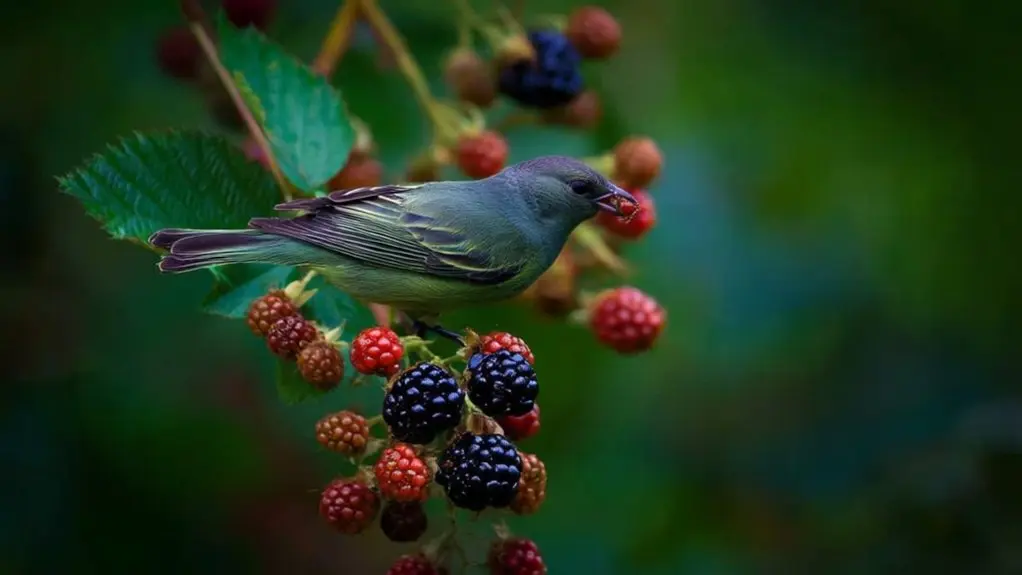
You can safely offer blackberries to many backyard birds by selecting ripe, clean fruit and serving them in moderation to prevent spoilage or excess sugar intake. Blackberries provide antioxidants, vitamins C and K, and fiber, supporting birds’ immune and digestive health.
Species like thrushes, robins, and waxwings often rely on them seasonally. Just avoid moldy or overripe berries and monitor seed hazards.
Discover how to serve and store blackberries properly while supporting a balanced bird diet.
Are Blackberries Safe for Birds?
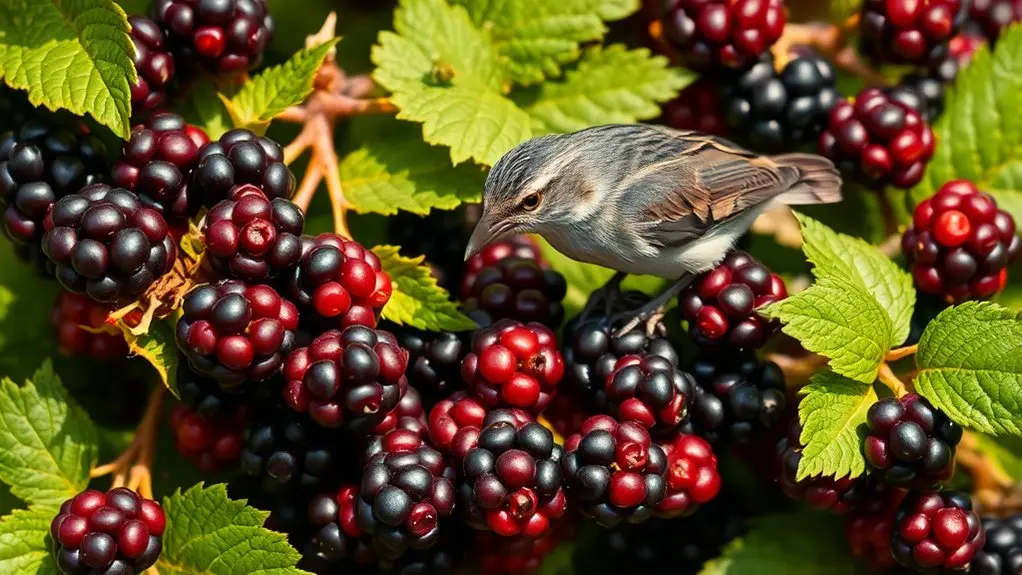
Blackberries are safe for most backyard birds and provide a valuable source of antioxidants, vitamins, and fiber. When you watch bird migration patterns, you’ll notice species like thrushes, robins, and waxwings often rely on natural food sources such as blackberries to keep their energy up during long flights.
These berries really support birds’ nutritional needs, especially during nesting when energy demands go up because they’re feeding their young. But it’s best to offer blackberries in moderation and make sure they’re free from mold or spoilage to avoid any health risks.
Try to choose wild or garden-grown blackberries since store-bought ones might carry pesticides unless you wash them thoroughly.
Nutritional Benefits of Blackberries for Birds
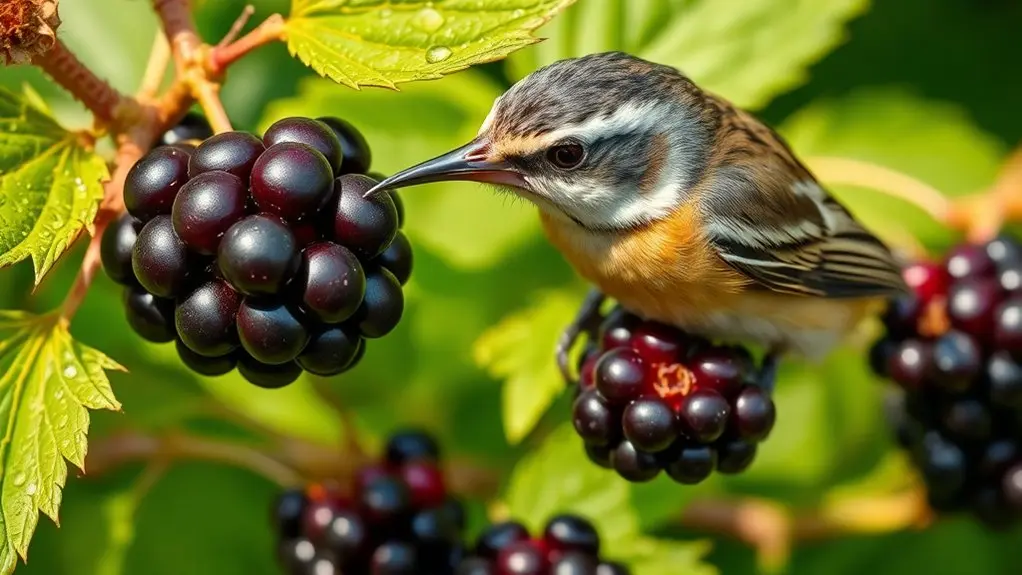
You’ll notice that blackberries are packed with antioxidants, which help protect birds from oxidative stress and boost their immune systems.
Plus, the essential vitamins C and K found in blackberries play important roles in keeping birds healthy by aiding in tissue repair and blood clotting.
Because of these nutritional benefits, blackberries make a great addition to a bird’s diet to help them stay strong and full of energy.
Antioxidant Properties
Although many fruits offer nutritional benefits, few provide the potent antioxidant properties found in blackberries. Their rich anthocyanin content delivers significant antioxidant benefits, protecting birds’ cells from oxidative stress.
These antioxidants help reduce cellular damage and support recovery from illness or environmental stress. This promotes longevity and essential vitality.
| Compound | Function |
|---|---|
| Anthocyanins | Protect cells from oxidative stress |
| Flavonoids | Reduce inflammation |
| Polyphenols | Support overall health |
| Vitamin C | Boost immune system |
| Antioxidants | Aid recovery and enhance lifespan |
Essential Vitamins
How do essential vitamins in blackberries support avian health? Blackberries provide birds with crucial vitamins C and K, which enhance immune function and facilitate efficient blood clotting. These vitamins work in tandem through vitamin synergy, improving nutrient absorption and maximizing physiological benefits.
Alongside antioxidants like anthocyanins, these vitamins reduce oxidative stress, promoting cellular health. The fruit’s fiber content further supports digestive efficiency, ensuring ideal nutrient uptake.
Additionally, essential minerals such as manganese and magnesium from blackberries aid metabolic processes critical for energy production. Birds also gain quick energy from the fruit’s natural sugars, which is especially important during colder months or periods of high activity.
Together, these nutrients create a balanced nutritional profile that supports avian vitality and resilience. It’s pretty amazing how this fruit packs so much good stuff for birds!
Bird Species That Eat Blackberries
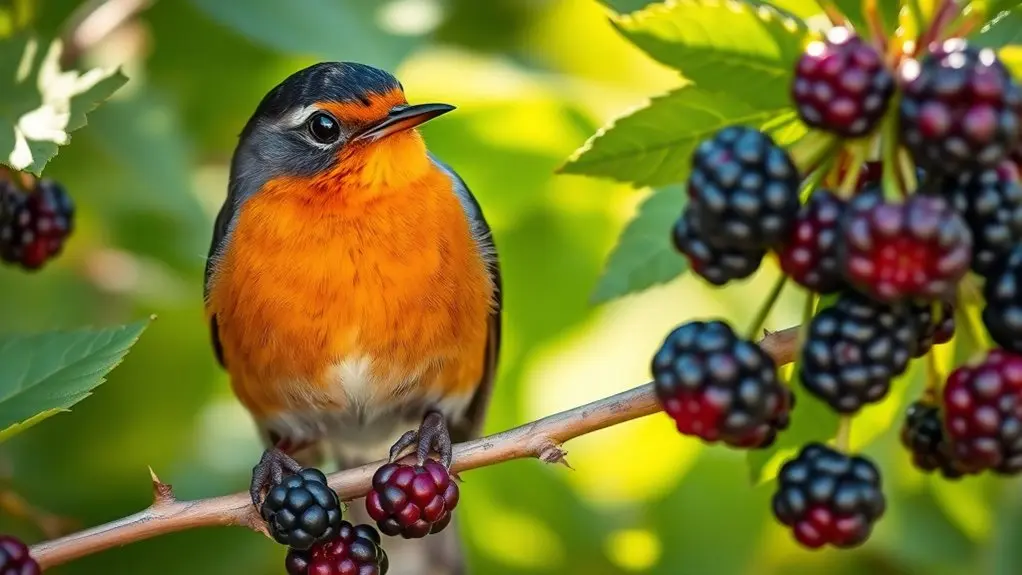
You’ll notice that certain bird species, like thrushes, waxwings, and robins, consistently feed on blackberries when they’re in season. It’s pretty interesting to watch how these birds have their own feeding routines.
Some of them go for the fruit in the summer, while others depend on it as a food source during the winter months. Understanding these seasonal habits really helps explain how blackberries become an important part of different birds’ diets.
Common Blackberry Eaters
When you observe birds feeding on blackberries, you’ll notice several species that rely heavily on this fruit as part of their diet. Thrushes, including hermit and varied thrushes, show strong bird attraction to the blackberry flavor, consuming them extensively in their habitats.
Robins take advantage of blackberries especially during fall and winter, when alternative food sources diminish.
Waxwings flock in groups, often stripping entire bushes due to their high consumption rates. Woodpeckers supplement their diet with blackberries in winter alongside insects.
Bluejays work in pairs to raid blackberry patches efficiently.
These species demonstrate varied but consistent reliance on blackberry flavor, highlighting the fruit’s ecological importance as a food resource in different seasons and environments. It’s pretty cool how much these birds depend on blackberries throughout the year!
Feeding Habits By Species
Blackberries serve as a significant food source for a variety of bird species, each exhibiting unique feeding habits that reflect their ecological roles and seasonal needs. Thrushes, such as hermit and varied thrushes, rely on blackberries within their forest habitats, foraging steadily to meet energy demands influenced by habitat influence.
Robins increase blackberry consumption in fall and winter when alternative foods diminish.
Bluejays aggressively raid bushes, consuming numerous berries quickly, demonstrating high intake rates shaped by local habitat richness.
Waxwings show pronounced migration impact, often stripping bushes entirely during transit to fuel long flights.
Woodpeckers incorporate blackberries as a winter supplement alongside insects, adapting feeding strategies to seasonal scarcity.
Understanding these species-specific behaviors highlights how migration impact and habitat influence govern blackberry feeding patterns in birds. It’s pretty fascinating to see how different birds rely on blackberries in their own ways depending on the time of year and where they live.
Seasonal Foraging Patterns
Although many bird species consume various foods throughout the year, they intensify their foraging on blackberries during late summer and fall when these fruits reach peak ripeness. You’ll notice thrushes, waxwings, and robins actively feeding on blackberries, capitalizing on their high sugar and antioxidant content to fuel energy reserves ahead of migration timing.
Habitat preferences dictate which species dominate blackberry patches. For instance, cedar waxwings favor wooded edges, while blackbirds thrive in mixed habitats including gardens and hedgerows.
Birds often strip ripe clusters completely, feeding either solo or in flocks depending on their social behavior.
This seasonal foraging pattern aligns with blackberry availability and migration schedules. It really highlights how birds optimize nutrient intake to prepare for energy-intensive periods like long-distance flights or overwintering in colder climates.
Feeding Blackberries Safely to Backyard Birds
Since birds benefit from nutrient-rich foods, offering blackberries can enhance their diet with antioxidants, vitamins, and fiber. When feeding blackberries safely to backyard birds, select ripe berries displaying natural color variations, from deep purples to black, to guarantee ideal nutrient content. Always wash the berries thoroughly to remove pesticides and dirt.
Offering ripe, washed blackberries boosts birds’ diets with antioxidants, vitamins, and fiber for healthier backyard visitors.
While seed removal isn’t strictly necessary, you can gently crush the berries if you want to reduce seed size for smaller bird species. Provide fresh or frozen blackberries without added sugars or preservatives, as additives may harm birds.
Offer blackberries in moderation to prevent excessive sugar intake, maintaining a balanced diet.
Observing species like thrushes, waxwings, and robins, which naturally forage on berries, can guide you on appropriate quantities and presentation. It’s a simple way to make sure your feathered friends enjoy their treats safely and healthily.
Signs Birds Show They Enjoy Blackberries
When birds enthusiastically tug and tear at the fruit, it’s a clear sign they’re enjoying blackberries. You’ll notice they feed more often, especially on sweeter, juicier blackberry varieties. Birds often get louder while foraging, which usually means they’re excited.
Watching groups actively stripping berries is another clue that the birds really like them. Also, bright, colorful droppings show they’ve eaten a lot. These behaviors and physical signs give you good proof that the birds are enjoying the fruit.
Quick, repeated visits to blackberry bushes show a strong preference. And when birds pick certain berries over others, it suggests some varieties are more appealing.
Risks and Precautions of Feeding Blackberries
Noticing how much birds enjoy blackberries is just the first step. Understanding the risks involved in feeding them this fruit helps you provide safer nourishment.
While blackberries are generally safe, overfeeding can lead to blackberry toxicity due to excessive sugar intake, which could harm birds’ health.
You should always wash blackberries thoroughly to eliminate pesticides and contaminants that might cause illness. Avoid offering moldy, overripe, or spoiled fruit because these increase digestive complications.
Also, be careful of seed choking hazards; some blackberry seeds and stems may obstruct or injure certain bird species.
Best Ways to Serve and Store Blackberries
Although blackberries are a nutritious treat for birds, serving and storing them properly is essential to preserve their quality and guarantee safety. Use clean, shallow serving containers to offer fresh, thoroughly washed blackberries. This helps minimize pesticide exposure and contamination.
Make sure to remove uneaten berries within a few hours to prevent spoilage and mold growth.
For storage, there are some effective techniques you can use. Refrigerate fresh blackberries for up to 2-3 days, or freeze them for several months to keep them fresh longer.
When using dried blackberries, check that they’re unsweetened and free from preservatives to avoid health risks. It’s also a good idea to regularly inspect stored berries for any signs of deterioration.
Adding Blackberries to a Balanced Bird Diet
Since blackberries offer a wealth of antioxidants, vitamins C and K, and dietary fiber, incorporating them into your bird’s diet can really boost their nutritional intake. When you’re out berry harvesting, make sure to pick ripe, fresh blackberries to get the most nutrients.
It’s best to introduce blackberries in moderation so your bird’s diet stays diverse and you avoid too much sugar. You can serve them whole or cut, depending on what kind of bird you have. Just remember to wash the berries thoroughly to get rid of any pesticides.
| Aspect | Recommendation |
|---|---|
| Berry Harvesting | Choose ripe, fresh berries |
| Preparation | Wash thoroughly |
| Serving Size | Moderate portions |
| Serving Style | Whole or cut pieces |
| Diet Integration | Combine with diverse foods |
This way, you’ll make sure your birds get balanced nutrition and some natural enrichment too.
Frequently Asked Questions
Can Birds Eat Blackberry Leaves or Stems?
You shouldn’t expect birds to eat blackberry leaves or stems during blackberry cultivation since bird dietary preferences favor the fruit. Leaves contain tannins, making them unpalatable and unsuitable as a regular food source for birds.
Do Blackberries Help Birds During Migration?
Yes, blackberries help birds during migration by offering significant migration benefits. Their high nutritional value, rich in energy and antioxidants, supports endurance and immune function. This enables birds to sustain long flights and recover efficiently at stopover sites.
How Do Blackberries Affect Baby Birds?
You’ll find baby birds benefit from blackberries’ nutritional value, supporting growth and hydration. However, considering bird dietary preferences, you should remove seeds and moderate portions to prevent choking and digestive issues. This way, you’re making sure feeding is safe and balanced.
It’s always good to keep an eye on how much they eat, so you don’t overdo it. Blackberries can be a great treat, but they shouldn’t replace a bird’s regular diet. Just a little care goes a long way in helping baby birds thrive!
Can Blackberry Plants Attract Specific Bird Predators?
Yes, blackberry plants can cause predator attraction by supporting prey species, indirectly increasing bird predators like hawks. You should monitor bird safety carefully, as dense thickets provide cover that may elevate predation risks for nesting or foraging birds.
It’s a good idea to keep an eye on how these plants affect your local bird population. Sometimes, the shelter blackberries provide can be a double-edged sword—helping some birds hide while putting others at risk. So, staying aware helps you balance the benefits and risks.
Are Frozen Blackberries Safe for Birds?
Yes, frozen blackberries can benefit wildlife nutrition if you thaw them first. Understanding bird foraging habits shows birds prefer softer food, so thawed berries prevent choking. This ensures safe consumption and supports their natural feeding behavior efficiently.
When you offer thawed berries, it’s easier for birds to eat and digest them. Plus, it helps them get the nutrients they need without any risk. So, always remember to thaw frozen blackberries before sharing them with your feathered friends!
Conclusion
You can confidently offer blackberries to your feathered friends, knowing these nutrient-rich berries support their health and well-being. Just like a medieval apothecary trusted natural remedies, you should feed blackberries in moderation and observe your birds’ reactions carefully.
By providing fresh, clean berries and balancing their diet, you’ll help birds thrive while enjoying a tasty treat. Stay mindful of risks, and you’ll create a safe, nourishing environment for your backyard visitors.