
Yes, birds can have diarrhea, which shows as loose, watery droppings caused by factors like diet changes, infections, toxins, or health issues such as liver disease or parasites. You’ll notice increased droppings frequency, abnormal colors, and possible behavioral changes like lethargy.
Many conditions mimic diarrhea, so proper diagnosis including fecal tests and physical exams is essential. Treatment involves fluid support, diet management, and stress reduction.
Understanding these details helps you manage your bird’s health effectively and safely. It’s always best to keep a close eye on your feathered friend and consult a vet if you notice anything unusual.
Why Does My Bird Have Diarrhea?
When your bird has diarrhea, it often signals an underlying issue affecting its digestive system. Changes in bird diet, such as introducing spoiled food or unfamiliar items, can disrupt gut function and cause diarrhea. Food intolerances also provoke gastrointestinal upset, impairing nutrient absorption.
Diarrhea in birds often indicates digestive issues triggered by diet changes or food intolerances.
Environmental factors play a significant role. Exposure to toxins, ingestion of foreign objects, or stress from habitat alterations can irritate the digestive tract. Infectious agents like bacteria, viruses, or fungi further compromise intestinal integrity, leading to abnormal stool consistency.
Additionally, underlying health conditions such as liver disease or parasitic infestations interfere with digestion, resulting in diarrhea. Recognizing these causes helps you manage your bird’s health proactively.
This way, you can minimize digestive disturbances that compromise its well-being.
How Can You Tell If Your Bird Has Diarrhea?
You can tell if your bird has diarrhea by keeping an eye on its droppings. Look out for changes like more liquid than usual, strange colors, or if they happen more often.
If the droppings look watery, frothy, or even have blood in them, that’s a sign something might be wrong with your bird’s digestion.
Also, pay attention to how your bird is acting. If it seems tired, isn’t eating as much, or you notice staining around the vent area, these can be clues that your bird isn’t feeling well.
Recognizing Abnormal Droppings
How can you accurately recognize if your bird is experiencing diarrhea? Monitor your bird’s droppings closely. Normal feces are solid with white urates and clear urine.
Diarrhea shows up as watery, more frequent droppings that don’t have the usual solid part. Also, watch for changes in color, like lime-green or dark, tarry stool—these can point to health problems.
If you see blood, a frothy texture, or a bigger volume of liquid, that’s a sign something’s off. It’s important to check your bird’s droppings every day for early detection.
While you’re at it, keep an eye on your bird’s feather grooming and wing flapping. These behaviors often change subtly before any obvious symptoms appear.
Recognizing these signs quickly means you can get your bird help sooner, keeping them healthy and avoiding complications from tummy troubles.
Behavioral And Physical Signs
Observing changes in your bird’s behavior and physical condition provides additional clues beyond droppings to identify diarrhea. Wet or stained feathers around the vent indicate poor feather hygiene caused by frequent soiling. You may notice your bird excessively preening this area in an attempt to clean itself.
Behavioral signs like lethargy, puffed feathers, and a tucked posture suggest discomfort or illness linked to diarrhea. Decreased appetite and altered activity levels are also common indicators.
Pay attention to vocal changes, such as reduced or abnormal calls, which can signal distress.
These combined behavioral and physical signs, alongside abnormal droppings, help you accurately recognize diarrhea in your bird. This way, you can prompt timely veterinary evaluation to address potential underlying health issues.
How Vets Diagnose Bird Diarrhea
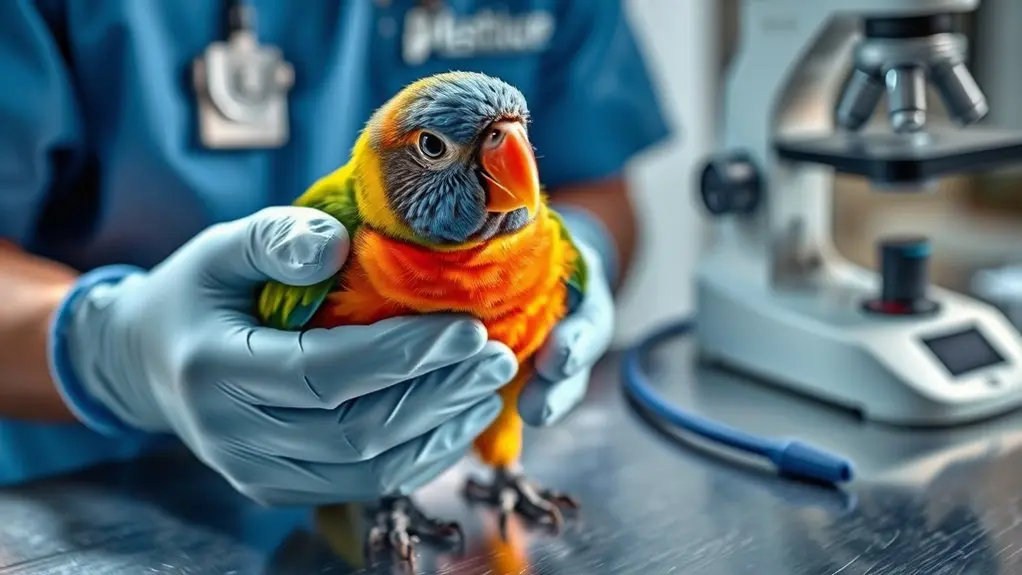
When your vet is trying to figure out why your bird has diarrhea, they’ll start with a thorough physical exam. They’ll also ask about your bird’s medical history to get a better idea of what might be going on.
Next, they’ll usually run some diagnostic tests like blood work, fecal analysis, and imaging. These tests help them spot infections, organ problems, or any structural issues that could be causing the diarrhea.
By looking at these results, your vet can detect important clues such as parasites, electrolyte imbalances, or blockages that might be contributing to your bird’s condition.
This way, they can get to the root of the problem and recommend the best treatment.
Diagnostic Procedures Overview
Although bird diarrhea can stem from various causes, veterinarians rely on a systematic diagnostic approach to pinpoint the underlying issue. They begin by evaluating genetic predispositions and environmental factors through a thorough physical exam and medical history review.
To detect infectious agents, fecal sampling is performed for bacterial culture, parasite testing, and cytology. Blood tests, including CBC and biochemical profiles, assess organ function and systemic infection.
Imaging techniques such as radiography and ultrasound identify obstructions, tumors, or foreign bodies within the digestive tract. Based on clinical signs and preliminary results, vets may conduct specific disease testing, for example, for viral infections like Chlamydiosis.
This detailed protocol ensures accurate diagnosis and guides targeted treatment strategies for bird diarrhea. It’s all about getting to the root of the problem so the bird can get the best care possible.
Key Diagnostic Indicators
To accurately diagnose bird diarrhea, veterinarians rely on a combination of clinical signs and diagnostic testing. They start by examining your bird physically and observing the droppings’ consistency and frequency. A detailed medical history helps identify factors like nutritional deficiencies or environmental stress that may contribute to symptoms.
Laboratory diagnostics, including fecal analysis, bacterial culture, and parasite testing, target infectious agents. Blood work, such as complete blood count (CBC) and biochemistry profiles, assesses organ function and detects systemic infections or toxins.
Imaging techniques like radiographs or ultrasounds reveal obstructions or foreign bodies impairing digestion.
Specific disease tests for conditions like Chlamydiosis or viral infections help confirm underlying causes. By integrating these key diagnostic indicators, veterinarians can pinpoint the root cause of diarrhea and tailor effective treatment plans. It’s all about gathering the right information to help your bird feel better soon.
How to Treat Bird Diarrhea
Providing prompt and appropriate treatment is essential to managing bird diarrhea effectively. Begin with fluid therapy, administering glucose and water to prevent dehydration.
Nutritional adjustments are critical; offer a bland diet to reduce gastrointestinal stress while avoiding abrupt changes.
Environmental enrichment supports recovery by minimizing stressors that could make symptoms worse.
Administer probiotics made specifically for birds to restore healthy gut flora and improve digestion.
If a veterinarian diagnoses infections or parasites, follow their prescribed medications exactly.
Keep the bird in a warm, stable environment to promote healing and reduce symptom severity.
Monitor your bird closely. If you don’t see any improvement within 24 to 48 hours, stop the current treatment and check in with your vet for further evaluation.
This approach ensures thorough and targeted management of bird diarrhea.
Caring for Your Bird at Home During Diarrhea
Managing your bird’s environment and daily care plays an essential role in supporting recovery from diarrhea. Maintain a warm, quiet space around 80°F to assure comfort.
Prioritize cage hygiene by cleaning the cage, toys, and perches daily with bird-safe disinfectants to minimize infection risks.
Change cage paper daily to monitor droppings closely, noting alterations in consistency, color, or frequency.
For bird nutrition, avoid sudden dietary changes and provide easily digestible, low-fat foods to reduce gastrointestinal stress.
Offer fresh, clean water regularly, supplementing with a small amount of glucose or electrolyte solution to prevent dehydration.
These precise steps facilitate your bird’s recovery, emphasizing consistent environment control, nutritional stability, and strict hygiene to effectively manage diarrhea at home.
Other Bird Digestive Problems That Look Like Diarrhea
Although diarrhea is a common sign of digestive distress in birds, several other conditions can produce droppings that appear similarly loose or abnormal.
Diarrhea in birds often signals digestive issues, but other conditions can cause similarly loose droppings.
For instance, an impacted crop, often caused by dietary causes or improper feeding, can lead to liquidy droppings that mimic diarrhea.
You should also consider maldigestion resulting from liver or pancreatic disease, which generates loose stools resembling diarrhea.
Infections like candidiasis introduce mucous and liquid components to droppings, further complicating diagnosis.
Stress-induced gastrointestinal upset and conditions such as sour crop or regurgitation produce unformed droppings containing excess liquid or undigested food.
Recognizing these distinct causes is essential, as treatment varies considerably.
Careful examination and veterinary consultation will help differentiate true diarrhea from these similar presentations and guide appropriate intervention.
Frequently Asked Questions
Can Bird Diarrhea Be Contagious to Humans?
Yes, bird diarrhea can be contagious to humans through cross-species transmission, especially with pathogens like bird flu.
You should practice strict hygiene and consult a vet to minimize infection risks from contaminated droppings.
Taking simple precautions really helps keep both you and your birds safe.
What Foods Should I Avoid to Prevent Bird Diarrhea?
Nearly 70% of bird digestive issues stem from diet. To keep your bird’s digestive health in check, it’s important to avoid spoiled foods and high-fat items. Processed snacks are also a no-go.
Spicy foods can upset their tummy, so steer clear of those too. And try not to make any sudden changes in their diet. Gradual adjustments work best to prevent diarrhea and keep your bird happy and healthy.
How Long Can Bird Diarrhea Last Without Treatment?
Bird diarrhea can last from several hours up to several days without treatment. You’ll need to prioritize bird hydration and implement dietary adjustments promptly to prevent dehydration, weight loss, and serious health complications.
If the diarrhea sticks around, it’s really important to seek veterinary care. Don’t wait too long because your bird’s health could get worse. Keeping an eye on them and acting quickly makes all the difference.
Can Stress Alone Cause Bird Diarrhea?
You wouldn’t expect stress effects alone to cause diarrhea in birds, but they do, even without dietary impacts. Stress hormones change how the gut moves and secretes, which can lead to loose droppings.
This happens even if their diet stays perfect. It’s frustrating, but it’s true.
Are Certain Bird Species More Prone to Diarrhea?
Yes, you’ll find small birds and parrots are more prone to diarrhea because of their sensitive digestive systems. This can also affect their feather health, which is pretty important for them.
Waterfowl often get diarrhea due to parasites, which is a common issue for these birds. On the other hand, exotic species face severe digestive risks less frequently. So, they’re not as commonly affected by diarrhea as some other birds.
Conclusion
When your bird’s droppings turn watery, it’s a red flag waving in the storm of its health. You can’t ignore these signs. They’re the language of distress from your feathered friend’s digestive system.
By acting swiftly and following veterinary guidance, you can steer through this turbulent phase. Remember, understanding and timely care are the compass and anchor that keep your bird’s well-being on course. This ensures its vibrant flight continues unhindered.