
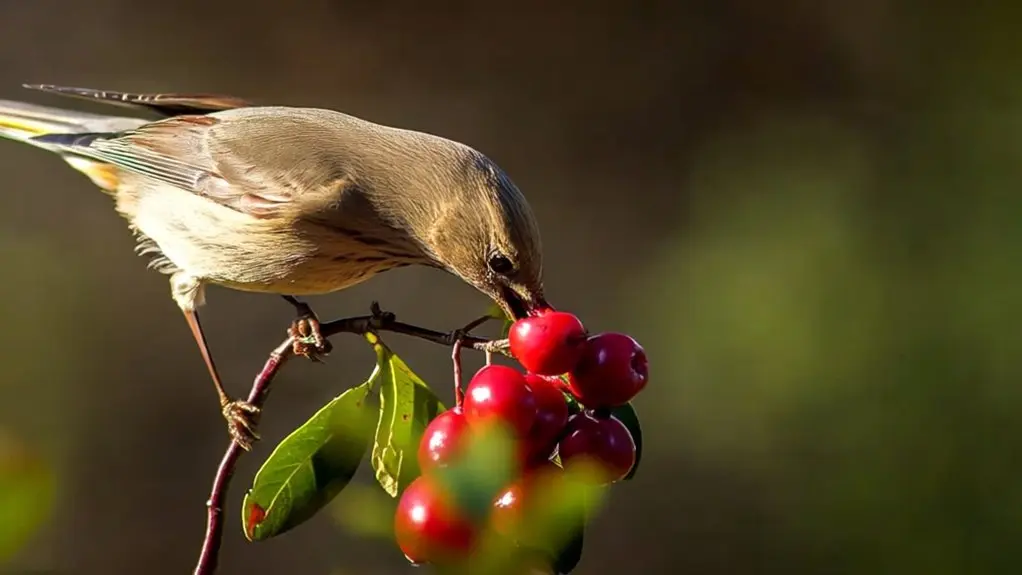
You can safely offer cranberries to many birds like cardinals, finches, and woodpeckers, especially in winter when food is scarce. Use fresh, unsweetened cranberries cautiously to avoid mold and choking risks. But dried cranberries without added sugars or preservatives are safer and more shelf-stable.
Always rinse and properly dry them before feeding. Watch for digestive or allergic reactions and stop if symptoms appear. To learn how to prepare cranberries safely and explore alternatives suited for wild birds, keep exploring further.
Which Birds Can Safely Eat Cranberries?
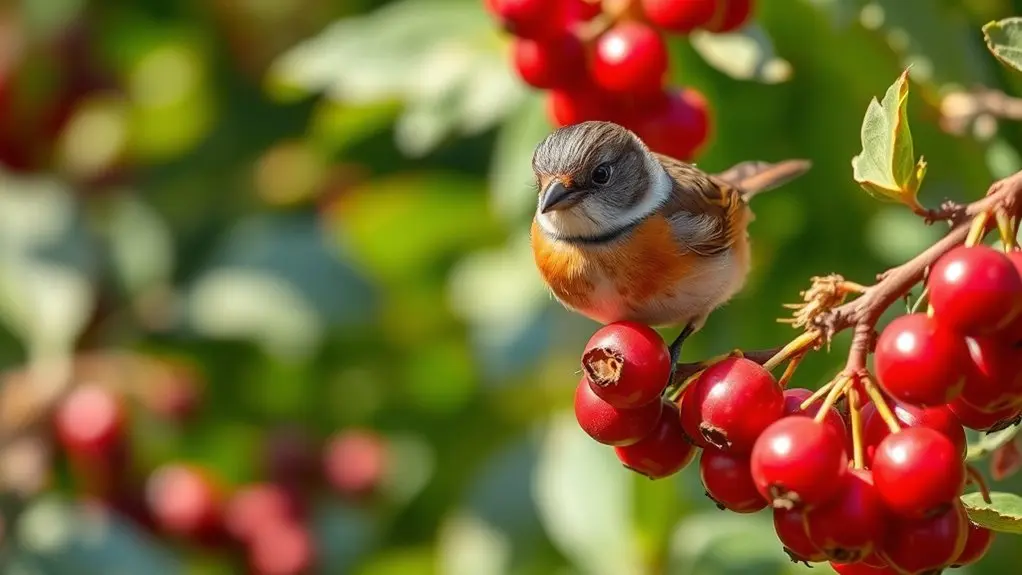
Although not all birds can safely eat cranberries, many common species like cardinals, finches, nuthatches, chickadees, jays, titmice, grosbeaks, and woodpeckers can include them in their diet without harm.
Understanding bird dietary preferences helps you provide the right food during cranberry harvesting seasons or even year-round.
Knowing birds’ dietary preferences ensures you offer appropriate food throughout cranberry season and beyond
Cranberries offer essential nutrients and support bird health, especially in colder months when natural food is scarce.
When feeding these birds, make sure to choose fresh, unsweetened, or properly dried cranberries to prevent mold and bacterial contamination.
Avoid processed or flavored cranberry products since they could disrupt digestion.
By matching cranberry harvesting and presentation with bird dietary needs, you encourage diverse species to thrive safely in your habitat.
This not only boosts their nutrition but also enhances your enjoyment of local wildlife.
Fresh vs. Dried Cranberries: What’s Best for Birds?
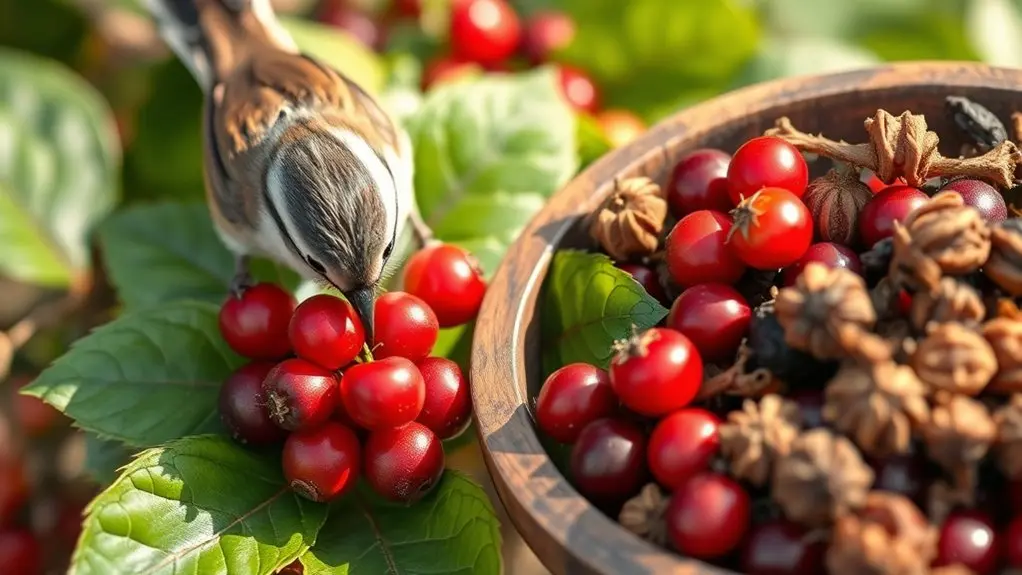
When feeding birds, it’s important to think about the risks that come with fresh cranberries. Because they’ve a high water content, fresh cranberries spoil quickly and can promote mold growth.
On the other hand, dried cranberries tend to be safer since they resist fermentation.
But here’s the catch—you want to make sure you pick dried cranberries that don’t have added sugars or preservatives. It’s totally okay to offer both fresh and dried cranberries in moderation.
Still, dried cranberries are usually more convenient and less likely to spoil, making them a great choice for bird feeding.
Fresh Cranberries Risks
Because fresh cranberries contain natural acids and tannins, feeding them to birds requires caution to avoid digestive discomfort or choking hazards. These compounds can disrupt bird digestion by irritating the gastrointestinal tract, potentially leading to cranberry toxicity if consumed excessively.
Also, the firm texture of fresh cranberries poses a choking risk, especially for smaller bird species. So, it’s best to offer fresh cranberries sparingly and only as an occasional treat rather than a regular food source.
Instead, focus on bird-friendly fruit alternatives with lower acidity. Remember, while fresh cranberries are natural, their chemical composition means you need to be careful to protect your birds’ health and prevent any adverse digestive reactions linked to cranberry toxicity.
Benefits Of Dried
Choosing the right form of cranberries can really make a difference in bird health and feeding success. Dried cranberries are usually the better choice because they resist mold and bacterial growth much better than fresh cranberries. Fresh ones spoil quickly since they’ve high moisture and sugars.
When you pick dried cranberries, go for varieties without added sugars, preservatives, or flavorings. This helps keep the birds safe and aligns with their dietary needs.
Nutritionally, dried cranberries pack a concentrated source of antioxidants and fiber, which supports bird health even more effectively.
Adding dried cranberries to your cranberry recipes for birdfeeders means the nutrition lasts longer and stays safe. Knowing these benefits helps you fine-tune your feeding strategies.
This way, you meet bird dietary needs while cutting down on risks from fresh fruit spoilage.
It’s all about supporting healthier and more sustainable bird feeding practices.
Preparing Cranberries Safely for Bird Feeding
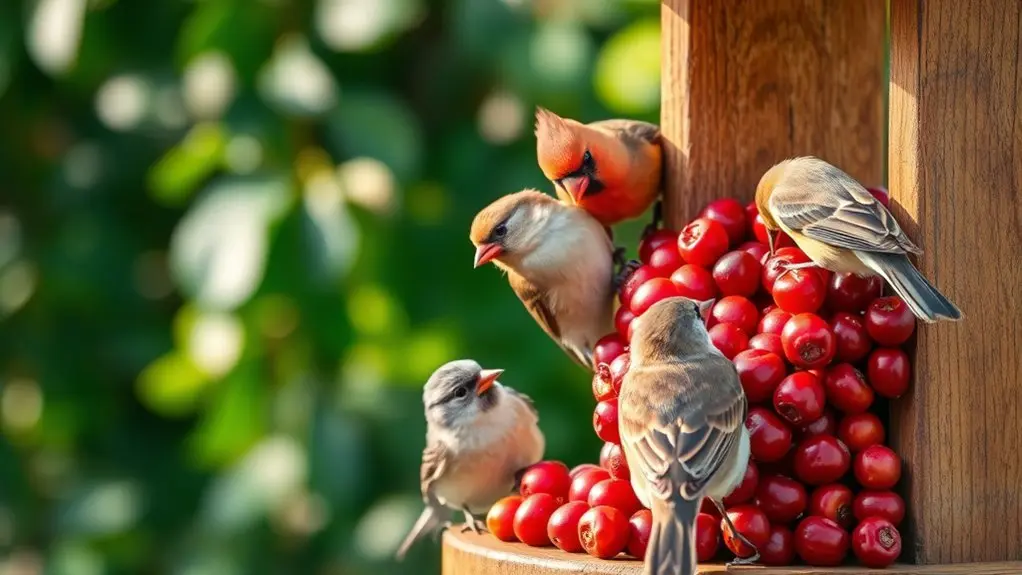
When you’re getting cranberries ready for feeding birds, it’s important to use properly dried berries. This helps cut down on mold growth and keeps bacteria at bay.
Make sure the drying process gets rid of moisture evenly throughout the berries. That way, the cranberries stay safe and last longer.
Plus, it keeps their nutritional value intact and helps protect the health of the birds you’re feeding.
Drying Cranberries Properly
Although fresh cranberries are nutritious, drying them properly is essential to prepare safe and long-lasting bird feed.
After cranberry cultivation and harvesting techniques yield ripe berries, rinse them thoroughly and remove stems or damaged fruit.
Spread the berries in a single layer on a baking sheet or dehydrator tray.
Use a food dehydrator at 135°F (57°C) for 10-12 hours until the cranberries become shriveled and leathery.
Alternatively, air-dry them in a warm, well-ventilated space, turning regularly for even drying.
Ensuring complete dehydration is vital to prevent bacterial growth and spoilage.
Store dried cranberries in airtight containers in a cool, dark place to maintain quality and avoid moisture absorption.
Proper drying preserves the nutritional value and safety of cranberries for bird consumption.
Avoiding Mold Growth
Because moisture fosters mold growth, you’ll need to guarantee cranberries are thoroughly dried before feeding them to birds. In cranberry cultivation, moisture control is essential to prevent fungal contamination, a principle that applies when preparing cranberries for bird dietary needs.
To avoid mold growth, follow these steps:
- Use dried cranberries instead of fresh ones, as they resist mold better.
- Store cranberries in a cool, dry environment to limit moisture exposure over time.
- Regularly inspect cranberries for mold or spoilage before offering them to birds.
Avoid soaking cranberries in water before feeding, since excess moisture promotes mold and bacterial growth. Maintaining these practices ensures cranberries remain safe and nutritious.
This way, you’ll support the health and dietary needs of wild birds effectively.
How to Spot If Cranberries Don’t Agree With Your Birds
If your bird experiences digestive upset such as vomiting or diarrhea after eating cranberries, it’s a clear sign the fruit may not agree with them. These signs of digestive upset indicate that the natural acids in cranberries could be irritating your bird’s digestive tract.
Digestive upset like vomiting or diarrhea after eating cranberries signals potential irritation from their natural acids.
Also, watch closely for allergic reaction indicators like swelling, itching, or respiratory distress. Behavioral changes, including reduced appetite or lethargy, can signal an adverse response too.
To accurately identify intolerance, introduce cranberries gradually and in small amounts, monitoring your bird’s reaction carefully.
If you notice these symptoms, immediately remove cranberries from their diet and consult with an avian vet.
Catching these signs early helps prevent more serious health complications and keeps your bird’s diet safe and appropriate.
Why Birds Usually Don’t Eat Cranberries in the Wild
When you observe wild birds in their natural habitats, you’ll notice they rarely consume cranberries. This behavior relates closely to bird habitat preferences and natural foraging behaviors. Here’s why cranberries aren’t a common food source:
Cranberries grow in specific wetland areas, but most birds don’t inhabit or forage extensively in these locations. Birds favor native fruits and berries that are more abundant and accessible within their typical habitats.
Observations show birds rarely eat cranberries from plants, indicating they don’t naturally seek them as food.
These factors explain why cranberries aren’t part of most wild birds’ diets. The misconception that birds eat cranberries arises mainly from human feeding practices, not from natural foraging patterns in the wild.
Best Alternatives to Cranberries for Winter Bird Feeding
Although cranberries aren’t a typical food source for wild birds, you can provide nutritious alternatives during winter to support their dietary needs. Understanding bird migration patterns and seasonal fruit availability helps you select suitable foods.
Dried fruits like raisins, cherries, and apples offer energy-dense options favored by many species.
Native berries such as winterberry and inkberry align with birds’ natural diets and provide reliable nutrition.
Juniper berries are particularly nutrient-rich, attracting woodpeckers and thrushes during colder months.
To guarantee safety and nutritional value, use real dried fruits without added preservatives or flavorings.
Also, planting native berry-producing shrubs and trees creates sustainable, long-term food sources that accommodate shifting bird migration patterns and the seasonal scarcity of fruits in winter habitats.
Choosing Bird Foods With Real Cranberries
Because cranberries offer valuable nutrients to many bird species, choosing bird foods that contain real cranberries can enhance your feeder’s appeal and nutritional quality. To align with bird flavor preferences and maximize cranberry nutritional content, follow these guidelines:
First, verify the label for actual dried or frozen cranberries, not artificial flavorings. This assures authentic nutrition for your feathered friends.
Next, select blends like “Fruit N Berry” or “Nut N’ Berry” which commonly include real cranberries. These mixes attract cardinals, finches, nuthatches, chickadees, jays, and woodpeckers.
Also, choose dried cranberries that are free from added sugars or preservatives. This helps maintain bird health and prevents mold or bacterial growth.
Frequently Asked Questions
Can Cranberries Help Improve a Bird’s Feather Condition?
Cranberries’ nutritional benefits, like antioxidants and vitamin C, may support your bird’s feather condition indirectly.
When it comes to bird dietary considerations, it’s best to feed cranberries in moderation. This helps avoid digestive issues while promoting overall health. And good health naturally benefits your bird’s feathers.
Are Cranberry Seeds Safe for Birds to Consume?
Just like cranberry harvesting requires precision, you should offer cranberry seeds carefully. They’re safe for birds when clean and pesticide-free.
Including them in a bird’s diet supports good nutrition. But remember, don’t overfeed to avoid any digestive upset. It’s all about balance!
How Often Can Birds Have Cranberries as Treats?
You should give birds cranberries only once or twice a week, respecting cranberry history and harvesting methods. This moderation prevents digestive issues, ensuring your bird benefits from cranberries without compromising its overall balanced diet.
It’s all about balance, really. Treat cranberries as a special snack, not a regular meal. That way, your bird stays happy and healthy!
Do Cranberries Attract Specific Bird Species More Than Others?
Like bees to blossoms, berry-loving birds prefer cranberries, reflecting wild bird diets shaped by cranberry cultivation. Species such as cardinals and grosbeaks show higher attraction.
Others less adapted to berries tend to seek alternative food sources in winter. It’s interesting how these preferences play out depending on the bird’s diet and habitat. So, cranberries really do pull in some species more than others.
Can Birds Develop Allergies to Cranberries?
You rarely see birds developing allergies to cranberries during migration or cranberry harvesting seasons. While digestive issues can happen from additives, true allergic reactions in birds aren’t proven by science. They’re considered super rare in natural settings.
Conclusion
While cranberries might not be a staple in your birds’ natural diet, offering them in moderation can add a splash of variety to their winter menu. Just remember to choose fresh or properly prepared options to avoid any digestive hiccups.
If cranberries don’t sit well, there are plenty of other nourishing treats to keep your feathered friends thriving. With thoughtful choices, you’ll create a safe and inviting feast that supports their health through the colder months.