
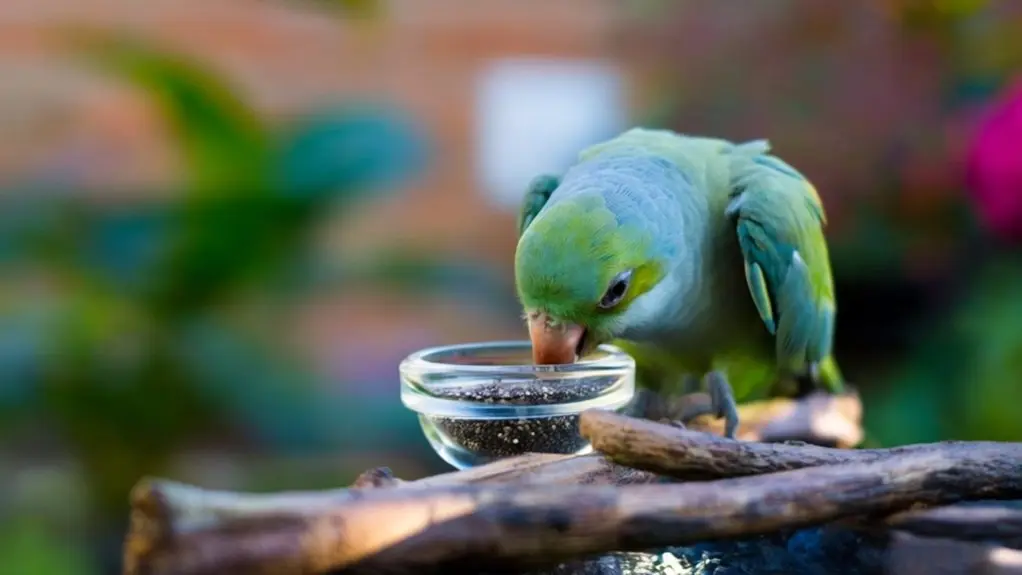
You can safely offer chia seeds to wild and pet birds by introducing them gradually. Just make sure the seeds are plain, unsalted, and mold-free. These little seeds pack a punch with omega-3 fatty acids, minerals, and energy.
They really help support feather health, digestion, and seasonal activities like migration and breeding. Start with a small pinch mixed into their regular food. Keep an eye out for any reactions and increase the amount slowly.
If you want to understand species preferences and get more feeding tips, keep exploring the best practices. It’s always good to learn more to keep your feathered friends happy and healthy!
Are Chia Seeds Safe for Wild and Pet Birds?
While chia seeds are generally safe for both wild and pet birds, you should introduce them gradually to avoid digestive upset or allergic reactions. Chia seeds are non-toxic and provide beneficial nutrients like omega-3 fatty acids and fiber.
These nutrients support birds during critical periods such as migration and nesting.
During bird migration, energy demands increase, and chia seeds can offer a compact nutrient source. Similarly, nesting habits require adequate nutrition to sustain egg production and chick development.
Just make sure the seeds are plain, unsalted, and free from additives.
Keep an eye on the birds when you first introduce chia seeds, as individual sensitivities might vary.
If you’re caring for pet birds with specific dietary needs, it’s a good idea to consult an avian veterinarian. They can help ensure chia seeds fit safely into your bird’s diet.
Key Nutrients and Seasonal Benefits of Chia Seeds for Birds
You’ll find chia seeds are an excellent source of omega-3 fatty acids, which help promote healthy feathers and overall wellness in birds.
Plus, they contain essential minerals like calcium and magnesium that support strong bones and reproductive health.
What’s really great is how chia seeds work seasonally. During colder months and breeding periods, they give birds an extra boost to their immunity and energy levels, helping them stay healthy and active.
Nutrient-Rich Omega-3 Source
How do chia seeds support birds throughout the year? Their rich omega-3 fatty acids play a critical role in maintaining healthy plumage and overall bird health. When birds consume chia seeds, their efficient bird digestion processes extract these essential fats, which aid in feather growth and tissue repair.
Additionally, chia seeds’ high fat content provides essential energy during colder months, helping birds conserve warmth. Proper seed storage guarantees these nutrients remain potent, allowing birds to access them when needed.
Beyond fats, chia seeds contain calcium and antioxidants, indirectly supporting bone strength and protecting against oxidative stress. By incorporating chia seeds into their diet seasonally, birds benefit from a nutrient-dense source that supports physiological demands year-round without compromising digestive efficiency or nutrient availability.
Seasonal Immune Support
Why do chia seeds play an essential role in seasonal immune support for birds? Chia seeds supply omega-3 fatty acids that reduce inflammation and strengthen immunity. This is critical during bird migration and nest building.
Their high fat content helps maintain body warmth in winter. At the same time, calcium and manganese support eggshell formation in spring. Plus, fiber aids digestion, removing toxins to enhance immunity during seasonal shifts.
| Season | Key Nutrients | Benefits for Birds |
|---|---|---|
| Winter | Fat, Omega-3 | Body warmth, cold stress resistance |
| Spring | Calcium, Manganese | Eggshell formation, reproductive health |
| Migration | Omega-3, Fiber | Immune support, toxin removal |
| Nest Building | Calcium, Fiber | Structural health, digestion |
Feeding chia seeds seasonally boosts birds’ resilience to environmental stressors. It supports their long-term health in a natural way.
Essential Minerals For Birds
Although often overlooked, essential minerals in chia seeds play a critical role in supporting birds’ physiological functions throughout the year. Calcium, magnesium, phosphorus, and manganese in chia seeds contribute substantially to bone health, metabolic processes, and growth.
During breeding seasons, calcium supports eggshell formation and embryo development, directly influencing reproductive success.
Magnesium regulates muscle and nerve function, which is indispensable for bird behavior such as flight and seed dispersal.
Phosphorus ensures efficient energy transfer and maintains feather integrity, important for thermoregulation and mating displays.
Seasonal feeding on chia seeds enhances immune responses, preparing birds for environmental challenges.
Which Wild Bird Species Eat Chia Seeds?
You’ll find that common U.S. seed-eaters like sparrows, bluejays, and doves often enjoy chia seeds when they come across them.
Over in the UK, finches and buntings are pretty quick to nibble on these seeds in their natural habitats.
Every now and then, you might even spot Red-bellied Woodpeckers adding chia seeds to their more varied diet.
Common US Seed-Eaters
When chia seeds are available, several common wild bird species in the US actively incorporate them into their diets. Finches, sparrows, and bluejays regularly consume chia seeds, especially during bird migration periods when energy demands increase.
Blackbirds and mourning doves also include chia seeds in their regular seed intake, benefiting from the nutrient density. Pigeons and doves favor chia seeds, which support their nesting behaviors by providing essential fatty acids.
Additionally, wild seed-eaters like buntings opportunistically feed on chia seeds when accessible. Even insectivorous birds such as Red-bellied Woodpeckers occasionally supplement their diet with chia seeds during foraging.
Understanding these feeding patterns highlights how chia seeds contribute to the nutritional ecology of diverse US bird species, particularly during critical life stages like migration and nesting. It’s pretty interesting to see how different birds make the most of this nutrient-packed seed when they can.
UK Birds That Consume
Which wild bird species in the UK incorporate chia seeds into their diets? Observations reveal that several seed-eating birds consume chia seeds, especially during bird migration and nesting behaviors when nutritional demands rise. Chia seeds provide essential nutrients that support energy and reproductive needs.
You’ll find these UK species consuming chia seeds: finches and buntings, which readily incorporate chia seeds. Sparrows, blackbirds, and doves feeding from feeders or ground sources. Bluejays and desert woodpeckers, opportunistic seed-eaters. European goldfinches, supplementing their diet occasionally. Various garden birds benefiting during breeding and wintering periods.
This dietary inclusion aligns with ecological patterns, enhancing survival during critical life stages like migration and nesting. It’s pretty interesting how these seeds play a key role during important times for birds. You can see how nature provides what’s needed just when it’s needed most.
Occasional Seed-Eating Species
Although seed consumption isn’t the primary feeding behavior for some species, several wild birds occasionally incorporate chia seeds into their diet.
In the US, bluejays, blackbirds, and pigeons often consume chia seeds, particularly near feeders. Desert woodpeckers and insectivorous Red-bellied Woodpeckers supplement their diets with chia seeds during certain seasons.
In the UK, finches, sparrows, and buntings also partake in chia seed consumption. These occasional seed-eating behaviors align with bird migration patterns and nesting behaviors, as nutrient needs fluctuate.
Wild birds typically eat chia seeds raw, either directly from the plant or within mixed seed foraging.
Understanding these patterns helps clarify how and when chia seeds fit into the diets of species not primarily classified as seed eaters.
How to Introduce Chia Seeds to Your Bird’s Diet
Since chia seeds are a new addition to your bird’s diet, start by mixing a tiny pinch into their regular food during the first week. Observe bird behavior closely, especially how they handle and store seeds, as sudden changes can affect seed storage habits.
Gradually increase chia seeds over subsequent weeks, ensuring proper adjustment.
Follow these guidelines: Serve chia seeds unsalted, unflavored, and preferably soaked in water to enhance digestibility. Introduce them slowly to avoid digestive upset and monitor stool consistency.
Note changes in seed storage behavior, which may indicate acceptance or rejection.
Make sure to maintain consistent feeding times to observe natural reactions. And if your bird has any health issues, it’s a good idea to consult a veterinarian before adding chia.
This measured approach respects physiological adaptation and supports dietary integration efficiently.
Easy Ways to Serve Chia Seeds to Birds
After gradually introducing chia seeds to your bird’s diet, you’ll want to think about some easy ways to serve them. Soak chia seeds in water or juice until they form a gel. This makes them easier for birds to digest.
You can mix these soaked seeds with chopped fruit or other seeds to create colorful, nutritious seed mixtures. Or, if you prefer, just sprinkle dry chia seeds directly onto existing bird feeders to give a nutritional boost.
For easy access, use a small dish or shallow tray to serve soaked chia seeds and keep them fresh.
When placing feeders, choose spots where birds feel safe and can easily reach the chia seed mixtures. This helps encourage feeding and makes it easier for you to watch the birds.
Precautions When Feeding Chia Seeds to Birds
When introducing chia seeds to your birds, start gradually to prevent digestive upset and closely observe their reactions. Bird digestion can be sensitive to sudden dietary changes, so careful monitoring is essential.
Also, consider these precautions to keep things safe: provide only unsalted, unflavored chia seeds free of additives. Watch for signs of allergies or any adverse reactions during those first feedings.
Avoid feeding seeds that show any signs of mold or spoilage. It’s important to store chia seeds properly to prevent contamination and keep them fresh.
If you’re unsure, it’s always a good idea to consult an avian veterinarian for advice tailored to your bird’s needs. Following these steps helps protect your birds from digestive troubles and potential illness caused by spoiled seeds, keeping them healthy and happy.
Why Adding Chia Seeds Is Great for Your Backyard Birds
Introducing chia seeds thoughtfully sets the stage for their many benefits to backyard birds. Rich in omega-3 fatty acids, chia seeds enhance plumage quality. This is especially important during bird migration when feather condition impacts flight efficiency.
Their mineral content, including calcium and phosphorus, supports bone strength and nesting behaviors. This helps with reproductive success, which is great news for your feathered friends. By adding chia seeds to feeders, you attract diverse species such as finches and bluejays. This promotes local biodiversity and makes your backyard more lively.
The seeds’ high fiber content improves digestion, enabling birds to use nutrients more effectively. Plus, chia seeds bolster immune function and energy levels across seasons. This supports both migratory endurance and nesting efforts.
Incorporating chia seeds into your bird-feeding routine provides scientifically backed nutritional support. It benefits various physiological and behavioral aspects vital to backyard bird populations. So, why not give your birds a little extra boost?
Frequently Asked Questions
Can Chia Seeds Help Injured Birds Recover Faster?
Yes, chia seeds can help injured birds recover faster by enhancing bird nutrition with omega-3s and antioxidants. These nutrients support healing and overall health.
That said, you need to consider how well birds can digest the seeds. It’s best to use chia seeds as a supplement rather than a main food source.
And of course, proper veterinary care should always accompany any nutritional support. Combining both gives injured birds the best chance to bounce back quickly.
Do Chia Seeds Affect Bird Migration Patterns?
You won’t find evidence that chia seeds affect bird migration patterns. Seed digestion supports bird dietary needs but doesn’t influence migration triggers. These triggers rely on environmental cues rather than nutritional intake or specific seed consumption.
Are Chia Seeds Safe for Baby Birds or Nestlings?
You shouldn’t feed chia seeds to baby birds. Their delicate digestive systems can’t handle the fiber and swelling. This can disrupt bird seed nutrition and natural bird dietary habits.
These habits are essential for their growth and development. So, it’s best to stick with foods that are safe and appropriate for nestlings. Keeping their diet natural helps them thrive.
Can Chia Seeds Replace Other Bird Feed Entirely?
You can’t replace other bird feed entirely with chia seeds. Despite their impressive seed nutrition, they lack the full spectrum needed.
Birds need a mix of seeds to get all the vitamins and minerals for their best health. So, it’s important to offer a variety rather than relying on just one type.
How Do Chia Seeds Compare to Flax Seeds for Birds?
You’ll find chia seeds offer superior seed nutritional content and better suit dietary preferences than flax seeds. They provide more omega-3s and essential minerals, which are great for birds.
Plus, chia seeds are easier to digest and have a longer shelf life. This makes them a more efficient choice for birds overall. So, if you’re deciding between the two, chia seeds might just be the better option.
Conclusion
You’ll find that adding chia seeds to your bird’s diet is a gentle way to boost their nutrition without overwhelming their system. These tiny powerhouses quietly support overall health and seasonal resilience for both wild and pet birds.
Just remember to introduce them gradually and watch for any subtle reactions. With mindful feeding, you’re offering a little nature’s secret that keeps your feathered friends thriving in the most natural, unobtrusive way.