
You can safely offer your bird small amounts of fresh, organic ginger occasionally. It provides anti-parasitic, anti-inflammatory, and immune-supporting benefits without significant risks when introduced gradually.
Just be sure to avoid combining ginger with toxic foods like onions or garlic. Keep an eye on your bird for any signs of digestive upset or allergies.
Remember, ginger should always be a treat, not a daily staple. Adjust the amounts based on your bird’s size and species. Exploring further reveals detailed guidelines and precautions.
Is Ginger Safe for Birds?
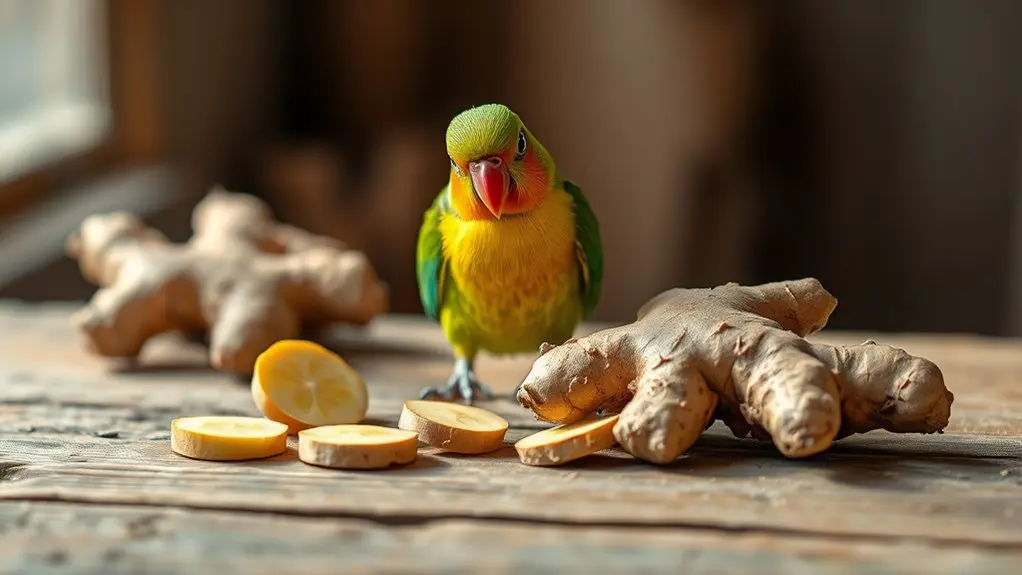
Although fresh ginger is generally safe for birds when given in moderation and properly prepared, you should introduce it carefully to avoid any adverse effects. Incorporating ginger into your bird’s diet requires strict dietary moderation, as too much might cause intolerance or allergic reactions.
You can use ginger as a flavor enhancer in cooked foods or smoothies, but always offer it as an occasional treat rather than a regular part of their meals. Parrots often enjoy ginger’s taste, making it a popular supplement when balanced correctly within their nutritional plan.
Keep an eye on your bird after the first time you give ginger to spot any signs of digestive upset or sensitivity. Sticking to moderation helps ensure ginger contributes safely to your bird’s diet without messing with their overall health.
How Does Ginger Benefit Your Bird’s Health?
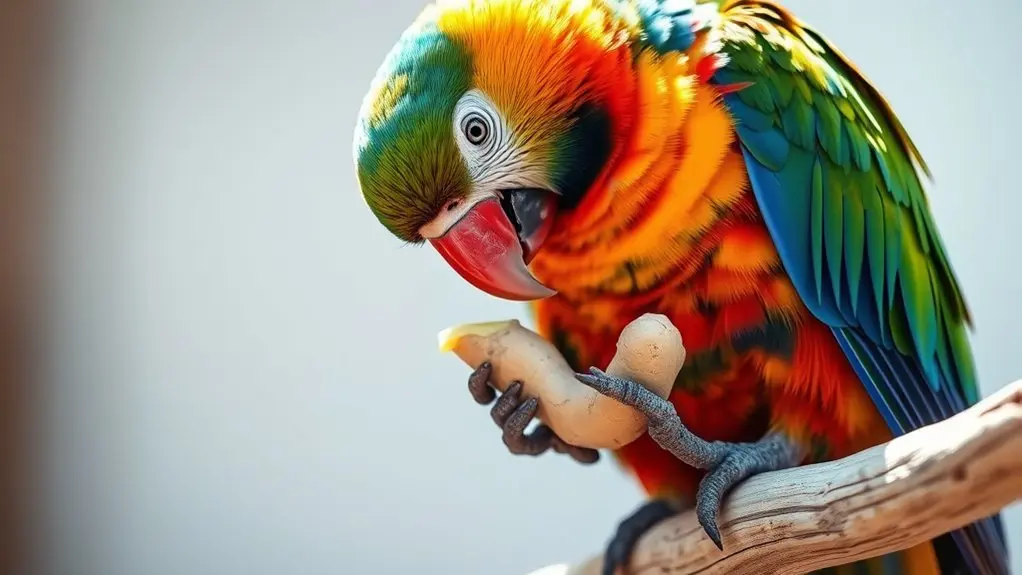
You’ll find that ginger has some pretty impressive anti-parasitic properties. This means it can help keep those pesky parasites under control and reduce their numbers in your bird.
On top of that, ginger’s natural compounds actually make food taste better, which encourages your bird to eat more without any health risks.
Knowing these benefits can really help you add ginger to your bird’s diet safely and effectively.
Anti-Parasitic Properties
How exactly does ginger contribute to your bird’s health regarding parasite control? Ginger contains bioactive compounds like gingerol, which exhibit natural anti-parasitic properties. These compounds can disrupt parasite survival, potentially weakening internal parasites.
Additionally, ginger stimulates your bird’s immune system, enhancing its ability to resist parasitic infections. Its anti-inflammatory effects also reduce tissue inflammation caused by parasites, supporting recovery.
To safely harness these benefits, maintain a moderate feeding frequency, as excessive ginger can trigger ginger allergies or digestive upset. Introducing ginger gradually and monitoring your bird’s response prevents adverse effects.
When incorporated thoughtfully into a balanced diet, ginger supports natural parasite resistance without harmful side effects. This makes it a valuable dietary addition for parasite management in birds.
Flavor Enhancer Benefits
Because ginger contains compounds like gingerol that offer anti-inflammatory and antioxidant effects, it serves as more than just a medicinal ingredient. It also enhances the flavor of your bird’s food. This flavor boost encourages birds to forage more diversely, which improves their nutritional intake.
By cultivating ginger, you can provide fresh sources that stimulate natural bird foraging behavior. Plus, ginger’s tasty flavor may help introduce varied diets. That supports both digestive health and immune function.
| Benefit | Mechanism | Impact on Bird Health |
|---|---|---|
| Flavor Enhancement | Stimulates taste receptors | Increases dietary diversity |
| Immune Support | Antioxidant gingerol compounds | Boosts resistance to illness |
| Digestive Aid | Anti-inflammatory effects | Promotes gut health |
Incorporating ginger thoughtfully can really benefit your bird’s overall well-being.
How Can Ginger Help Control Parasites in Birds?
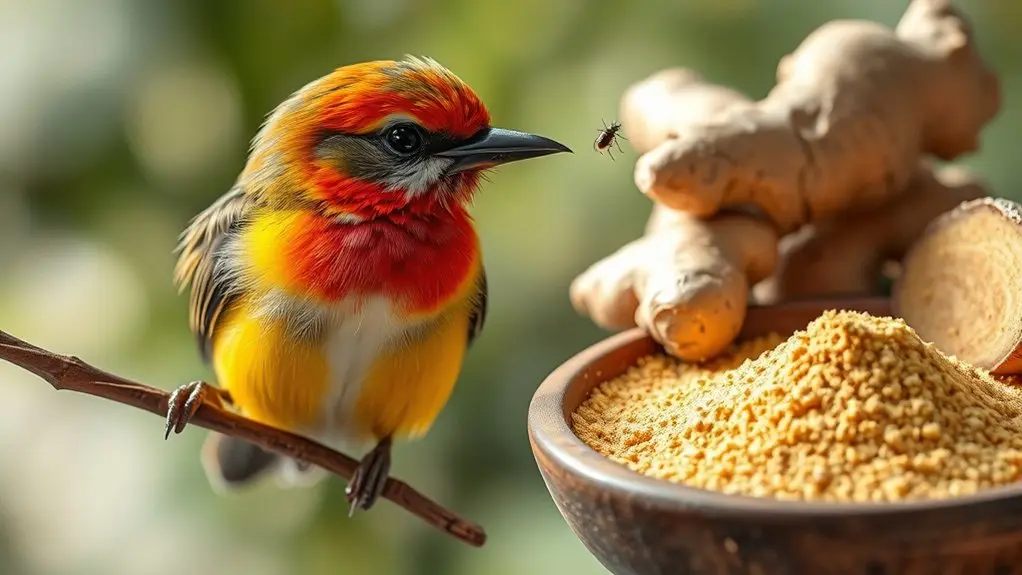
You’ll find that ginger contains bioactive compounds like gingerol, which have strong anti-parasitic effects by stopping parasite growth.
When you add ginger to your bird’s diet, it helps create an environment in their digestive tract that basically starves the parasites and breaks their life cycle.
This two-pronged approach makes it easier to control parasites without having to depend only on traditional treatments.
Anti-Parasitic Properties
Although scientific studies specifically targeting ginger’s effects on bird parasites remain limited, compounds like gingerol in ginger have shown notable anti-parasitic properties in various contexts.
When you consider using ginger for birds, it’s important to manage the dosage carefully. Too much ginger might affect different bird species differently and could impact their overall health.
Ginger’s bioactive compounds may help reduce parasite loads by creating a less favorable environment for parasites and supporting the bird’s immune response.
While traditional practices support ginger’s role in expelling intestinal parasites, you should think of it as a complementary measure rather than a replacement for veterinary treatments.
Always check with an avian veterinarian to determine safe dosing and make sure ginger is compatible with your bird species before adding it to their diet.
Parasite Starvation Mechanism
When birds consume ginger, the bioactive compounds like gingerol actively create an environment that disrupts parasite survival by making it less hospitable. This effect interferes with the parasite lifecycle, particularly by inhibiting their feeding and reproductive activities within the host’s intestines.
Through dietary integration, ginger’s antiparasitic properties effectively starve parasites by limiting their ability to obtain nutrients, reducing their overall population. Additionally, ginger’s anti-inflammatory and immune-enhancing effects support the bird’s natural defenses, further suppressing parasite development.
Regular, moderate inclusion of ginger in a bird’s diet can consequently contribute to lowering parasite loads via this starvation mechanism. However, it’s important to note that ginger works best as a complementary measure and shouldn’t replace conventional antiparasitic treatments.
How to Introduce Ginger to Your Bird’s Diet
Since birds can be sensitive to new foods, you should introduce ginger gradually by offering small, thin slices or finely chopped pieces mixed into familiar foods like smoothies or cooked grains. This approach supports food safety and minimizes stress on your bird’s digestive system.
Use fresh, organic ginger to avoid preservatives or additives that could harm your pet.
Observe your bird closely for any adverse reactions, such as behavioral changes or reduced appetite, during initial exposure.
Incorporate ginger once or twice weekly in moderate amounts to maintain a balanced bird diet and reduce the risk of overexposure.
Combining ginger with other healthy ingredients creates palatable treats, encouraging acceptance while ensuring nutritional variety and maintaining excellent food safety standards.
This way, your bird can enjoy the benefits of ginger without any fuss.
How Much Fresh Ginger Is Too Much for Birds?
Introducing ginger to your bird’s diet requires careful attention to quantity, as overfeeding can cause digestive disturbances or allergic reactions. You should limit fresh ginger to a tiny slice or a pinch, offered once or twice weekly. The exact amount may vary depending on your bird’s size and bird color, as some species with more sensitive digestive systems or vibrant plumage might react differently.
Also, consider your bird’s cage size. Smaller cages often house smaller birds, which need stricter portion control to avoid adverse effects. Excessive ginger intake could interfere with medications or trigger allergies.
Foods to Avoid When Feeding Ginger Treats
Although ginger offers health benefits for many birds, you must avoid certain foods when preparing ginger treats to prevent adverse reactions. If your bird has known ginger allergies or sensitivities, exclude ginger entirely to eliminate risk.
Avoid using ginger processed with added salt, sugar, or preservatives, as these toxic ingredients can harm avian health.
Never feed ginger combined with onions or garlic, which are toxic to birds and may cause severe complications.
Always use fresh, uncontaminated ginger free from mold or spoilage to prevent gastrointestinal upset.
Limit ginger intake to occasional treats instead of daily staples to reduce the risk of digestive issues.
How to Spot Bad Reactions to Ginger in Birds
When you add ginger to your bird’s diet, closely monitor its response to detect any adverse reactions early. Toxic symptoms may include gastrointestinal upset such as vomiting, diarrhea, or abnormal droppings.
Pay attention to behavioral changes like lethargy, loss of appetite, or signs of discomfort, as these often indicate a negative response.
Watch for changes like lethargy or loss of appetite as signs your bird may be reacting poorly.
Allergic reactions can show up as swelling around the face or eyes, and if you notice this, stop giving ginger right away.
It’s best to start with small amounts to minimize risk and watch your bird carefully for any signs of distress.
If you see any toxic symptoms or behavioral changes, remove ginger promptly. Doing this helps prevent further complications and keeps your bird safe.
Which Birds Enjoy Ginger the Most?
Since birds vary widely in taste preferences and dietary habits, certain species are more inclined to enjoy ginger than others. Among bird species, many parrots, such as African Greys, Cockatoos, and Conures, show a clear preference for ginger when it’s offered in moderation. These birds typically have varied dietary preferences and tend to accept flavorful, spicy foods. This makes ginger a favored addition.
In contrast, smaller bird species like songbirds and finches have more sensitive palates and may react adversely to strong flavors. So, it’s important to introduce ginger carefully to them.
Overall, larger and more intelligent bird species with diverse diets are more likely to seek out and enjoy ginger’s taste. This is especially true when it’s incorporated into mixed foods or smoothies.
Understanding these preferences helps tailor dietary options to each species’ needs. It’s all about knowing what your bird likes and what’s good for them. That way, you can keep them happy and healthy.
When Should You Consult a Vet About Feeding Ginger?
Recognizing which bird species respond well to ginger is important, but monitoring their health after introducing this spice is equally essential. You should seek veterinary consultation if your bird shows signs of gastrointestinal upset, allergic reactions, or unusual behavior following ginger consumption.
Changes in appetite or lethargy also warrant professional advice. Before adding ginger to your bird’s diet, especially if your bird has underlying health conditions or a history of digestive issues, consult a vet to avoid adverse effects.
Prompt veterinary consultation becomes vital if you observe any negative symptoms linked to ginger intake, ensuring timely intervention.
Taking these steps helps maintain your bird’s health and safety while exploring dietary additions like ginger.
Frequently Asked Questions
Can Ginger Affect a Bird’s Feather Color or Growth?
Ginger doesn’t affect your bird’s feather pigmentation or growth directly. Instead, focus on providing balanced nutrition with essential vitamins and minerals. These offer the true nutritional benefits needed for healthy feather development and vibrant coloration.
Is Powdered Ginger as Effective as Fresh Ginger for Birds?
Don’t assume powdered ginger matches fresh ginger’s potency. Its aroma and bioactive compounds degrade during drying.
For bird dietary benefits, fresh ginger offers stronger effects. That said, powdered can help if it’s pure and used cautiously in moderation. Just keep in mind, fresh is usually the better choice.
Can Ginger Be Mixed With Other Herbs for Birds?
You can mix ginger with other herbs to enhance your bird’s diet and herbal supplements. Use fresh, organic ingredients like parsley or chamomile. Introduce combinations gradually, and monitor reactions to guarantee safety and nutritional benefits.
It’s always a good idea to start slow and see how your bird responds. Mixing herbs can be great, but keeping an eye on any changes helps ensure everything’s working well. Just remember, a little patience goes a long way!
Does Ginger Interact With Common Bird Medications?
You should know ginger can interact with common bird medications, potentially altering their effects or causing herbal toxicity.
It’s really important to always consult your avian vet before mixing bird dietary supplements with medications. This helps guarantee safety and avoid any complications. Better safe than sorry, right?
How Often Can Birds Safely Have Ginger Treats?
You can safely give ginger treats once or twice a week, considering bird digestion sensitivity.
Just keep an eye out for any adverse reactions, especially if you notice a strong ginger odor.
If anything seems off, it’s a good idea to consult an avian vet. They can help you figure out the best frequency and quantity for your bird.
Conclusion
You might think giving your bird ginger is just a simple treat, but it comes with a bunch of health benefits and some potential risks too. While ginger can boost immunity and help control parasites, giving too much might upset your bird’s digestion.
It’s also important to know which birds actually enjoy ginger and how to spot any bad reactions early on. So, you should introduce ginger carefully and keep a close eye on your bird.
If you notice anything worrying, don’t hesitate to consult a vet right away. This way, you can make sure you’re using ginger safely and effectively.