
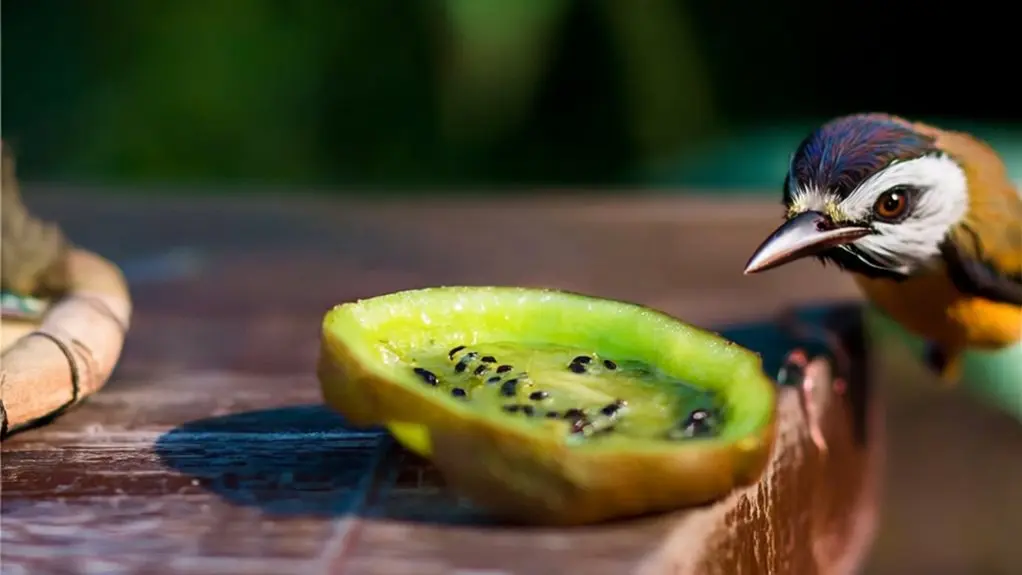
You can safely offer fresh, pesticide-free kiwifruit in small amounts to many garden birds. It provides them with valuable vitamins and antioxidants. Just make sure to remove any seeds or pits to avoid toxins and prevent choking, especially for smaller species.
Avoid rotten or chemically treated fruit because these can harm birds and attract pests. Proper preparation and controlled feeding support their health and local ecosystems.
If you’re curious, explore further to understand the best practices and ecological impacts for bird-friendly fruit feeding. It’s always good to know how to help our feathered friends the right way!
Understanding “Kiwi”: The Bird vs. The Fruit
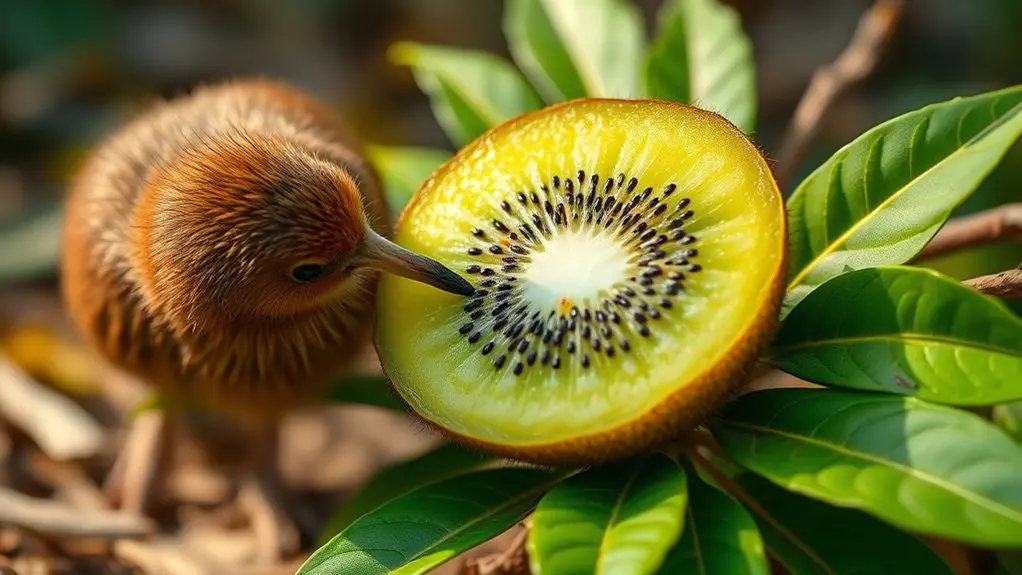
Although they share the same name, the kiwi bird and the kiwi fruit are entirely different entities with no biological relation. The kiwi bird lives in the dense forests and scrublands of New Zealand. It thrives in an environment with limited predators and lots of ground cover.
This bird is nocturnal and flightless, using its long beak to forage for insects and worms.
On the other hand, the kiwi fruit is a cultivated plant known for its fuzzy brown skin and bright green flesh. It’s packed with essential vitamins and dietary fiber, making it a nutritious fruit.
While the bird is legally protected in its natural habitat, the fruit is grown commercially all over the world. Knowing these differences helps explain why they share a name but are so different in their ecology and biology.
Can Garden Birds Safely Eat Kiwifruit?
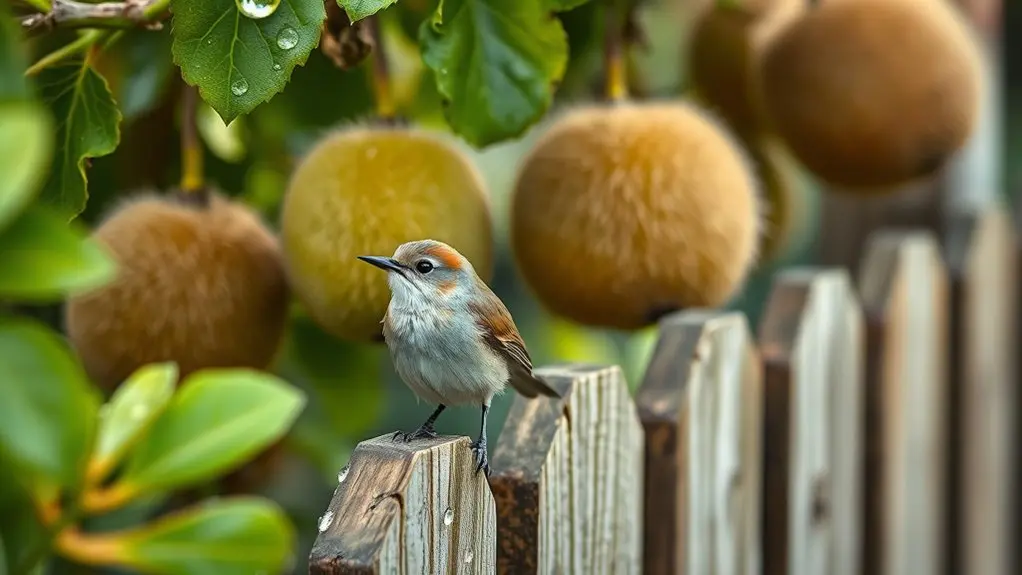
When you offer garden birds small amounts of fresh kiwifruit, you provide them with a valuable source of vitamins and energy that can complement their natural diet. In bird dietary terms, kiwifruit delivers notable fruit benefits, such as antioxidants and essential nutrients, which support overall health.
However, it’s important to serve kiwifruit cautiously, only small, fresh pieces, to prevent choking hazards in smaller species. Avoid kiwifruit treated with pesticides, as chemicals may harm birds.
While kiwifruit seeds are generally safe, birds can disperse them, potentially encouraging invasive plant growth.
How to Prepare and Offer Fruit Safely to Garden Birds
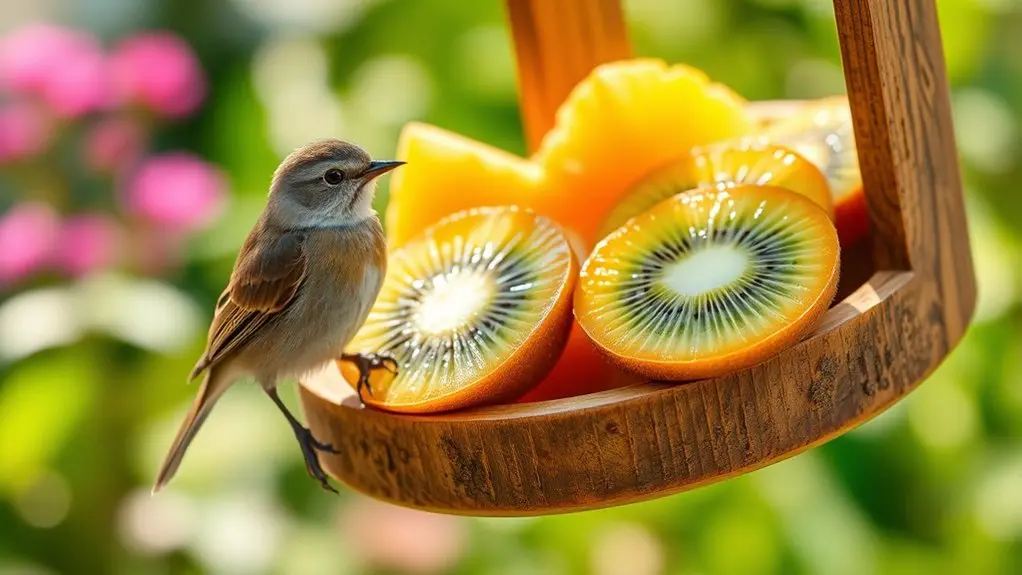
When you’re getting fruit ready for garden birds, make sure to take out any seeds and pits first. These can contain toxins like cyanide, which aren’t safe for the birds. It’s a simple step that makes a big difference.
Next, try offering the fruit on bird-safe feeders or platforms. This helps keep the birds safe from pests and predators.
Plus, if you put the fruit out at the same times each day, the birds will start to come back regularly.
Don’t forget to keep the feeding areas clean. Remove any fallen or damaged fruit quickly, so the environment stays healthy and inviting for your feathered visitors.
This way, everyone stays happy and safe!
Preparing Safe Fruit
Since some fruit components can pose risks to garden birds, you must prepare and offer fruit carefully to guarantee their safety. Remove seeds and pits before serving, as they may contain trace cyanide harmful to small birds. Use bird-safe feeders or platforms to keep fruit off the ground, reducing pest attraction and predation.
Bruised fruit retains nutritional benefits and is acceptable, but discard rotten or moldy pieces to prevent health issues. Consider seasonal availability when selecting fruit to provide fresh, appropriate nutrients year-round.
Protect fruit on trees with bird-safe netting or deterrents to avoid overfeeding or damage.
Regularly clean feeders to inhibit mold, bacteria, and pest growth, ensuring safe feeding conditions. These steps optimize fruit’s nutritional benefits while minimizing risks to garden birds. It’s all about keeping our feathered friends healthy and happy!
Offering Fruit Properly
Proper preparation and presentation of fruit play an essential role in safeguarding garden birds’ health. To optimize fruit nutritional benefits and align with natural bird behavior, follow these steps:
Cut fruit into small, manageable pieces to prevent choking hazards and facilitate feeding. Make sure to remove seeds and pits, as they may contain trace cyanide harmful to birds.
Using bird-safe feeders or platforms to present fruit off the ground helps reduce pest attraction and contamination.
You can offer bruised fruit but avoid rotten pieces. Also, regularly clean feeders to prevent illness and maintain hygiene.
This way, you help keep the birds healthy and happy while enjoying their visits.
Best Bird-Friendly Fruits Besides Kiwifruit
Although kiwifruit is a popular choice, native birds also benefit from a variety of other fruits such as apples, citrus, pears, stone fruits, and bananas. These fruits supply essential high-energy nutrients that birds need.
Fruit nutrition plays an important role in supporting birds like korimako, tūī, and tauhou, who especially like apples and citrus.
When feeding birds, it’s good to practice proper bird feeding etiquette by removing seeds and pits. This helps avoid toxins like cyanide that might harm small birds.
You should offer fresh or slightly bruised fruits on feeders or platforms to encourage natural feeding behaviors.
Also, using bird-safe netting on fruit trees helps control access. This stops overfeeding by larger or invasive species while making sure native birds get balanced nutrition.
This approach keeps your garden’s ecosystem healthy and supports the well-being of our native birds. It’s a simple way to make a big difference for them.
What Kiwifruit Seeds Mean for Birds and Plants
When birds eat kiwifruit, they carry and spread the seeds over wide areas. This means the seeds can end up germinating in places where the plants aren’t native.
Because of this, it’s important to realize that seed dispersal by birds might lead to invasive plant growth. And that can shake up the balance of local ecosystems.
Seed Germination Risks
Kiwifruit seeds have the potential to germinate after passing through a bird’s digestive system, which can lead to the unintended spread of this non-native plant. This seed dispersal mechanism raises concerns about invasive risks that may affect local ecosystems.
When birds eat kiwifruit, they can transport viable seeds to new areas, facilitating germination outside cultivated zones. They can also introduce non-native plants that compete with indigenous species for resources.
This means kiwifruit seedlings might establish themselves in wild habitats and disrupt native plant biodiversity. Over time, if seedling growth becomes widespread, it could contribute to ecological imbalances.
You should be aware that while birds safely consume kiwifruit flesh, the seeds’ capacity to germinate poses risks. Proper seed disposal helps prevent accidental establishment and supports ecosystem stability.
Invasive Plant Concerns
Birds play a significant role in dispersing kiwifruit seeds, which can lead to the establishment of invasive plants in non-native environments. Because kiwifruit is nutritious, birds are attracted to the fruit’s high energy content and consume it readily.
During digestion, the seeds often pass intact through their digestive tract, which helps them spread to new areas. This seed dispersal can cause invasive kiwifruit plants to form dense thickets.
These thickets threaten native plants by outcompeting them for resources and reducing biodiversity. Such invasions disrupt local ecosystems and can negatively impact agriculture and natural habitats.
Bird Seed Dispersal
Because many bird species, including tūī and bellbirds, consume kiwifruit, they actively contribute to the dispersal of its seeds across various habitats. This seed dispersal plays a vital role in plant propagation and ecosystem dynamics.
When you observe this process, note these key points:
- Kiwifruit seeds remain viable after ingestion, enabling germination in new locations.
- Birds gain nutritional benefits, illustrating a mutualistic relationship between fauna and flora.
- Seed dispersal enhances genetic diversity and supports kiwifruit colonization in diverse environments.
- While mostly beneficial, this dispersal can occasionally facilitate invasive species spread, impacting native ecosystems.
Understanding these interactions helps you appreciate the complex mutualistic relationships that sustain biodiversity and ecological resilience. It’s pretty amazing how plants and birds work together like this, isn’t it?
Why Avoid Rotten or Pesticide-Treated Fruit
When you offer fruit to garden birds, making sure it’s fresh and free from pesticides is really important for their health. Rotten fruit can cause serious problems because it harbors mold and bacteria. These can lead to digestive upset and other health issues in birds.
Also, fruit treated with pesticides exposes birds to harmful chemicals. This can cause poisoning or make them sick.
Both rotten and chemically contaminated fruit can attract pests and encourage harmful fungal growth, which is bad news for the birds.
Avoiding these risks helps keep your garden birds safe by reducing their chance of eating harmful substances and germs.
Tips for Safe and Healthy Fruit Feeding in Your Garden
Although offering fruit can attract various bird species to your garden, ensuring safe and healthy feeding requires careful preparation and maintenance. Proper fruit feeding not only supports local bird populations during bird migration but also helps protect nests by reducing disease risks.
Here are some tips to keep in mind:
- Use bird-safe feeders or platforms to present fruit. This helps prevent damage and contamination.
- Remove uneaten fruit promptly. Doing this avoids pests and keeps the area clean.
- Avoid bruised or rotten fruit since mold and bacteria can harm birds.
- Protect fruit on trees with bird-safe netting. This prevents overfeeding and helps preserve fruit quality.
Make sure to clean feeding equipment regularly. This minimizes disease transmission and supports a healthy environment for birds during important migration and nesting times.
Frequently Asked Questions
Can Kiwi Birds Be Kept as Pets?
You can’t keep kiwi birds as pets because their unique bird habitat and specific pet bird care needs can’t be met in captivity.
They have a nocturnal, shy nature, which makes them quite different from typical pet birds. Plus, their conservation status means they need protected, natural environments.
Only licensed experts can provide the kind of care and environment kiwi birds require. So, it’s really not something for the average pet owner to take on.
What Do Kiwi Birds Eat in the Wild?
You’ll find that kiwi bird diet in the wild consists mainly of invertebrates like earthworms and beetles. They have this cool habit of probing soil with their sensitive beaks to locate food. It’s mostly high-protein and energy-rich stuff, which they really need.
This diet is essential for their nocturnal activity. So, when the sun goes down, they’re ready to go!
Are Kiwifruits Toxic to Other Animals Besides Birds?
You should know kiwi fruit toxicity is low, but the seeds contain cyanogenic compounds. Besides bird dietary restrictions, some animals might risk digestive upset.
Always remove the seeds to reduce toxicity and guarantee safe consumption for various species. It’s better to be safe than sorry when feeding kiwi to your pets or wildlife.
How Long Do Kiwi Birds Live in Captivity?
You know what they say: “A stitch in time saves nine.” Kiwi birds live 25 to 50 years in captivity, thanks to kiwi bird conservation and kiwi breeding programs. These programs provide care, protection, and a stable environment for longevity.
It’s pretty amazing how much these efforts help the birds thrive. Without them, kiwi birds wouldn’t have such a fighting chance to live long, healthy lives. So, it really shows the importance of conservation work.
Can Feeding Birds Kiwifruit Affect Their Migration Patterns?
You won’t find evidence that feeding birds kiwifruit causes migration disruption. Dietary impacts like high-energy foods might alter activity, but migration depends mainly on environmental cues.
Conclusion
Feeding kiwifruit to garden birds can be a nourishing treat when done thoughtfully. You’ll want to remove seeds and avoid any fruit that’s spoiled or pesticide-laden, as these can pose risks. Think of your garden as a delicate ecosystem.
Each careful choice is like a thread in a web, supporting bird health and plant growth. By offering fresh, safe fruits, you’re cultivating a vibrant, balanced environment where both birds and plants thrive scientifically and sustainably.