
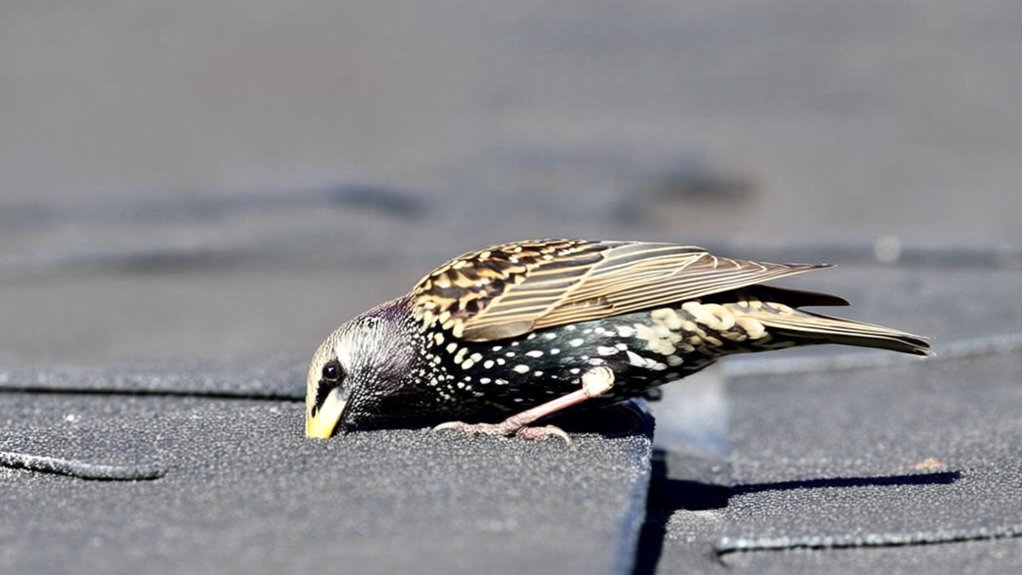
Yes, birds can damage your rubber roof through pecking, clawing, and nesting. This can cause tears and weaken the waterproof membrane. Their acidic droppings also chemically degrade rubber surfaces, which speeds up cracks and corrosion.
Blocked gutters from debris can increase water pooling and the risk of leaks. You’re not safe ignoring these effects because ongoing damage compromises your roof’s integrity and durability.
Understanding how these factors interact will help you better protect and maintain your roof against bird-related harm. It’s all about staying ahead before small problems turn into big ones.
Bird Damage Mechanisms on Rubber Roofs
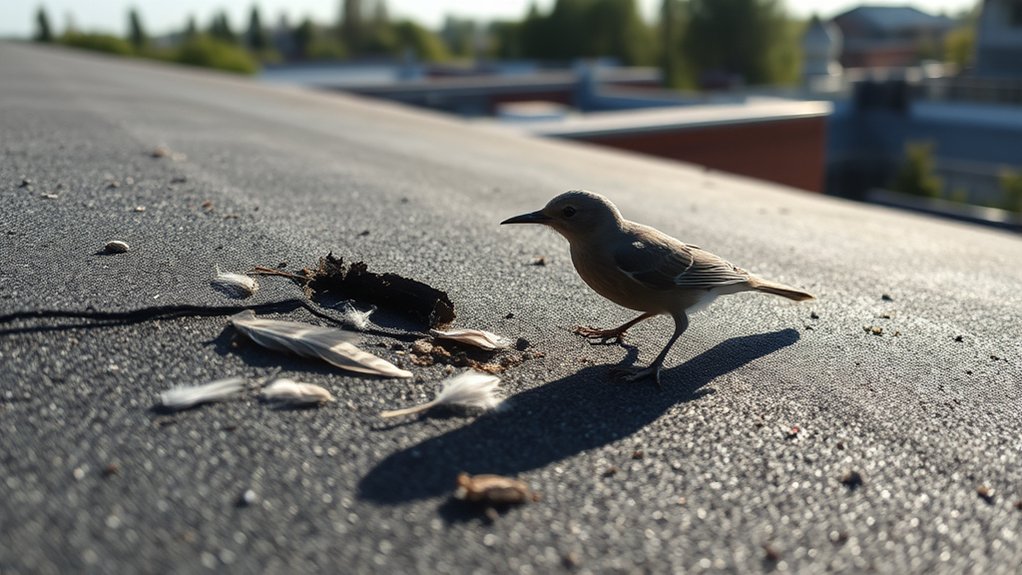
Although rubber roofs provide durable protection, birds such as gulls, crows, and pigeons actively damage these surfaces by pecking and clawing. This behavior creates tears, holes, and punctures. You’ll find their beaks can puncture the rubber membrane, while claws rip and gouge it, especially during nesting or when testing roof stability.
These mechanical actions compromise the rubber’s waterproof layer, making it susceptible to leaks. Additionally, bird droppings contain acidic compounds that chemically corrode the rubber surface, accelerating material degradation.
This combination of physical and chemical damage weakens the roof’s integrity, promoting cracks and premature wear.
To protect your roof, understanding these damage mechanisms is vital for effective maintenance and timely repairs. This way, you can ensure the rubber membrane continues to perform its protective function against environmental elements.
Rubber Roof Vulnerabilities to Bird Activity
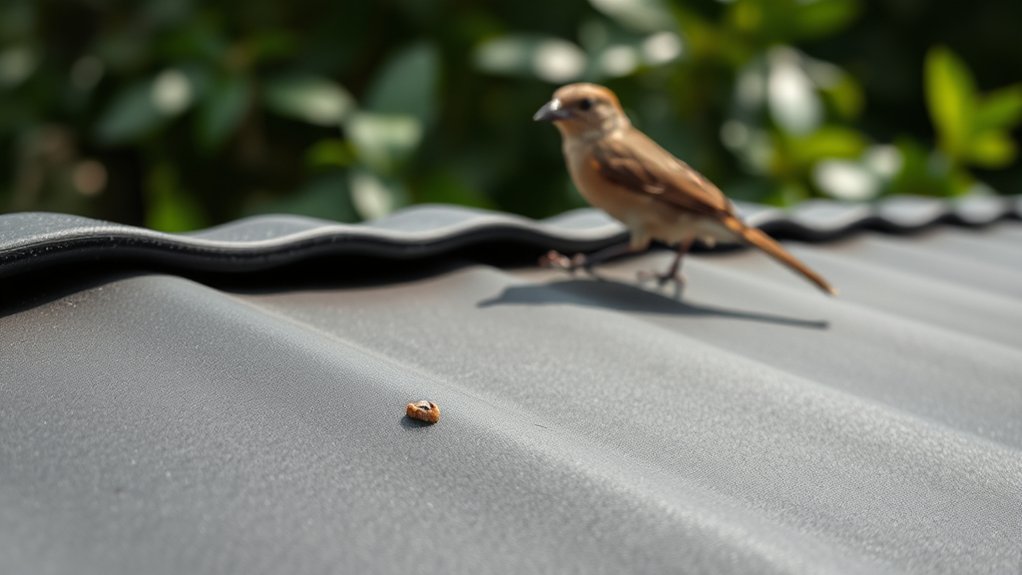
You’ll notice that when birds peck and claw at rubber roofing membranes, they can create punctures and tears. This directly compromises the waterproof barrier.
On top of that, their acidic droppings speed up material breakdown, which weakens the surface and encourages corrosion.
All these factors together really put the membrane’s integrity and the long-term performance of your roof at risk.
Pecking and Clawing Damage
When birds like gulls and crows peck or claw at rubber roofs, they cause tears and punctures that compromise the waterproof membrane. Repeated pecking weakens the rubber’s protective coating, which speeds up material deterioration.
Clawing creates rips and holes, making the roof more vulnerable to leaks, especially near edges and seams where the membrane is more likely to get damaged. You should keep a close eye on these areas to avoid costly repairs.
| Damage Type | Common Locations | Consequences |
|---|---|---|
| Pecking | Edges, seams | Tears, punctures |
| Clawing | Membrane surface | Rips, holes |
| Repeated Impact | Vulnerable points | Accelerated material failure |
Knowing these damage patterns helps you keep your roof in good shape and prevents bigger structural problems down the line.
Acidic Droppings Effects
Beyond physical damage like pecking and clawing, chemical factors also threaten rubber roofing integrity. Bird droppings, especially from pigeons, contain acids that gradually degrade rubber materials. You’ll notice this degradation through cracks, tears, and weakened waterproofing.
Continuous accumulation speeds up chemical erosion, which shortens your roof’s lifespan. It can even corrode the substrates underneath. This corrosion increases the risk of leaks and structural issues.
To keep your roof in good shape, consider these tips:
- Regularly clean droppings to prevent acid buildup.
- Apply protective coatings designed for rubber membranes.
- Inspect the roof frequently for early signs of chemical damage.
- Address accumulations promptly to avoid prolonged exposure.
Membrane Integrity Risks
Although rubber roofs are designed to withstand environmental stress, bird activity poses significant risks to membrane integrity. Birds pecking and clawing can create tears and holes, weakening the rubber’s waterproof barrier. Acidic droppings accelerate material degradation, while repeated stress leads to cracks, increasing leak potential.
This kind of damage often requires costly repairs or replacements. So, it’s important to keep an eye on your roof and address any bird-related issues as soon as they appear.
| Damage Type | Cause | Consequence |
|---|---|---|
| Tears & Holes | Pecking & Clawing | Waterproofing loss |
| Material Weakening | Physical impact | Premature deterioration |
| Stress Cracks | Repeated activity | Leak risk increase |
| Coating Damage | Surface abrasion | Reduced protection |
You need to tackle bird-related damage promptly to maintain your roof’s integrity and avoid expensive consequences. Taking action early can save you a lot of trouble down the road.
Chemical Effects of Bird Droppings on Rubber Roofs
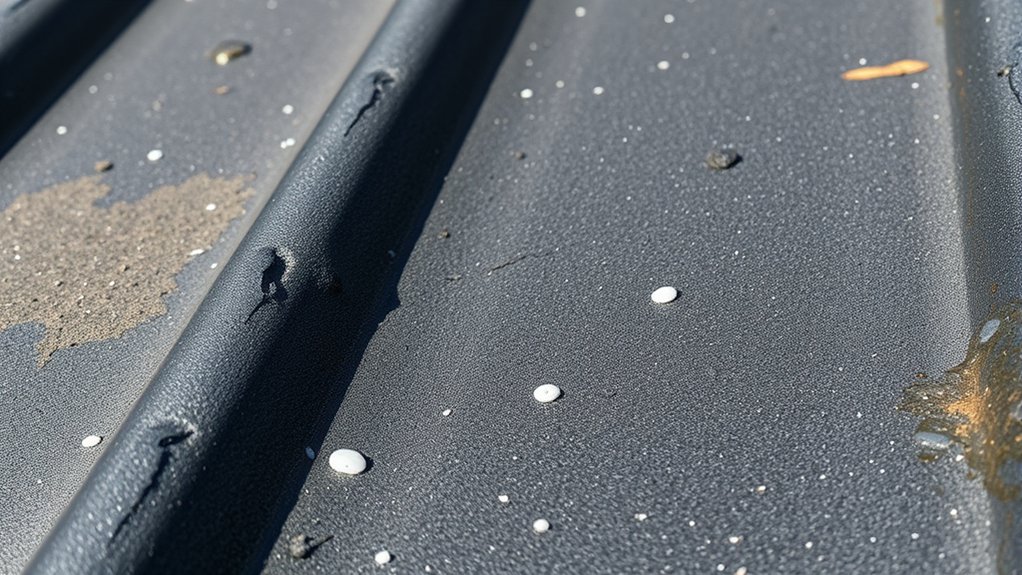
Since bird droppings contain highly acidic compounds with pH levels as low as 3.5, they actively degrade rubber roofing materials over time. This acidity speeds up the chemical breakdown of rubber membranes, which leads to structural weaknesses.
Bird droppings’ acidity accelerates rubber roof degradation, causing structural weaknesses over time.
You should know that continuous exposure to these droppings causes premature deterioration, reducing the roofing’s protective abilities.
Specifically, acidic droppings can penetrate and weaken rubber sealants and adhesives, compromising waterproofing. When droppings accumulate regularly, chemical erosion increases, which ultimately shortens the lifespan of your roofing system.
Here are the key chemical effects to keep in mind:
- Accelerated breakdown of rubber membranes causing cracks
- Degradation of rubber coatings reducing effectiveness
- Penetration and weakening of sealants and adhesives
- Increased chemical erosion from accumulation
Understanding these effects helps you maintain your rubber roof’s integrity against bird-related chemical damage. It’s a good idea to check your roof often and clean off any droppings you see to protect your investment.
Nesting and Pecking Damage on Rubber Roofs
Chemical damage from bird droppings contributes substantially to the degradation of rubber roofs, but physical harm caused by birds also poses a serious threat. Birds like gulls, crows, and pigeons frequently peck at rubber membranes, creating tears and holes that compromise the roofing material.
Repeated pecking and clawing weaken rubber coatings, accelerating material deterioration.
Additionally, nesting activities near or on rubber roofs can dislodge components such as flashing and seams, further damaging the structure. These physical disruptions can impair the roof’s waterproof integrity, increasing the risk of leaks.
To protect your rubber roof, it’s essential to monitor areas prone to bird activity and implement deterrents that minimize pecking and nesting. Doing this helps preserve the roof’s durability and functionality over time.
Clogged Gutters and Water Damage Risks for Rubber Roofs
Bird droppings and nesting debris frequently clog gutters and drainage outlets on rubber roofs, disrupting the essential flow of water off the surface. When gutters are blocked, water pools, which increases the risks of leaks, membrane damage, and structural stress.
Standing water also speeds up corrosion of metal components and weakens the roofing system’s integrity.
Plus, pigeon droppings are highly acidic, which makes gutter corrosion and premature roof material deterioration happen even faster. To keep your rubber roof safe, focus on a few key things.
Regularly clean gutters and drainage outlets to prevent blockages. Make sure to inspect drainage systems for debris buildup and any damage. Removing bird droppings promptly helps reduce acidic corrosion.
Also, keep an eye on water flow during rainfall so you can catch drainage issues early. Maintaining clear gutters is one of the best ways to protect your roof from water damage caused by bird-related obstructions.
Top Bird Deterrents to Protect Rubber Roofs
Although birds can cause significant damage to rubber roofs, you can effectively minimize their impact by using targeted deterrent methods. Installing bird spikes and netting prevents perching and nesting, which reduces physical damage. Visual deterrents like reflective tapes and scare balloons help disrupt bird activity near roofing materials.
Securing roof vents and eaves with bird-proof devices limits entry points, which curbs damage and droppings accumulation. Applying impact-resistant coatings on rubber roofs adds extra protection against pecking and scratching.
To keep these deterrents effective, you should regularly inspect and repair them because birds may adapt or find ways around weakened barriers.
How to Repair and Maintain Your Rubber Roof After Bird Damage
To fix bird damage on your rubber roof, begin by giving the surface a good, thorough cleaning. Make sure it’s completely dry before you move on to applying any specialized sealants, like Lap Sealant or Eternabond tape, to patch up holes and tears.
You might also want to consider adding impact-resistant coatings. These can help reduce future damage and really extend the life of your roof.
Don’t forget, regular inspections and quick repairs are key. Staying on top of any issues will keep your roof in good shape and prevent water from sneaking in.
Effective Roof Repair
How do you effectively repair and maintain a rubber roof after it has sustained damage from birds? Start by thoroughly cleaning the damaged area to remove debris and droppings that accelerate rubber deterioration. Make sure the surface is completely dry to prevent mold and help the sealant stick better.
Next, apply a compatible sealant or patching material, like EPDM or silicone-based products, to seal any holes or tears caused by bird pecks. It’s important to choose the right materials so your repair lasts.
It’s also a good idea to think about adding protective coatings to reduce damage from future bird activity. This extra step can save you time and money down the road.
Follow these steps:
- Clean affected areas thoroughly, removing all debris and droppings.
- Dry the roof completely before repairs.
- Use EPDM or silicone-based patches to seal damage.
- Apply impact-resistant coatings to protect against further pecking.
Ongoing Maintenance Tips
Since bird activity can cause ongoing wear to your rubber roof, regular maintenance is essential to preserve its integrity and extend its lifespan. You should inspect your roof frequently for signs of pecking, tears, or holes, especially after nesting seasons.
Promptly clean bird droppings and debris to prevent acidic damage to the roofing material. Applying impact-resistant coatings or installing bird deterrents like spikes or netting can effectively reduce future harm.
When you find minor holes or tears, repair them using suitable sealants such as Lap Sealant or Eternabond tape. Just make sure the surface is dry before you apply them.
Additionally, maintain proper drainage by clearing gutters and outlets regularly to avoid water pooling, which can make damage worse. These measures together really help keep your rubber roof durable against bird-related wear.
Frequently Asked Questions
Are Certain Bird Species More Likely to Target Rubber Roofs?
Yes, certain bird species like gulls, crows, woodpeckers, and vultures target rubber roofs more because of their pecking behavior and nesting habits.
You’ll often notice damage from their strong beaks and larger size affecting the roofing material. It’s pretty common with these birds since they tend to be more aggressive or persistent when it comes to finding spots for nests or food.
Can Bird Noise Affect the Roof’s Structural Integrity?
Bird noise alone doesn’t affect your roof’s structural integrity.
However, you should keep an eye on bird behaviors like pecking or nesting. These actions—not the noise—can cause physical damage and may compromise your rubber roof over time.
Do Bird Repellents Harm Nearby Plants or Pets?
You won’t need a Victorian-era greenhouse to protect your plants if you use bird repellents properly. Most are non-toxic, but you should avoid chemical contact with pets or sensitive plants.
Always follow the instructions for safe, effective use. It’s pretty simple when you get the hang of it! Just a little care goes a long way in keeping everyone safe.
How Often Should Rubber Roofs Be Inspected for Bird Damage?
You should inspect your rubber roof twice yearly, preferably in spring and fall, to catch bird damage early. This helps you stay ahead of any problems before they get worse.
It’s a good idea to check more often if you’re near nesting sites, after severe weather, or during bird migrations. Doing this can save you from costly repairs down the road. Just a little extra attention can make a big difference!
Are There Eco-Friendly Options for Bird Deterrents on Roofs?
Birds are like unwelcome artists scratching your roof’s canvas, but you can fight back. Use eco-friendly deterrents like reflective tapes, ultrasonic devices, and natural repellents. Combining them with netting helps protect your rubber roof scientifically and safely.
These options keep your roof safe without harming the birds or the environment. Plus, they’re easy to set up and maintain. So, you can keep your roof looking great while being kind to nature.
Conclusion
You might be surprised to learn that birds cause over 30% of roof damage annually, including to rubber roofs. Their droppings have an acidic nature that can deteriorate rubber membranes. Plus, nesting and pecking lead to physical damage.
Clogged gutters from debris also increase water risks, which speeds up wear and tear. So, protecting your rubber roof with effective bird deterrents and timely repairs is really important.
Taking proactive steps like these helps keep your roof durable and safe for the long haul. It’s all about preserving its integrity and making sure it lasts.