
You’re unlikely to see birds struck by lightning since such events are rare and usually involve birds perched on tall trees or metal structures during storms. Birds instinctively seek shelter in dense vegetation or low areas, reducing their risk.
Lightning mainly targets the tallest objects, and perchers can suffer fatal electrocution or trauma if struck. That said, birds flying or grounded often avoid harm.
If you want to understand the behaviors and risks involved, there’s more to explore.
How Often Are Birds Struck By Lightning?
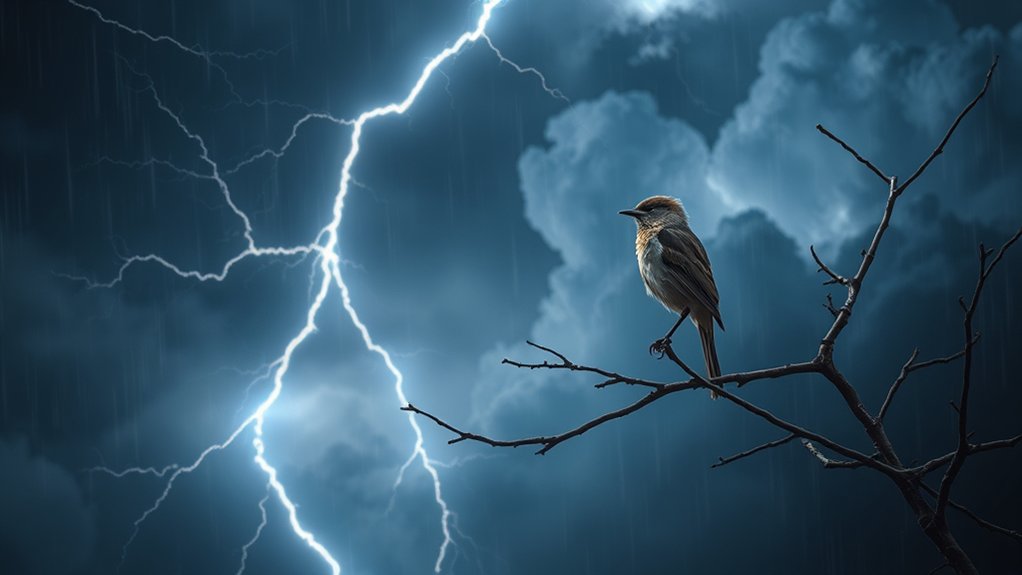
Although birds live in places that often have thunderstorms, they’re rarely struck by lightning. You might think they’d get hit more because they’re outside so much, but actual cases are pretty uncommon.
Most lightning strikes on birds happen when they’re perched out in the open on tall trees or exposed structures during storms. That’s when they’re most vulnerable. There are some famous examples, like the 1939 White Pelican event, but those are more the exception than the rule.
We don’t have a ton of exact data on how often birds get struck by lightning, but experts agree it’s pretty rare compared to how much lightning actually happens. When lightning does kill birds, it’s usually large flocks huddled in exposed spots.
Can Birds Be Electrocuted While Flying During Storms?
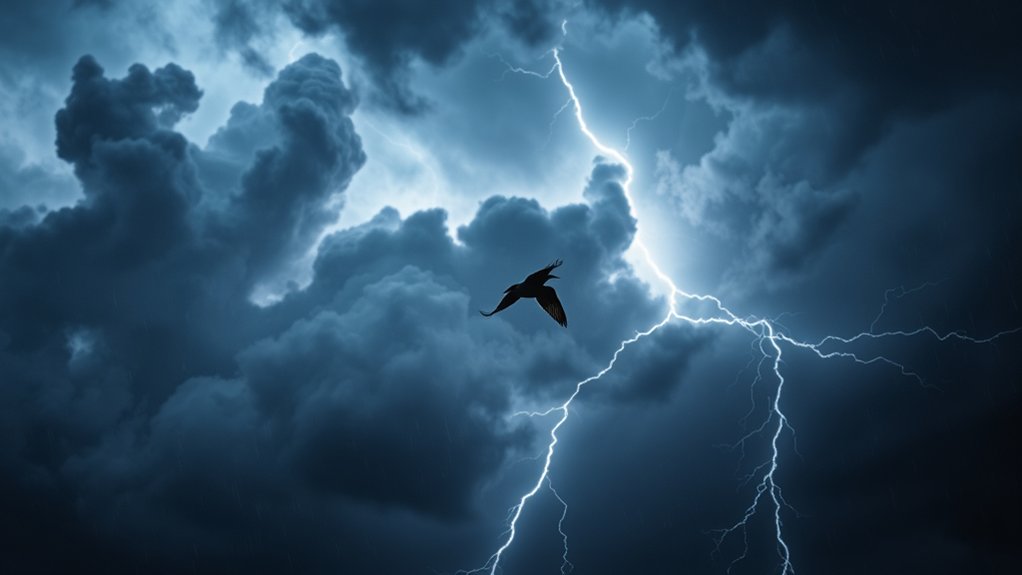
When birds fly during storms, they face the danger of electrocution if lightning strikes nearby or if they perch on conductive surfaces like metal structures or wet trees. Lightning can travel through a bird’s body, causing fatal electrocution either in flight or while perched.
You should note these key points:
- Birds in contact with conductive objects such as wires or metal poles are at higher risk.
- Electrocution can occur instantly when lightning strikes tall trees where birds rest.
- Although rare, documented cases show birds killed mid-flight by lightning in open areas.
Why Birds Avoid Flying During Lightning Storms
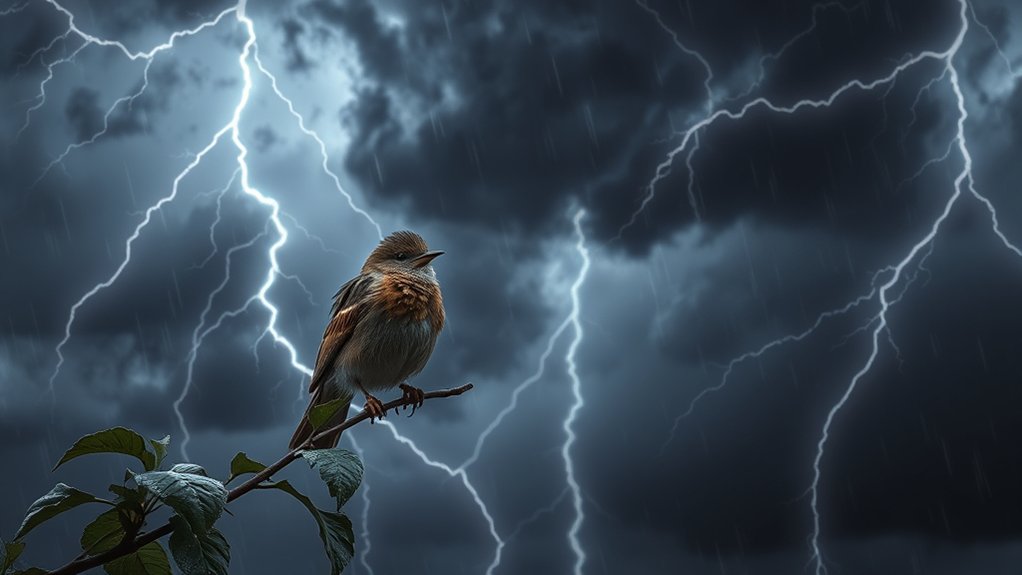
Since lightning storms pose significant risks, birds instinctively avoid flying to minimize exposure to electrical discharges. You’ll notice birds detect atmospheric changes, such as rising static electricity, prompting them to seek shelter in bushes, trees, or tall grasses. They often fly low or stay stationary, reducing risk by avoiding open areas.
It’s pretty interesting how they do this. Birds are really tuned in to their environment, and these small changes in the air signal it’s time to be careful.
Here’s a detailed observation of their behavior:
| Behavior | Trigger | Purpose |
|---|---|---|
| Seeking Shelter | Increased static electricity | Minimize lightning strike risk |
| Flying Low | Visible lightning/thunder sound | Reduce exposure in open air |
| Staying Stationary | Storm onset | Avoid electrical discharge |
What Happens To Birds Perched On Trees Struck By Lightning
If you observe a lightning strike hitting a tree, you’ll understand why birds perched there face extreme danger. Lightning tends to target the tallest object, such as a tree, making birds in high branches especially vulnerable.
Lightning often strikes the tallest object, putting birds perched high in trees at great risk.
When the lightning hits, the electric current radiates outward through the tree, exposing any birds on the branches to a lethal surge.
Here’s what happens to birds perched on trees struck by lightning:
- They risk immediate electrocution from the electrical current passing through the tree.
- They may suffer severe injuries or die instantly due to the intense electrical discharge.
- Birds found dead around struck trees were likely perched there at the impact moment, confirming the lethal effect of the strike.
You see, the tree acts as a conductor, putting perched birds in serious peril. It’s pretty dangerous for them to be up there when lightning strikes.
How Lightning Kills Birds Perched In Trees
Although lightning often targets the tallest objects in a landscape, birds perched in trees face a deadly risk as the electric charge travels through the tree’s surface. When lightning strikes, the electric current radiates outward along the bark and branches, instantly electrifying any birds perched nearby.
Because the tree conducts electricity, birds in direct contact with the struck area experience a sudden, intense flow of current that disrupts their nervous and cardiac systems, leading to immediate death. This conduction poses a significant threat, especially for birds resting high in tall trees, where lightning is most likely to strike.
You can see that the rapid spread of electricity across the tree’s surface leaves little chance for survival. It makes perching during storms extremely dangerous for birds. So, it’s really risky for them to stay put when lightning is around.
How Birds’ Shelter-Seeking Behavior Reduces Lightning Risk
You’ll notice that birds instinctively seek shelter in dense bushes or low vegetation during storms. This helps them avoid the highest points where lightning tends to strike. It makes sense, right?
They stay away from open areas and exposed perches because those spots come with a higher risk of lightning. By picking up on changes in the atmosphere, birds really do a great job of lowering their chances of getting struck by finding safer cover.
Instinctual Shelter-Seeking
When storms approach, birds instinctively seek shelter in bushes, trees, or tall grasses. This behavior considerably lowers their chances of being struck by lightning. It reduces their risk by minimizing exposure to the highest points where lightning typically strikes.
You can observe this instinctual response in three ways:
First, birds avoid open areas and choose cover that offers electrical insulation and reduces conduction risks.
Second, they respond to atmospheric cues like changes in pressure and humidity that signal an impending storm.
Third, by perching low in dense vegetation, they decrease their chances of being the tallest object around, which helps them avoid direct strikes.
This evolutionary adaptation really boosts their survival during thunderstorms. Birds that shelter instinctively suffer fewer injuries from lightning and its electrical effects.
Reduced Lightning Exposure
Because lightning tends to strike the tallest and most exposed objects, birds instinctively reduce their risk by seeking shelter in bushes, trees, or tall grasses. This behavior minimizes their presence in open areas where lightning is more prone to hit, such as bare ground or exposed perches.
By retreating to these protected locations, birds effectively lower their chances of direct strikes during flight or while perched. This instinctive shelter-seeking is a clear evolutionary adaptation that enhances survival during thunderstorms.
When you observe birds disappearing into dense foliage as storms approach, you’re witnessing a natural strategy that considerably reduces their exposure to lightning’s deadly path. It shows how their behavior prioritizes safety in hazardous weather conditions.
Documented Cases Of Bird Deaths Caused By Lightning Strikes
Although bird deaths from lightning strikes are relatively rare, documented cases provide clear evidence of their occurrence and impact. You can observe these incidents through historical and scientific records that detail how lightning affects birds directly.
For example, in 1939, 34 White Pelicans in Nebraska were killed by a single lightning strike. Then, in 1941, four double-crested cormorants suffered the same fate.
There was also a storm that killed over 50 Snow Geese in a flock, showing lightning’s capacity to impact large groups all at once.
Birds perched on trees or metal structures like lightning rods have been struck as well. Autopsies often reveal trauma consistent with lightning injuries.
These cases confirm that lightning can cause fatal trauma to birds, whether they’re airborne or just sitting still.
Why Being Outdoors Is Dangerous For Birds And Humans In Storms
Since storms increase lightning activity, staying outdoors considerably raises your risk of being struck. This also applies to birds sharing the environment with you. Lightning targets the tallest objects like trees or poles, where birds often perch, which increases their risk of electrocution.
If you get caught in open areas or near trees during storms, you’re exposed to direct strikes or dangerous ground currents. The best thing you can do is seek shelter inside buildings or vehicles. Honestly, no outdoor location is completely safe when a storm hits.
| Location | Risk Level | Reason |
|---|---|---|
| Open field | Very High | Tallest objects exposed |
| Under trees | High | Ground current hazards |
| Near metal poles | High | Lightning attraction points |
| Inside building | Low | Insulated from strikes |
| Inside vehicle | Low | Metal frame disperses current |
How Birds Survive And Recover After Storms
Lightning poses severe threats to birds during storms, yet many manage to survive by instinctively seeking shelter in dense vegetation or low-lying areas. You’ll notice birds often take refuge in bushes, trees, or tall grasses, reducing their exposure to lightning and strong winds.
Birds instinctively shelter in dense vegetation or low areas, minimizing risks from lightning and storms.
After storms, bird populations frequently rebound, illustrating their resilience. Here’s how birds survive and recover:
- They instinctively find protective cover, limiting injury from lightning strikes and wind.
- Despite some sustaining impact trauma or ground burns, many survive with minor or no injuries.
- Post-storm, surviving birds quickly resume feeding, nesting, and reclaiming territories, driving population recovery.
Frequently Asked Questions
Can Lightning Strikes Affect Bird Migration Patterns?
Yes, lightning strikes can affect bird migration patterns by causing mortality and forcing you to alter routes or timing. You may also experience delays or displacements as storms push migrating birds toward safer, sheltered areas.
It’s pretty common for birds to change their plans when faced with bad weather like thunderstorms. They might slow down or take a detour to avoid the danger. This natural response helps them survive the journey despite the risks.
Do Certain Bird Species Have Better Lightning Resistance?
You won’t find bird species with true lightning resistance; all are vulnerable. While larger birds perch higher and denser plumage might help slightly, no species inherently withstands strikes better. Behavioral sheltering is key to survival during storms.
How Do Bird Feathers Protect Against Electrical Damage?
You’ll find bird feathers protect against electrical damage by acting as an insulating barrier. They’re made of keratin, which resists current flow. This helps to keep the electricity from passing through easily.
The feathers also disperse the electrical charge across their layers. This reduces how much the electricity can penetrate deeper into the bird’s body. As a result, it lowers the severity of injury during electrical exposure.
Can Lightning Strikes Impact Bird Nests or Eggs?
You might not expect it, but lightning strikes can devastate bird nests and eggs. This is especially true for those perched high and exposed. The intense heat and electrical energy can crack, scorch, or obliterate eggs.
Sometimes, lightning can even ignite fires that destroy entire colonies. It’s surprising how much damage a single strike can cause to these fragile homes. Birds nesting in tall trees or open areas are particularly at risk.
Are There Any Natural Lightning Shelters Birds Use?
You’ll find birds using dense foliage, tall trees, and thick shrubs as natural lightning shelters. They often hide in cavities, under branches, or in rocky outcroppings. This helps reduce their exposure and keeps them safer during thunderstorms.
It’s pretty interesting how they instinctively know where to go when the sky gets stormy. These natural spots give them a better chance of staying dry and protected from lightning strikes. Birds really have a knack for finding the best hiding places!
Conclusion
You might think lightning strikes birds like cosmic snipers, but in reality, such events are rare and mostly accidental. Birds’ instinctive avoidance of storms and strategic sheltering drastically reduce their risk. When lightning does hit, it’s usually because they’re perched on vulnerable trees.
Understanding these behaviors helps you appreciate nature’s delicate balance. It also reminds you that, just like birds, staying indoors during storms is the smartest way to stay safe from nature’s electrifying fury.