
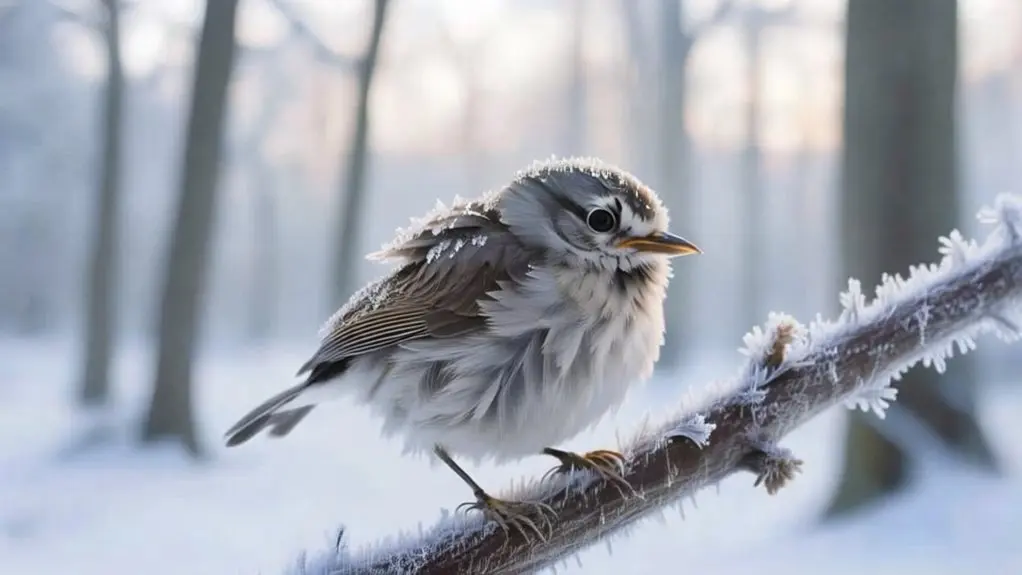
Yes, birds can live in cold weather because they rely on specialized feathers that trap warm air and waterproofing oils that prevent heat loss. They also use physiological adaptations like counter-current heat exchange and torpor to conserve energy.
On top of that, birds have behavioral strategies such as seeking insulated shelters, reducing activity, and storing high-energy food. These habits really help them survive through the tough winter months.
Humans can also lend a hand by providing food and shelter, which boosts birds’ resilience even more. It’s fascinating how all these adaptations work together to help birds thrive despite harsh winter conditions.
How Birds’ Feathers Keep Them Warm in Cold Weather
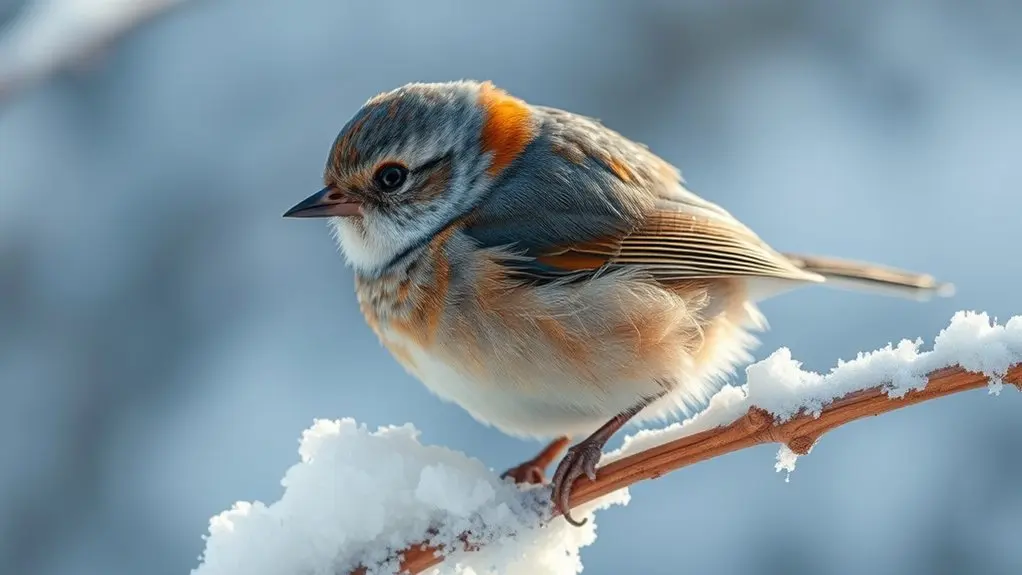
Although you mightn’t notice it at first glance, a bird’s feathers play a critical role in regulating its body temperature during cold weather. Feather insulation works by trapping layers of warm air close to the bird’s skin, creating a thermal barrier against the cold.
Down feathers are especially effective, forming a dense, fluffy layer that maximizes heat retention. Birds actively use piloerection techniques, fluffing up their feathers to interlock fine filaments and increase the thickness of this insulating layer. This adaptation enhances their ability to retain warmth efficiently.
Additionally, waterproofing oils keep feathers dry, preventing heat loss through moisture.
You’ll also observe birds tucking feathers around vulnerable areas like legs, further minimizing heat escape and protecting them against harsh winter conditions.
How Birds Use Physiological Adaptations to Conserve Heat
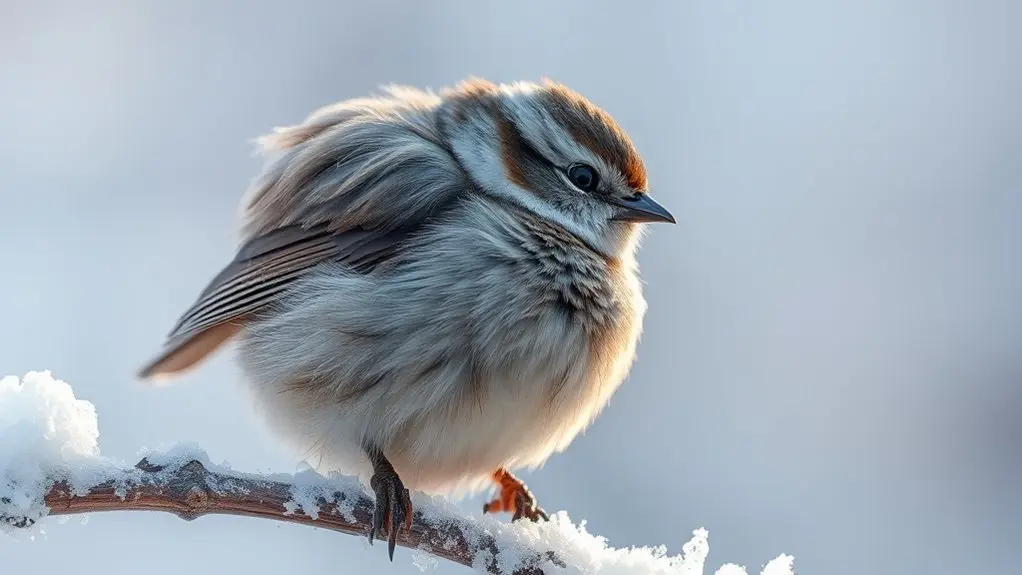
When temperatures drop, birds rely on specialized physiological adaptations to conserve heat and keep their core body temperature steady. These adaptations work really well, especially after their feather molt prepares them with fresh, dense plumage for insulation.
Birds use counter-current heat exchange in their legs, which warms cold blood returning from their extremities with outgoing warm blood.
Birds warm cold blood in their legs by exchanging heat with outgoing warm blood to conserve warmth.
Puffing up their feathers traps insulating air, which cuts down heat loss a lot. They also tuck their legs and bills under their feathers to keep those extremities warm.
Plus, sun basking helps them absorb external warmth, giving their internal heat reserves a nice boost.
How Behaviors Help Birds Survive Winter’s Chill
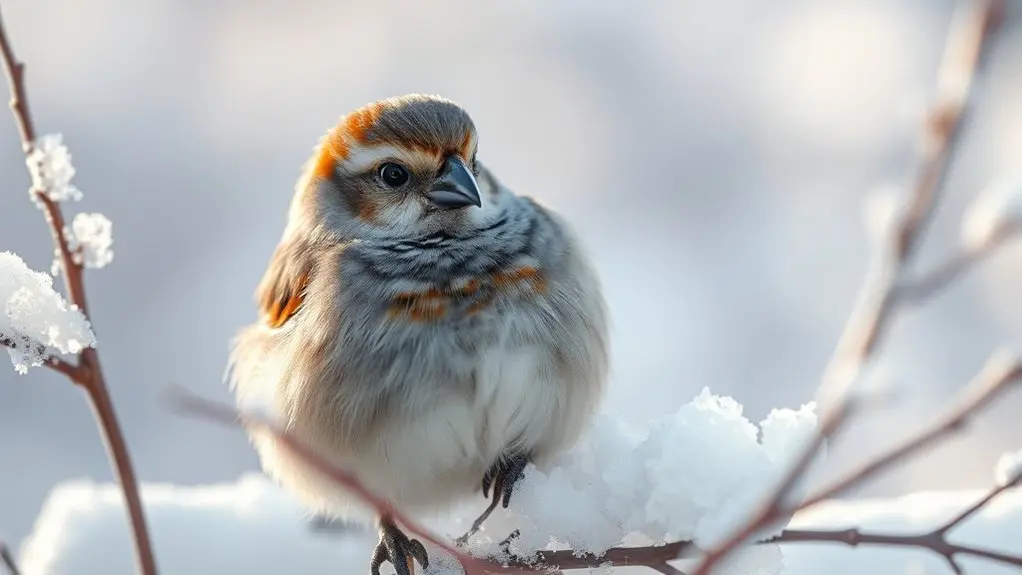
Because cold weather can quickly drain a bird’s energy, they adopt specific behaviors that help them survive winter’s chill. You’ll notice many birds adjust their migration patterns, either moving to milder climates or delaying travel to conserve energy.
When they stay put, birds employ nesting strategies that maximize insulation, such as selecting tree cavities or dense foliage to reduce heat loss.
You’ll observe them minimizing movement during storms and huddling in groups, sharing body heat to endure cold nights. Birds also choose microclimates with better shelter and delay foraging during severe weather, lowering exposure and conserving energy.
These behavioral adaptations work alongside physiological traits, allowing birds to maintain energy balance and survive harsh winter conditions effectively.
How Birds Find and Use Shelter During Cold Weather
You’ll notice that birds often take refuge in natural cavities like tree hollows or dense evergreen foliage. These spots help shield them from cold winds and precipitation.
When storms roll in, they usually stay put within these shelters. It helps them conserve energy and avoid the risks that come with flying in harsh weather.
Shelter Types Birds Use
Although cold weather presents significant challenges, birds actively seek out various types of shelter to conserve heat and avoid exposure. Unlike those relying on migration patterns to escape colder climates, many species stay put and use strategic nest construction and natural or artificial refuges to endure winter.
You’ll notice birds utilize tree cavities, such as hollows or rotting logs, which offer insulated protection from predators and weather. They also use dense foliage and evergreen branches that shield against wind, rain, and snow.
Man-made structures like birdhouses or nest boxes provide secure, dry roosting spots.
Sometimes, birds huddle together in sheltered nooks or crevices to conserve warmth. These shelter types reduce heat loss and energy expenditure, which is critical for survival during frigid conditions.
It’s pretty amazing how resourceful birds can be when the temperatures drop!
Behavior During Storms
When storms hit, birds adjust their behavior to maximize shelter use and minimize energy loss. You’ll notice they seek dense foliage, tree cavities, or sheltered nooks, using natural barriers like evergreen trees to avoid wind and precipitation. Their feather waterproofing helps keep them dry, while nest construction provides critical protection.
Often, birds remain stationary, tucking heads and bills under wings to conserve heat instead of flying in dangerous conditions. Prioritizing refuge over foraging ensures survival during storms.
| Behavior Aspect | Description |
|---|---|
| Shelter Selection | Dense foliage, tree cavities, thick branches |
| Energy Conservation | Stationary perching, heat retention by tucking limbs |
| Protection Mechanisms | Feather waterproofing, sturdy nest construction |
How Birds Manage Food and Energy to Survive Winter
You’ll notice that many birds switch up their diet in winter, going for calorie-rich foods like seeds and insects to keep their energy levels up.
For example, some species like jays and chickadees actually stash away high-energy snacks in secret spots. Then, when food gets hard to find, they can just go back and grab those hidden reserves.
At the same time, birds try to save energy by moving less and taking more rests during the cold spells, helping them get through the tough winter conditions.
Winter Diet Shifts
How do birds adjust their diets to survive the harsh demands of winter? As migration patterns and breeding behaviors slow down, birds undergo big dietary shifts to meet increased energy needs. They switch from fruits and insects to calorie-dense foods like high-oil seeds, nuts, and grains. This change helps them stay warm and conserve energy in freezing conditions.
You’ll notice birds expanding their foraging ranges and visiting feeders more often as natural food sources become scarce. Key winter diet strategies include consuming sunflower seeds, peanuts, and suet for high fat and protein.
They also shift from protein-rich insects to energy-rich seeds. Birds increase their energy intake to keep their body heat up.
Plus, they adjust their foraging behavior because food is limited and the weather is tough. These smart adaptations help them survive even when food is hard to find during winter storms.
Food Caching Behavior
Although winter brings scarce food resources, many bird species rely on food caching to get through the cold months. You’ll see birds like jays and juncos storing food by hiding nuts and seeds in secret spots under tree bark, soil, or leaf litter. This clever strategy ensures they’ve high-energy reserves when fresh food is hard to find.
Clark’s Nutcracker is especially impressive—it can remember hundreds of cache sites for months. That kind of spatial memory is vital for survival.
These hidden caches help birds keep essential fat reserves, which provide both insulation and energy during tough conditions.
To help these birds, it’s really important to preserve natural habitats. They need plenty of food sources and good hiding places to keep up their food storage habits through the challenges of winter.
Energy Conservation Methods
What strategies do birds use to manage their energy during the harsh winter months? Birds rely on a mix of physiological and behavioral adaptations to conserve energy. Some species migrate to escape the extreme cold, while others stay put and make the most of their energy through smart nest building and adjusting their metabolism.
For example, they build insulated nests that help reduce heat loss. They also use a clever system called counter-current heat exchange in their legs to keep warm.
Here are some other ways birds save energy: they cut down on activity and movement at night to use less energy. Some even enter torpor, which means lowering their metabolism during really cold times.
Plus, many birds stash away high-energy foods like seeds and nuts to eat throughout winter. And of course, nest construction plays a big role in keeping heat in and blocking cold winds.
When you look at all these methods, it’s clear how birds carefully balance using and saving energy to get through winter’s tough conditions.
How Birds Use Torpor to Survive Extreme Cold
When temperatures plunge beyond their usual range, some birds enter a state called torpor to conserve essential energy. Torpor physiology involves a controlled reduction of body temperature—from around 105°F down to as low as 50°F—and a drastic slowdown of metabolic rate.
This energy trade-off allows birds like hummingbirds and swifts to survive cold nights without continuous foraging. However, waking from torpor demands significant energy to restore normal body functions, so birds rely on this strategy only when the benefits outweigh the costs.
How Human Actions Support Bird Survival in Winter
Because winter presents harsh challenges to birds, human actions play an essential role in supporting their survival during this season. By integrating urban planting and applying birdwatching techniques, you can observe and enhance bird resilience in cold weather.
Providing high-fat seeds and nuts boosts energy reserves, while heated bird baths prevent dehydration and aid thermoregulation.
Native trees and shrubs planted in urban areas offer shelter and natural foraging opportunities, key for winter survival.
Consistently refilling feeders with diverse food reduces the risk of starvation.
Consider these actions:
- Supply calorie-rich foods like seeds and nuts.
- Install heated water sources to maintain hydration.
- Engage in urban planting of native vegetation.
- Use birdwatching techniques to monitor bird health and behavior.
Your efforts contribute considerably to sustaining bird populations through winter’s demands.
Frequently Asked Questions
What Types of Birds Migrate to Avoid Cold Winter Weather?
You’ll find warblers, thrushes, ducks, geese, hawks, eagles, swallows, and purple martins migrate to avoid cold winters. Their migration patterns compensate for limited feather insulation, seeking warmer climates with accessible food and milder temperatures.
Basically, these birds aren’t built to handle the chill, so they head somewhere cozy. It’s all about finding places where they can eat and stay warm until spring rolls around again.
How Do Baby Birds Survive Their First Winter?
Think of baby birds as tiny astronauts in a fragile capsule. Nest building shields them, while feather insulation acts like their space suits.
You’ll see parents brood and feed, making sure their little ones stay warm and survive that cold, critical first winter. It’s all about keeping them safe and cozy during those tough first months.
Can Birds Survive in Artificial Cold Environments Like Freezers?
You can’t expect birds to survive in freezers because their feather insulation and cold weather shelters rely on natural airflow and warmth.
Artificial cold environments lack these, causing rapid heat loss and fatal tissue damage.
Basically, freezers are just too harsh and unnatural for birds to handle. They need that natural balance to stay warm and alive.
Do All Bird Species Have the Same Cold-Weather Adaptations?
You’ll find that only about 10% of bird species develop thick feather insulation and substantial fat reserves for cold. Most rely on behavioral strategies since adaptations vary widely.
This reflects diverse evolutionary responses to cold weather challenges. So, not all birds have the same ways to deal with the cold. They’ve each found what works best for them.
How Does Climate Change Affect Birds’ Ability to Survive Winter?
You’ll see climate change disrupts birds’ feather insulation effectiveness and forces urban adaptation as natural habitats shift. This challenges their survival by altering food availability and shelter, pushing species to adjust behavior and physiology rapidly.
It’s a tough adjustment because birds rely so much on their feathers to keep warm. When that’s compromised, they have to find new ways to cope. Plus, as natural areas change or disappear, cities become a fallback, but that comes with its own challenges.
Conclusion
You can see how birds survive harsh winters by watching chickadees fluff their feathers to trap heat and save energy. Their bodies also adjust by increasing metabolism, which helps keep them warm.
They don’t just rely on their bodies though. Birds look for dense shelter to stay protected from the cold and wind. It’s amazing how nature has it all figured out.
When you understand these survival tricks, you really start to appreciate how birds make it through winter. Plus, your winter bird feeders or shelters can help a lot, giving them extra support during the coldest days.