
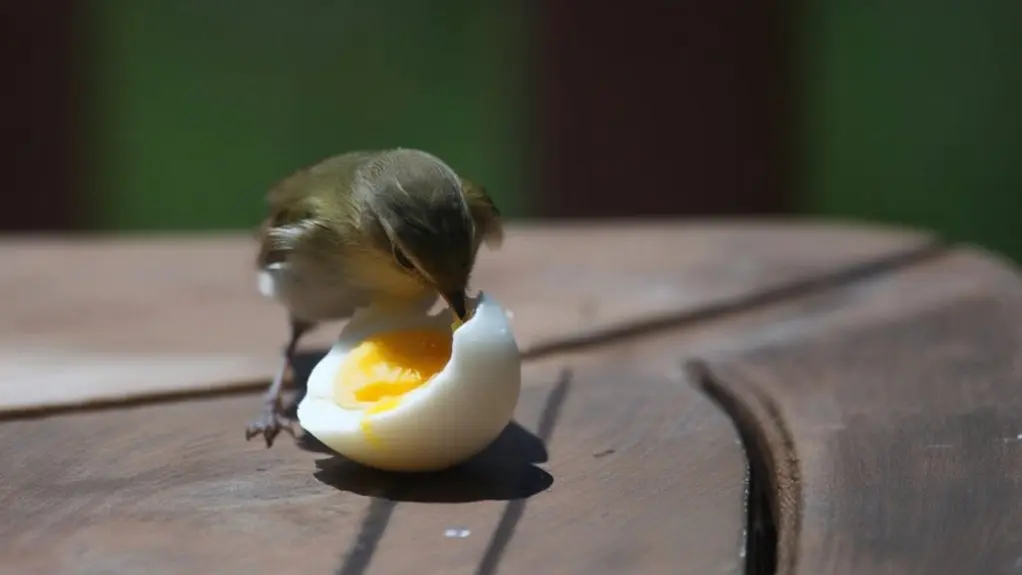
Yes, you can safely feed birds boiled eggs if you prepare and serve them correctly. Always fully boil eggs for at least 10 minutes, then cool them down. After that, peel and serve in small, manageable pieces without any seasoning.
Limit feeding to about half an egg per week, and try mixing in crushed eggshells for calcium. Keep an eye out for any negative reactions your bird might have.
When handled properly, boiled eggs provide essential protein and nutrients. Keep exploring to understand preparation tips, risks, and alternatives for your bird’s diet.
Can You Feed Birds Boiled Eggs?
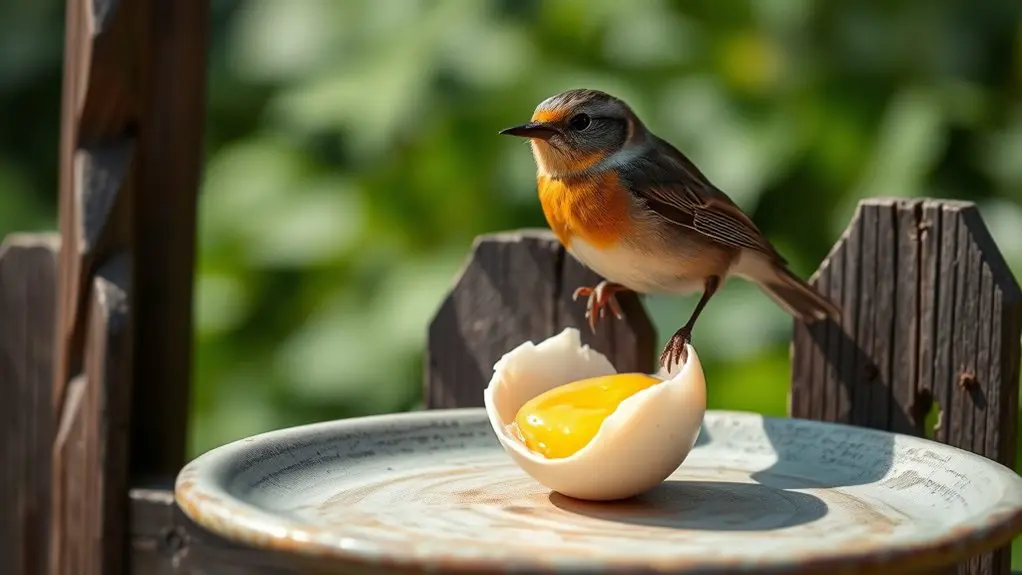
Can you safely feed birds boiled eggs? Yes, many wild and captive birds can eat plain, cooked boiled eggs as a protein source without harm. You must serve the eggs plain, with no salt, seasoning, or oils to keep them safe for birds.
Always make sure the eggs are thoroughly cooked to eliminate bacteria risks like salmonella. Serving small portions is important. Half an egg per feeding prevents overfeeding and helps maintain a balanced diet.
Additionally, crushed eggshells from boiled eggs offer a natural calcium supplement that benefits birds’ bone health.
Nutritional Benefits of Boiled Eggs for Birds
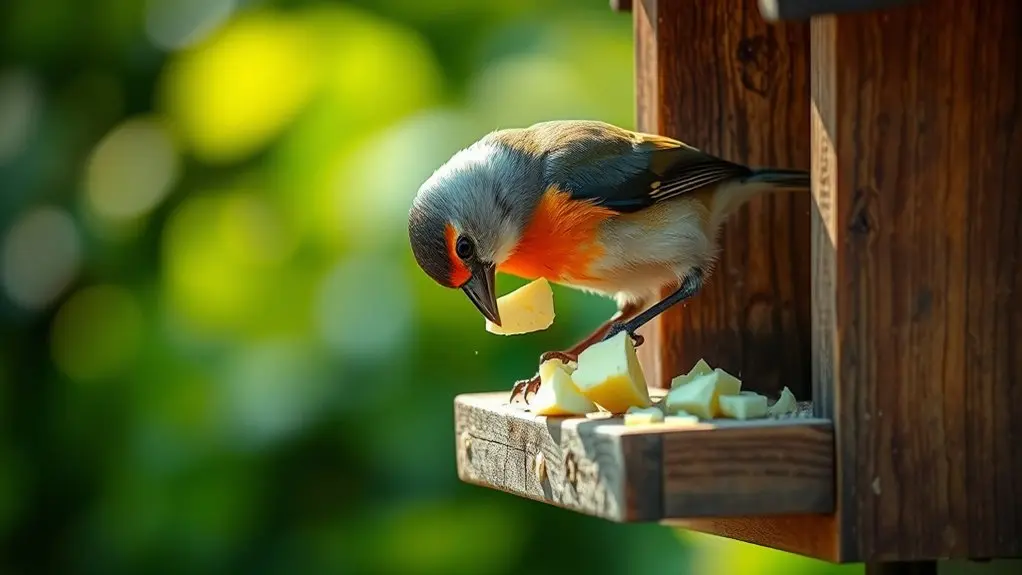
Although birds thrive on a varied diet, including boiled eggs can really boost their nutritional intake. Boiled eggs offer high-quality protein, which is essential for muscle development and tissue repair. They also supply necessary nutrients that enhance immunity and overall health.
Including boiled eggs in a bird’s diet boosts protein intake and supports immunity and overall health.
When you feed birds boiled eggs, you’re giving them calcium for stronger bones and improved eggshell production. They get vitamin A to support eyesight and nervous system function, plus amino acids that maintain cellular health.
Boiled eggs also provide healthy fats that supply critical energy, especially during cold or breeding seasons. Plus, these nutrients improve feather quality and vitality.
Adding boiled eggs to their diet helps make sure birds get balanced nourishment, promoting robust health and longevity. It’s a simple way to keep them happy and thriving.
How to Safely Prepare Boiled Eggs for Birds
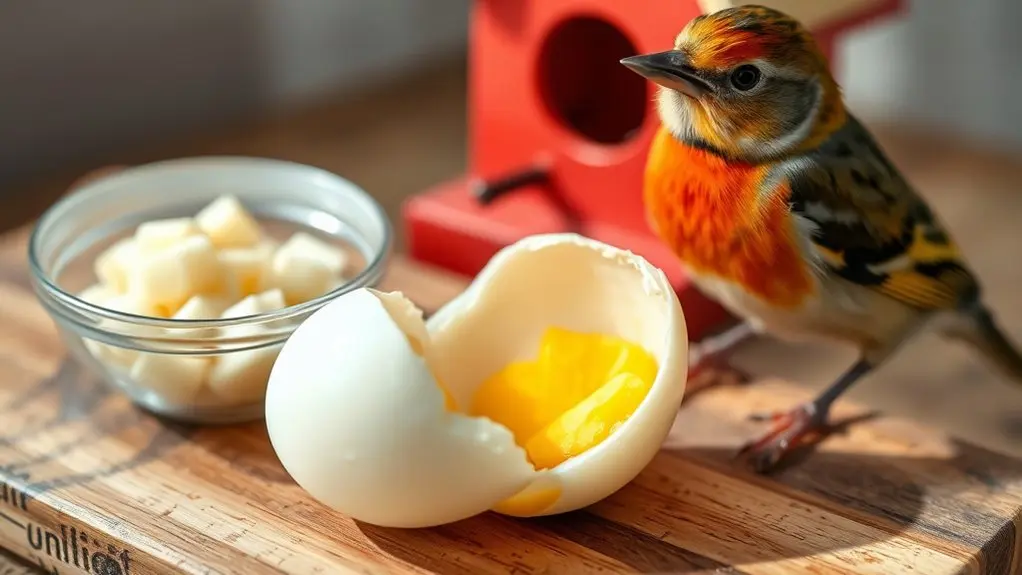
You’ll want to boil the eggs thoroughly to make sure any harmful bacteria are killed before you offer them to birds.
Once they’re cooked, go ahead and remove the shells. Crushing the shells is a good idea because it provides a safe source of calcium without the risk of choking.
Then, cut the eggs into small pieces that suit the size of the bird you’re feeding.
It’s best to serve the eggs plain—no seasoning or additives.
Just remember to keep the servings moderate so you don’t accidentally overfeed your feathered friends.
Boiling Eggs Properly
How do you guarantee boiled eggs are safe and nutritious for birds? Start by boiling the eggs thoroughly for at least 10 minutes to eliminate bacteria and ensure they’re fully cooked. Once boiled, let the eggs cool completely to avoid burns and make handling easier.
When you’re ready to feed the birds, crush the eggshells into small pieces. This gives them a nice calcium boost while preventing any choking risks. Just remember, don’t add any salt, seasoning, or oils during boiling. Keeping the eggs natural helps maintain their nutritional value.
Finally, always remove any leftover eggs or shells within 12 hours. This helps minimize bacterial growth and keeps things fresh.
Follow these simple steps, and your feathered friends will enjoy safe, healthy boiled eggs.
- Boil eggs for at least 10 minutes
- Cool eggs completely before serving
- Crush shells into small pieces
- Avoid additives like salt or oil
- Remove leftovers within 12 hours
Portion Size Guidelines
When should you offer boiled eggs to birds, and how much is appropriate? Serve boiled eggs occasionally, about once a week or less, to avoid overfeeding and maintain a balanced diet.
Offer small, manageable portions, typically half an egg per bird depending on their size.
Make sure the eggs are thoroughly boiled to eliminate bacteria, so they’re safe to eat. Avoid giving whole eggs that are too large or difficult for small birds to handle safely.
You can also provide crushed eggshells separately as a calcium supplement, but keep these separate from the egg portions.
Egg Shell Calcium
Why is preparing eggshell calcium safely vital for your birds? Proper preparation eliminates bacterial risks and guarantees your birds reap the full nutritional benefits.
When offering eggshell calcium, follow these steps: Boil the eggs thoroughly to kill harmful bacteria. Use fresh eggs without any salt, spices, or seasonings. Rinse the eggshells well after boiling to remove residual egg contents.
Next, crush or crumble the dried shells into small pieces for easy consumption. Make sure to dry the crushed shells completely before mixing them into the bird’s diet to prevent mold growth.
Taking these simple steps helps keep your birds healthy and happy.
Raw and Fried Eggs: Are They Safe for Birds?
Although some birds may eat raw eggs in the wild, feeding them raw eggs in captivity poses significant health risks because of potential contamination with bacteria like Salmonella. Raw eggs can introduce harmful pathogens and cause nutritional imbalances when fed regularly.
Fried eggs, on the other hand, are unsafe for birds. They often contain added oil, salt, and seasonings, which can be toxic to them.
| Egg Type | Safety for Birds |
|---|---|
| Raw Eggs | Risk of Salmonella; unsafe |
| Fried Eggs | Contains harmful additives |
| Boiled Eggs | Safe when plain and cooked |
| Seasoned | Always unsafe |
Always avoid raw and fried eggs to protect your birds’ health and prevent disease. It’s best to stick to properly cooked eggs without any additives.
How to Serve Boiled Eggs to Different Bird Species
Since birds vary greatly in size and dietary needs, you should prepare boiled eggs in ways that suit each species. Always cool and peel the eggs first, then cut them into sizes appropriate for your bird. Here’s how to serve boiled eggs properly:
Serve plain boiled eggs without seasoning or oils. For small birds, offer only a quarter to half an egg to avoid choking or overfeeding. Mix crushed eggshells into the egg to supply natural calcium.
Remove any uneaten portions within 12 hours to prevent bacterial growth. Adjust portion size and presentation based on the bird’s size and feeding habits. Just keep an eye on how much your bird eats and tweak the serving size as needed.
How Often Should You Feed Boiled Eggs to Birds?
You should feed boiled eggs to birds once or twice a week. This helps avoid nutritional imbalances and too much fat in their diet. It’s a good idea to keep the portion sizes small and mix things up by offering other protein sources as well.
That way, you can help keep your bird healthy overall. Also, keep an eye on how your bird is doing. If you notice any signs of obesity or cholesterol problems, you might want to change how often you give them boiled eggs.
Recommended Feeding Frequency
How often should you feed boiled eggs to birds to guarantee their health? To ensure a balanced diet and prevent nutritional imbalances, limit boiled egg servings to no more than once a week. Offering eggs 1-2 times weekly provides a nutritious treat without excessive fat intake.
Feeding eggs less frequently, every 10-14 days, also supports dietary variety. Here are key guidelines to consider:
- Serve boiled eggs no more than once weekly.
- Aim for 1-2 feedings per week for most birds.
- Space feedings 10-14 days apart if reducing frequency.
- Vary feeding schedules to avoid dependency.
- Monitor bird health and behavior to adjust frequency.
Keeping an eye on your birds will help you figure out what works best for them. It’s all about balance and making sure they get a variety of nutrients. Just remember, moderation is key!
Portion Size Guidelines
Although boiled eggs provide valuable protein and nutrients, offering them in small, controlled portions is essential to maintain your bird’s health. Aim to feed about half an egg per serving, adjusting for your bird’s size and dietary needs.
Limit boiled egg treats to once a week or less to prevent nutritional imbalances and excessive fat intake.
Always remove any uneaten egg within 12 hours to minimize bacterial growth and spoilage risks.
Use boiled eggs as an occasional supplement rather than a daily staple, ensuring your bird receives a balanced diet.
Rotating eggs with other protein sources helps maintain dietary variety and avoids over-reliance on a single food type. This way, you support your bird’s overall well-being and nutritional balance.
Monitoring Bird Health
Since overfeeding boiled eggs can cause nutritional imbalances and health problems like obesity or high cholesterol, it’s essential to limit their frequency to once a week or less. You should carefully monitor your birds after feeding eggs to guarantee their well-being.
Watch for changes in behavior, weight fluctuations, or digestive issues.
Take these steps to maintain bird health:
- Feed boiled eggs no more than once weekly
- Remove uneaten eggs within 12 hours to prevent bacterial growth
- Observe birds for any signs of discomfort or illness
- Consult an avian veterinarian for species-specific advice
- Adjust feeding based on individual health conditions and responses
Risks and Precautions of Feeding Eggs to Birds
When you feed eggs to birds, you must take specific precautions to avoid health risks such as bacterial contamination, including salmonella, especially if the eggs aren’t properly cooked. Always serve fully boiled eggs to eliminate harmful bacteria and reduce choking hazards.
Avoid giving raw or undercooked eggs, as they can cause digestive issues. Never season or salt the eggs, since additives can harm birds.
Additionally, feed eggs in moderation to prevent nutritional imbalances and excessive fat intake that may lead to obesity and other health problems.
By following these guidelines, you’ll provide a safe, nutritious treat while minimizing risks.
Signs to Watch for After Feeding Boiled Eggs to Birds
After feeding boiled eggs to your birds, you should closely monitor them for any signs of digestive upset, such as diarrhea or lethargy. These can indicate intolerance or overfeeding. It’s important to watch for these specific signs to keep your birds safe.
Look out for weight fluctuations or abdominal discomfort, which might signal overfeeding or sensitivity. Allergic reactions like swelling or unusual behavior are also important to notice, especially if eggs are new to their diet.
Pay attention to a foul odor from leftover eggs or abnormal droppings, as these may suggest a bacterial infection. Changes in overall activity levels or health stability in the days after eating eggs are other key things to watch.
If digestive issues persist beyond the initial feeding, that could indicate a possible intolerance. Keeping an eye on these signs helps ensure your birds stay happy and healthy.
What to Do If Your Bird Reacts Poorly to Eggs
If your bird shows signs like vomiting, lethargy, or diarrhea after eating eggs, you should stop feeding them immediately and closely monitor its condition.
Observe for any worsening or persistence of symptoms, such as decreased appetite or digestive upset. It’s vital to consult an avian veterinarian promptly to evaluate your bird’s health and determine whether eggs are the cause.
Eggs should be introduced gradually and in small amounts to detect any sensitivities or allergic reactions early on.
If negative symptoms continue despite ceasing egg consumption, discontinue eggs entirely and seek professional advice.
Prioritize your bird’s well-being by responding quickly to adverse reactions and following expert guidance to guarantee safe dietary choices.
Nutritional Alternatives to Boiled Eggs for Birds
If you’re looking to replace boiled eggs in your bird’s diet, try focusing on protein-rich options like mealworms or soaked nuts. These are great for supporting your bird’s growth.
For calcium, crushed eggshells or fortified pellets work well to keep their bones strong.
You can also mix things up by offering safe seasonal treats, like fresh fruits and leafy greens. These help round out their diet nicely.
Protein-Rich Food Options
While boiled eggs provide a valuable protein source for birds, you can offer several nutritious alternatives that meet their dietary needs. Many birds thrive on a variety of protein-rich foods that mimic their natural diet and guarantee balanced nutrition. Consider including these options:
Mealworms and dried insects are rich in protein and commonly found in commercial bird foods. Cooked legumes like lentils and chickpeas supply essential amino acids safely. Unsalted nuts and seeds support both protein intake and overall health.
You can also try small amounts of grated cheese or cooked, unseasoned meat for omnivorous and insectivorous species. Fish meal or soy-based ingredients in commercial mixes are designed to fulfill birds’ protein requirements.
These alternatives provide safe, effective protein sources without the risks sometimes associated with boiled eggs. So, feel free to mix things up and keep your bird’s diet interesting and nutritious!
Calcium Sources For Birds
Where can you find reliable calcium sources to support your bird’s health beyond boiled eggs? Crushed eggshells and cuttlebone stand out as natural, safe options that birds readily consume.
Dark leafy greens like kale, spinach, and dandelion greens offer moderate calcium levels and serve as excellent supplements.
Additionally, commercial bird supplements and calcium powders provide controlled, balanced calcium. These are particularly essential during breeding or molting periods.
However, you must avoid over-supplementation since excessive calcium intake can cause kidney problems and other health issues.
By incorporating these alternatives thoughtfully, you ensure your bird maintains strong bones, ideal eggshell quality, and overall health without relying solely on boiled eggs.
Always monitor intake carefully to provide the right amount of calcium tailored to your bird’s specific needs.
Safe Seasonal Treats
Beyond calcium-rich options like boiled eggs, birds benefit greatly from a variety of safe seasonal treats that provide balanced nutrition and enjoyment. You can enhance their diet with nutrient-dense alternatives that support health throughout the year.
Consider offering these seasonal options:
- Fresh fruits such as apples, pears, and grapes for vitamins and hydration
- Berries and sunflower seeds as antioxidant-rich snacks
- Suet and high-energy nuts during winter for warmth and energy
Insects or mealworms are great to supplement protein when natural sources are scarce.
Vegetables like kale, cabbage, and cooked sweet potatoes add fiber and essential nutrients to their diet.
Mixing things up with these treats will keep your birds happy and healthy all year round!
Frequently Asked Questions
Can Baby Birds Eat Boiled Eggs?
Yes, you can feed baby birds small, soft pieces of thoroughly cooked boiled eggs. Make sure to mash them well and avoid seasoning.
Offer the eggs in controlled amounts alongside other soft foods for safe, balanced nutrition. It’s a good idea to mix things up to keep their diet healthy.
Just remember, moderation is key when feeding boiled eggs to baby birds. They’ll appreciate the variety!
Do Wild Birds Prefer Boiled Eggs Over Other Foods?
Imagine a hungry bird choosing its feast; you’ll find wild birds don’t prefer boiled eggs over insects or seeds. They treat eggs as a protein bonus, not a staple, especially when other foods are plentiful.
Can Boiled Eggs Help Birds During Extreme Weather?
Yes, boiled eggs can help birds during extreme weather by providing essential protein, calories, and fats that boost energy and warmth.
You should offer them carefully, ensuring freshness and combining with other foods for balanced nutrition.
It’s a great way to give birds a little extra fuel when they need it most.
Are There Specific Bird Species That Avoid Eggs?
About 30% of seed-eating birds, like finches and sparrows, avoid eggs because of their dietary habits. You’ll notice predatory birds, such as hawks, rarely eat eggs unless they find abandoned nests. This mostly reflects their natural feeding preferences.
How Should Boiled Eggs Be Stored Before Feeding Birds?
You should store boiled eggs in an airtight container in the refrigerator at or below 40°F (4°C).
Make sure to use them within 24 hours, and never leave them out at room temperature for more than two hours.
This way, you keep the eggs fresh and safe for the birds to enjoy.
Conclusion
You can safely feed birds boiled eggs, offering them a protein-rich boost. Eggs contain about 13 grams of protein per 100 grams, which is essential for their growth and energy. Just make sure to prepare and serve them properly, avoiding raw or fried eggs.
Remember to watch for any adverse reactions and offer alternatives if needed. With the right precautions, boiled eggs can be a nutritious treat that supports your bird’s health and robustness effectively. It’s a simple way to give your feathered friends a healthy snack they’ll enjoy.