
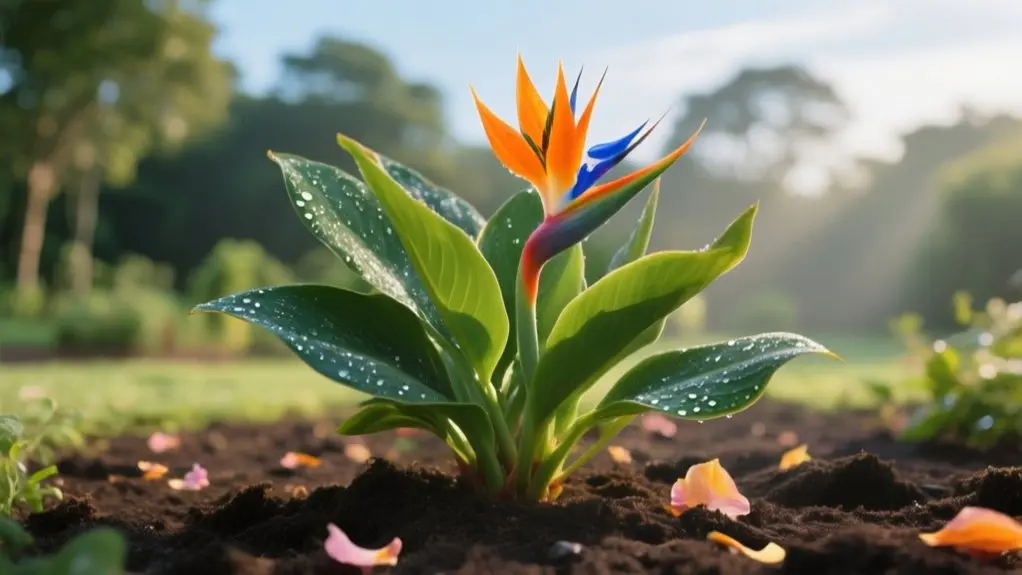
You can grow Birds of Paradise outdoors if you provide warm conditions typical of USDA zones 10-12. Make sure to protect them from temperatures below 25°F, because frost can seriously damage their leaves, flower buds, and roots.
They need full sun exposure and well-draining soil to stay healthy. This helps prevent stress and disease, which they’re prone to without proper care.
If they get too cold, you’ll see dieback and the plants will weaken. So, understanding exactly where to place them, how to water, and when to make seasonal adjustments is key to keeping them thriving all year round.
Can You Grow Birds of Paradise Outdoors in Your Climate?
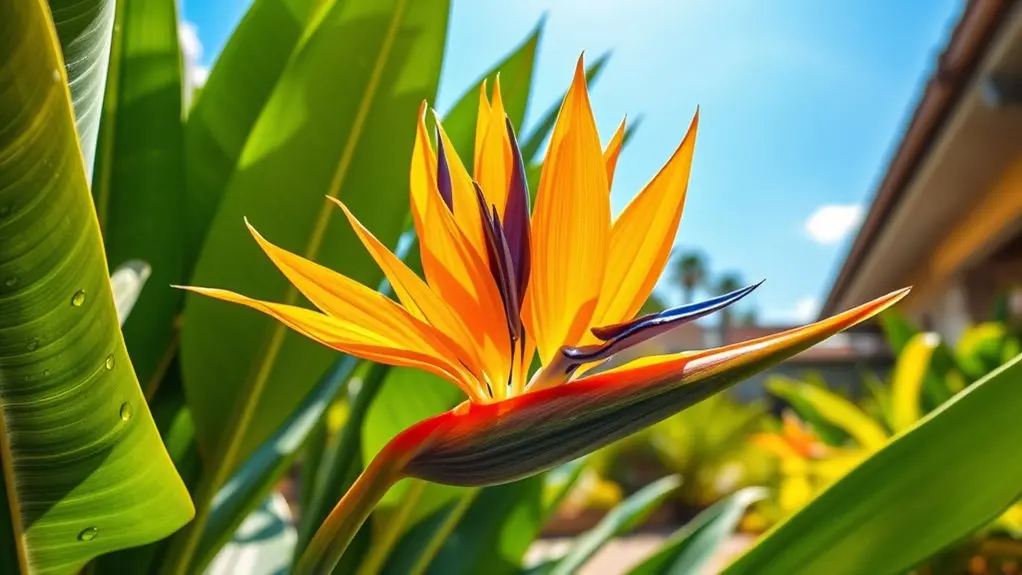
Although Birds of Paradise are native to warm climates, you can successfully grow them outdoors if you live within USDA zones 10 to 12, where temperatures remain consistently mild. In these zones, plant propagation thrives because the stable conditions support root development and flowering.
Birds of Paradise flourish outdoors in USDA zones 10 to 12 with mild, stable temperatures supporting growth.
You’ll want to guarantee full sun exposure for ideal growth, though partial shade works in hotter areas.
Companion planting with species that prefer similar moisture and drainage conditions can enhance your garden’s microclimate, reducing stress on the Birds of Paradise. Proper soil drainage and consistent moisture are critical.
Poor drainage risks root rot, especially in humid or rainy environments.
Outside these zones, survival rates drop without winter protection, making outdoor cultivation less viable. Careful site selection and companion planting improve success in suitable climates.
How Do Temperature and Frost Affect Outdoor Birds of Paradise?
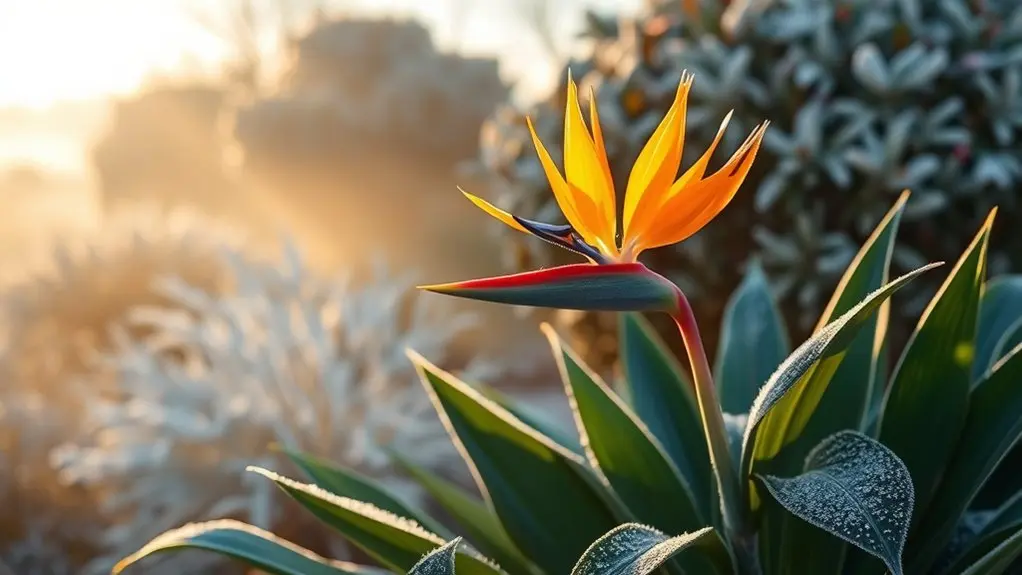
When temperatures drop below 25°F, your outdoor Birds of Paradise will likely suffer significant damage, especially to their foliage and flower buds. Frost damage happens because the plant’s cells freeze, which disrupts tissue and causes leaves to brown.
This kind of temperature stress weakens the plant, making it more vulnerable to root damage or even death if the cold sticks around.
If you live in USDA zones 10-12, where frost is rare, your plant will do great outdoors. But in colder zones, you really need to protect your plant from frost to avoid these problems.
Here are some key effects to watch out for:
- Leaf browning and dieback due to cellular freezing
- Loss of flower buds, which means fewer blooms
- Root damage from being exposed to cold for too long
Knowing how temperature and frost affect your Birds of Paradise helps you take the right steps to keep them healthy and thriving.
Best Outdoor Light and Placement for Birds of Paradise
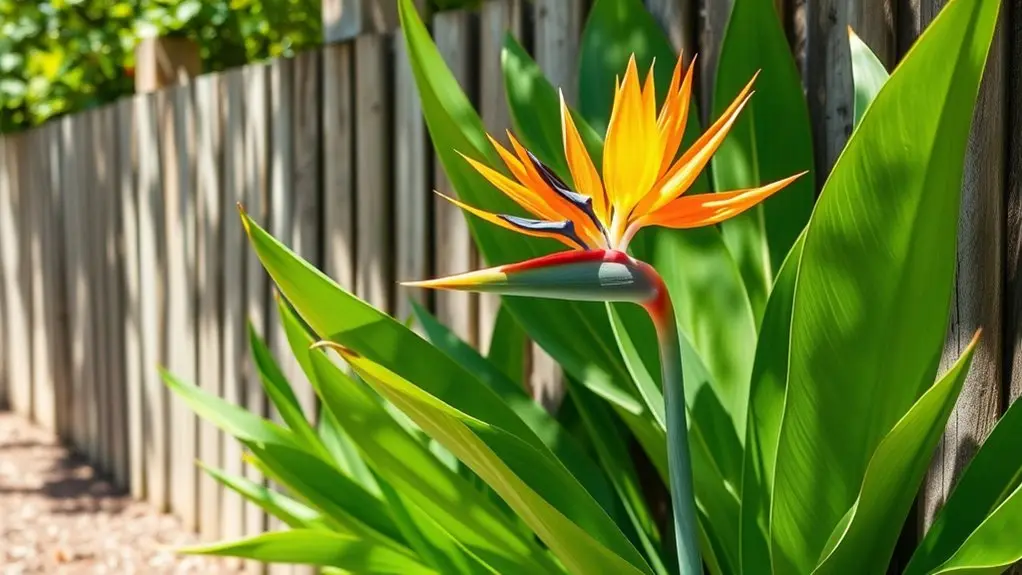
You’ll want to position your Birds of Paradise where they get plenty of sunlight—full sun to partial shade works best. That’s because the amount of sunlight they receive directly affects how big the flowers grow and how long the stems get.
It’s a good idea to space each plant about six feet apart. This way, they’ve enough room to grow well and get good airflow.
Also, don’t forget about the soil quality and moisture. These factors are just as important for keeping your Birds of Paradise healthy when they’re outside.
Optimal Sunlight Exposure
Since Birds of Paradise require at least six hours of direct sunlight daily, placing them in a spot that gets full sun is essential for their best growth and flowering. These plants don’t handle shade very well.
While some partial shade can encourage taller growth and bigger blossoms, it actually cuts down on the overall number of flowers.
Too much shade leads to fewer blooms and leggier stems as the plant stretches to find light. If you live in a cooler climate, making sure your plant gets full sun during the warmer months really helps boost flower production and keeps the plant healthy and vigorous.
To get the most sunlight for your Birds of Paradise, try positioning it where it can soak up at least six hours of direct sun. Avoid spots that are heavily shaded to prevent your plant from becoming leggy.
And during the warmer periods, maximize sun exposure to enhance both flowering and the vibrancy of the foliage.
Following these tips will help keep your plant thriving and ensure it produces plenty of beautiful flowers.
Ideal Plant Positioning
Although Birds of Paradise flourish in full sun to encourage dense growth and abundant flowering, positioning them thoughtfully outdoors is crucial to maximize their health and bloom potential. You should place them about six feet apart to allow airflow, which aids pest prevention and supports ideal flower arrangement.
In hot climates, partial shade reduces leaf scorch and fosters larger blossoms. Also, protect plants from cold winds in cooler areas to avoid frost damage. Guarantee well-draining soil and minimal shading for robust roots and vibrant foliage.
| Factor | Recommendation | Benefit |
|---|---|---|
| Sunlight | Full sun or partial shade | Abundant flowering, less scorch |
| Spacing | 6 feet apart | Better flower arrangement, pest prevention |
| Wind Protection | Shelter from cold winds | Frost damage prevention |
| Soil | Well-draining | Healthy roots, vibrant foliage |
| Shading | Avoid excessive shade | Maximizes bloom potential |
Soil and Drainage Requirements for Outdoor Birds of Paradise
When cultivating Birds of Paradise outdoors, ensuring well-draining, loamy soil is vital to prevent water from pooling around their roots and causing damage. The ideal soil composition balances organic content and aeration, which promotes healthy root development.
You can improve drainage by amending soil with compost or pumice, enhancing both nutrient availability and water flow.
In areas with poor drainage, elevating the planting site or creating mounds reduces moisture retention, lowering root rot risks.
Regularly assess soil moisture to maintain slightly moist, not soggy, conditions. That’s essential for the best growth.
To maximize soil and drainage for your outdoor Birds of Paradise:
- Incorporate organic matter to enhance soil composition
- Use raised beds or mounds for drainage improvement
- Monitor soil moisture to avoid waterlogging
Watering and Humidity Needs for Outdoor Birds of Paradise
To maintain healthy outdoor Birds of Paradise, you’ll need to water them deeply every 2 to 3 weeks during warm seasons. Make sure the soil stays slightly moist without becoming waterlogged. This watering routine helps the roots function well and encourages strong growth and flowering.
Since these plants love high humidity, keeping humidity levels in check is really important. Dry air can cause brown leaf edges and stress the plant. Mulching around the base is a great way to hold soil moisture and keep humidity stable near the plant, creating a cozy little environment for it.
When the months get cooler and darker, it’s best to cut back on watering. Too much moisture then can lead to root rot, which you definitely want to avoid.
Managing Pests and Diseases on Outdoor Birds of Paradise
Because outdoor Birds of Paradise often encounter pests like mealybugs, scale insects, and spider mites, you should regularly inspect your plants for early signs such as yellowing, stippling, or fine webbing on the leaves.
Regular checks for yellowing, stippling, or webbing help catch pests like mealybugs and spider mites early.
Effective pest prevention means acting quickly with insecticidal soap or natural remedies to keep infestations from getting worse.
Disease management is just as important, especially for fungal problems like black spot. These diseases love poor drainage and high humidity, so removing infected leaves and making sure your soil drains well can really help prevent root rot.
Here are some key things to keep in mind:
- Check your plants regularly to catch pests and diseases early
- Use targeted treatments like insecticidal soaps right away
- Keep watering and soil drainage just right to stop fungal growth
Following these steps will keep your outdoor Birds of Paradise healthy and thriving.
Pruning and Maintenance Tips for Healthy Outdoor Birds of Paradise
Although outdoor Birds of Paradise are hardy, regular pruning and maintenance are essential for keeping them healthy and vigorous. Remove dead or damaged leaves and spent flower stalks promptly. This helps prevent disease and encourages a strong, beautiful flower display.
Prune overgrown plants to about 1 foot above the ground. Use sharp, clean tools to make precise cuts without harming the remaining tissue. Shearing back dense foliage improves air circulation and keeps the plant looking attractive.
In spring or early summer, divide mature clumps and replant the divisions at the same depth. This stimulates new growth and more flowering.
Combine these steps with consistent soil fertilization to provide the nutrients your plant needs.
When you do all this, your outdoor Birds of Paradise will thrive both in health and appearance. It’s all about giving them a little regular care to keep them looking their best.
When and How to Bring Birds of Paradise Indoors for Winter Protection
When outdoor temperatures approach 25°F, you’ll want to bring your Birds of Paradise indoors to prevent cold damage that can severely impact its health.
To guarantee effective frost protection, start acclimating the plant gradually over a week. Place it near a bright, south-facing window receiving 4-6 hours of direct sunlight to support photosynthesis indoors.
Begin gradual acclimation indoors near a bright, south-facing window with 4-6 hours of sunlight for frost protection.
Maintaining adequate indoor humidity is critical. Use a humidifier or mist regularly to mimic its tropical environment.
Water sparingly during winter, and avoid fertilization until spring growth resumes.
Acclimate your plant slowly to indoor conditions. Position it near a south-facing window with ample sunlight.
Maintain high indoor humidity using humidifiers or misting.
This method minimizes stress and helps your plant survive winter’s cold spells.
Frequently Asked Questions
How Long Does It Take for Birds of Paradise to Bloom Outdoors?
You’ll see Birds of Paradise bloom outdoors typically in 3 to 5 years with proper bird care and plant maintenance.
Ideal sunlight, consistent fertilization, and pruning can speed flowering to as little as 2 years, especially in mature plants.
Can Birds of Paradise Attract Wildlife or Pollinators in My Garden?
You’ll notice Bird of Paradise flowers increase local pollinator visits by up to 40%, influencing bird behavior considerably. Their vibrant blooms enhance garden design, actively supporting bees, butterflies, and hummingbirds drawn to nectar-rich flowers during peak bloom.
These plants aren’t just pretty—they play a real role in attracting wildlife. So, if you want to invite more pollinators to your garden, adding Bird of Paradise is a smart move. They add color and life, making your outdoor space buzz with activity.
Are Birds of Paradise Toxic to Pets or Children?
Yes, Birds of Paradise pose toxicity concerns for pets and children. You should prioritize garden safety by keeping them out of reach.
If ingested, the plant can cause nausea, vomiting, and abdominal pain due to harmful alkaloids. So, it’s best to be cautious and keep an eye on curious little ones and furry friends around these plants.
What Companion Plants Grow Well With Birds of Paradise Outdoors?
You won’t find succulents whispering sweet nothings to Birds of Paradise. Stick to red ti plants or crotons instead. Their shared soil requirements and pruning techniques guarantee harmony.
This pairing promotes vibrant growth in well-drained, sunny outdoor spots. It’s all about choosing companions that thrive under similar conditions. That way, your garden stays happy and healthy.
Can Birds of Paradise Be Grown in Containers Outside?
You can grow Birds of Paradise in containers outside if you meet tropical climate requirements, ensuring frost protection.
Keep an eye on how they grow indoors versus outdoors. Adjust watering and fertilization as needed to help them thrive.
This way, you support healthy development and encourage flowering in warm zones.
Conclusion
If you live in USDA zones 9-11, you can successfully grow Birds of Paradise outdoors. They thrive in temperatures above 50°F and can tolerate brief frosts down to 24°F.
Remember, about 70% of their growth depends on proper sunlight and well-drained soil. By monitoring temperature, watering carefully, and pruning regularly, you’ll keep your plant healthy year-round.
When cold snaps hit, bringing them indoors safeguards their vibrant blooms and ensures survival. It’s a simple step that makes a big difference!