
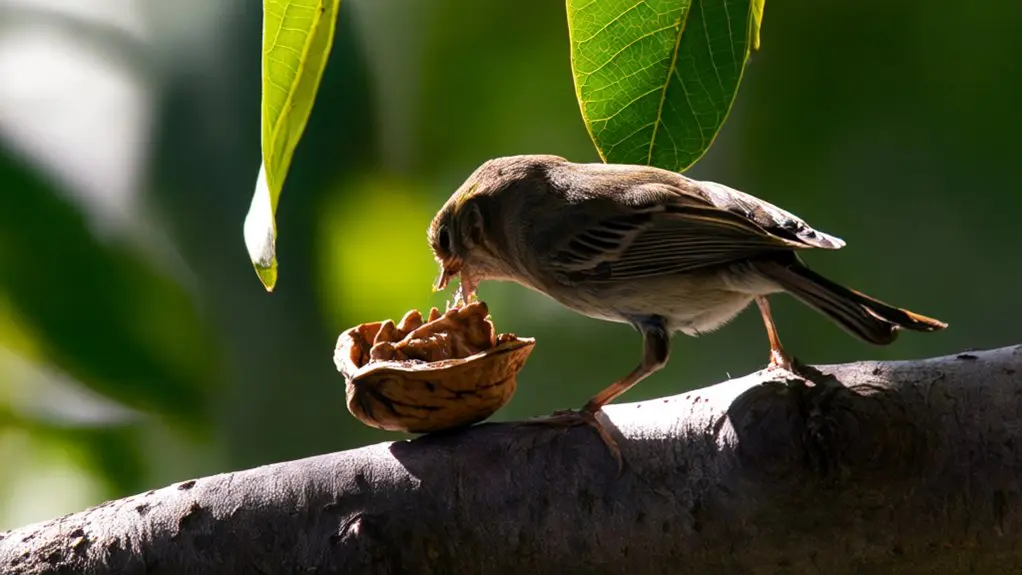
You can feed birds plain, unsalted walnuts safely by making sure they’re fresh, mold-free, and stored properly in a cool, dry place. Larger birds like jays and woodpeckers naturally crack open whole nuts. Smaller species prefer shelled or cracked pieces to avoid choking.
Walnuts provide essential fats, proteins, and antioxidants that support energy and immune function, especially in colder seasons. Understanding how to prepare, offer, and store walnuts ensures birds benefit without health risks. There’s more to explore about their feeding behavior and best practices.
Can Birds Safely Eat Walnuts?
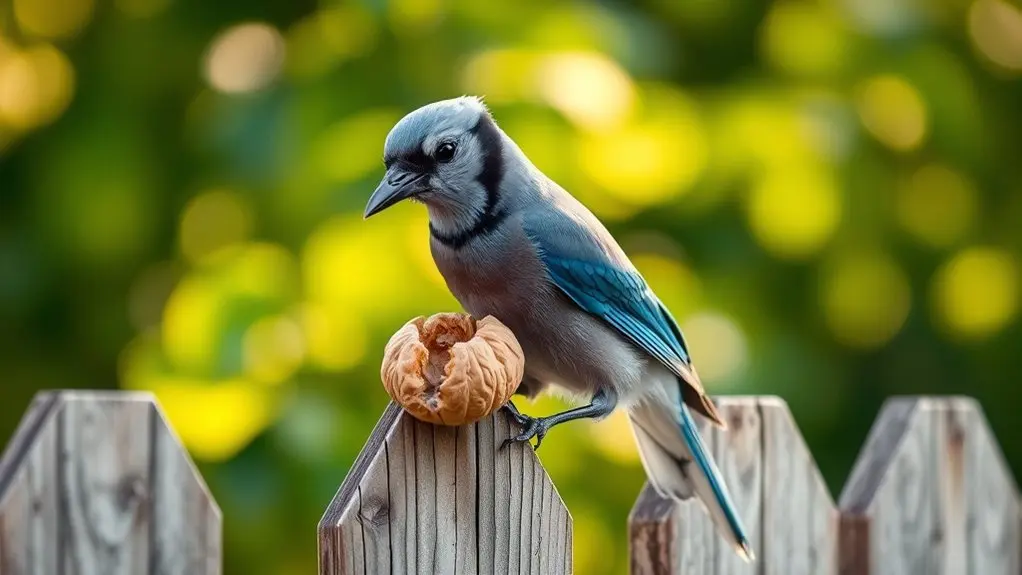
Although not all birds can handle them, you can safely offer walnuts to certain species as long as the nuts are plain, unsalted, and free from added seasonings or coatings.
Birds with strong beaks, like jays and woodpeckers, can crack open walnut shells, using the nuts as a valuable food source during bird migration when energy demands increase.
Birds with powerful beaks, such as jays and woodpeckers, rely on walnuts for energy during migration.
Unshelled walnuts also provide important foraging enrichment. They encourage natural behaviors that are essential for survival.
Plus, some species may even use walnut shells in their nest building, taking advantage of the durable material to strengthen their nests.
However, you should avoid offering walnuts that are flavored or salted. These additives can harm avian health.
Always check raw walnuts for mold or spoilage before feeding them to birds to keep them safe during important times like migration and nesting.
Nutritional Benefits of Walnuts for Birds
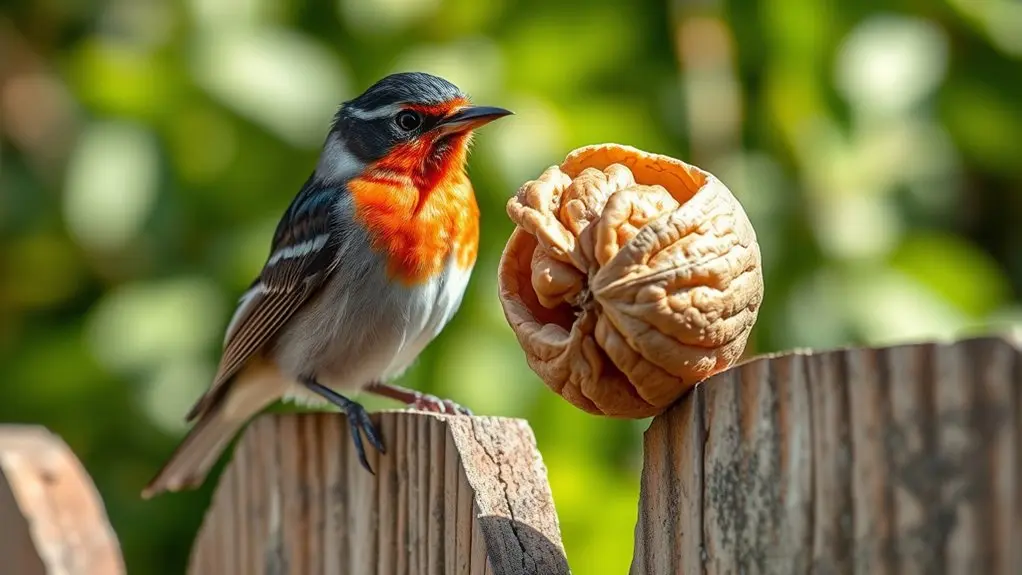
Because walnuts are rich in healthy fats, proteins, and omega-3 fatty acids, they provide essential nutrients that support birds’ energy requirements and overall health. These components contribute considerably to bird energy, particularly benefiting migratory species and those in cold climates by supplying dense caloric reserves.
Walnuts also contain antioxidants and vitamins that enhance immune function and promote longevity. Efficient nut digestion is vital for birds to access these nutrients, as they must break down the tough walnut matrix to absorb fats and proteins effectively.
When fed in moderation, walnuts improve feather quality and reproductive health. So, incorporating walnuts into a bird’s diet offers a scientifically supported nutritional boost. This ensures ideal energy metabolism and physiological maintenance without compromising safety or digestive efficiency.
Preparing Walnuts for Bird Feeders
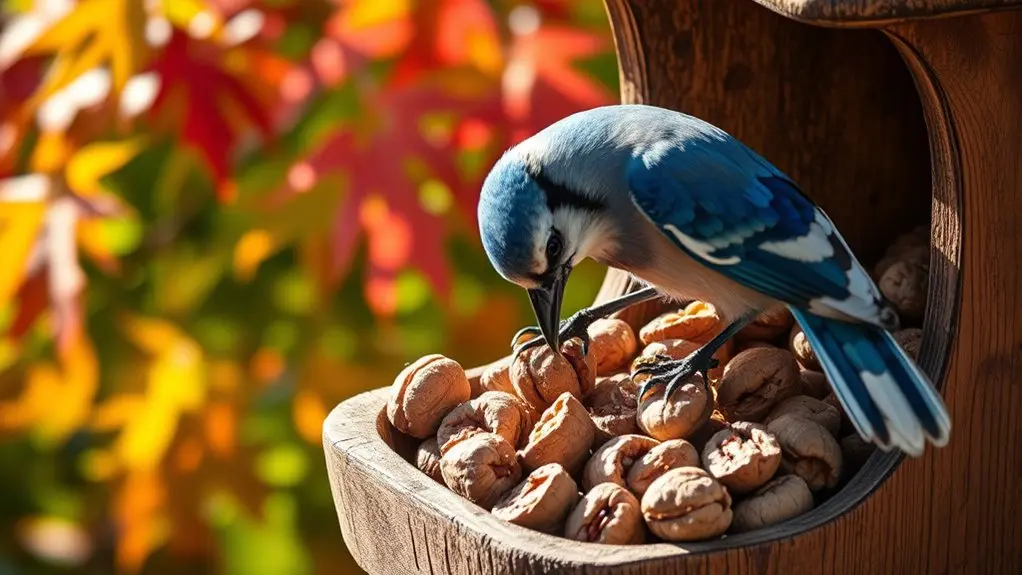
When preparing walnuts for bird feeders, you should first crack them open and offer pieces or halves to guarantee birds can access the nutritious kernel easily. Make sure the walnuts are unsalted and unseasoned, because additives can be harmful.
Crack walnuts open and offer unsalted, unseasoned pieces to ensure birds access the nutritious kernels safely.
Store them in a cool, dry place to prevent mold growth, which can compromise the nut’s safety and nutritional value. Also, remove any cracked or damaged shells to reduce the risk of spoilage.
You can provide the walnuts in specialized feeders designed for nuts or simply scatter them on the ground for ground-feeding birds. This kind of preparation matches the natural nut-harvesting behaviors seen in many bird species.
Doing it this way helps the birds incorporate the nuts into their diet efficiently. Proper preparation maximizes nutritional benefits while minimizing health risks that come from improper storage or additives.
It’s really about making sure the birds get the best and safest feed possible.
How Walnuts Fit Into Birds’ Natural Diet
You’ll notice that many bird species prefer walnuts because they’re packed with fat and protein, which are great for meeting their energy needs.
Plus, the time of year really affects when birds go for walnuts—especially in the fall and winter months.
Birds’ Nut Preferences
Although many nuts can provide energy to birds, walnuts hold a unique position in their natural diet because of their high fat content and tough shells. Bird behavior studies show that species like jays, woodpeckers, and chickadees actively choose walnuts for their durability and nutrient density.
The hardness of walnut shells matches well with the strong beaks of these birds, making it easier for them to crack open and get to the kernel. Nut selection often involves caching behavior too. For example, blue jays and nuthatches store walnuts for future energy needs.
Some birds eat walnuts whole, while others prefer shelled or chopped forms to make feeding easier. This preference reflects an adaptive strategy to maximize energy intake while fitting species-specific feeding methods and ecological demands.
This is especially true during energetically costly times like migration and winter.
Walnuts Nutritional Value
Because walnuts contain a high concentration of healthy fats, proteins, vitamins, and minerals, they serve as an essential nutritional resource for many bird species. These nutrients support bird metabolism by providing sustained energy, especially critical during periods of increased activity like migration or cold weather.
Wild birds such as jays and woodpeckers naturally incorporate walnuts into their diets, benefiting from the rich caloric content.
The nut shell hardness requires birds to engage their beak strength and foraging skills, promoting natural feeding behaviors that enhance survival. However, you should offer walnuts in moderation and without added salts or seasonings to avoid adverse effects.
Seasonal Nut Consumption
Wild birds adapt their feeding habits according to seasonal availability, and walnuts play a significant role during certain times of the year. During fall, nut harvesting peaks as walnuts become abundant, providing a critical source of energy-dense fats and nutrients.
Species like jays and woodpeckers actively crack open walnut shells to access the meat inside, demonstrating natural foraging adaptations.
This seasonal nut consumption supports birds preparing for seasonal migration or winter survival, supplying the necessary calories for long flights or cold conditions. Additionally, some birds cache walnuts for later use, which aids in seed dispersal and habitat regeneration.
Understanding these behaviors highlights how walnuts seamlessly fit into birds’ natural diets, aligning with their ecological needs and energy demands throughout fluctuating seasonal cycles. It’s pretty fascinating how these birds time their eating habits with the seasons, isn’t it?
Which Birds Love Walnuts?
When you observe birds around walnut trees or feeders, you’ll notice that species like chickadees, nuthatches, and woodpeckers frequently consume walnuts, especially when the shells are cracked open. These birds use walnuts as an energy-rich food source, which is super helpful during migration when they need extra nutrition.
Larger birds such as jays and magpies can crack open whole walnuts thanks to their strong beaks and foraging habits. Nesting habits also play a role in walnut consumption; birds that store food near their nests might prefer shelled nuts because they’re easier to access.
Chickadees and nuthatches favor cracked walnuts since their beaks are smaller. Woodpeckers use their strong beaks to get into whole walnuts. Jays and magpies show impressive shell-cracking skills.
Parrots and crows also enjoy walnuts as a nutritious treat in various habitats.
Understanding these preferences helps us see how bird migration patterns, nesting habits, and walnut use are all connected.
Best Ways to Offer Walnuts to Wild Birds
When you’re offering walnuts to wild birds, it’s best to choose unsalted, unflavored raw or roasted nuts to keep things safe for them. You can give the walnuts whole, cracked, or mixed into seed blends.
Using squirrel-proof feeders or platform dishes helps keep pesky mammals away from the bird’s treats.
Also, don’t forget to check for mold or spoilage by cleaning the feeding spots regularly and tossing out any old nuts. This way, the birds stay healthy and happy!
Choosing Suitable Walnut Types
Although many types of walnuts are available, choosing ones that maximize nutritional benefits and safety is essential for feeding birds. You should consider walnut shell hardness, as harder shells suit larger birds capable of cracking them, while smaller birds benefit from shelled or broken pieces.
Seasonal nut preferences also matter, as birds may favor fresher walnuts during peak seasons. Always select unsalted, raw, or simply roasted walnuts without additives to avoid health risks. Avoid moldy or spoiled nuts.
Offer shelled walnuts for easier consumption by small species. Provide whole walnuts to larger birds for natural foraging enrichment. Break walnuts into smaller pieces to reduce waste and choking hazards. Guarantee nuts are fresh and free from mold or seasoning additives.
Feeding Methods For Walnuts
Since birds vary in size and beak strength, offering walnuts in different forms guarantees better accessibility and feeding success. Nut harvesting yields walnuts either shelled or unshelled. Smaller or less confident birds benefit from walnuts partially cracked or fully shelled to access the nut meat easily.
Always offer unsalted, unseasoned walnuts free from coatings to guarantee safety. You can place walnuts on platform feeders, open trays, or scatter them on the ground, accommodating diverse species.
| Feeding Method | Walnut Form | Suitable Bird Types |
|---|---|---|
| Platform feeder | Shelled or cracked | Medium to large birds |
| Open tray | Shelled | Small to medium birds |
| Ground scatter | Unshelled | Ground-feeding birds |
Preventing Mold And Spoilage
To prevent mold and spoilage, you should offer walnuts in dry, well-ventilated conditions that inhibit fungal growth. Proper storage and handling are critical for mold prevention and maintaining walnut quality when feeding wild birds.
Follow these storage tips and practices:
Store walnuts in a cool, airtight container away from sunlight to preserve freshness and reduce spoilage risk. Avoid offering walnuts during humid or rainy weather to prevent moisture accumulation that promotes mold.
Regularly inspect walnuts for mold, discoloration, or musty odors before feeding to ensure safety. Limit the quantity of walnuts placed out at once and promptly remove any uneaten nuts to avoid fungal buildup.
Preventing Mold and Ensuring Safe Walnut Feeding
When you store walnuts in a cool, dry place, you greatly reduce the risk of moisture buildup that can lead to mold growth. Proper nut storage is key to keeping mold at bay.
Always check walnuts for any visible mold, discoloration, or a musty smell before feeding them to birds. These are clear signs of fungal contamination.
Try to avoid offering walnuts during humid or rainy weather since moisture speeds up mold development. It’s best to use only fresh, thoroughly dried walnuts to keep contamination risks low.
Also, make sure to regularly clean and dry feeders and storage containers. This helps stop mold spores from spreading.
Following these steps will keep walnuts safe for birds and lower the chances of health problems caused by mold.
Frequently Asked Questions
Can Baby Birds Eat Walnuts?
You shouldn’t feed baby birds walnuts due to their dietary preferences and digestive limits. Though walnuts offer nutritional benefits like healthy fats, young birds can’t safely handle their hard texture or rich content until fully developed.
It’s best to stick with softer, more suitable foods for baby birds. They need something gentle on their little stomachs while they grow. So, hold off on the walnuts until they’re older and better equipped to enjoy them.
Do Walnuts Attract Unwanted Pests or Animals?
Like a magnet pulling metal shavings, walnuts attract unwanted pests and animals. You’ll face pest attraction and animal risks, such as squirrels and ants, which break shells and invade your space.
How Often Should I Offer Walnuts to Birds?
You should offer walnuts to birds once or twice a week. This helps balance their nutrition and feeding schedule.
Doing this prevents excessive fat intake and dependency. Plus, it provides energy, especially during migratory or winter periods.
Are Black Walnuts Safe for Birds?
You’re handing birds a treasure chest; black walnuts are safe for species like jays and woodpeckers, offering rich walnut nutrition. Their hard shells promote natural foraging and beak health.
But always provide unsalted, unseasoned nuts. That way, you’re making sure the birds get the best treat without any added stuff they don’t need.
Can Walnut Shells Harm Birds if Ingested?
Yes, walnut shells can harm birds if ingested due to nut shell toxicity and their hardness. You should respect bird dietary restrictions since swallowing fragments may cause internal injury, choking, or digestive blockages. These issues can pose serious health risks.
Conclusion
Feeding walnuts to birds is like offering a nutrient-rich key that opens their natural vitality. By preparing and presenting walnuts safely, you provide essential fats and proteins that mirror their wild diet. This supports their health and energy.
Just as a well-tuned instrument relies on quality strings, birds depend on safe, mold-free walnuts to thrive. Your mindful feeding makes sure this symbolic gift nourishes rather than harms their delicate ecosystem balance.