
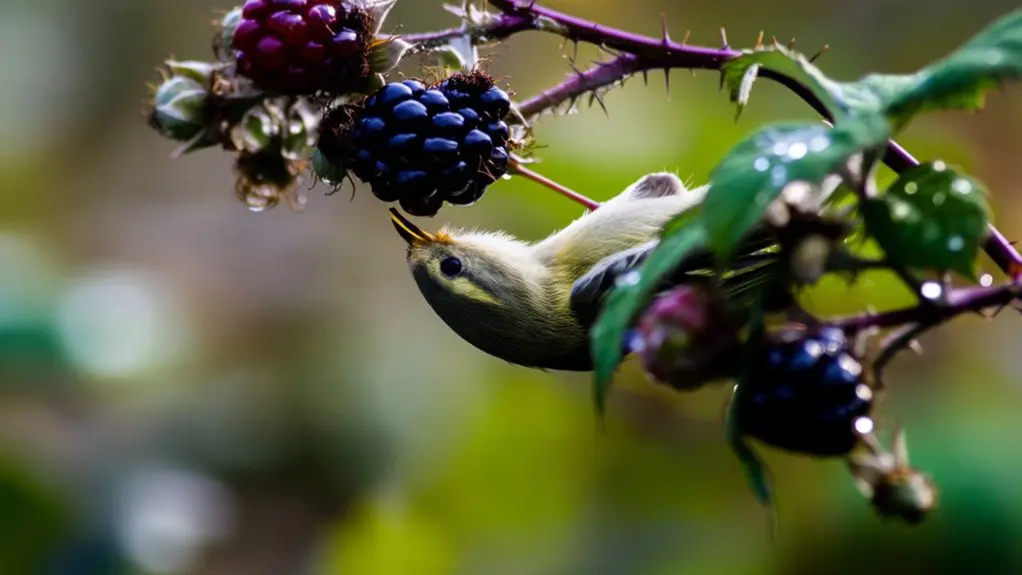
Yes, birds actively eat blackberries because these fruits offer high energy, vitamins, and antioxidants. You’ll notice thrushes, blackbirds, and finches targeting ripe berries, often causing punctures, broken stems, and rapid crop loss.
Birds perch or hang upside down to access fruit clusters, and their droppings can pose contamination risks. While they help disperse seeds intact, they also damage plants. Understanding their feeding habits and protection methods can help you manage and preserve your blackberry crop effectively.
Why Birds Eat Blackberries and What They Gain
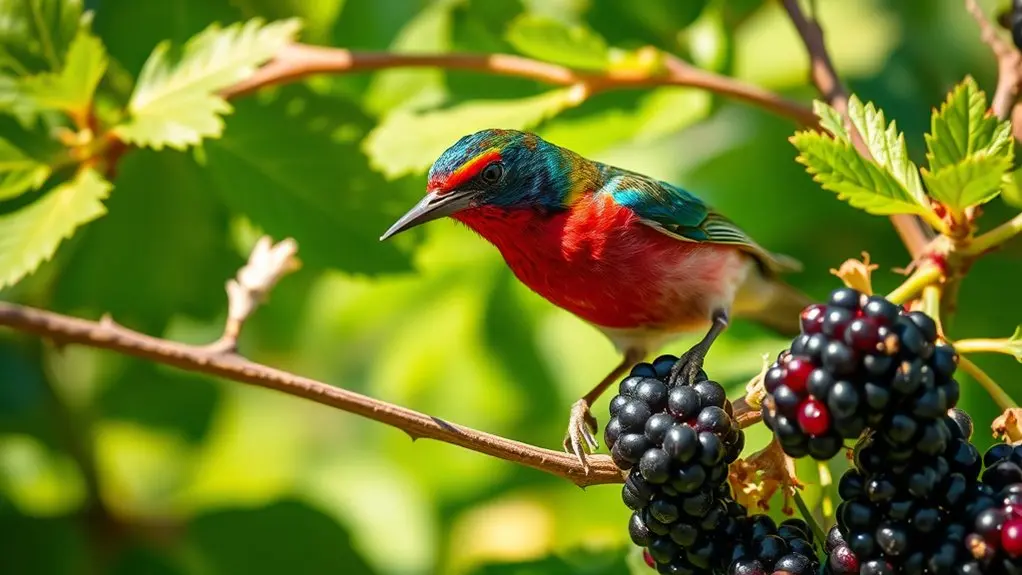
Although many fruits attract birds, blackberries stand out because they offer a high-energy, nutrient-dense food source rich in sugars, vitamins, and antioxidants. You’ll notice birds prefer ripe blackberries since these provide maximum nutritional value and are easier to consume.
The fruit’s high anthocyanin content signals antioxidant benefits, attracting birds seeking to supplement their diet.
When birds eat blackberries, they often ingest seeds that pass through their digestive tract intact, promoting seed dispersal and plant propagation.
Depending on their dietary needs, birds might target the pulp for its sugars or forage for insects hiding inside the fruit.
By choosing blackberries, birds efficiently obtain essential nutrients and energy, aiding their survival and simultaneously supporting the blackberry’s ecological cycle through seed dispersal.
It’s a win-win for both the birds and the plants!
Birds That Love to Eat Your Blackberries
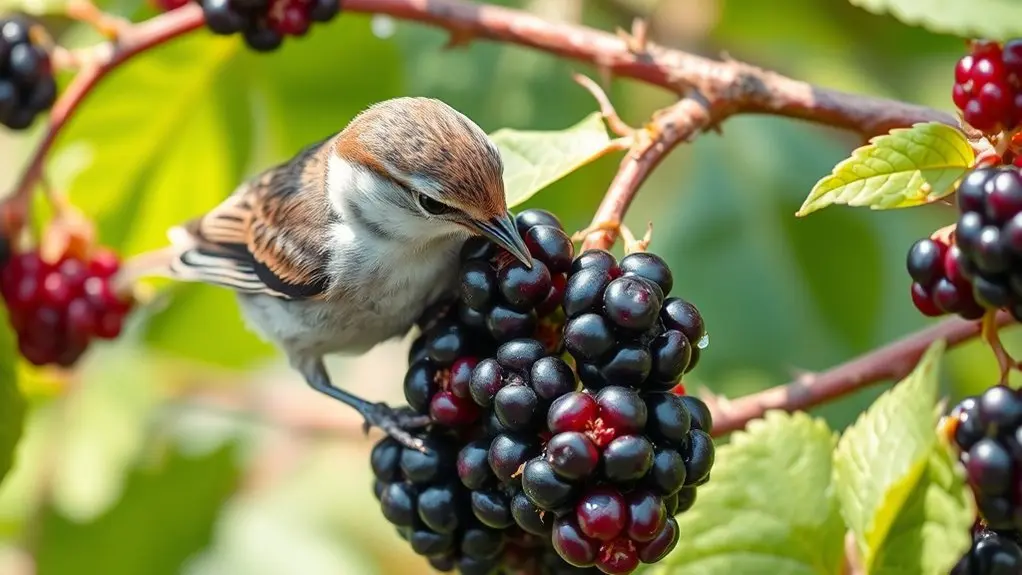
You’ll often see starlings, thrushes, blackbirds, and finches happily munching on ripe blackberries in late summer. These birds really seem to go for the fully ripened fruit.
For example, blackcaps and robins are known to strip bushes pretty quickly once the berries are ready. It’s interesting to watch how their feeding habits can actually affect how many blackberries you end up with in your garden.
Understanding what they like to eat gives you a better idea of why your blackberry supply changes throughout the season.
Common Blackberry-Eating Birds
Which birds are most likely to raid your blackberry bushes? Starlings, blackbirds, thrushes, and finches frequently feed on blackberries, targeting ripe fruit.
Juvenile stonechats and blackcaps also consume blackberries directly, especially during fruiting seasons.
Thrushes and blackbirds are known to strip bushes rapidly, removing large quantities of berries in a short time.
Finches and buntings focus on the seeds inside, impacting the fruit’s availability by damaging the pips.
Many of these species prefer fully ripe berries, which offer the highest sugar content and nutritional value.
Additionally, some birds eat insects found on or within the berries, which adds to their diet.
Observing these birds can help you understand how they affect your blackberry harvest and the ecological role they play in seed dispersal.
Seasonal Feeding Patterns
When do birds start turning to blackberries as a key food source? You’ll notice thrushes, blackbirds, and starlings feeding heavily on ripe blackberries in late summer and autumn. During this period, many birds shift from insectivory to frugivory, making blackberries an essential energy source.
Migratory species like waxwings and redwings arrive in winter, targeting leftover berries when other foods are scarce. The ripening schedule of blackberries dictates which species feed on them at different times. For example, finches and warblers exploit early or late fruiting.
Seasonal factors, including cold snaps or drought, can alter feeding patterns, sometimes increasing birds’ reliance on blackberries. Observing these seasonal shifts helps you understand how blackberries support diverse bird communities throughout the year.
It’s pretty fascinating to see how nature balances itself, isn’t it?
Bird Preferences and Behavior
As blackberries ripen, different bird species show distinct feeding preferences and behaviors that influence how these fruits are consumed in your garden or local habitat. Birds like starlings, thrushes, blackbirds, and finches prefer fully ripe berries, plucking them right from the brambles. Juvenile stonechats and blackcaps feed actively on the fruit and can strip bushes pretty quickly.
Some birds also go after the insects attracted to the fruit, which can affect how many berries are left for you.
| Bird Species | Feeding Behavior |
|---|---|
| Thrushes | Strip entire bushes quickly |
| Blackbirds | Pick ripe berries with precision |
| Juvenile Stonechats | Eat directly from bushes |
| Finches | Feed opportunistically on ripe fruit |
Knowing these behaviors helps you get ahead of blackberry loss to birds.
How Birds Access and Damage Blackberries
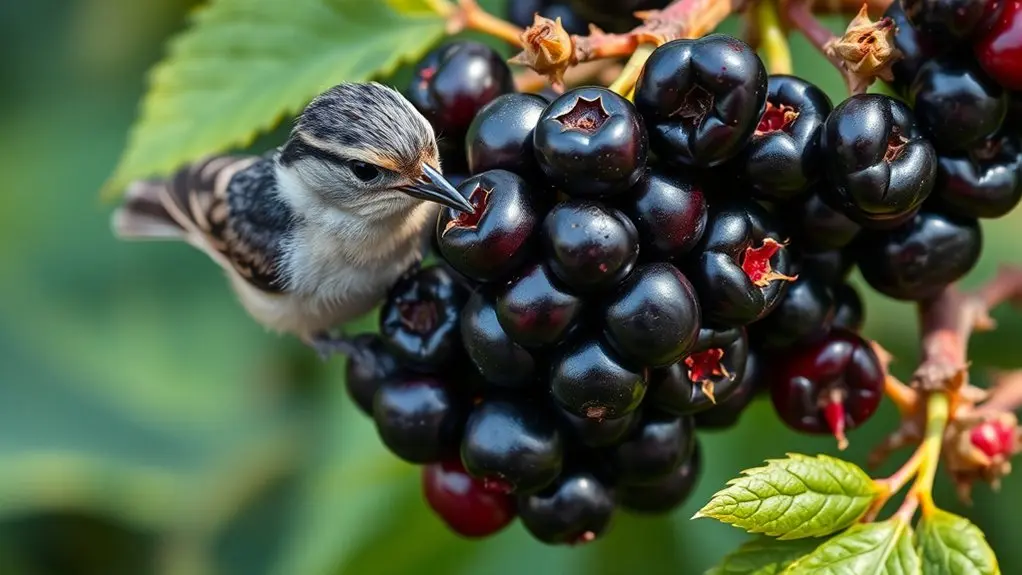
You’ll often see birds like thrushes and blackbirds perching right on blackberry bushes to get at the ripe fruit. They can strip whole clusters pretty quickly.
When they peck at the berries, it not only knocks fruit off before it’s ready but also makes the plants more prone to disease. Knowing how birds get to the berries and the kind of damage they cause helps explain why crop loss can be so significant.
Bird Feeding Behaviors
Although blackberries hang in dense clusters, birds such as thrushes, blackbirds, and starlings skillfully perch or even hang upside down on bramble branches to access the fruit. You’ll notice these birds peck directly at ripe berries, breaking the skin to reach the juicy pulp and seeds inside.
Many species prefer fully ripe blackberries, often consuming entire berries in one feeding session.
Finches and sparrows focus on the pips, swallowing seeds whole rather than just the pulp. When you observe large flocks, you’ll see how quickly they can strip bushes bare, sometimes within hours.
This rapid depletion results from their efficient feeding methods and preference for accessible, ripe fruit clustered on the outer branches.
Common Damage Patterns
When birds like blackbirds and thrushes feed on blackberries, they cause distinct damage patterns that reveal their methods of access and consumption. You’ll notice that they often peck directly at the fruit’s surface, leaving visible punctures and nibbled edges. They focus on fully ripened berries, frequently stripping entire clusters during peak ripening.
As they hang upside down or reach through dense brambles, you might see broken stems or displaced branches where they maneuver. Larger species, such as thrushes, can consume whole berries, sometimes removing large sections of the patch.
Half-eaten berries often remain on bushes or fall to the ground, increasing the risk of fungal or bacterial decay.
Observing these patterns helps you understand how birds impact blackberry crops. It’s pretty interesting once you start paying attention, and it can really give you a better idea of what’s going on in your patch.
Access Routes Used
Because blackberries grow within dense, thorny brambles, birds have developed specific access routes to reach the fruit. You’ll notice they exploit natural gaps or less dense areas of the bush, inserting their beaks to pluck berries.
Some birds perch or even hang upside down to access difficult clusters.
Larger species may bypass barriers like netting by forcing entry or finding weak points. Their feeding methods often lead to damage, either by pecking directly on ripe berries or stripping entire clusters.
- Perching on or reaching through dense brambles, sometimes upside down
- Inserting beaks into natural gaps or less dense bush areas
- Pecking at berries on the plant or plucking from stems
- Forcing entry through or around protective netting
Understanding these routes helps you anticipate and mitigate bird-related blackberry loss. It’s pretty useful to know how they get in so you can protect your crop better.
How Bird Droppings Can Contaminate Your Blackberries
Since birds often perch on or feed from blackberry bushes, their droppings can land directly on the fruit, introducing up to 60 known diseases. You should know contamination mainly affects berries on lower branches, where feces accumulate more easily. These droppings carry pathogens that can survive on the fruit surface, posing health risks if ingested.
To minimize this risk, thorough washing and careful harvesting are essential.
| Contamination Factor | Risk Level | Notes |
|---|---|---|
| Bird perching | High | Direct droppings on fruit |
| Lower branch berries | Elevated | Closer to bird activity |
| Pathogen survival | Moderate to High | Can persist on berry surface |
| Washing | Risk Reduction | Essential to remove contaminants |
Protecting Blackberries With Garden Netting
How can you effectively protect your blackberry harvest from persistent bird interference? Using garden netting creates a physical barrier that birds can’t penetrate or bypass, considerably reducing crop loss. When properly draped and secured around your blackberry bushes, netting prevents birds from accessing ripe fruit without harming them.
Consider these key points about garden netting:
- Made from lightweight, UV-protected polypropylene, it’s easy to handle and install.
- Durable and weather-resistant, it withstands seasonal changes year-round.
- Allows sufficient sunlight and air circulation, ensuring healthy fruit development.
- Eco-friendly and humane, it protects berries without chemical deterrents.
It’s a simple and effective way to keep your blackberries safe while letting them grow naturally. Plus, you don’t have to worry about harming the birds or using harsh chemicals. Just set it up right, and you’re good to go!
Choosing the Right Bird Netting for Blackberries
Garden netting offers a reliable physical barrier to protect your blackberry harvest from birds. But picking the right type of netting really boosts how well it works. You want netting with small mesh sizes, around 1/4 inch, to keep even the tiniest birds out.
Lightweight, UV-protected polypropylene is the best choice because it’s durable and can handle seasonal or even year-round use. Using bird control clips like Poly-Clips to secure the netting helps keep it tight and stops any gaps where birds might sneak in.
| Feature | Benefit |
|---|---|
| Mesh Size (1/4 inch) | Blocks small bird species effectively |
| Material (Polypropylene) | Durable, UV-resistant for longevity |
| Weight (Lightweight) | Easy to handle and drape over bushes |
| Clips (Poly-Clips) | Maintains tautness, secures netting |
| Full Coverage | Prevents bird access through gaps |
Tips for Installing Netting to Keep Birds Away
When installing netting to keep birds away from your blackberry bushes, you’ll want to drape it carefully to cover the entire plant without leaving gaps. Proper coverage is essential to prevent birds from accessing fruit through openings.
Use UV-protected, durable polypropylene netting with a fine mesh size (1/4 to 3/4 inch) to guarantee longevity and resistance to weathering.
Secure all edges tightly using bird-proof clips like Bird B Gone Poly-Clips to maintain tautness. Additionally, choose lightweight netting to allow easy handling during installation and harvest.
Remember to inspect and tighten the netting regularly, especially after storms, to avoid sagging or gaps.
- Cover entire bush with no gaps
- Use UV-resistant, fine mesh netting
- Secure edges with bird-proof clips
- Regularly check and tighten netting
Frequently Asked Questions
Can Feeding Blackberries to Birds Affect Their Health?
Feeding blackberries to birds can benefit their health due to antioxidants and sugars. These natural nutrients help keep birds energetic and support their immune systems.
But you should avoid overripe, fermented, or chemically treated berries. These kinds might cause toxicity or digestive issues. That can impact their well-being in a negative way.
Do Birds Prefer Blackberries Over Other Fruits?
You’ll notice birds prefer blackberries for their size, sweetness, and energy. They choose ripe, juicy fruits over smaller, less ripe options. When blackberries are abundant, birds target them actively.
They select blackberries above rowan berries or windfall apples. It’s like they know where the best snacks are! So, if you want to attract birds, offering ripe blackberries is a smart move.
How Do Birds Help in Blackberry Seed Dispersal?
You’ll notice birds eat blackberries, digest the fruit, then excrete seeds elsewhere. This dispersal helps blackberry plants colonize new areas.
The seeds remain viable, and the droppings actually enrich the soil. That promotes germination and growth, making it easier for new blackberry plants to thrive.
Are There Seasonal Patterns in Birds Eating Blackberries?
Yes, you’ll notice birds eat blackberries most during late summer and early autumn when berries are ripe. Feeding declines as berries overripen. Migration patterns influence which species feed seasonally on these nutritious fruits.
Can Blackberries Attract Specific Bird Species to My Garden?
You can attract species like thrushes and waxwings by planting blackberries. Studies show up to 70% of these birds prefer bramble patches during migration, making your garden a crucial stopover.
These patches provide abundant food and shelter. So, if you want to see more of these beautiful birds around, adding blackberries is a great move. It’s a simple way to help them out during their long journeys.
Conclusion
You’ve seen how birds enjoy blackberries for their natural sweetness and nutrients, but their visits can come with unintended consequences, like fruit damage and contamination. While it’s tempting to share your harvest, using bird netting thoughtfully offers a gentle reminder to these feathered friends to dine elsewhere.
By choosing and installing the right protection, you can maintain a thriving blackberry patch. It’s all about balancing nature’s curiosity with your garden’s well-being.