
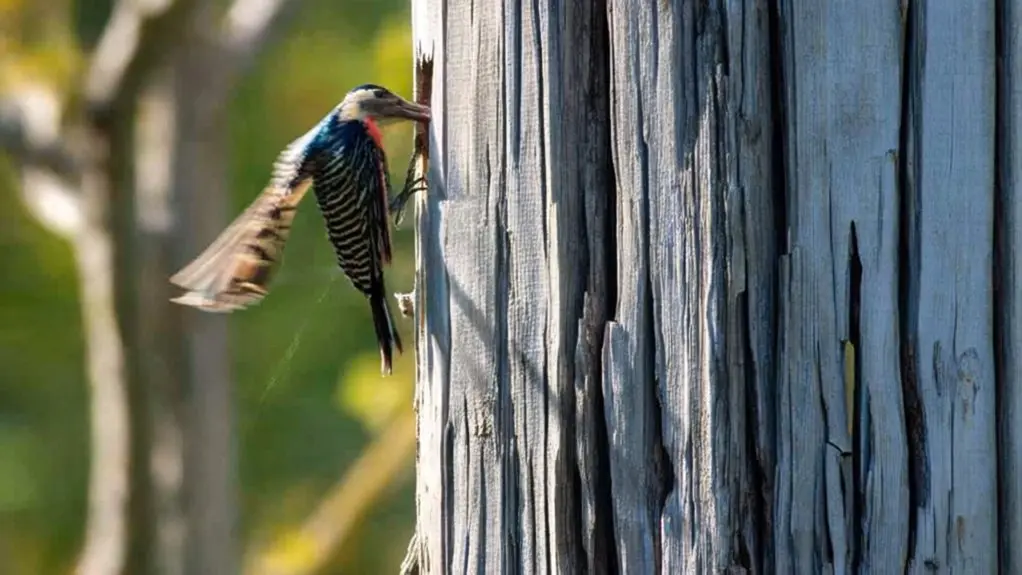
You can’t expect birds to peck through solid concrete or brick walls. But woodpeckers and similar species can damage wooden siding or stucco. They often enter through small gaps and cracks as tiny as half an inch.
Birds usually nest in sheltered wall cavities near eaves or vents. This can cause damage that weakens insulation and the structure itself. If you notice tapping sounds or nesting materials near openings, it’s a sign of activity that could lead to costly repairs.
There are more details that explain how to identify, prevent, and address these issues. So, keep an eye out and take action early to avoid bigger problems down the road.
Do Birds Actually Peck Through Walls?
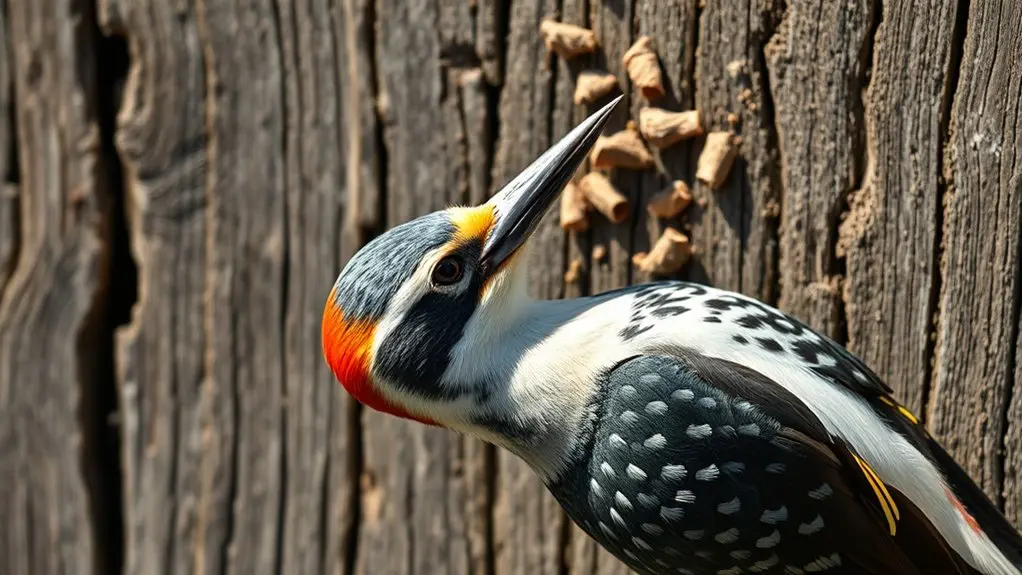
How likely is it that birds can peck through your walls? In reality, birds generally can’t breach solid walls like concrete or brick.
While certain woodpecker species can bore into wooden siding or softer materials such as stucco, they don’t peck through reinforced walls.
When you hear persistent bird vocalizations near your home, especially during bird migration seasons, it often signals birds attempting to access nesting sites or food behind vulnerable exterior surfaces.
The damage you observe, like small holes or dents, is typically limited to siding or thin materials, not the wall’s core structure.
Understanding this helps you accurately assess bird-related damage and differentiate it from other causes.
Nesting behavior and external pecking, not wall penetration, primarily explain these interactions.
How Birds Enter Walls and Nest
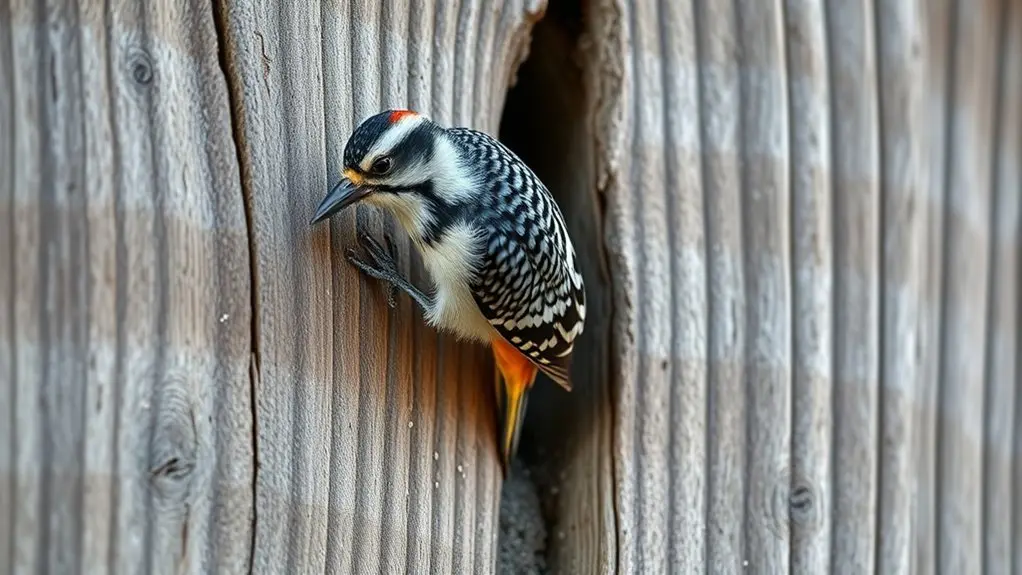
You’ll notice that birds take advantage of tiny gaps, cracks, and vents to get into walls—sometimes openings as small as half an inch. They tend to look for cozy, protected spots like wall voids, attic spaces, or behind exterior cladding where they can find shelter and feel safe.
Understanding these typical entry points and where birds like to nest really helps explain how they end up making nests inside your walls.
It’s kind of fascinating how clever they’re at finding just the right spot!
Common Entry Points
Where do birds find their way into the walls of your home? They exploit small holes, cracks, or gaps in siding, brickwork, and vent openings. Bird behavior drives them to seek out these entry points, often climbing or flying into accessible attic vents or loose siding panels.
Common access areas include gaps around utility pipes, electrical conduits, and chimney or roof vents. Over time, birds may enlarge tiny openings by pecking or gnawing, making it easier for them to get inside. Damaged stucco or loose siding serves as external features that invite intrusion.
Once inside, birds use nesting materials to build secure nests within wall cavities. Understanding these common entry points helps you identify vulnerabilities in your home’s exterior and prevent unwanted nesting inside your walls. It’s all about spotting those weak spots before birds do!
Nesting Site Preferences
Although birds can enter your walls through tiny, often overlooked cracks and gaps, they specifically seek out nesting sites that offer protection from predators and harsh environmental conditions.
You’ll find they prefer wall cavities, conduit openings, or spaces behind shutters to guarantee safety and shelter. Once inside, their feather behavior adapts to confined spaces, allowing them to maneuver and settle efficiently.
They use various nesting materials such as twigs, grass, and debris to construct secure nests within these voids.
Key nesting site preferences include:
- Wall cavities near eaves or roof vents, providing easy access and concealment.
- Spaces shielded from weather and predators to enhance survival.
- Locations where nesting materials can accumulate without immediate disturbance.
Understanding these points helps you identify and address potential bird intrusion. It’s all about knowing where they like to settle so you can keep them out.
How to Tell If Birds Are Nesting Inside Your Walls
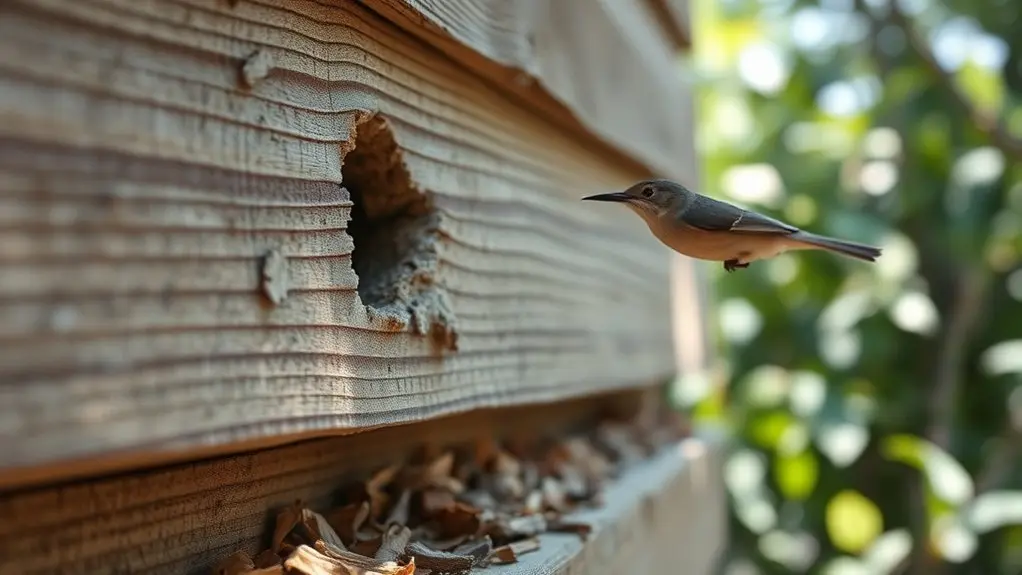
If birds find even a small gap or hole in your walls, they can enter and create nests within hidden cavities. To determine if birds are nesting inside, observe bird behavior closely, especially at dawn and dusk when they’re most active. Listen for scratching, tapping, or persistent chirping sounds coming from wall cavities.
Check areas near vents, attic openings, or small cracks in siding and brickwork for visible nesting materials like twigs, feathers, or droppings. These signs usually mean there are active nests within the walls. Since birds pick concealed, insulated spaces, their nesting materials often build up unnoticed.
Confirming their presence might require a professional inspection because bird activity inside walls can be subtle. But you can still detect it through careful listening and looking for clues linked to typical bird behavior. It’s all about paying close attention and knowing what to watch for.
Risks and Structural Damage From Birds Nesting in Walls
You might notice that when birds start nesting inside your walls, they can actually weaken the structure. This happens because they chew through wood and insulation, which can compromise the strength of your walls.
On top of that, all the nesting debris builds up and clogs the wall cavities. This not only causes blockages but also makes your insulation less effective, leading to higher energy loss.
Plus, the nests tend to hold moisture, which creates the perfect environment for mold to grow. That mold can speed up the deterioration of materials and even cause health problems. So, it’s definitely something to keep an eye on.
Wall Integrity Compromise
How exactly do birds nesting within walls compromise structural integrity? During bird migration, species exhibit specific nesting habits that often involve pecking through wall materials to create or enlarge cavities. This persistent activity weakens structural components, increasing susceptibility to damage.
You should be aware that repeated pecking and drilling expand entry points, compromising insulation and making it easier for pests to get in. Nest cavities trap moisture, which promotes mold growth and speeds up material deterioration.
Continuous scratching and pressure can cause cracks, putting the wall at risk of partial failure and leading to costly repairs. So, it’s definitely something to keep an eye on if you notice birds nesting in your walls.
Nesting Debris Accumulation
Although birds nesting within walls may seem harmless at first, the accumulation of debris such as feathers, droppings, and nesting materials poses significant risks to both structural integrity and indoor health.
Bird behavior prompts them to gather diverse nesting materials, which accumulate over time inside wall cavities. This buildup can obstruct ventilation and drainage pathways, reducing airflow and increasing the likelihood of water damage.
Nesting debris also accelerates deterioration of wall components and insulation, potentially leading to costly repairs. Additionally, the debris attracts pests like mites and rodents, which make the damage and health hazards even worse.
If you don’t address this accumulation promptly, you risk progressive structural compromise and indoor environmental decline due to persistent nesting debris inside your walls.
Moisture And Mold Risks
Why does moisture from birds nesting in walls pose such a serious threat? During bird migration, their nesting behavior can introduce significant moisture into wall cavities. This moisture fosters mold growth, which compromises structural materials and indoor air quality.
You should consider these risks: Bird droppings increase humidity, accelerating mold proliferation and wood decay. Moisture infiltrates insulation, diminishing its thermal performance and leading to structural deterioration.
Mold spores released from damp nests pose health hazards to occupants. Continuous nesting and accumulation of droppings cause wood rot in wall framing, undermining building stability.
Understanding these moisture and mold risks helps you mitigate potential damage caused by birds nesting inside walls.
How to Prevent Birds From Nesting in Your Walls
When birds find small openings in your walls, they can quickly establish nests that cause structural damage and health concerns. To prevent this, seal all cracks and holes with durable materials like steel mesh or caulking. It’s best to do this especially before peak bird migration seasons when urban landscaping changes can attract more birds.
You can also install bird-proof vents and chimney caps to block common access points birds use to peck through walls. Make it a habit to regularly inspect your home’s exterior to catch potential nesting sites early.
Additionally, deterrents such as reflective objects or bird spikes around walls can discourage birds from coming close. If you find existing nests or entry points, think about calling in professional wildlife exclusion services. They specialize in effective, humane prevention methods to keep your walls secure from nesting birds.
Signs That Bird Pecking Is Causing Wall Damage
If you notice visible cracks, holes, or damaged paint on your walls, these could be signs that birds are actively pecking at the surface to gain entry or create nests. Such damage often happens during bird migration when birds look for new nesting spots.
You might also hear tapping or scratching noises near your walls, which usually means birds are pecking. It’s a good idea to pay attention to these sounds because they can signal ongoing damage.
Look for these specific indicators:
- Unusual bird sounds like repetitive tapping, showing attempts to get through structural surfaces.
- Small debris, bird droppings, or nesting materials near wall openings.
- Persistent or growing damage around vents or small entry points birds use.
If you see these signs, it means bird activity is affecting your walls. It’s important to act quickly to stop further damage from happening.
When Should You Call a Professional to Remove Birds?
Although minor bird pecking might seem manageable, you should call a professional once the damage becomes persistent or creates structural vulnerabilities in your walls.
Repeated pecking or nesting attempts that cause holes or affect electrical wiring demand expert intervention.
Professionals apply advanced bird deterrent methods and assure proper sealing to prevent re-entry and structural risks.
If birds nest inside walls, producing noise, odors, or debris, contacting specialists guarantees legal and humane removal aligned with wildlife rehabilitation standards.
Also, when DIY efforts fail to deter birds or seal entry points, pest control experts provide effective solutions.
Timely professional removal protects your property from fire hazards and further deterioration, maintaining safety and compliance with wildlife protection regulations.
Frequently Asked Questions
What Types of Birds Are Most Likely to Peck Near Walls?
You’ll find bird species like woodpeckers, starlings, and sparrows most likely to peck near walls. They’re driven by nesting behaviors, looking for cavities to use as shelter or for food. Sometimes, it’s also about defending their territory.
These birds use their beaks to excavate or access hidden spaces. It’s pretty fascinating how they find and create spots to call home. So if you notice pecking sounds near walls, these are probably the usual suspects.
Can Bird Droppings Inside Walls Cause Health Issues?
Like a hidden toxin, bird droppings inside walls cause serious health issues by fostering wall contamination. You’ll face risks from harmful bacteria, fungi, and airborne spores that trigger respiratory illnesses and allergic reactions.
These problems can get worse if the droppings aren’t removed properly. So, it’s really important to take the right precautions when dealing with them. Otherwise, your health could be at risk without you even realizing it.
Are Ultrasonic Bird Deterrents Effective for Wall Protection?
You shouldn’t rely on ultrasonic frequency devices for wall protection, as birds’ behavior shows low sensitivity to those sounds. Over time, birds habituate, reducing deterrent effectiveness.
How Long Does It Take for Birds to Establish Nests in Walls?
If you notice sparrows settling in your attic, they can establish nests within a week. Bird nesting habits adapt quickly, and wall insulation effects may influence their choice, often providing warmth and protection for faster nest-building.
It’s pretty interesting how birds pick their spots. They look for places that keep them safe and cozy. So, if your walls are insulated, that might just make them the perfect nesting site.
Do Birds Prefer Certain Wall Materials for Nesting?
You’ll notice avian behavior favors softer, porous materials like wood or drywall for nesting preferences, as these provide easier access and better insulation.
Harder surfaces like brick tend to deter birds from pecking or nesting inside walls. So, birds usually go for spots that feel cozier and safer to them. It’s kind of like how we prefer softer pillows over hard ones when we sleep!
Conclusion
Remember, “a stitch in time saves nine.” Birds don’t typically peck through solid walls, but they can exploit weak spots to enter and nest. Ignoring early signs of bird activity inside your walls risks structural damage and health hazards.
You should act promptly by inspecting vulnerable areas, sealing entry points, and consulting professionals if needed. Taking these precise, preventive steps guarantees your home stays secure and bird-free without unnecessary damage.