
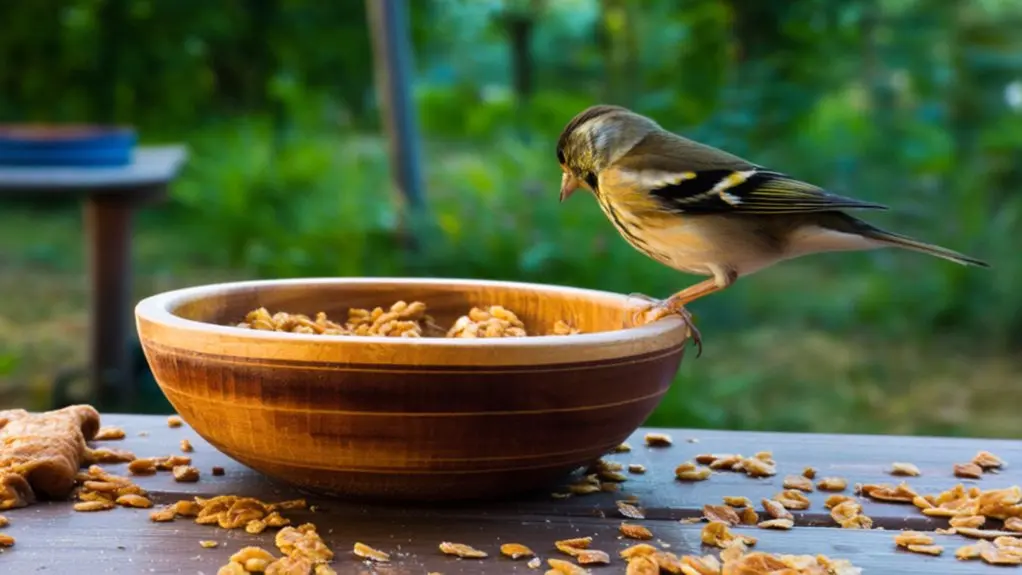
You can safely feed birds plain, unsweetened bran flakes as a nutritious, high-fiber treat that supports their digestion and overall health. Make certain the flakes contain no added sugars, salt, or artificial flavors. Serve them dry to avoid mold.
Offer small amounts to small songbirds like finches and tits. Always remove leftovers daily to maintain freshness and hygiene.
If you want to guarantee ideal bird feeding practices, there’s more detailed guidance ahead.
What Are Bran Flakes and Why Do Birds Like Them?
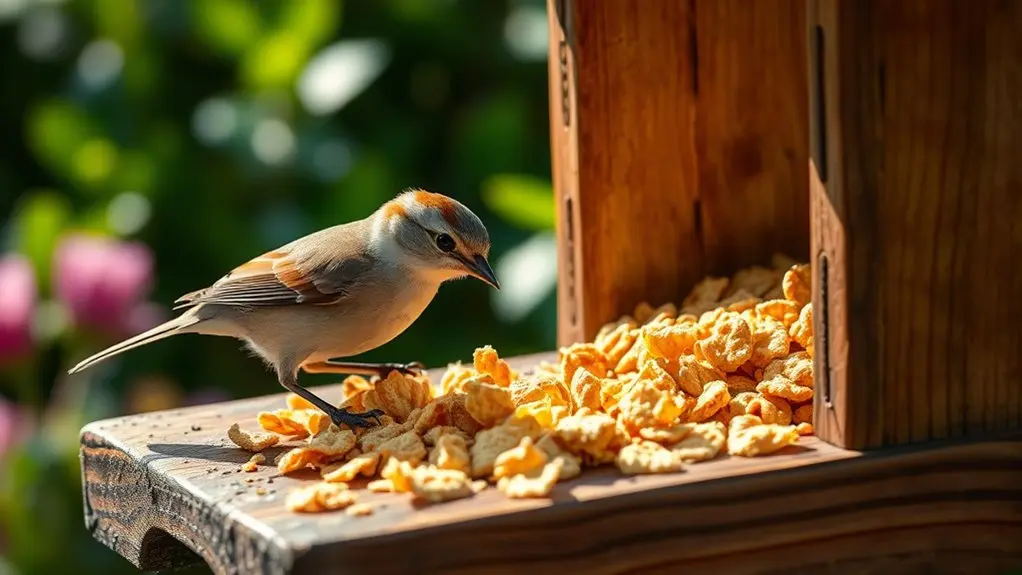
Although bran flakes are primarily known as a human breakfast cereal made from whole grain wheat, they’ve become a popular food choice for birds due to their high dietary fiber content. You’ll find that birds are attracted to bran flakes because this fiber supports their digestion and overall health.
Since bran flakes are unsweetened and free from artificial flavorings, you can offer them as a safe treat without worrying about harmful additives. Their dry, crunchy texture makes it easy for birds to peck and consume the flakes efficiently.
When you provide bran flakes, you help supplement a bird’s diet with essential nutrients. This can potentially promote greater biodiversity in your garden by supporting various bird species with a nutritious, natural food source.
Is It Safe to Feed Bran Flakes to Wild and Garden Birds?
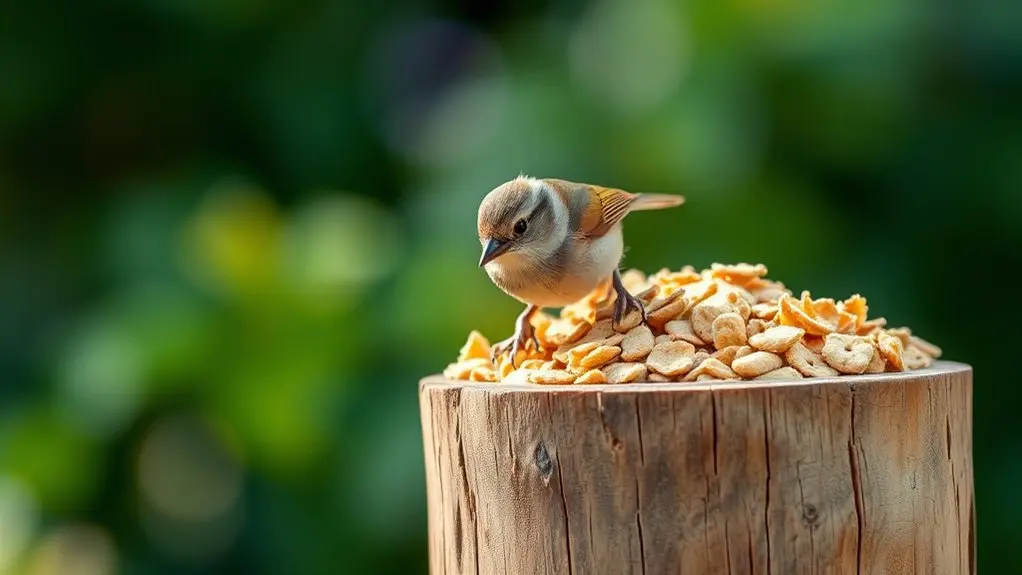
When you offer bran flakes to wild and garden birds, you must guarantee they’re plain and given in moderation to maintain safety and health. Bran flakes provide valuable fiber and nutrients that support digestion and overall well-being in birds.
Offering plain bran flakes in moderation supports birds’ digestion and overall health safely.
To avoid potential harm, make certain the flakes contain no added salt, sugar, or artificial flavors.
Serving them dry or mixed with other natural foods helps reduce mold growth and spoilage risks. Always remove any uneaten bran flakes daily, as stale or damp cereal can harbor bacteria or fungi harmful to birds.
Providing fresh water alongside bran flakes further promotes hygiene and bird health.
Ingredients in Bran Flakes to Avoid for Your Birds
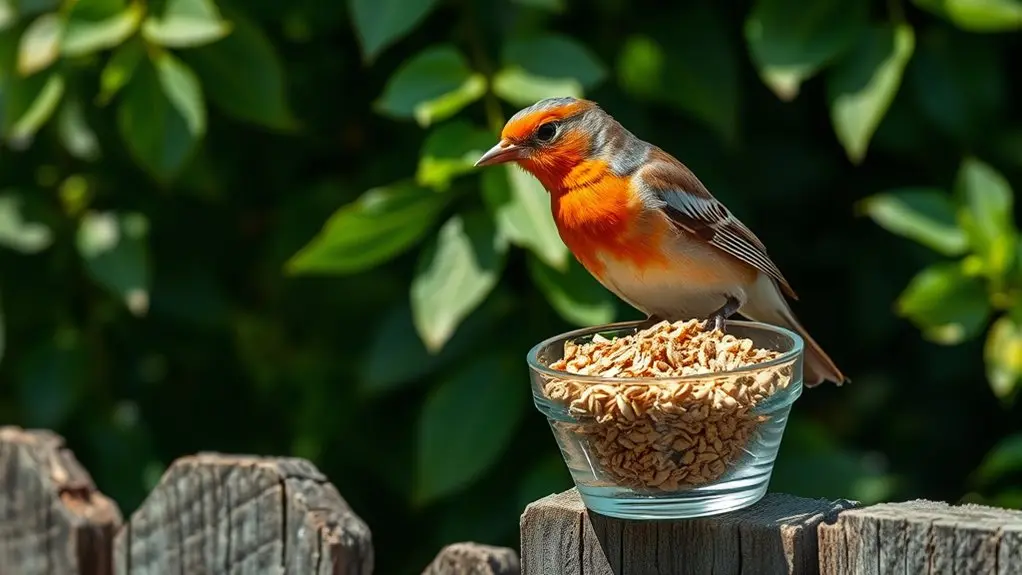
Because bran flakes often contain additives that can harm birds, you should carefully examine ingredient labels before offering them to your birds.
Many commercial bran flakes contain substances that may be toxic or nutritionally unsuitable for birds. Avoiding these ingredients helps prevent potential health issues.
Here are key additives to watch for:
- Added sugars and artificial sweeteners, which can disrupt avian metabolism
- Salt, which can cause dehydration and kidney strain
- Preservatives and artificial colors, potentially harmful to bird physiology
- Malted barley extract or malt flavoring, unsuitable for avian digestion
- Excessive or unbalanced vitamins and minerals from fortification, risking nutrient imbalances
Nutritional Benefits of Bran Flakes for Birds
You’ll find that bran flakes offer birds a rich source of dietary fiber. This is really important because it helps keep their digestion running smoothly and supports regular bowel movements.
Plus, bran flakes provide essential vitamins, like the B-complex group, along with minerals such as iron and magnesium. These nutrients play a big role in supporting your bird’s overall health.
Just remember, including bran flakes in moderation is key—they make a great low-fat, nutrient-packed addition to your bird’s diet.
High Fiber Content
Although birds require a variety of nutrients to thrive, incorporating bran flakes into their diet offers significant benefits due to their high fiber content. Dietary fiber in bran flakes supports healthy digestion by preventing constipation and promoting gut health.
This fiber also helps regulate blood sugar levels, contributing to metabolic stability.
Including bran flakes can create a feeling of fullness, which is great for helping with weight management in birds. When you add bran flakes to your bird’s diet, it complements other foods to maintain nutritional balance.
- Enhances digestive function and prevents constipation
- Supports overall gastrointestinal health in birds
- Regulates blood glucose through soluble fiber
- Promotes satiety, helping control food intake
- Contributes to a balanced diet alongside other nutrients
Essential Vitamins and Minerals
Beyond their high fiber content, bran flakes also supply a range of vitamins and minerals that support various physiological functions in birds. They provide essential B vitamins such as thiamine (B1), riboflavin (B2), and pyridoxine (B6). These vitamins play critical roles in energy metabolism and neurological health.
Additionally, bran flakes contain minerals including iron, magnesium, and manganese. Iron is crucial for oxygen transport in the blood. Magnesium supports muscle function and enzymatic reactions, while manganese contributes to bone formation and antioxidant defenses.
Incorporating bran flakes into a bird’s diet can promote stronger feathers and enhance immune function by supplying these key nutrients.
Bird Species That Eat Bran Flakes
When you offer bran flakes at your bird table, you’ll notice many garden species readily consuming them. Bran flakes serve as a high-fiber, nutritious treat particularly suited for small songbirds. Observations confirm that species such as sparrows and finches benefit from this dietary addition.
Bran flakes are a high-fiber, nutritious treat loved by sparrows, finches, and many small songbirds.
Wild birds like blue tits and great tits also actively peck at bran flakes, highlighting their acceptance across different bird types. Both adult birds and fledglings gain essential nutrients during the breeding season from these flakes.
Make sure you provide plain, unsweetened bran flakes in a dry state to maintain safety and prevent mold.
- Sparrows
- Finches
- Blue tits
- Great tits
- Small songbirds (general)
How Much Bran Flakes Should You Feed Birds?
Offering bran flakes to various bird species provides valuable nutrients, but it’s important to regulate the quantity given to maintain their health. You should feed birds bran flakes only as an occasional treat, limiting the amount to no more than a handful per feeding session. This precaution prevents overfeeding and avoids dietary imbalances since bran flakes aren’t a primary food source.
Bran flakes’ high fiber content can aid digestion; however, excessive intake may lead to gastrointestinal distress. Always serve bran flakes dry and plain, steering clear of cereals containing added sugars, salts, or artificial ingredients.
Keep an eye on the birds for any adverse reactions, and adjust portion sizes accordingly. This way, you’ll support their overall well-being and keep their nutritional balance in check.
How to Prepare Bran Flakes for Bird Feeding
If you want to feed birds with bran flakes, it’s a good idea to soak plain bran flakes in water or unsweetened fruit juice first. This softens them up and makes them easier for the birds to eat.
Just make sure you avoid any added sugars or dairy because those aren’t good for birds.
Once the flakes are ready, you can either serve them in a shallow dish or just scatter them on a dry, sheltered bird table. This helps keep the flakes fresh and appealing.
And don’t forget—removing any uneaten flakes every day is important to stop mold from growing and to keep pests away.
Serving Method Tips
Although bran flakes are a convenient bird feed option, you should serve them dry and unsweetened to guarantee safety and ease of consumption. Moisture and additives can compromise bird health and feeding efficiency.
To optimize serving, consider these tips:
Scatter a small handful in a shallow dish or directly on a bird table for easy access. Place the flakes in a dry, sheltered location to prevent sogginess and mold growth. Remove any uneaten flakes daily to maintain hygiene and avoid attracting pests.
Avoid soaking bran flakes in water or milk, as dry cereal supports better digestion. Use plain, unsweetened bran flakes to eliminate exposure to harmful sugars or additives.
Following these guidelines ensures bran flakes remain a safe, digestible, and accessible food source for wild birds.
Storage And Freshness
When preparing bran flakes for bird feeding, it’s really important to keep them dry and crispy. Store the bran flakes in an airtight container and put it somewhere cool and dry. This helps stop any moisture from sneaking in.
Try to keep them away from humidity or direct sunlight because that can make them go stale or even grow mold. Before you feed the birds, check that the flakes are completely dry and not clumped together. This way, they’re safe and tasty for the birds.
If the flakes do get stale, you can bring back their crunch by toasting them briefly at a low temperature. Or, just swap them out for fresh flakes if you prefer.
Also, take a moment regularly to look over your stored bran flakes for any signs of pests, mold, or spoilage. Toss out anything that looks off to keep things fresh and safe for the birds.
Tips for Keeping Bran Flakes Fresh and Safe for Birds
To maintain the nutritional quality and safety of bran flakes for birds, store them in an airtight container placed in a cool, dry environment away from direct sunlight. This helps prevent moisture absorption, nutrient degradation, and spoilage.
You should also keep an eye on the flakes regularly to make sure they stay fresh and safe.
- Use airtight containers to block moisture and pests.
- Place containers in locations with stable, low humidity.
- Avoid exposure to direct sunlight to reduce oxidation of nutrients.
- Check expiration dates and discard stale or moldy flakes promptly.
- Replace flakes daily during feeding to keep them crisp and uncontaminated.
Following these guidelines helps preserve the flakes’ integrity. It reduces health risks and supports birds’ well-being by ensuring they get consistent nutrients.
Seasonal Feeding Tips for Bran Flakes
Because food availability changes throughout the year, you should adjust how and when you offer bran flakes to birds to get the most nutritional benefits. During the warmer months, bran flakes can help supplement energy when natural foods like insects and seeds are less abundant.
Try scattering small amounts early in the day on birdtables or the ground to attract active foraging birds, especially during breeding season. Always place bran flakes in sheltered, dry spots to keep them from getting soggy or moldy, which isn’t safe for the birds.
Make sure to remove any leftovers daily to avoid attracting pests and to keep things clean. Also, providing fresh water nearby helps support digestion and keeps birds hydrated.
This seasonal approach ensures bran flakes stay a safe and helpful food source that matches birds’ changing nutritional needs throughout the year.
Frequently Asked Questions
Can Bran Flakes Cause Allergies in Birds?
Yes, bran flakes can cause allergies in birds because of the grains or additives they contain.
It’s a good idea to introduce them gradually. Keep an eye out for signs like itching, respiratory issues, or feather plucking.
If you notice any of these symptoms, stop feeding bran flakes right away. Then, be sure to consult an avian vet for advice.
How Do Bran Flakes Affect Bird Digestion Long-Term?
You’ll find that long-term bran flakes intake supports digestion by regulating bowel movements. But feeding too much can cause blockages or nutrient absorption issues.
Balancing bran flakes with varied foods ensures ideal digestive health in birds. It’s all about giving them a little bit of everything so their system stays happy. Just keep an eye on portions, and your bird should do just fine.
Are Bran Flakes Suitable for Baby Birds?
You can feed baby birds bran flakes occasionally, but only in small, crushed amounts. Their 10% fiber content helps with digestion, which is good. Just don’t overdo it, or you might cause a nutritional imbalance.
Always pick plain, dry flakes to avoid mold and additives. It’s better to keep things simple and safe when feeding little birds.
Can Bran Flakes Be Mixed With Other Bird Foods Safely?
Yes, you can safely mix plain bran flakes with seeds, dried fruits, or fresh vegetables. Just make sure the mix stays dry and free from additives.
Introduce the new mix gradually. Keep an eye on your bird for any digestive issues or allergies.
This way, you’ll know if your bird is reacting well to the new food combination. It’s always better to be cautious!
What Signs Indicate a Bird Dislikes Bran Flakes?
Wondering how you know if your bird dislikes bran flakes? You’ll notice spitting out flakes, pecking around them, or decreased foraging. These are clear signs your bird isn’t a fan.
Sometimes, you might also see stress behaviors like feather plucking and restlessness. These indicate aversion or discomfort with the food.
Conclusion
Feeding bran flakes to birds can be a balanced gift of nutrition when offered thoughtfully. Like a carefully tuned instrument, the right portion and preparation harmonize with their natural diet, supporting their health without harm.
Avoid harmful ingredients and keep the flakes fresh to guarantee safety. By understanding these details, you become a steward of their wellbeing, turning simple flakes into seeds of vitality that nourish winged life through every season’s rhythm.