
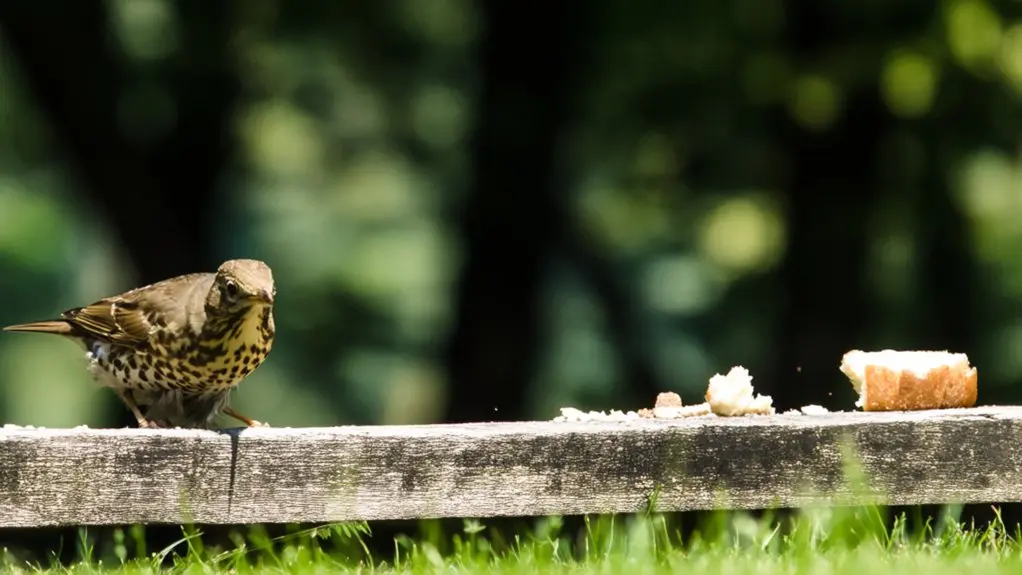
You can’t feed birds bread safely because it offers no real nutrition and fills their stomachs with empty calories. This can lead to malnutrition and weakened immunity. Moldy or stale bread can cause serious health issues like respiratory infections and deformities such as Angel Wing syndrome.
While some species might tolerate small amounts occasionally, bread shouldn’t be a regular food source. If you want to support bird health effectively, it’s important to understand the risks and know better alternatives.
Effects of Bread on Birds
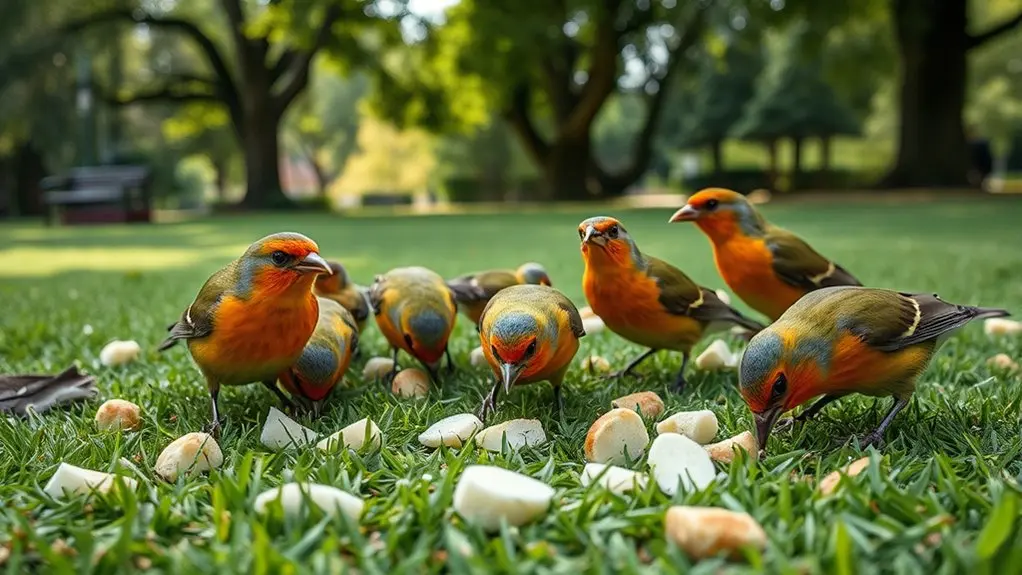
Although feeding birds bread might seem harmless, it offers no nutritional value and can quickly fill their stomachs, preventing them from eating healthier foods. When birds consume bread regularly, they risk developing vitamin deficiencies and other health problems due to lack of essential nutrients.
Moldy bread is particularly dangerous, as it contains toxins that can cause respiratory infections and compromise their immune systems. Also, large chunks or too much bread may block birds’ digestive tracts, creating serious health hazards.
Why Bread Isn’t Good Nutrition for Birds
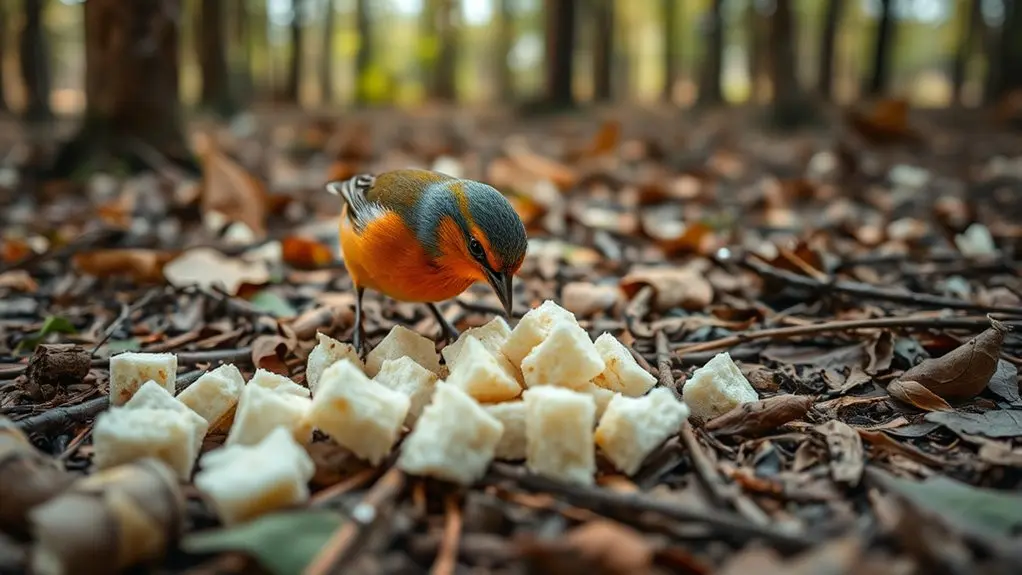
Because bread lacks essential nutrients like proteins, vitamins, and fats, it fails to support the metabolic and physiological needs of birds. When birds consume bread, its high carbohydrate content quickly fills their stomachs, reducing their appetite for more nutrient-dense foods crucial for their health.
Over time, this can lead to vitamin deficiencies and malnutrition, weakening their immune systems and overall vitality. Unlike bread, birds’ natural diets consist of diverse, nutrient-rich foods that provide balanced energy and support growth, reproduction, and disease resistance.
Feeding bread disrupts this balance and deprives birds of key nutrients necessary for maintaining ideal health. So, you should avoid offering bread as a nutritional source since it doesn’t meet the dietary requirements that birds naturally need to thrive.
Risks of Feeding Bread to Waterfowl
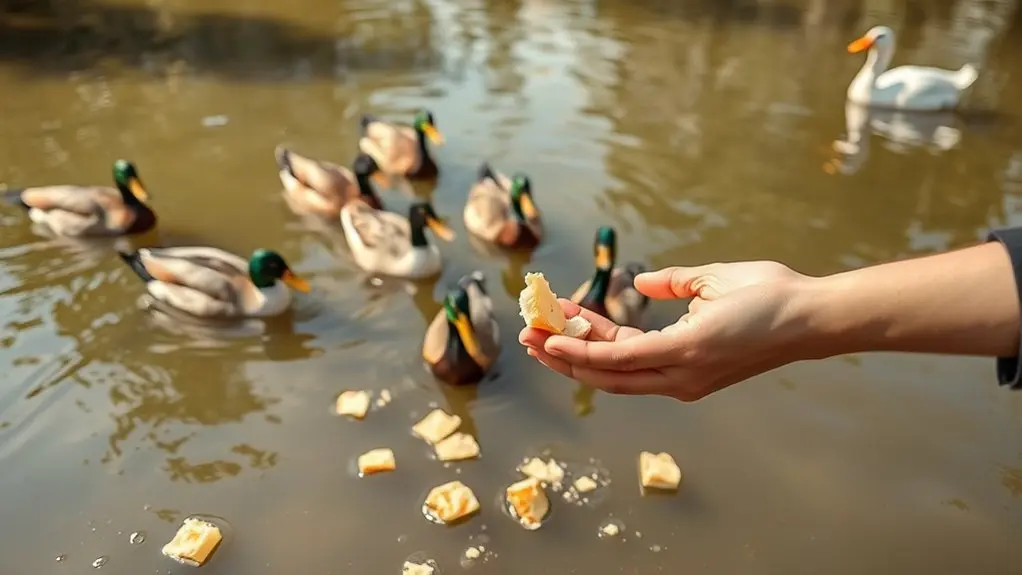
Feeding bread to waterfowl poses specific health risks beyond poor nutrition. When you feed bread, waterfowl can develop Angel Wing syndrome, a condition caused by abnormal fat deposits that deform their wings and impair flight.
Feeding bread to waterfowl can cause Angel Wing syndrome, deforming their wings and hindering flight.
Bread’s lack of essential nutrients disrupts their natural diet, potentially leading to malnutrition.
If you regularly provide bread, waterfowl may become dependent on it. This can decrease their natural foraging instincts and survival skills.
Plus, leftover bread in water bodies decomposes and promotes excessive algae growth.
That algae harms aquatic ecosystems and reduces oxygen levels that are critical for fish and other organisms.
Risks of Moldy or Stale Bread
When you offer bread to birds, it’s crucial to make sure it isn’t moldy. Mold contains fungi that release spores causing respiratory infections like Aspergillosis. Moldy bread poses serious health risks to birds, including poisoning and respiratory diseases.
Even if you remove visible mold, the fungal roots can penetrate deeper into the bread, so contamination can still be there. Stale bread without mold is generally safer but should still be given sparingly. It doesn’t offer much nutritional value and can fill birds up without nourishing them.
To protect birds’ health, avoid feeding moldy bread altogether and limit stale bread portions. Prioritizing fresh, safe food helps reduce the risk of infections and poisoning.
This way, you’re supporting birds’ wellbeing more effectively.
Bird Species That Can Safely Eat Bread
Although bread isn’t ideal as a primary food source, certain bird species can safely consume small amounts without immediate harm. Hardy birds like pigeons, house sparrows, and starlings tolerate bread due to their omnivorous diets. Waterfowl such as ducks and geese can also eat bread in small pieces.
That said, even these species do better with nutritionally balanced foods. So, it’s always better to think of bread as an occasional treat rather than a staple.
| Bird Species | Diet Type | Bread Tolerance |
|---|---|---|
| Pigeons | Omnivorous | Can tolerate small amounts |
| Ducks | Omnivorous | Safe in small, manageable pieces |
| House Sparrows | Omnivorous | Occasional consumption possible |
You should always offer bread sparingly to avoid nutritional deficiencies or health issues, no matter which bird you’re feeding. It’s all about keeping our feathered friends healthy and happy!
How Much Bread Is Safe for Birds
Since bread lacks essential nutrients, you should limit how much you offer to birds. Small amounts of stale, uncolored bread can be given occasionally without causing immediate harm. However, feeding large quantities or fresh bread regularly risks nutritional deficiencies and health issues.
Experts recommend restricting bread portions to a few small pieces per bird to prevent overeating. Bread should serve as an infrequent treat, not a staple food source.
Always monitor the birds to make sure they eat other natural, nutrient-rich foods alongside any bread offered.
This approach helps keep their diet balanced and supports their overall health. By controlling how much bread you give and how often, you reduce potential problems.
That way, birds can enjoy bread safely on rare occasions without any harm.
Why Avoid Processed Snacks Like Bread
You should avoid feeding birds processed snacks like bread because they don’t have the essential nutrients birds need.
When birds eat these foods, they might fill up their stomachs but still miss out on important vitamins and proteins. This can end up compromising their health.
Plus, leftover bread often attracts unwanted wildlife, which can throw off the balance of local ecosystems.
Nutritional Deficiencies Risk
When birds consume processed snacks like bread regularly, they miss out on essential nutrients such as proteins, fats, vitamins, and minerals necessary for their health. Bread’s high carbohydrate content offers empty calories that fill their stomachs, reducing their drive to seek nutrient-rich natural foods.
This dietary imbalance can cause vitamin deficiencies, weakening their immune systems and increasing disease susceptibility.
Over time, malnutrition from relying on bread can lead to developmental deformities like Angel Wing, which impairs flight and survival. Nutritional deficiencies also hinder growth, reproduction, and longevity in wild bird populations.
Attracts Unwanted Wildlife
Although feeding birds bread might seem harmless, it often attracts unwanted wildlife such as raccoons, rats, and mice to feeding areas. These animals create pest problems and pose risks to both birds and humans.
Processed snacks like bread can lure larger animals that threaten small birds or disrupt ecosystems.
When leftover bread accumulates in parks or yards, it increases human-wildlife conflicts and helps spread diseases.
Unintended wildlife consuming bread may introduce invasive species, which further destabilizes local habitats.
By attracting pests and larger animals, bread feeding disturbs the natural balance and safety of bird environments.
To protect birds and keep the ecosystem healthy, it’s best to avoid offering processed foods like bread that encourage unwanted wildlife and related problems.
Best Natural Foods to Feed Birds Instead of Bread
Since bread lacks essential nutrients and can harm birds, offering natural foods better supports their health and natural behaviors. Native plants like sunflowers, coneflowers, and berries provide nutrient-rich seeds and fruits that closely align with birds’ wild diets.
You can supplement with sliced apples, grapes, and berries, which supply critical vitamins and antioxidants. Protein is vital, so including insects such as mealworms, caterpillars, and earthworms ensures birds receive necessary fats and amino acids.
Seeds from native plants, like sunflower seeds and millet, promote balanced nutrition and encourage natural foraging. Additionally, chopped vegetables like peas, carrots, and leafy greens offer essential minerals and vitamins.
Feeding these natural options fosters healthier birds and maintains their ecological roles better than bread ever could. It’s a simple way to help birds thrive while keeping their environment balanced.
How Feeding Bread Changes Bird Behavior and Migration
If you feed birds bread regularly, you unintentionally alter their natural behaviors and migration patterns. Birds can become dependent on this easy food source, which reduces their instinct to forage and delays their seasonal migration.
This dependence weakens their ability to find and process natural diets, ultimately affecting population health.
Also, birds exposed to bread lose their natural fear of humans, which increases their risk of predation and accidents.
Health issues like Angel Wing syndrome, caused by poor nutrition from bread, impair flight capability and survival.
These problems add up and make it harder for birds to thrive.
Over time, these behavioral and physical changes disrupt ecological balances and threaten bird populations.
So, feeding bread doesn’t just affect individual birds—it also messes with important migratory behaviors that species need to survive.
It’s better to offer birds healthier food options that support their natural habits.
Tips for Supporting Healthy Bird Diets and Habitats
Feeding birds bread can disrupt their natural behaviors and health, so it’s important to focus on how you can support their diets and habitats more effectively. You can do this by providing native plants, avoiding pesticides, and offering varied shelter and water sources.
Educating others about the risks of processed foods also helps improve bird health and ecosystem balance. It’s all about creating an environment where birds can thrive naturally.
| Action | Benefit |
|---|---|
| Plant native flora | Supports balanced diets and habitat health |
| Avoid pesticides | Protects crucial insect and plant food sources |
| Provide shelters & water | Encourages natural foraging and population health |
| Educate others | Promotes informed choices and biodiversity |
Frequently Asked Questions
Can Baby Birds Safely Eat Bread?
No, baby birds can’t safely eat bread. You shouldn’t feed it to them because it lacks essential nutrients. Plus, bread can cause choking or digestive issues.
Instead, try giving them insects, small fruits, or specialized bird foods. These options support healthy development and keep baby birds safe and strong.
Is Feeding Bread to Birds Illegal Anywhere?
Feeding bread to birds can be a legal tightrope. In some parks or protected areas, local laws ban it to protect wildlife health and ecosystems. You should always check regional regulations before offering bread to birds.
It’s a good idea to know the rules because what seems like a harmless treat might actually cause harm or even get you in trouble. So, before you toss that bread, take a moment to find out what’s allowed where you are.
How Should Bread Be Prepared Before Feeding Birds?
You should prepare bread for birds by removing any butter, sugar, or preservatives. Cut it into small pieces to make it easier for them to eat. Using stale or dried bread is best.
Avoid moldy or heavily processed varieties to keep the birds safe and healthy. It’s really important to make sure the bread is plain and free of anything that might harm them. That way, you’re helping the birds enjoy a safe snack!
Do Birds Get Addicted to Bread?
You see birds flocking, pecking, returning. Yes, they can develop a behavioral dependence on bread.
This reliance alters their natural foraging and dulls their predator awareness. It also creates habitual feeding.
But it’s not a chemical addiction like drugs. So, while they get used to it, it’s more about behavior than substance.
Can Bread Attract Unwanted Pests When Feeding Birds?
Yes, bread can attract unwanted pests like raccoons, rats, and insects when feeding birds. You should avoid leaving bread scraps outdoors, as they encourage pest infestations and increase disease risks in your feeding area.
It’s best to stick to bird-friendly foods instead. That way, you keep your feathered visitors happy without inviting trouble.
Conclusion
While you might think feeding bread to birds is harmless, it actually offers little nutritional value and can harm their health and behavior. Moldy or stale bread poses additional risks, especially to waterfowl.
Instead, focus on natural, nutrient-rich foods to support birds’ well-being and migration patterns. By choosing appropriate foods, you help maintain healthy bird populations and habitats. This disproves the myth that bread is a safe or beneficial treat for wild birds.