
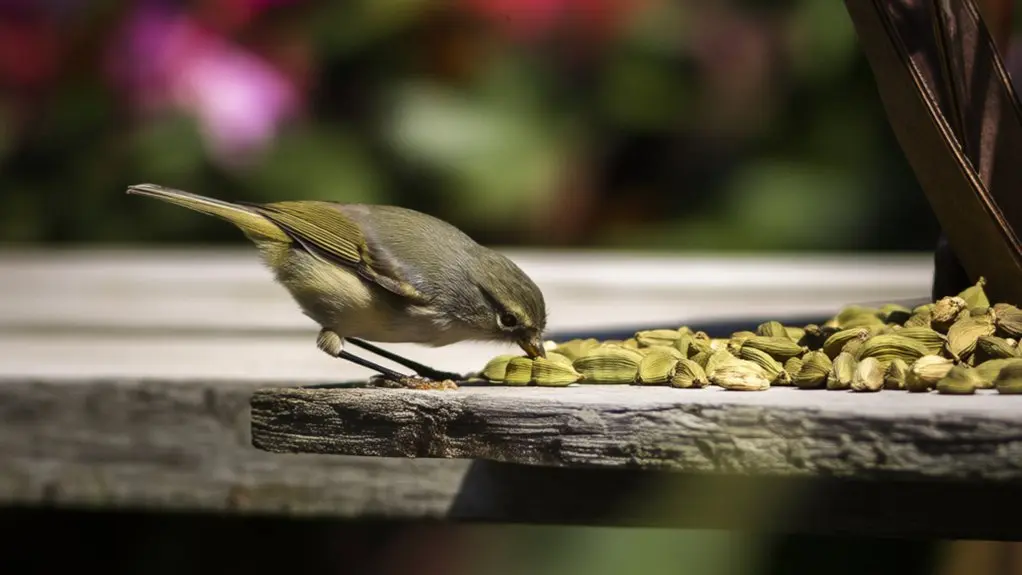
Yes, you can safely offer birds small amounts of cardamom seeds occasionally. These seeds contain antioxidants and antimicrobial compounds that support immune and digestive health, especially in parrots, who respond well to their aromatic flavor.
However, cardamom’s essential oils are potent and can cause digestive upset if overused. Always crush seeds lightly and serve in moderation. It’s a good idea to consult a vet before feeding cardamom regularly.
Understanding how to prepare and limit cardamom helps guarantee your bird’s safety and well-being. So, just take it slow and keep an eye on how your feathered friend reacts.
Are Cardamom Seeds Safe for Birds?
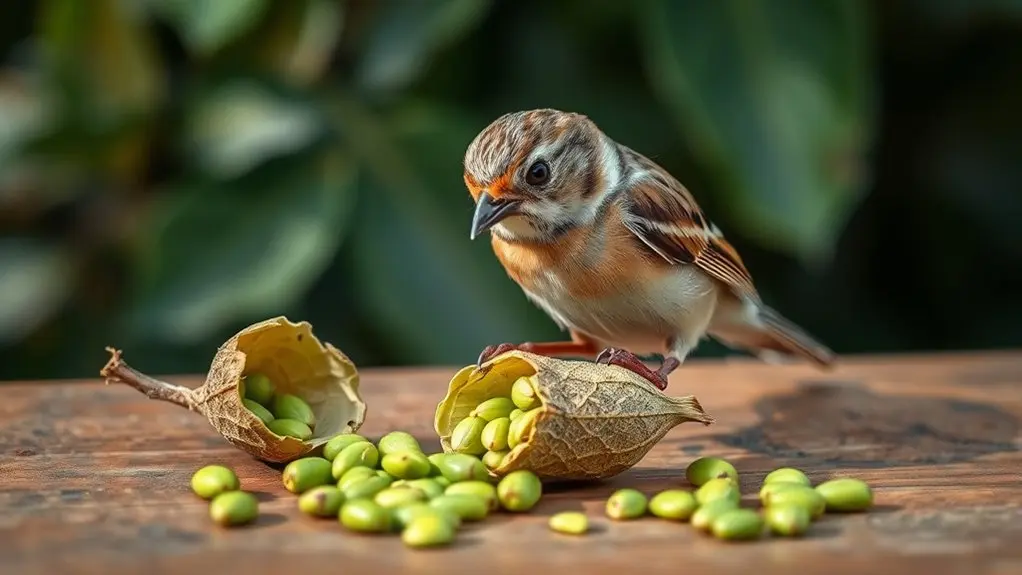
Although research on cardamom seeds‘ effects on birds is limited, they’re generally safe for parrots when given in small, infrequent amounts.
Cardamom seeds contain antioxidants that may offer health benefits, but they also possess potent aromatic oils. These essential oils can be harmful if consumed excessively, potentially causing digestive upset or toxicity.
Cardamom seeds have antioxidants but their strong essential oils may cause digestive issues if overconsumed.
Because of this, you should introduce cardamom seeds cautiously and avoid overfeeding. The lack of comprehensive avian studies means it’s vital to prioritize moderation and observe your bird for any adverse reactions.
Before adding cardamom seeds to your bird’s diet, always consult an avian veterinarian to guarantee safety based on your specific bird’s health status and species. This careful approach minimizes risks while exploring dietary variety.
Which Pet Birds Enjoy Cardamom Seeds Most?
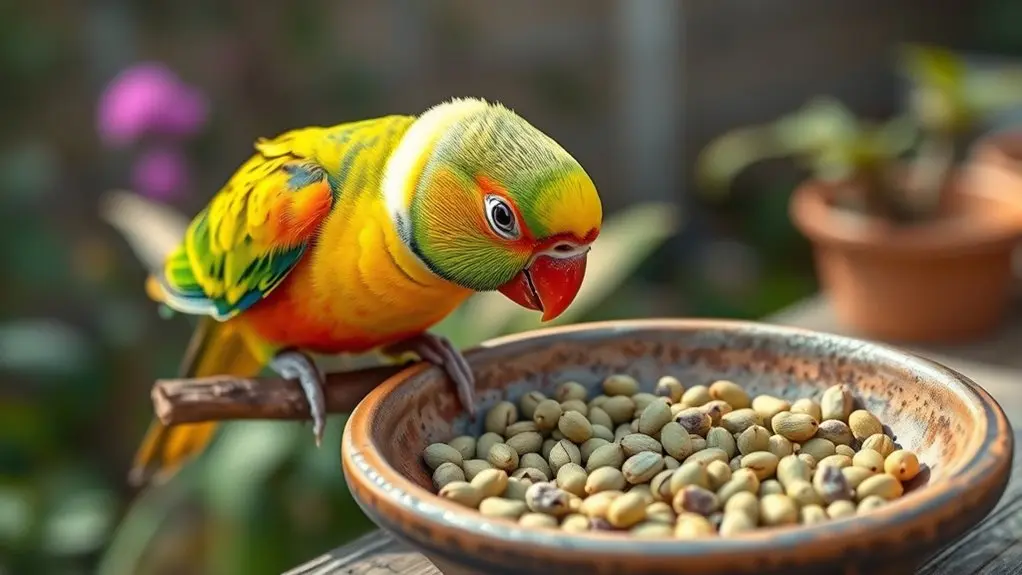
When you offer cardamom seeds to pet birds, species like parrots and cockatoos often show interest because they’re curious and enjoy aromatic flavors. These birds like to explore new spices, and cardamom’s scent really appeals to their senses. Just remember to give seeds in moderation to avoid any digestive issues.
| Bird Species | Interest Level in Cardamom Seeds |
|---|---|
| Parrots | High – enjoy aromatic enrichment |
| Cockatoos | Moderate – curious but cautious |
| Budgerigars | Low – less attracted to spices |
A lot of birds might try cardamom seeds, but parrots and cockatoos usually have the strongest positive reaction. Always make sure the seeds are free from additives and offer them only as an occasional treat.
What Health Benefits Do Cardamom Seeds Offer Parrots?
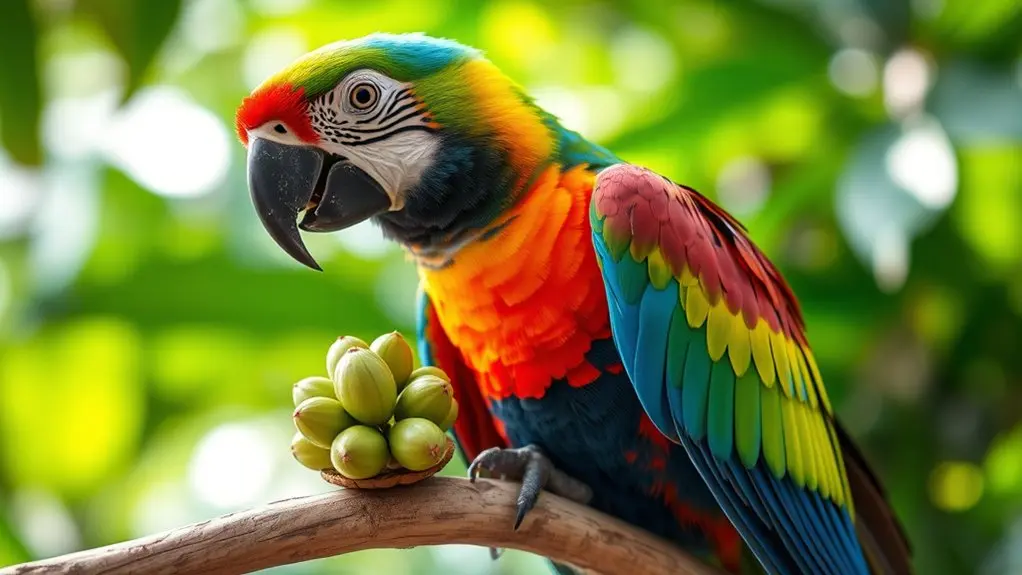
Because cardamom seeds contain antioxidants and antimicrobial compounds, they can support your parrot’s immune system and reduce inflammation. These properties help protect cells from oxidative damage and may lower the risk of chronic inflammatory conditions.
Additionally, cardamom aids digestion by stimulating gastrointestinal function, which can alleviate digestive discomfort in parrots. The seeds also provide essential oils and nutrients that contribute to improved metabolic processes, enhancing overall health.
Their aromatic nature can stimulate your parrot’s curiosity and promote mental engagement during foraging, benefiting cognitive function. However, it’s important to use cardamom seeds in moderation to avoid potential adverse effects.
Incorporating them thoughtfully can complement a balanced diet and support your parrot’s well-being through multiple physiological pathways.
How Do You Prepare and Serve Cardamom Seeds to Parrots?
If you want to introduce cardamom seeds into your parrot’s diet, you should prepare them carefully to minimize the risk of digestive irritation. Lightly crush the dried seeds to release their essential oils and aroma.
Then, sprinkle only a tiny pinch onto fresh fruits, vegetables, or homemade treats.
Avoid offering whole, uncrushed seeds in large quantities because their potent oils can irritate your bird’s digestive system. Make sure the seeds are free from additives or preservatives to prevent potential toxicity.
It’s best to serve cardamom seeds either in ground or lightly crushed form so you can control the dosage accurately.
Always watch your parrot’s reaction when you introduce cardamom. If you notice any adverse effects or have safety concerns, don’t hesitate to consult an avian veterinarian.
How Much Cardamom Seeds Are Safe to Give Your Bird?
After preparing cardamom seeds properly, determining the correct amount to offer your bird becomes important to avoid health risks. Small quantities are generally safe for parrots when given occasionally.
Properly prepared cardamom seeds are safe for parrots in small, occasional amounts.
You should limit the intake to a pinch or just a few crushed seeds per week to prevent digestive upset caused by the seeds’ potent essential oils.
Introduce cardamom seeds gradually into your bird’s diet, carefully observing for any adverse reactions such as changes in digestion or behavior.
Consistent monitoring ensures early detection of potential sensitivities.
Before incorporating cardamom seeds regularly, consult an avian veterinarian to confirm safety based on your bird’s species, size, and health status.
This approach helps maintain your bird’s well-being while providing dietary variety.
What Are the Potential Health Risks of Feeding Cardamom Seeds?
While cardamom seeds offer an aromatic flavor, they contain essential oils that can irritate or even become toxic to parrots when consumed in large amounts. These oils may cause gastrointestinal upset, including vomiting or diarrhea.
Scientific research on cardamom’s safety for parrots remains limited, so potential risks come mainly from its potent compounds.
Feeding large quantities or frequent doses of cardamom seeds could strain your bird’s liver or kidneys over time, leading to organ damage. Parrots are sensitive to strong spices and essential oils, so even small amounts might provoke adverse effects.
To minimize health risks, it’s safest to avoid offering cardamom seeds altogether rather than risk irritation, toxicity, or long-term harm to your bird’s digestive and excretory systems.
Better safe than sorry when it comes to your feathered friend’s health.
How to Include Cardamom Seeds Creatively in Your Bird’s Diet
Despite the potential risks associated with cardamom seeds, careful and controlled inclusion can offer sensory enrichment for your bird. You can incorporate small amounts of crushed or ground cardamom seeds into homemade treats like spiced birdie bread or seed mixes, enhancing flavor without overwhelming their diet.
Sprinkling lightly on fresh fruits and vegetables encourages foraging behavior and curiosity. Whole cardamom pods serve as chewable enrichment objects within foraging toys, promoting natural manipulation.
Additionally, steeping crushed seeds in water creates a mild, aromatic beverage that can be offered occasionally for hydration and mental stimulation.
Introduce cardamom gradually, monitor your bird closely for any adverse reactions, and guarantee cardamom remains a minor component within a balanced dietary regimen to maintain ideal health and safety. Just take it slow and watch how your feathered friend responds!
Frequently Asked Questions
Can Cardamom Seeds Affect a Bird’s Behavior or Mood?
You can’t be certain cardamom seeds affect a bird’s behavior or mood since research is limited. Their compounds might cause mild stimulation or calming effects.
However, frequent exposure could stress your bird, so it’s best to avoid overuse. Just keep an eye on how your bird reacts if you ever try giving cardamom seeds.
Are Cardamom Seeds Safe for Baby or Young Birds?
Only a tiny fraction of young birds tolerate cardamom seeds safely due to their sensitive digestion.
You should introduce these seeds sparingly, as their essential oils can cause irritation. Always consult an avian vet first.
How Long Does It Take for Birds to Digest Cardamom Seeds?
You’ll find that birds typically digest cardamom seeds within 1 to 4 hours, depending on species, seed form, and health. The high oil content may slightly delay digestion, but it generally remains efficient and rapid.
Can Cardamom Seeds Cause Allergies in Birds?
You might find cardamom seeds could occasionally ruffle your bird’s feathers by triggering mild allergic reactions.
Introduce them cautiously, and keep an eye out for any respiratory or skin changes. If you notice anything unusual, don’t hesitate to consult a vet promptly.
Is There a Difference Between Green and Black Cardamom for Birds?
Yes, green cardamom is milder and generally safer for birds. It’s a better choice if you want to add a bit of flavor or aroma around your feathered friend.
Black cardamom, on the other hand, contains stronger oils that may irritate birds. So, it’s best to avoid using black cardamom unless an avian vet specifically confirms it’s safe for your bird. Better safe than sorry!
Conclusion
You can think of cardamom seeds as a small, fragrant treasure chest of nutrients for your bird. They offer antioxidants and digestive benefits when given in moderation.
However, don’t let this spice become a storm on your bird’s health. Too much can cause irritation or digestive upset.
By carefully measuring portions and introducing seeds gradually, you create a balanced, enriching diet. This supports your feathered friend’s well-being without risking harm.