
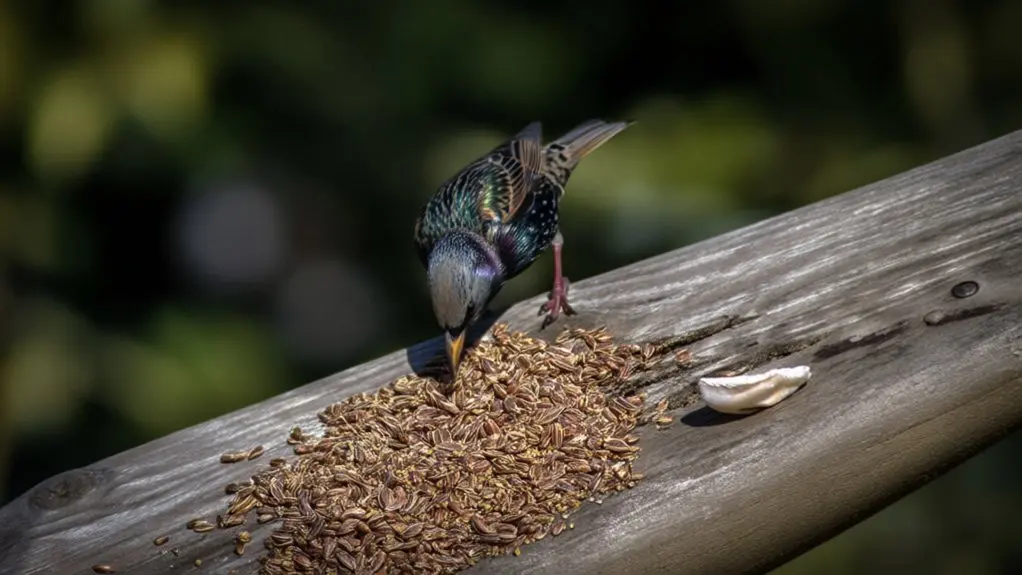
You can safely feed your bird small, measured amounts of caraway seeds, around 0.5 teaspoons per kilogram daily. Just keep an eye out for any adverse reactions. These seeds offer antioxidants, minerals, and digestive benefits.
But remember, caraway seeds contain tannins and saponins that might impair nutrient absorption and stress your bird’s organs if overfed. So, always introduce caraway gradually. Store the seeds properly, too.
And it’s a good idea to consult an avian vet to make sure caraway fits your bird’s specific needs. Understanding how to prepare the seeds, the risks involved, and possible alternatives will help you provide balanced nutrition.
Can Birds Safely Eat Caraway Seeds?
Although caraway seeds contain beneficial nutrients like calcium, iron, and potassium, you should only offer your bird small amounts to guarantee safety.
Providing about 0.5 teaspoons of sprouted caraway seeds per kilogram of your bird’s body weight daily is considered safe. This quantity minimizes the risk of toxicity from compounds such as tannins and saponins, which can harm the liver and kidneys if consumed excessively.
Overconsumption may also cause hypervitaminosis or interfere with nutrient absorption, leading to health complications. When introducing caraway seeds, monitor your bird closely for any adverse reactions.
If you’re uncertain about the safety or proper dosage for your specific species, consult an avian veterinarian to avoid potential risks and assure your bird’s well-being.
Nutritional Benefits of Caraway Seeds for Birds
When you include caraway seeds in your bird’s diet in controlled amounts, you provide a valuable source of antioxidants, calcium, iron, and potassium that support various physiological functions. These minerals contribute to bone strength, oxygen transport, and electrolyte balance, which are essential for maintaining your bird’s health.
Caraway seeds contain tannins and saponins, compounds that can aid digestion and offer antimicrobial properties, enhancing gut health. Plus, the seeds supply trace elements crucial for metabolic processes and immune support.
Caraway seeds support digestion and immunity with tannins, saponins, and vital trace elements for gut health.
While their exact antioxidant capacity (ORAC value) remains undetermined, the natural antioxidants present can help reduce oxidative stress. Adding caraway seeds diversifies your bird’s nutrient intake, promoting vitality and overall well-being.
Just remember to keep the amounts moderate to get the benefits without any unintended effects. This way, you can optimize your bird’s diet in a smart and precise way.
Health Risks of Feeding Caraway Seeds to Birds
You should be cautious when feeding caraway seeds to birds. Eating too many of these seeds can cause liver and kidney problems.
That’s because caraway contains tannins and saponins, which might interfere with how birds absorb nutrients. This could even lead to dietary anemia.
If birds eat too much, they’re also at risk of hypervitaminosis and organ overload. So, it’s really important to feed caraway seeds in moderation and keep a close eye on their intake.
Potential Organ Toxicity
Because caraway seeds contain compounds such as tannins and saponins, feeding them excessively to birds can cause significant organ toxicity, particularly affecting the liver and kidneys. These compounds may induce cellular stress and damage by interfering with normal metabolic processes.
Overconsumption can lead to hypervitaminosis or nutrient overload, placing additional strain on these organs. Tannins, specifically, may leach essential vitamins like B12, making deficiencies worse and impairing organ function.
Since research on caraway’s antioxidant capacity and toxicity thresholds in birds is limited, it’s best to avoid feeding large quantities. This precaution helps prevent cumulative organ damage, which could compromise your bird’s health and longevity.
Monitoring and limiting caraway seed intake ensures you reduce the risk of liver and kidney toxicity from harmful phytochemicals. So, keeping an eye on how much your bird consumes is really important.
This way, you help protect their overall health while still offering variety in their diet.
Nutrient Absorption Issues
Although caraway seeds offer some nutritional benefits, their tannins and saponins can considerably disrupt nutrient absorption in birds.
Tannins specifically inhibit iron absorption, increasing the risk of dietary anemia. Saponins further complicate nutrient uptake by blocking essential vitamins and minerals from being properly absorbed.
This interference can result in deficiencies that compromise a bird’s overall health and immune function. Additionally, saponins may leach water-soluble vitamins such as B12, which are crucial for neurological and metabolic processes.
If you feed your bird caraway seeds frequently, these compounds can cumulatively impair nutrient bioavailability, potentially leading to long-term health issues.
Risks Of Overconsumption
When birds consume caraway seeds in excessive amounts, they risk developing serious health complications such as liver and kidney damage because the seeds can be toxic. Overeating these seeds may also cause hypervitaminosis, which leads to nutrient imbalances and puts extra stress on their organs.
There are compounds like tannins and saponins in caraway that can mess with nutrient absorption. They might even leach out essential vitamins, including B12, which is important for overall health.
While small amounts of caraway are usually safe, feeding birds large quantities significantly raises the chances of negative effects. So, to keep your bird healthy, it’s important to watch and limit how much caraway they eat.
Controlling their intake helps prevent toxicity and keeps their metabolism and long-term health intact.
Tannins and Saponins in Caraway: Effects on Birds
You should know that tannins in caraway seeds can actually inhibit iron absorption, which might increase the risk of anemia in birds.
On top of that, saponins make things trickier by messing with the absorption of essential vitamins and minerals.
Eating too much of these compounds can throw off a bird’s health, so it’s really important to keep an eye on how much they’re taking in.
Tannins Impact On Nutrition
Since tannins and saponins in caraway seeds can interfere with nutrient absorption, you should consider their impact carefully when feeding birds. Tannins specifically inhibit iron absorption, which risks dietary anemia. They also leach Vitamin B12, a vitamin that’s vital yet hard for birds to maintain.
Excessive tannins reduce overall nutrient utilization, which can potentially cause deficiencies. Here’s a concise overview:
| Compound | Nutritional Impact |
|---|---|
| Tannins | Impair iron absorption, reduce Vitamin B12 availability |
| Saponins | Hinder absorption of various nutrients |
| Excessive Intake | Leads to nutrient deficiencies and poor health |
Moderation is essential. Overfeeding caraway seeds may compromise bird nutrition through these antinutritional factors. So, you should balance their diet carefully to avoid these risks.
Saponins And Nutrient Absorption
Although saponins are naturally occurring compounds in caraway seeds, they pose significant challenges to nutrient absorption in birds by disrupting the digestive process.
Saponins impair the uptake of essential nutrients by damaging the intestinal lining, reducing the efficiency with which birds absorb minerals and vitamins. Specifically, they leach out vitamin B12, a water-soluble vitamin crucial for metabolic functions and neurological health.
Alongside tannins, saponins interfere with iron absorption, compounding the risk of anemia and impairing blood health. These compounds collectively hinder the bioavailability of key nutrients like iron, vitamin B12, and other minerals, which can impair physiological functions.
Risks Of Excess Consumption
When birds consume caraway seeds in excessive amounts, the high levels of tannins and saponins can markedly disrupt their nutrient absorption and overall health. Tannins interfere with iron uptake, potentially causing dietary anemia, while saponins impair absorption of other crucial nutrients. These compounds may also leach essential vitamins like B12, which are already scarce in avian diets.
Excessive intake stresses the liver and kidneys, increasing the risk of organ damage. To protect your birds, avoid overfeeding caraway seeds.
Key risks include impaired iron absorption leading to anemia, nutrient deficiencies caused by saponin interference, and liver and kidney stress from toxin overload.
Feeding small, controlled amounts is generally safe, but it’s important to stay vigilant to prevent toxicity. Just keep an eye on how much you’re giving to make sure your birds stay healthy and happy.
How Much Caraway Seed Should Birds Eat Daily?
Determining the right amount of caraway seeds for your bird involves careful measurement based on its body weight, with about 0.5 teaspoons per kilogram recommended daily. Since most common pet birds weigh under 1 kilogram, this dosage remains manageable when precisely measured.
Administering small quantities ensures your bird benefits nutritionally without risking toxicity.
Excessive caraway intake can strain the liver and kidneys, potentially causing harm due to its bioactive compounds. To maintain ideal health, incorporate caraway seeds as a moderate supplement within a varied diet rather than a primary food source.
This approach helps balance nutrient intake while minimizing adverse effects.
Always monitor your bird’s response and adjust amounts accordingly. Stick to the 0.5 teaspoons per kilogram guideline for safe daily consumption.
That way, you can keep your feathered friend happy and healthy!
How to Store and Prepare Caraway Seeds for Birds
To preserve the nutritional quality and safety of caraway seeds for your bird, you should store them in an airtight container kept in a cool, dark environment. This prevents moisture accumulation and exposure to sunlight, which can degrade seed quality and promote mold growth.
When preparing seeds for feeding, you can enhance digestibility and nutrient availability by lightly toasting or grinding them. Always handle seeds with clean, dry utensils to avoid contamination.
Here are key storage and preparation tips:
- Keep seeds away from humidity and direct sunlight to prevent spoilage.
- Regularly inspect seeds for mold, mustiness, or pests, discarding any compromised batches.
- Lightly toast or grind seeds before feeding to release aromatic oils and improve digestion.
Following these steps guarantees safe, nutritious caraway seeds for your bird. It’s a simple way to make sure your feathered friend gets the best from their seeds!
How to Introduce Caraway Seeds to Your Bird’s Diet
After confirming caraway seeds are properly stored and prepared, you can begin incorporating them into your bird’s diet with careful consideration. Start by offering a small pinch, about 0.5 teaspoons per kilogram of your bird’s body weight daily, to monitor tolerance.
To encourage acceptance and prevent overfeeding, mix sprouted or ground caraway seeds into the regular seed or pellet mix. Observe your bird closely for any adverse reactions, like behavioral changes or digestive issues, after the initial introduction.
Use small quantities at first since eating too much can harm the liver and kidneys because of tannins and saponins.
Make sure the diet stays balanced by combining caraway seeds with other safe, nutritious foods. This helps avoid nutritional imbalances and keeps your bird healthy and happy.
Alternative Seeds and Natural Foods to Complement Caraway
While caraway seeds offer valuable nutrients, incorporating a variety of alternative seeds and natural foods can enhance your bird’s diet and promote overall health. Diversifying their intake supports natural foraging behaviors and provides a broader nutrient spectrum.
Including diverse seeds and natural foods enriches your bird’s diet and encourages healthy foraging habits.
Consider these options to complement caraway seeds: Native seeds like coneflower (Rudbeckia laciniata) and native thistles (Cirsium discolor) offer essential seeds and nectar that closely mimic wild diets.
Sprouted seeds and microgreens supply fresh vitamins and minerals, improving digestion and nutrient absorption.
Unsalted, unflavored nuts such as almonds and walnuts provide healthy fats and proteins crucial for energy and feather quality. Adding these to your bird’s menu can make a big difference in their well-being.
Frequently Asked Questions
Can Baby Birds Eat Caraway Seeds Safely?
You shouldn’t feed baby birds caraway seeds because their digestive systems can’t handle tannins and saponins. These compounds may disrupt nutrient absorption and cause digestive issues.
It’s best to wait until they’re fully grown before introducing such seeds safely. That way, you can be sure they’re ready to digest them without any problems.
Do Caraway Seeds Affect Different Bird Species Differently?
Yes, caraway seeds affect different bird species differently because their digestive systems and metabolic pathways vary. You’ll find some seed-eaters tolerate caraway well, while others might experience adverse effects from its tannins and saponins.
It really depends on the bird’s biology and how they process these compounds. So, not all birds react the same way to caraway seeds. Some might be perfectly fine, while others could have a harder time.
Can Caraway Seeds Help With Bird Feather Growth?
Caraway seeds won’t directly boost feather growth, but their vitamins and antioxidants support overall health, which helps feathers develop.
You should offer them sparingly, balancing with other nutrients to avoid toxicity and promote ideal feather condition.
It’s all about giving your bird a well-rounded diet to keep those feathers looking their best.
Are Caraway Seeds Safe for Birds With Allergies?
Caraway seeds aren’t guaranteed safe for birds with allergies. You should introduce them cautiously and monitor closely for respiratory or digestive symptoms.
It’s always best to check with an avian vet before feeding caraway seeds, especially if your bird has known sensitivities. Better safe than sorry, right?
Can Wild Birds Eat Caraway Seeds Found Outdoors?
Yes, wild birds can eat caraway seeds found outdoors, but they rarely do. These seeds aren’t a primary food source, so you’ll mostly see birds preferring native seeds that better suit their dietary needs and local ecosystems.
It’s kind of like how we might pass on unfamiliar food even if it’s available. Birds tend to stick with what they know and what works best for them. So, while caraway seeds aren’t harmful, they’re just not very popular among wild birds.
Conclusion
You can safely offer caraway seeds to your birds in moderation. This way, you balance benefits like antioxidants and fiber with potential risks from tannins and saponins.
Make sure to store the seeds properly and introduce them gradually. Keep an eye on your bird’s response carefully.
It’s also a good idea to complement caraway with diverse seeds and natural foods. This helps guarantee a well-rounded diet.
By doing so, you’ll promote your bird’s health, enhance nutrition, and support their overall well-being effectively.