
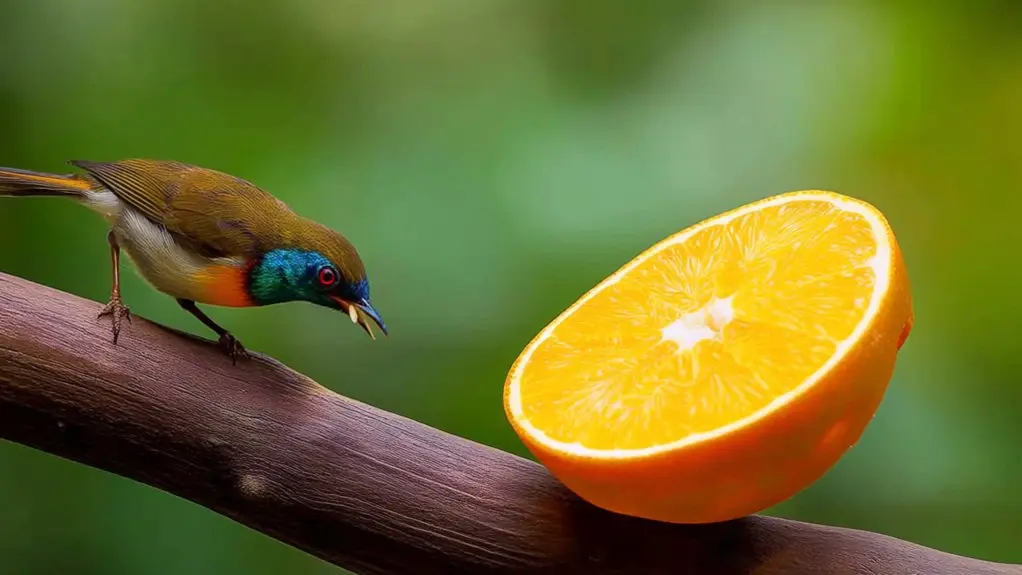
Yes, you can safely feed birds small, ripe citrus pieces in moderation, usually once or twice a week. Just be sure to remove seeds and peel to avoid toxins and pesticide residues. Also, replace the fruit regularly to prevent spoilage.
Citrus provides valuable vitamin C, hydration, and natural sugars that attract species like orioles and tanagers, especially during migration. It’s a nice little treat for them.
Keep an eye out for any signs of intolerance like lethargy or digestive upset. If you notice these, stop feeding citrus to your birds.
Keep exploring to understand species preferences, feeding tips, and safety precautions. There’s always more to learn about what’s best for our feathered friends!
Is Citrus Safe for Birds? Here’s What You Need to Know
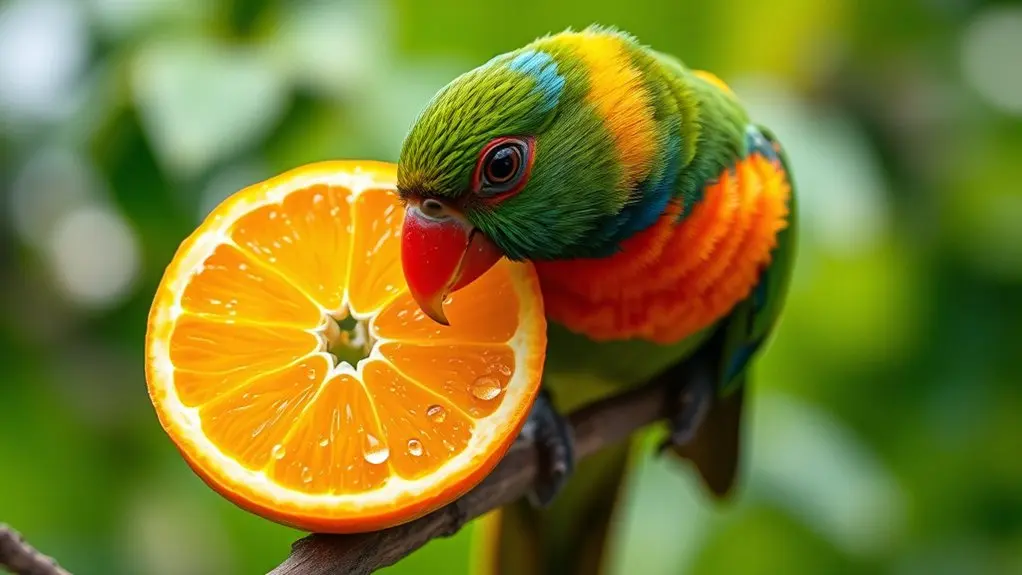
While citrus fruits like oranges and lemons are generally safe for birds when given in moderation, you should be cautious about overfeeding them because of their high acidity. Eating too much citrus can lead to health issues like Iron Overload Disease in some species.
Always remove seeds and pits before offering citrus since some seeds contain cyanide compounds that could poison your birds. Birds like Orioles, tanagers, and finches often enjoy citrus, especially during migration.
But it’s best to treat these fruits as occasional supplements rather than regular parts of their diet. Overusing citrus may cause digestive problems or other health complications.
Why Citrus Is Good for Birds
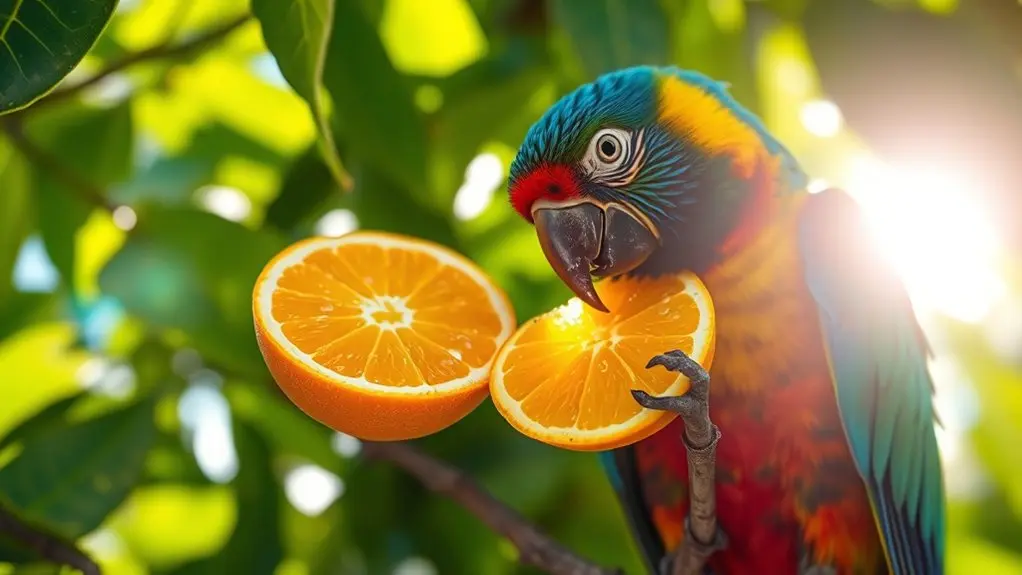
You’ll find that citrus fruits offer essential nutrients like vitamin C, antioxidants, and fiber, all of which support birds’ health and hydration.
Plus, birds are naturally attracted to citrus because of its energy-boosting sugars and refreshing water content.
Just remember, to keep feeding safe, it’s important to offer citrus in moderation and follow guidelines suited to specific bird species.
Nutritional Benefits of Citrus
How exactly does citrus benefit birds nutritionally? Citrus fruits offer several key advantages that support avian health. You’ll find that these fruits deliver essential nutrients and promote well-being in multiple ways.
They are rich in vitamin C, which boosts the immune system and enhances overall vitality. Antioxidants in citrus help combat oxidative stress, protecting cellular health. Plus, the high water content provides hydration, which is really important during hot weather or dry conditions.
Natural sugars supply quick energy, making citrus a beneficial occasional treat. Additionally, the dietary fiber found in citrus supports healthy digestion and regularity.
Including citrus in your bird’s diet, in moderation, guarantees they receive these valuable nutrients without overwhelming their system.
Citrus Attraction to Birds
Why are birds so drawn to citrus fruits? Birds like orioles, tanagers, and some woodpeckers are naturally attracted to the bright orange color and strong scent of citrus. These features spark their curiosity and encourage them to feed.
Citrus fruits provide essential vitamins, especially vitamin C, which helps support their immune health during migration and nesting. Plus, the natural sugars and high water content make citrus an appealing energy source.
| Bird Species | Attraction Factor | Nutritional Benefit |
|---|---|---|
| Orioles | Bright orange color | Vitamin C, immune support |
| Tanagers | Strong citrus scent | Energy from natural sugars |
| Woodpeckers | Vibrant hue and scent | Hydration and essential nutrients |
All in all, this mix makes citrus fruits both beneficial and tempting for a variety of bird species.
Safe Citrus Feeding Practices
Understanding what makes citrus fruits appealing to birds is only part of the picture; ensuring you feed these fruits safely is just as important. Citrus provides essential vitamin C, which boosts immune health and encourages natural foraging with its bright color and scent.
However, you must feed citrus in moderation to prevent health risks like Iron Overload Disease. Follow these safe feeding practices:
- Offer citrus fruits such as oranges without seeds, as seeds contain cyanide and are toxic.
- Peel the fruit to remove any pesticides or wax residues that could harm birds.
- Limit citrus servings to occasional treats rather than daily staples to avoid nutritional imbalances.
- Monitor your bird’s reaction to citrus, stopping if you notice digestive upset or unusual behavior.
Which Bird Species Eat Citrus Fruits
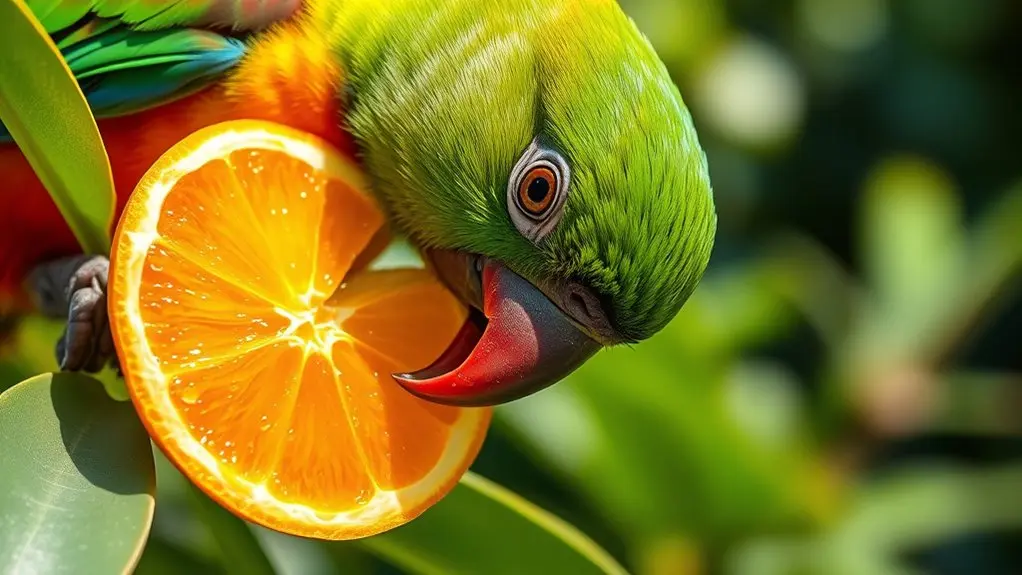
You’ll find that orioles, tanagers, grosbeaks, catbirds, and woodpeckers commonly eat citrus fruits like oranges, especially during migration and nesting seasons.
It’s interesting how each species has its own preferences—many of them really go for orange slices or even grape jelly at feeders.
Knowing their seasonal feeding habits can help you offer the right citrus treats just when they need them the most.
Birds Commonly Eating Citrus
Although many birds primarily feed on insects and seeds, several species readily incorporate citrus fruits into their diets when available. Observing these birds can help you understand their dietary flexibility and how citrus fits into their nutrition.
Here are four bird species commonly eating citrus fruits:
- Orioles, including Bullock’s Orioles, consume oranges during migration and nesting seasons.
- Western Tanagers frequently feed on orange halves at feeding stations during migration.
- Black-Headed Grosbeaks and Northern Mockingbirds occasionally eat citrus fruits such as oranges.
- House Finches learn to feed on citrus by watching adult birds at feeders.
Additionally, Gray Catbirds and Red-Bellied Woodpeckers also take advantage of available citrus fruits, showing diverse species utilization. It’s pretty neat to see how many birds enjoy citrus when it’s around!
Fruit Preferences Among Species
Birds show distinct preferences when it comes to citrus fruits, with certain species regularly seeking out oranges and similar fruits. Orioles, including Bullock’s Orioles, favor oranges and grape jelly during migration, especially in spring and summer.
Western Tanagers also gravitate toward orange halves, often visiting feeders set up during migration periods.
Black-headed and rose-breasted grosbeaks are notable fruit-eaters, frequently consuming oranges and other soft fruits.
Northern mockingbirds and gray catbirds commonly stop by orange feeders, taking advantage of readily available citrus.
Additionally, some native and exotic species like thrashers, woodpeckers, and buntings occasionally include citrus fruits in their diets.
Understanding these species-specific preferences helps you provide appropriate food sources and enrich your birdwatching experience.
Seasonal Citrus Feeding Patterns
When do different bird species prefer citrus fruits during the year? The peak feeding season aligns with citrus ripening, from late spring through early fall. You’ll notice distinct patterns based on species and migration habits.
Migratory birds like orioles, tanagers, and grosbeaks actively consume oranges and mandarins during spring and early summer as they establish territories.
Resident species such as house finches and black-headed grosbeaks favor citrus fruits throughout summer and fall.
Feeding activity declines in late fall as migratory birds depart.
Ravens and crows opportunistically eat citrus year-round, especially during harvest seasons.
Understanding these seasonal feeding preferences helps you provide timely and appropriate citrus offerings for various bird species in your area.
How to Feed Citrus Fruits to Backyard Birds
Feeding citrus fruits to backyard birds requires careful preparation to guarantee safety and accessibility. Start by slicing oranges or mandarins into halves or wedges. Then securely skewer or place them on feeders to allow easy access.
Always remove seeds or pits, especially those with cyanide, to protect the birds. You can cover ripening citrus on trees with netting or produce bags to prevent birds from pecking prematurely.
Position citrus offerings in visible spots like deck railings, platform feeders, or DIY feeders made from scrap wood to attract birds effectively.
Replace the fruit every 1-2 days during summer and every 2 days in spring to maintain freshness and appeal.
This approach assures a safe, attractive feeding environment for your backyard birds. It’s a simple way to keep your feathered friends happy and healthy!
When and How Often to Feed Birds Citrus
Once you’ve prepared and positioned citrus fruits safely for your backyard birds, understanding the ideal timing and frequency for offering these treats will help maximize their benefits. Feeding citrus in moderation is key to maintaining bird health and encouraging visits.
Consider these guidelines:
- Offer citrus once or twice a week to avoid overconsumption.
- Provide fruits during peak migration seasons to attract species like Orioles and tanagers.
- Present small portions, like slices or wedges, to control intake and prevent waste.
- Replace citrus regularly to ensure freshness and sustained interest.
Starting early in the migration season can help birds establish feeding routines at your feeder. Following these steps will make sure you provide a safe, appealing citrus source for your feathered visitors.
How to Spot If Citrus Isn’t Agreeing With Your Birds
Although citrus fruits offer nutritional benefits to many birds, they can sometimes cause adverse reactions that are important to recognize promptly. If your bird vomits, has diarrhea, or becomes lethargic after eating citrus, these are clear signs of intolerance.
Citrus fruits can benefit birds but watch for vomiting, diarrhea, or lethargy as signs of intolerance.
You should also watch for sudden loss of appetite or weight loss, as these may indicate a negative reaction.
Changes in the color, consistency, or frequency of droppings can signal sensitivity. Additionally, swelling or irritation around the mouth or digestive tract after citrus consumption warrants concern.
If you notice any of these symptoms, stop feeding citrus immediately and consult an avian veterinarian to ensure your bird’s health and safety.
Early detection helps prevent complications and promotes proper care. So, keep an eye on your feathered friend’s behavior after giving them citrus, and don’t hesitate to seek professional advice if something seems off.
Your bird will thank you for it!
Tips for Healthy and Fun Citrus Feeding for Birds
When you offer small, ripe citrus slices or wedges to your birds, you provide them with a valuable source of vitamin C and hydration in an engaging, edible form. To maximize benefits and keep feeding enjoyable, follow these tips:
Use colorful citrus halves or slices on feeders to attract visually-oriented species like orioles and tanagers, encouraging natural foraging. Replace citrus pieces regularly to maintain freshness and prevent mold or spoilage. This helps keep your birds healthy.
Incorporate citrus into enrichment activities. Skewer slices or hide pieces in toys to stimulate foraging instincts.
Feeding citrus in moderation a few times per week provides nutrition without risking health issues such as iron overload.
Frequently Asked Questions
Can Citrus Seeds Harm Birds if Ingested?
Yes, citrus seeds can harm birds if ingested in large amounts because they contain cyanogenic compounds. You should always remove the seeds before feeding citrus fruits to birds to prevent potential cyanide poisoning and related health issues.
It’s better to be safe than sorry when it comes to your feathered friends. So, always check the fruit carefully and take out those seeds. That way, you can enjoy sharing citrus treats without any worries.
Do Birds Prefer Specific Citrus Fruit Varieties?
Yes, birds prefer sweeter citrus like mandarins and blood oranges due to their high sugar content and softer flesh.
You’ll notice orioles and grosbeaks often favor these varieties over tart fruits like lemons or limes.
It makes sense since sweeter fruits are easier for them to eat and more rewarding. They tend to avoid the sourer options because those are less appealing.
How Does Citrus Affect a Bird’s Digestion Long-Term?
Citrus can irritate your bird’s digestive tract and disrupt calcium absorption long-term. Overfeeding may cause iron overload and chronic gastrointestinal discomfort.
You should offer citrus sparingly to avoid these digestive issues and keep your bird healthy. It’s all about balance when it comes to their diet. Just a little citrus now and then is okay, but don’t overdo it.
Can Citrus Fruits Interact With Bird Medications?
Just like a key can jam a lock, citrus fruits can interfere with your bird’s medications by altering absorption and effectiveness.
You shouldn’t offer citrus without your avian vet’s approval to avoid harmful interactions or complications. It’s better to be safe than sorry when it comes to your feathered friend’s health.
Are Dried Citrus Fruits Safe for Birds to Eat?
You shouldn’t feed dried citrus fruits to birds because preservatives and concentrated compounds can harm them.
Instead, offer fresh, ripe citrus to guarantee they get safe, nutritious, and appealing treats without risking digestive upset or toxicity.
Fresh fruit is always the better choice when it comes to keeping your feathered friends happy and healthy.
Conclusion
Feeding citrus to birds is like offering a splash of sunshine. Bright, invigorating, and full of life. When you share these vibrant fruits responsibly, you nourish their health and spark joy in your backyard.
Just remember to watch for any signs of discomfort. Feed in moderation, too. That way, you create a thriving, colorful haven where both you and the birds can enjoy nature’s zest together.
It’s safe, balanced, and full of energy.