
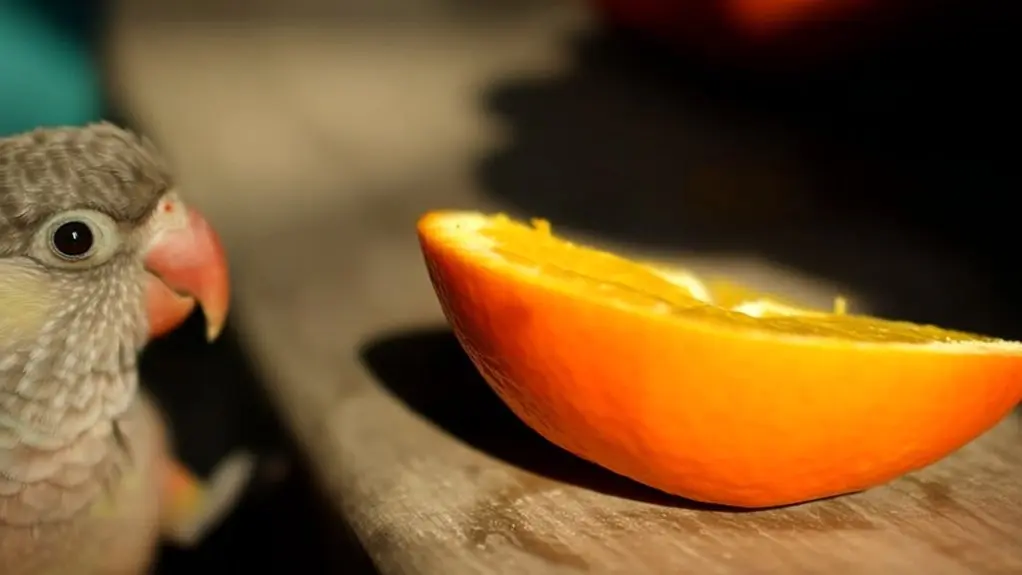
You can safely feed birds fresh, peeled clementines in moderation by removing all seeds and cutting the fruit into small pieces. Clementines provide valuable vitamins, antioxidants, and energy. But be careful not to give too much because their acidity can cause digestive issues.
Always serve ripe fruit on clean, shallow feeders placed near natural cover. Replace leftovers every 1 to 2 days to prevent mold and bacteria from growing.
Following these guidelines helps protect bird health and encourages natural foraging. If you want, there are more insights available on how to optimize feeding practices.
Are Clementines Safe for Birds?
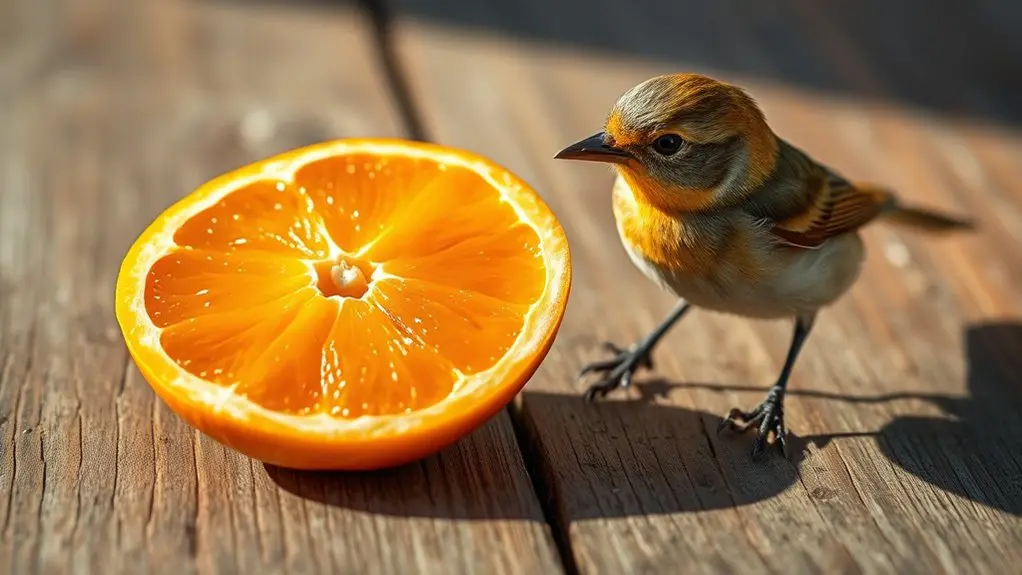
Although you might be cautious about offering new foods to birds, clementines are safe to feed in moderation and provide a valuable source of vitamin C. Many bird species, including orioles and tanagers, enjoy the fruit’s natural sugars, which supply energy beneficial for their metabolism.
However, it’s essential to remove all seeds before feeding, as they may contain compounds toxic to some birds. To minimize choking risks, offer small, peeled segments rather than whole slices.
Always provide fresh clementines and replace any uneaten portions promptly to prevent mold growth and spoilage, which can harm birds.
Preparing Clementines for Your Feathered Friends
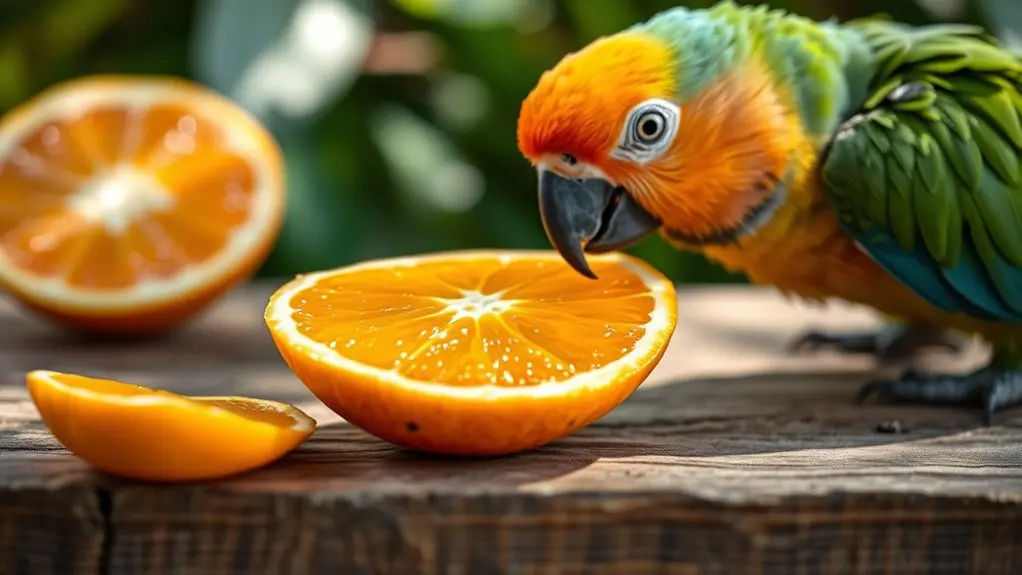
When preparing clementines for your feathered friends, you should always peel the fruit and remove any seeds. This guarantees safety and makes it easier for them to enjoy. Cutting the fruit into small, manageable pieces like halves, quarters, or slices helps birds grip and eat effectively.
Make sure to serve only fresh, ripe clementines. Also, replace any leftovers every 1-2 days to prevent spoilage since spoiled fruit can harm your birds.
| Preparation Step | Purpose |
|---|---|
| Peel the clementine | Prevent choking, ease access |
| Remove seeds | Avoid toxicity |
| Cut into small pieces | Facilitate gripping and consumption |
Following these steps ensures your birds safely enjoy clementines without any risk of choking, toxicity, or spoilage.
Bird Species That Eat Clementines
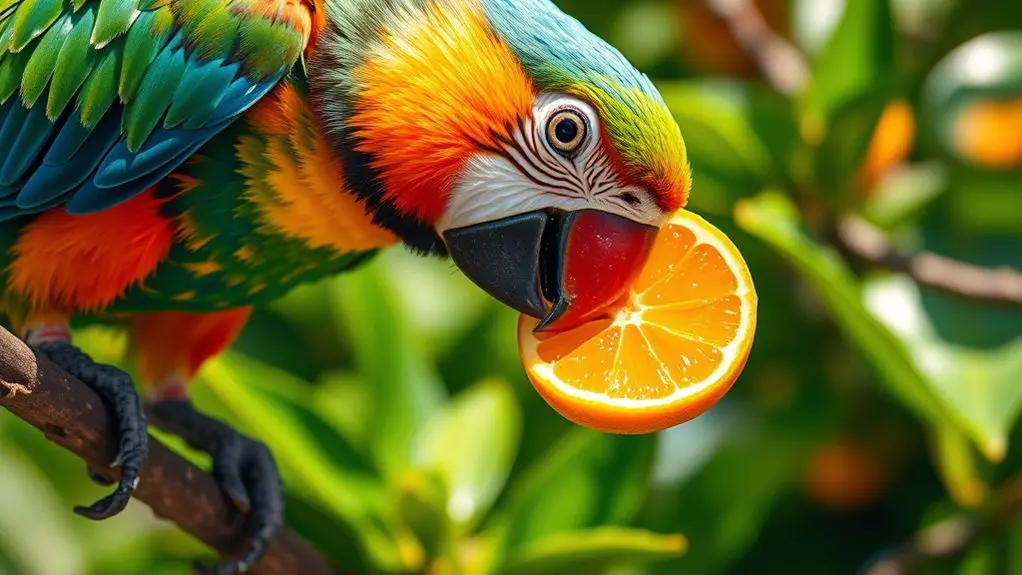
Once you’ve prepared clementines properly for feeding, it’s helpful to know which bird species are most likely to consume them. Orioles, tanagers, and grosbeaks favor clementines due to their sweet, juicy flesh. Orioles, attracted by the bright orange color and scent, often visit citrus feeders.
Northern mockingbirds and catbirds also eat clementines, particularly during migration or food scarcity. Black-headed grosbeaks and blue jays peck at clementines, drawn by their sugar content and vibrant appearance.
Smaller birds like finches and warblers nibble on accessible, easy-to-peel sections.
Understanding these species’ preferences helps you provide clementines effectively, ensuring they reach the birds most inclined to consume them. This knowledge supports targeted feeding, promoting healthier interactions between you and local avian populations.
It’s a great way to enjoy birdwatching while helping out your feathered friends.
Nutritional Benefits of Clementines for Birds
Since clementines contain essential nutrients like vitamin C, antioxidants, and dietary fiber, they can really support birds’ immune function and digestive health. When you feed clementines to birds, you’re giving them valuable nourishment that complements their natural diet.
Clementines provide birds with essential nutrients that boost immunity and aid digestion naturally.
Here are some benefits to consider:
- Immune support and hydration: Vitamin C and antioxidants help strengthen immune defenses. Plus, the high water content keeps birds hydrated, which is especially important in hot weather.
- Energy supply: The natural sugars in clementines provide quick energy. This is vital for active or migrating birds, helping boost their stamina.
- Feather and vision health: Vitamin A supports healthy skin, feathers, and vision. All of these are essential for survival and flight efficiency.
Risks of Feeding Clementines to Birds
Although clementines offer nutritional benefits, feeding them to birds carries certain risks that require careful consideration. Their high acidity can cause digestive distress, including upset stomach and dehydration, especially if given excessively.
You should always remove seeds before offering clementines, as they may contain trace toxins harmful to some bird species.
Birds with sensitive digestive systems, such as parrots and canaries, are particularly vulnerable and should receive only small amounts.
Also, moldy or spoiled clementines pose a significant health hazard and must be discarded promptly to prevent illness.
By understanding these risks, you can better protect your birds from potential complications associated with clementine consumption.
That way, you can still provide occasional nutritional enrichment without worrying too much about the downsides. Just keep an eye on how your bird reacts and adjust accordingly.
It’s all about balance and care.
How Often to Feed Clementines to Birds
Managing the frequency of feeding clementines to birds helps minimize the risks associated with their acidity and sugar content. You should feed clementines sparingly to avoid digestive upset while still providing nutritional benefits.
Consider these guidelines:
- Offer clementines once every few days. This way, birds don’t overconsume acidity or sugar but still gain energy.
- Increase feeding frequency during peak migration seasons to supply extra energy, but make sure to keep the portions controlled.
- Replace clementines every 1-2 days in hot weather. This helps prevent spoilage and mold, which can harm birds.
Best Ways to Serve Clementines at Your Feeder
You’ll want to start by peeling and segmenting the clementines into small, manageable pieces so the birds can easily eat them.
Then, find a spot for your feeder that’s both visible and shaded—this helps attract a variety of fruit-eating birds while giving them a safe place to perch.
Don’t forget to replace the fruit regularly to keep it fresh and prevent mold, which can turn the birds away.
Preparing Clementine Slices
When preparing clementine slices for your feeder, peeling the fruit first makes it easier for smaller birds to grasp and consume.
To optimize feeding and minimize waste, follow these guidelines:
Cut the peeled clementines into manageable wedges or chunks. This allows multiple birds to feed simultaneously and reduces leftover fruit.
Serve the slices directly on a feeder or place them on a plate positioned in a shaded, sheltered area. This slows spoilage and keeps the fruit fresh longer.
Regularly replace the clementine slices and clean the serving dishes or feeders. This maintains hygiene, preventing mold and bacteria buildup that could harm birds.
Feeding Station Placement
Although clementines are highly attractive to many bird species, their effectiveness as a food source depends considerably on how and where you place them. Position the clementines on a sturdy platform or skewer them on hooks in a visible, accessible location like a deck railing or tree branch.
Bright-colored feeders or trays designed for fruit can enhance visibility, increasing bird visits.
Place the feeding station in shaded areas to slow fruit spoilage and extend freshness. Confirm the site is near natural cover such as bushes or trees, providing birds with safety and quick escape routes.
These factors collectively improve feeding success and bird comfort.
Remember to replace clementines every one to two days to prevent mold development and sustain bird interest at your feeder. It’s a simple step but super important to keep things fresh and inviting for your feathered friends.
Maintaining Fresh Fruit
Proper presentation and upkeep of clementines at your feeding station directly impact their attractiveness and safety for birds. To serve clementines effectively, you should peel and separate the fruit into small segments to make it easy for birds to eat.
Using shallow dishes or platform feeders helps keep the segments from rolling away and keeps the area clean. It’s also important to replace clementine segments every 1-2 days. That way, you’re always offering fresh fruit and avoiding any overripe or moldy pieces that might cause health problems.
Also, try placing the fruit in visible spots near trees or shrubs. This encourages more birds to visit. Following these tips will help keep the fruit appealing and safe, which promotes healthy feeding habits in wild birds.
Cleaning Clementine Feeders for Healthy Birds
Because clementine feeders provide a nutrient-rich environment, you must clean them thoroughly with hot, soapy water after each use to prevent mold and bacterial growth. Regularly remove leftover fruit and debris to maintain hygiene and reduce contamination risks.
Disinfect feeders weekly using a solution of one part white vinegar to three parts water. This effectively eliminates germs without harming birds.
Before refilling, confirm all feeder parts are completely dry to prevent moisture buildup that encourages mold growth.
Also, inspect feeders frequently for cracks or damage. Replace any compromised components to avoid contamination and protect bird health.
Consistently following these cleaning protocols will maintain a safe feeding environment, supporting the wellbeing of birds consuming clementines.
Frequently Asked Questions
Can Baby Birds Eat Clementines Safely?
Yes, you can safely offer baby birds small, peeled clementine segments occasionally. Make sure to remove seeds and introduce them gradually.
Keep an eye out for any digestive issues, since the high acidity and sugar could cause discomfort if given too much.
It’s best to treat clementines as a special snack rather than a regular part of their diet. Just take it slow and watch how they respond!
Do Clementines Attract Specific Bird Species?
Yes, clementines attract specific bird species like orioles, tanagers, goldfinches, mockingbirds, and grosbeaks. Their bright color and sweet scent specifically lure visually oriented and fruit-eating birds during migration and nesting seasons.
These birds are drawn to the fruit because it’s easy to spot and tasty. So, if you want to attract these species, offering clementines can be a great idea. It’s a simple way to bring some vibrant birdlife to your garden.
Can Clementine Juice Be Harmful to Birds?
Yes, clementine juice can harm birds because it’s high in acidity and sugar. You really shouldn’t give them concentrated juice. It might irritate their digestive system and cause diarrhea.
Giving whole fruit is a safer option for birds. They can enjoy it without the risks that come with the juice. So, stick to the whole clementine instead!
Are Dried Clementines Safe for Birds?
Yes, dried clementines are safe for birds if you remove the peels and seeds. Make sure to avoid added sugars and feed them in moderation.
Keep an eye on how your bird reacts, and don’t forget to throw away any uneaten portions. This helps prevent mold and digestive issues. It’s always better to be cautious!
How to Store Clementines for Bird Feeding?
You’ll find that storing clementines in a cool, dry place or refrigerated in breathable containers prevents mold and spoilage. This careful preservation guarantees your birds get fresh, nutritious fruit, enhancing their health and feeding experience.
It’s pretty simple really, just keep them somewhere not too warm and make sure there’s some airflow. That way, your feathered friends enjoy their treats longer and stay happy.
Conclusion
You can safely offer clementines to many bird species, but always prepare them properly by removing seeds and peeling. While clementines provide beneficial vitamins like C and antioxidants, feeding them too often may upset your bird’s digestive balance.
Scientific observations confirm that moderate, cleaned servings support bird health without risks. By following these guidelines, you guarantee your feathered friends enjoy this nutritious fruit safely, enhancing their diet without unintended harm.