
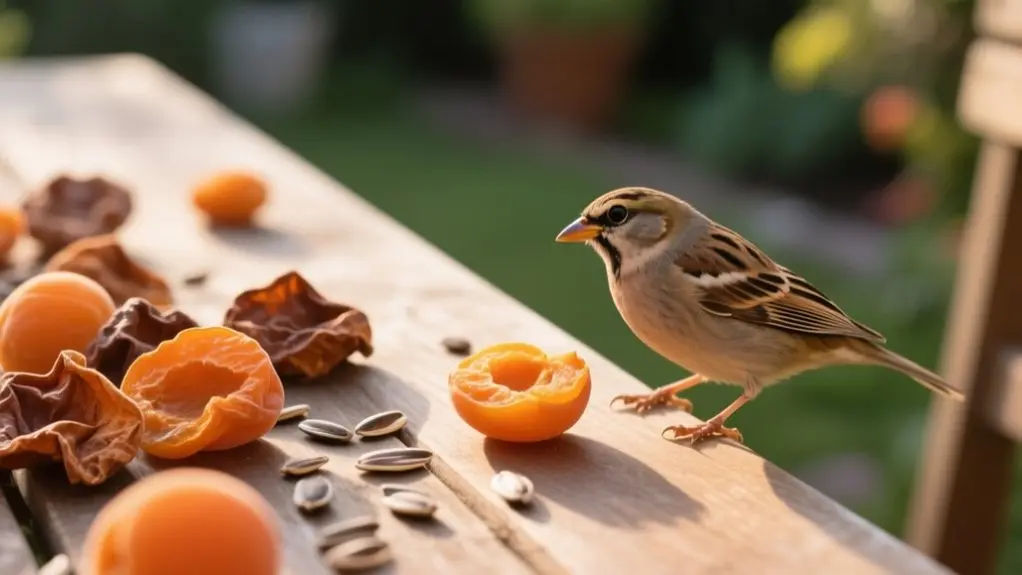
You can let your bird enjoy dried apricots in moderation, but be careful of their high sugar content and potential digestive risks. Always choose pit-free, preservative-free options, and serve small portions based on your bird’s size.
Fresh apricot flesh is a safer choice overall. Watch for any signs of distress like diarrhea or lethargy after feeding.
If you want to keep your feathered friend healthy and happy, understanding serving tips and alternatives will help you make the best decisions.
Are Dried Apricots Safe for Birds to Eat?
Why should you avoid giving dried apricots to birds? Dried fruit like apricots contains high sugar levels that can lead to obesity and other health issues in birds.
Since dried apricots lack moisture, they pose a risk of digestive blockages, which can be dangerous.
Furthermore, many dried fruits have preservatives or added sugars that aren’t safe for birds. If you’re caring for a bird and want to maintain a healthy diet, it’s best to steer clear of dried apricots altogether.
Instead, fresh apricot flesh without the pit offers a safer option, providing beneficial nutrients without the risks tied to dried fruit.
Always check ingredients carefully before introducing any dried fruit to your bird’s diet.
What Nutrients Do Dried Apricots Provide for Birds?
Although dried apricots contain concentrated sugars, they also provide valuable nutrients that can benefit your bird in small amounts. Their nutritional value includes vitamins A and C, which help maintain healthy feathers and support immune function.
Furthermore, dried apricots offer dietary fiber that aids digestion and helps prevent gastrointestinal issues. They’re also a good source of potassium, essential for heart health and muscle function.
Antioxidants found in dried apricots protect your bird’s cells from damage, promoting overall wellness. However, it’s important to feed dried apricots in small amounts to avoid overloading your bird’s diet with sugar.
Including them occasionally as a treat can complement a balanced diet and contribute useful nutrients without compromising your bird’s health.
Why Is Sugar in Dried Apricots a Concern for Birds?
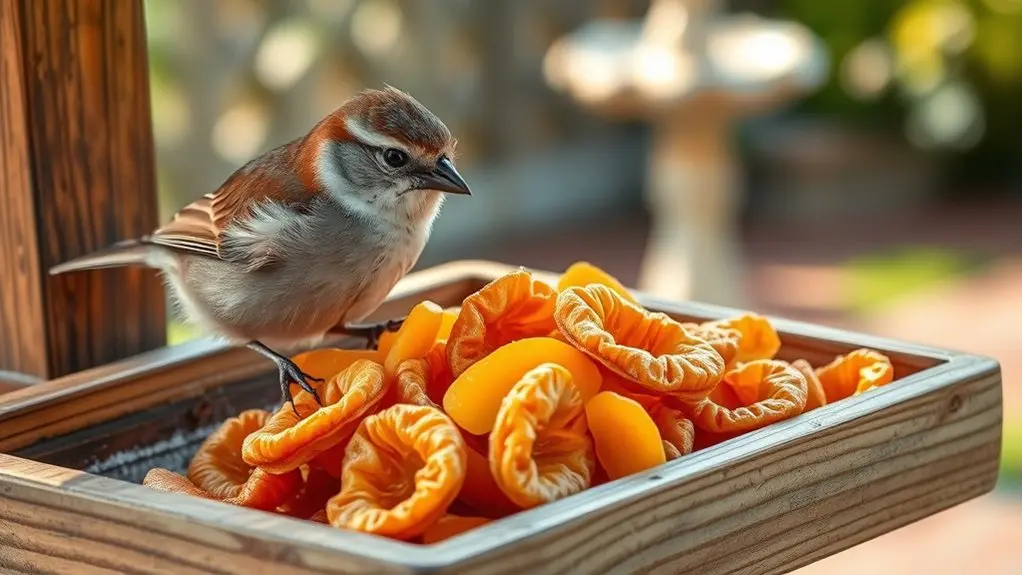
How much sugar is too much for your bird when it comes to dried apricots? The sugar in dried apricots is highly concentrated due to dehydration, up to four times more than fresh ones.
This high sugar content can quickly cause health problems like obesity and digestive issues in birds if they eat too much. Birds’ digestive systems aren’t built to handle such intense sugar levels, which can disrupt their metabolism and spike blood sugar, especially if your bird has existing health concerns.
To avoid these risks, you should only offer dried apricots as an occasional treat, making sure they don’t exceed 5-10% of your bird’s daily diet.
This way, you help keep your feathered friend healthy without overloading them with sugar in dried apricots.
What Risks Should I Know About When Feeding Dried Apricots?
Understanding the sugar content in dried apricots is just one part of keeping your bird safe. You also need to take into account the portion size carefully because too much can cause obesity and digestive blockages due to their low moisture content.
Make sure any dried apricots you offer are completely pit-free, as the pits contain cyanide compounds that are toxic to birds.
Furthermore, check labels for added preservatives or extra sugars, which can harm your feathered friend.
Introducing dried apricots gradually is essential too, as sudden changes in diet might upset your bird’s digestive system.
What Are Signs of Adverse Reactions to Dried Apricots in Birds?
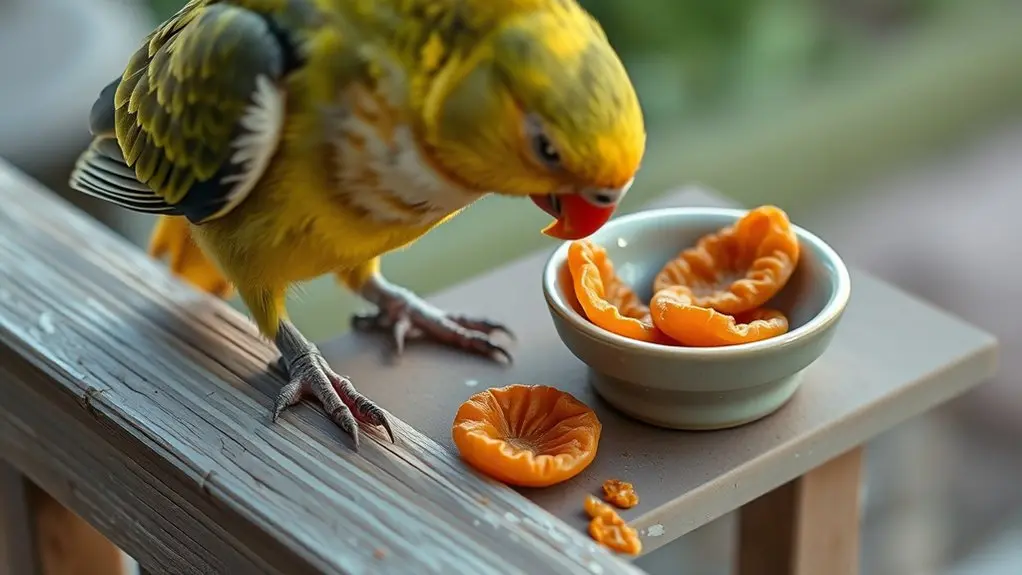
If your bird shows signs like diarrhea, vomiting, or swelling around the face after eating dried apricots, it’s important to act quickly. These symptoms are clear signs of distress and may indicate an allergic reaction or digestive upset caused by the fruit’s high sugar content or preservatives.
Watch for behavioral changes such as lethargy, decreased activity, or unusual vocalizations, as these can signal your bird isn’t tolerating dried apricots well. You might also notice excessive thirst or altered drinking habits, which suggest hydration issues from digestive discomfort.
Keep an eye on ruffled feathers or difficulty breathing, especially swelling around the eyes or beak, as these require immediate veterinary care.
Monitoring these signs of distress helps guarantee your bird stays safe and healthy.
Should I Give Birds Fresh Apricot Flesh or Dried Apricots?
You’ll want to go with fresh apricot flesh instead of dried apricots. Fresh fruit gives your bird essential vitamins and fiber without all those added sugars or preservatives.
On the other hand, dried apricots have a high sugar concentration, which can be harmful to your bird’s health. Just make sure to remove the pit and cut the fruit into small pieces to keep your feathered friend safe.
Fresh Versus Dried
While both fresh and dried apricots can be tempting treats, fresh apricot flesh offers more benefits for your bird’s health. Fresh apricots provide essential vitamins and moisture without the concentrated sugars found in dried apricots.
You should always remove the pit before serving fresh apricots to avoid any risks. Dried apricots may have added sugars or preservatives, which can harm your bird and cause digestive issues if given excessively.
Moderation is key with both forms, but fresh apricots are generally safer and healthier.
| Feature | Fresh Apricots |
|---|---|
| Vitamins | High |
| Sugar Concentration | Low |
| Moisture Content | High |
| Risk of Additives | None |
| Feeding Recommendation | Small, pit removed |
Nutritional Differences
Because fresh apricot flesh contains more essential vitamins and moisture, it offers better nutrition for your bird than dried apricots, which have concentrated sugars and may include harmful additives. Fresh apricots provide crucial Vitamin A and about 86% moisture, supporting your bird’s digestion and health.
In contrast, dried apricots contain around 20% moisture but pack a higher sugar concentration, which can lead to obesity or diabetes in birds. Furthermore, dried apricots often have preservatives or added sugars that are harmful to birds.
Always remove seeds and pits from any apricot you serve, as their cyanide compounds are toxic.
How Do I Choose the Right Dried Apricots for My Bird?
How can you guarantee the dried apricots you choose are safe and healthy for your bird? Start by selecting dried apricots labeled as 100% fruit with no added sugars or preservatives.
Avoid any products containing sulfites or artificial additives, as these aren’t safe for birds.
Look for a vibrant color and firm texture. Dull or leathery apricots might indicate poor quality.
Always check that the apricots are free from pits or seeds, which can be choking hazards or contain harmful compounds.
By choosing high-quality dried apricots and introducing them gradually, you help confirm they’re safe for birds and well-tolerated.
Monitoring your bird’s reaction is essential to keep its diet both enjoyable and healthy.
How Should I Prepare Dried Apricots for Bird Feeding?
To prepare dried apricots for your bird, start by chopping them into small, manageable pieces to prevent choking. Always remove any pits, as they can be hazardous and contain harmful compounds.
Before serving, make sure the dried apricots don’t have added sugars, preservatives, or sulfites, since these additives can harm your bird.
To make the apricots softer and easier to eat, soak them in water for a few hours to rehydrate.
When offering dried apricots as bird food, serve them in moderation because they’re high in natural sugars and should only make up about 5-10% of your bird’s daily diet.
How Often Can Birds Safely Eat Dried Apricots?
You should offer dried apricots to your bird only occasionally.
Think of them as a small treat, not something for every day.
It’s best to keep dried apricots under 5-10% of your bird’s daily food intake to avoid too much sugar.
Just make sure to measure the portions carefully, so your feathered friend stays healthy and happy.
Recommended Serving Frequency
Offering dried apricots once or twice a week keeps your bird’s diet balanced and prevents excessive sugar intake. Since dried apricots contain concentrated sugars, you should limit their presence to no more than 5-10% of your bird’s daily diet.
This approach helps avoid digestive issues, especially in small birds, which are more sensitive to sugary treats. Always make sure the dried apricots you offer are free from added sugars, preservatives, or sulfites, as these additives can harm your feathered friend.
Cut the apricots into small, manageable pieces to reduce choking risks, and monitor your bird’s reaction carefully. If you notice any signs of digestive discomfort, stop offering dried apricots and consult a vet.
Moderation and careful observation are key to keeping your bird healthy and happy.
Portion Size Guidelines
Although dried apricots can be a tasty treat for your bird, they should only make up 5-10% of its daily diet due to their high sugar content. You need to offer them in moderation and carefully control the portion size to avoid health issues.
Small birds typically get about a quarter of a dried apricot, while larger birds can safely have a whole piece. Always verify the apricots are unsweetened and free from preservatives.
Here’s a quick guide to portion size:
| Bird Size | Portion Size |
|---|---|
| Small Birds | 1/4 dried apricot |
| Medium Birds | 1/2 dried apricot |
| Large Birds | 1 whole dried apricot |
Monitor your bird’s reaction when introducing dried apricots to keep them healthy and happy.
What Are Better Fruit Alternatives to Dried Apricots?
When choosing fruit alternatives to dried apricots, you’ll find several options that provide better nutrition and appeal to your bird’s taste buds.
Fresh fruits like mango and papaya are excellent because they’re rich in Vitamin A, which supports healthy feathers and eyesight.
Certain fruits such as strawberries and blueberries offer high antioxidant levels that boost your bird’s immune system.
Apples, served without seeds, provide fiber and Vitamin C, while bananas add natural sweetness along with potassium and Vitamin B6.
Peaches and apricots (flesh only) contribute beta-carotene and fiber, making them wholesome too, as long as you remove the pits.
These better fruit alternatives guarantee your bird enjoys a varied and nutritious diet without the risks sometimes associated with dried apricots.
Can Dried Apricots Help With My Bird’s Dietary Enrichment?
Since dried apricots contain vitamins A and C along with fiber, they can add valuable nutrients to your bird’s diet while encouraging natural foraging behavior.
Offering dried apricots as bird treats provides a tasty and healthy way to enrich your bird’s environment. Their natural sweetness appeals to birds, motivating them to explore and interact with their food.
Dried apricots offer a delicious, nutritious treat that encourages birds to engage and explore their food naturally.
When you cut dried apricots into small, manageable pieces, you make it easier and safer for your bird to enjoy these treats, reducing choking risks.
Just be sure to pick dried apricots without added sugars or preservatives, which can be harmful.
Incorporating these treats occasionally enhances your bird’s diet and keeps feeding time stimulating and enjoyable.
When Should I Consult an Avian Vet About Fruit Treats?
You should definitely check in with an avian vet if your bird starts showing signs of digestive upset or acts differently after enjoying fruit treats.
It’s really important to be extra cautious if your bird already has health issues or has had food sensitivities before.
And whenever you’re introducing new treats regularly, it’s a good idea to talk to your vet to make sure they’re safe and a good fit for your feathered friend.
Signs of Adverse Reactions
Although dried apricots can be a healthy treat, you should consult an avian vet immediately if your bird shows signs of digestive distress like vomiting or diarrhea after eating them.
These signs of adverse reactions can also include lethargy, ruffled feathers, difficulty breathing, or swelling around the beak.
Such symptoms may indicate an allergic response or more serious issues like heart damage caused by improper fruit consumption.
Keep an eye on changes in thirst, urination, or unusual droppings, as these could signal underlying gastrointestinal or systemic problems.
Prompt veterinary consultation guarantees your bird receives the right care and prevents complications from escalating.
Don’t hesitate to seek professional advice if you notice anything unusual after introducing dried apricots or other fruit treats.
Underlying Health Conditions
When your bird has underlying health conditions, consulting an avian vet before introducing dried apricots or other fruit treats becomes essential.
If your bird has kidney issues, the potassium in dried apricots might affect renal function, so get professional advice first.
Birds with diabetes or obesity should avoid dried apricots due to their high sugar content, which can spike blood sugar levels dangerously.
Also, if your bird shows digestive problems like diarrhea or vomiting, check with a vet before offering fruit treats.
For those with behavioral concerns, such as feather plucking, an avian vet can recommend safe fruit options that won’t worsen symptoms.
Always consult your vet when your bird has underlying health conditions or takes medication before adding dried apricots to their diet.
Frequency of New Treats
Frequently introducing new treats like dried apricots requires careful attention to your bird’s reactions and health.
The frequency of new treats should be limited to avoid upsetting your bird’s digestive system or causing nutritional imbalances.
Here’s when you should consult an avian vet about fruit treats:
- If your bird has existing health conditions, consult a vet before introducing dried fruits, as sugars can worsen issues.
- Watch for signs of digestive distress, lethargy, or changes in droppings within a week of trying new treats.
- If unusual symptoms appear, seek veterinary advice immediately to prevent serious complications or death in birds.
Frequently Asked Questions
Can Dried Apricots Cause Allergies in Certain Bird Species?
Yes, dried apricots can cause allergic reactions in certain bird species because of their bird sensitivities.
You’ll want to watch for signs like feather plucking or gastrointestinal distress when introducing them.
Since some birds, like budgerigars and cockatiels, are more prone to allergies, you should introduce dried apricots gradually.
If your bird shows any allergic reactions, stop feeding them immediately and consult an avian vet to keep your feathered friend safe.
How Should Dried Apricots Be Stored to Keep Them Fresh for Birds?
To keep dried apricots fresh for your birds, use airtight storage containers to block moisture and air.
Store the containers in a cool, dark place, away from heat and sunlight.
For freshness tips, consider dividing apricots into smaller jars, so you only open what you need weekly.
Always check for mold or odd smells before feeding, and handle apricots with dry hands to avoid introducing moisture that causes spoilage.
Are There Specific Bird Species That Should Avoid Dried Apricots Entirely?
Certain species should steer clear of dried apricots to safeguard their bird health.
Small parrots and sensitive species like budgerigars struggle with sugar spikes and digestive distress, so you’ll want to avoid offering these treats.
Species preferences matter.
Large birds can handle occasional servings, but if your bird has obesity or diabetes, skip dried apricots entirely.
Always prioritize your feathered friend’s well-being by respecting their unique dietary needs.
Can Dried Apricots Be Mixed With Other Treats Safely for Birds?
Yes, you can practice safe mixing by combining dried apricots with other treats, but you need to be careful with treat combinations.
Pair dried apricots with high-fiber, low-sugar options like freeze-dried berries to balance sugar content and keep your bird healthy.
Avoid mixing them with high salt or fat treats, as those can harm your bird.
Always introduce combinations gradually and watch for any adverse reactions.
What Is the Best Age to Start Feeding Birds Dried Apricots?
When Sarah introduced dried apricots to her parrot at six months, she noticed his bird preferences quickly emerged.
The ideal feeding age for dried apricots is around six months, once your bird is fully weaned and ready for solid foods.
Starting too early can upset their digestion.
Always offer small amounts first and watch for any reactions.
This approach helps you balance treats with their overall diet safely and enjoyably.
Conclusion
Imagine your bird nibbling on a small piece of dried apricot, its bright color catching the light like a tiny jewel. While these treats can add a sweet spark to their diet, you’ll want to keep servings small and infrequent to avoid sugar overload.
Remember, a balanced diet is like a colorful garden, full of variety and health. When in doubt, reach out to your avian vet to keep your feathered friend thriving and happy.