
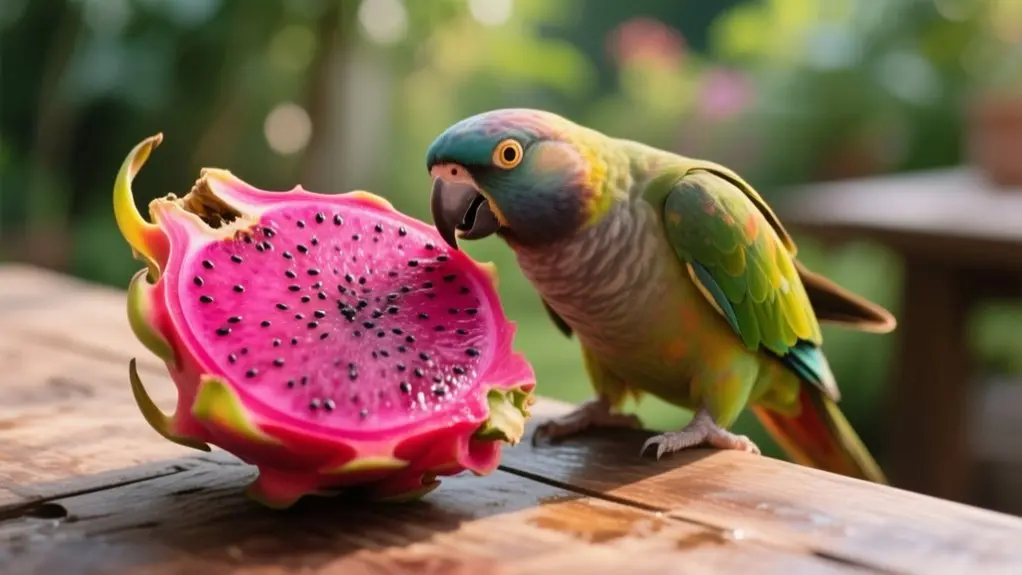
You can feed your bird dragon fruit seeds in moderation, but it’s safest to remove the seeds first to avoid choking or digestive problems, especially for small birds like cockatiels. The seeds do offer nutritional benefits like healthy fats, protein, and fiber, which support your bird’s health when given carefully.
Always introduce new foods gradually and watch for any signs of distress. Keep exploring to find the best ways to prepare and serve dragon fruit safely for your feathered friend.
What Are Dragon Fruit Seeds?
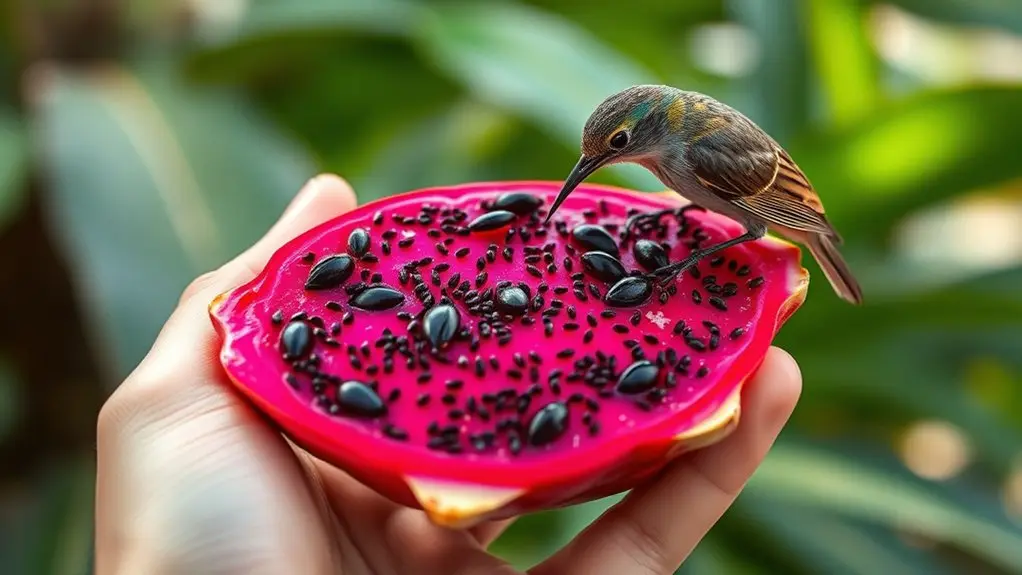
Dragon fruit seeds are tiny, black, and edible, nestled within the sweet, juicy flesh of the fruit. You’ll find hundreds of these little seeds scattered throughout the vibrant pulp of the dragon fruit, also called pitaya.
These seeds add a subtle crunch and pack a nutritional punch, rich in healthy fats, protein, and dietary fiber. While they’re safe for you to eat, you should be cautious if you plan to share dragon fruit seeds with smaller birds like cockatiels.
The seeds don’t contain harmful toxins, but their size can pose a choking hazard. Plus, eating too many might cause digestive issues.
Nutritional Benefits of Dragon Fruit Seeds for Cockatiels
Small and crunchy, the seeds inside this tropical fruit offer more than just texture. They provide cockatiels with healthy fats, protein, antioxidants, and fiber. These nutritional benefits support your bird’s energy, immune system, and digestion. Including dragon fruit seeds in their diet can contribute to overall well-being when given in moderation.
| Nutrient | Benefit |
|---|---|
| Healthy Fats | Energy and cell function |
| Protein | Muscle maintenance and repair |
| Antioxidants | Fight oxidative stress |
| Fiber | Promote healthy digestion |
Can Cockatiels Safely Eat Dragon Fruit Seeds?
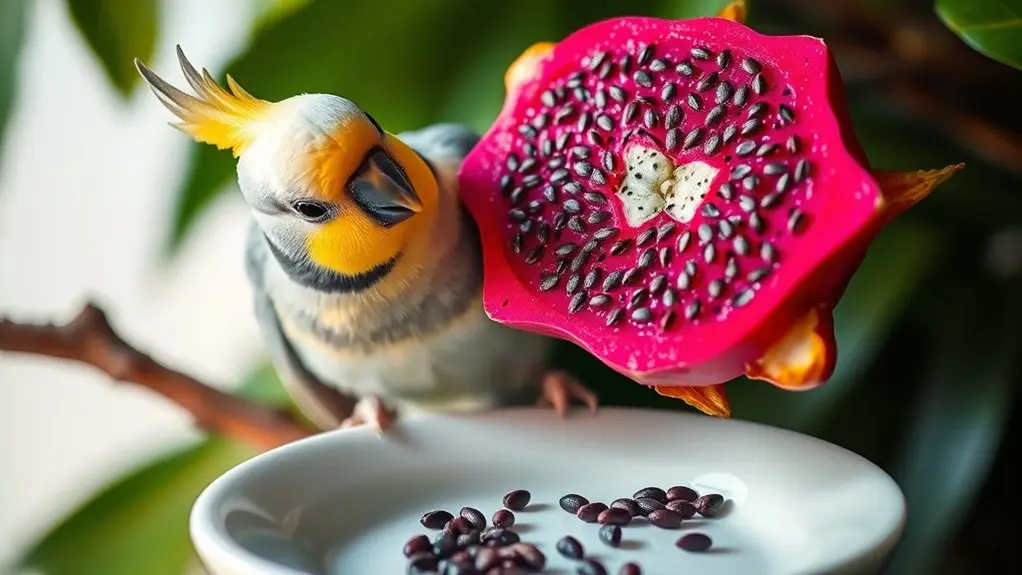
You can let your cockatiel enjoy dragon fruit seeds, but it’s important to remove them first to prevent choking. Those little seeds do have healthy fats and protein, which can be good for your bird.
That said, feeding too many seeds might cause digestive issues or nutrient overload.
Seed Safety Concerns
Although dragon fruit seeds are nutritious, they can pose a choking hazard for your cockatiel, so it’s best to remove them before feeding. When thinking about seed safety concerns, you should also know that too many seeds might cause digestive problems in your bird. Moderation is key when feeding birds, and it’s safer to focus on the fruit’s flesh. Introducing any new food, including seeds, should be done gradually while watching your cockatiel for any adverse reactions. Here’s a quick overview to keep in mind:
| Aspect | Details |
|---|---|
| Seed Size | Small but potentially risky |
| Choking Risk | Present if not removed |
| Digestive Impact | Possible if consumed in excess |
| Feeding Advice | Remove seeds; feed flesh only |
| Monitoring | Watch for reactions |
Choking Hazard Risks
When feeding your cockatiel dragon fruit, you need to be cautious about the seeds since they can easily cause choking due to their hard texture and size.
These seeds pose a significant choking hazard, especially for smaller birds like cockatiels.
Even though the fleshy part of the fruit is safe, any seeds left in the pieces you offer can lead to dangerous blockages in your bird’s throat.
To keep your cockatiel safe, always remove the seeds before feeding and closely monitor your bird after introducing dragon fruit.
Avoiding this choking hazard helps prevent emergencies and guarantees your cockatiel enjoys the fruit safely without risking their health.
Nutritional Impact
Dragon fruit seeds contain healthy fats and protein that could benefit your cockatiel’s diet in small amounts.
However, these seeds are tiny and difficult for your bird to digest properly. While they’re a nutritious seed, feeding them whole can cause digestive upset and even pose a choking hazard.
To keep your cockatiel safe and healthy, it’s best to remove the seeds and offer only the fleshy dragon fruit pulp. This way, your bird still enjoys the fruit’s vitamins and hydration without the risk linked to seeds.
Always watch your cockatiel closely when introducing dragon fruit or any new food to spot any adverse reactions quickly.
Moderation and caution guarantee a balanced, safe diet.
Common Myths About Feeding Dragon Fruit Seeds to Birds
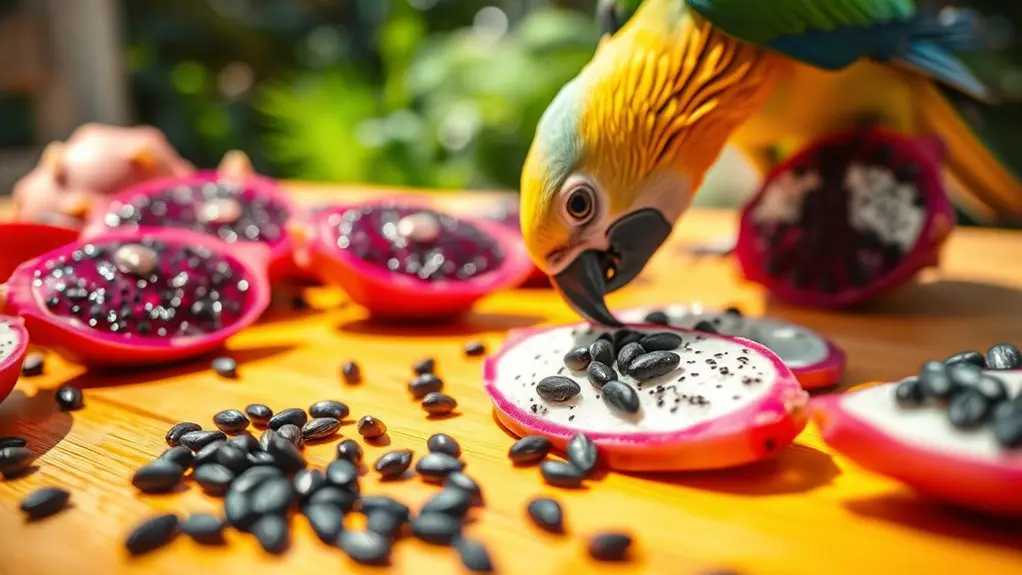
Because many bird owners want to provide healthy treats, you might assume that feeding dragon fruit seeds is beneficial. However, common myths suggest these seeds offer significant nutrition or are completely safe, which isn’t true.
Dragon fruit seeds can pose choking hazards, especially for smaller birds, and may cause digestive issues if eaten in excess. Removing seeds guarantees your bird enjoys the fruit safely.
| Myth | Reality | Impact on Birds |
|---|---|---|
| Seeds are highly nutritious | Seeds have minimal benefits | Potential digestive upset |
| Seeds are safe to swallow | Small seeds can choke birds | Risk of choking, especially in small species |
| Seeds can be given freely | Seeds should be limited | Overconsumption can cause discomfort |
Always prioritize safety over assumptions when feeding your bird.
Are Dragon Fruit Seeds Toxic or Harmful to Cockatiels?
How safe are dragon fruit seeds for your cockatiel? Good news: dragon fruit seeds aren’t toxic or harmful to pet birds like cockatiels. They actually contain healthy fats and protein, making them a nutritious treat in small amounts.
However, you should always remove the seeds before feeding to avoid choking risks. Also, don’t overdo it. Excessive consumption can cause digestive issues.
When introducing dragon fruit seeds for the first time, keep a close eye on your cockatiel for any unusual reactions, as rare allergies could occur.
Choking Hazards of Dragon Fruit Seeds for Cockatiels
Although the seeds of dragon fruit are small, they can easily become a choking hazard for your cockatiel due to their hard texture and size.
These choking hazards might cause your bird difficulty swallowing or even lead to gastrointestinal blockages.
To keep your cockatiel safe, it’s best to remove the seeds before offering dragon fruit. When feeding, cut the fruit into small, manageable pieces to avoid accidental ingestion of any remaining seeds.
Remove dragon fruit seeds and cut into small pieces to keep your cockatiel safe from choking hazards.
Always watch your cockatiel closely after introducing new foods like dragon fruit, so you can spot any signs of distress or choking early.
Understanding these choking hazards helps you prevent accidents and guarantees safer feeding habits for your feathered friend.
How Much Dragon Fruit Seed Is Safe for Your Cockatiel?
You should limit your cockatiel’s intake of dragon fruit seeds to just a few at a time to keep them safe. While these seeds contain healthy fats and protein, offering them in moderation is essential to avoid digestive issues.
It’s best to remove most seeds before feeding to prevent choking hazards. Focus on giving your bird the dragon fruit flesh instead, which is safer and more nutritious.
Always introduce dragon fruit seeds gradually, watching your cockatiel for any negative reactions. Remember, the bulk of their diet should be nutritious pellets and vegetables, not seeds.
Signs Your Cockatiel May React Badly to Dragon Fruit Seeds
Three key signs can indicate your cockatiel is reacting badly to dragon fruit seeds. First, watch for signs of choking, such as gagging, coughing, or difficulty breathing. These need immediate attention.
Second, digestive distress like vomiting, diarrhea, or lethargy may show your bird’s system isn’t handling the seeds well.
Digestive distress such as vomiting, diarrhea, or lethargy signals your bird may be struggling with the seeds.
Third, allergic reactions can cause swelling, breathing problems, or unusual behavior changes.
Because dragon fruit seeds are small and hard, they pose a choking risk, so keep a close eye on your cockatiel after feeding. If you notice any of these symptoms, remove the seeds and consult a vet promptly.
Monitoring your bird closely guarantees its safety and helps you spot issues early before serious problems develop.
Preparing Dragon Fruit Seeds Safely for Cockatiels
When you’re getting dragon fruit ready for your cockatiel, it’s really important to take out all the seeds carefully. You don’t want your little bird to have any choking risks.
A good way to do this is by using a spoon to scoop out the flesh, making sure no seeds sneak in.
And of course, always handle the seeds and fruit with clean hands or utensils to keep everything safe and hygienic for your feathered friend.
Seed Removal Techniques
Careful seed removal guarantees your cockatiel enjoys dragon fruit safely without choking risks.
Start by cutting the dragon fruit in half and using a spoon to scoop out the flesh. This simple seed removal technique helps separate the seeds naturally, allowing you to set them aside easily.
After scooping, inspect the fruit flesh closely to confirm no seeds remain, as even tiny seed fragments can pose choking hazards. If you notice seeds mixed with the flesh, remove them carefully before serving.
Consistently applying these seed removal techniques prevents accidental ingestion of seeds by your cockatiel.
Safe Seed Handling
After removing the seeds from the dragon fruit flesh, you’ll want to handle any leftover seeds with care before offering them to your cockatiel. While dragon fruit seeds are nutritious, they can be a choking hazard and hard for your bird to digest, so it’s best to keep them separate from the fruit you serve.
Always choose fully ripe dragon fruit to guarantee the seeds are mature and less likely to cause digestive issues. Cut the fruit into small, manageable pieces to make eating safe for birds.
If a few seeds accidentally remain, watch your cockatiel closely for any signs of distress or choking.
Following these steps helps you prepare dragon fruit seeds in a way that’s truly safe for birds.
How Often Should You Offer Dragon Fruit Seeds to Your Bird?
Anyone offering dragon fruit seeds to their bird should do so sparingly to guarantee safety and health. These seeds contain healthy fats and protein, but you need to limit their quantity to avoid digestive issues.
Always remove the seeds from the fruit carefully to prevent choking hazards.
Introduce dragon fruit seeds gradually, watching your bird for any allergic reactions or digestive discomfort. It’s best to keep these seeds as an occasional treat, making up no more than 10% of your bird’s overall diet. By doing this, you’ll provide nutritional variety without risking overconsumption.
Alternatives to Dragon Fruit Seeds for Nutritional Variety
If you want to give your bird a nutritional boost, why not try offering cooked quinoa or chia seeds? They make great healthy alternatives to dragon fruit seeds.
You can also toss in small amounts of unsalted sunflower seeds or flaxseeds. These add variety and pack in some essential nutrients, which your bird will appreciate.
And don’t forget about leafy greens like kale or spinach! They’re perfect for keeping your bird’s diet balanced and safe.
Nutritious Seed Alternatives
While dragon fruit seeds offer some nutritional benefits, you can provide your birds with a wider variety of healthy seeds to boost their diet.
Nutritious seed alternatives like chia seeds deliver omega-3 fatty acids, fiber, and protein, promoting overall wellness.
Sunflower seeds are another option, rich in essential fats and vitamin E, but offer them sparingly due to their high fat content.
Pumpkin seeds, or pepitas, supply magnesium, zinc, and antioxidants, supporting your bird’s health effectively.
Quinoa seeds bring a protein-rich punch with essential amino acids, great for balanced nutrition.
Millet seeds are small, easy to eat, and provide carbohydrates and fiber, aiding energy and digestion.
Including these nutritious seed alternatives guarantees your birds enjoy diverse, beneficial nutrients for a healthier diet.
Safe Snack Options
Although dragon fruit seeds can be nutritious, you can easily diversify your bird’s diet with safe snack options that provide essential vitamins and minerals.
Try sliced apples without seeds, which offer vitamin A and fiber vital for your bird’s health.
Berries like blueberries and strawberries make excellent alternatives, packed with antioxidants and low in calories.
Fresh vegetables such as carrots and leafy greens also serve as nutritious snacks while helping to keep your bird hydrated.
For a boost of healthy fats and protein, offer unsalted almonds or walnuts sparingly to avoid obesity.
If your bird enjoys crunch, plain popcorn without salt or butter can be a fun and safe snack option.
These choices guarantee your bird gets a balanced and varied diet without relying solely on dragon fruit seeds.
Variety For Bird Health
Expanding your bird’s diet beyond dragon fruit seeds helps guarantee they get a wide range of nutrients for better health. Instead of seeds, offer fruits like apples (without seeds), bananas, and berries to provide essential vitamins and minerals.
You can also include leafy greens such as spinach and kale, which supply calcium and vitamin A.
For protein, cooked quinoa or small amounts of cooked beans make safe, nutritious alternatives without choking risks.
Nuts, given in moderation, add healthy fats and extra protein to their meals.
Don’t forget vegetables like carrots and bell peppers, which enhance dietary variety and provide additional nutrients.
Which Bird Species Can Eat Dragon Fruit Seeds Safely?
Several bird species, including parrots and finches, can safely eat dragon fruit seeds in moderation, gaining healthy fats and protein from them. These seeds are small and soft, making them easier for many birds to consume compared to larger seeds.
Bird species with strong beaks, like macaws and cockatoos, can even crack open tougher seeds to access the nutrients inside.
However, some birds, such as cockatiels, should avoid the seeds due to choking risks, even if they enjoy the fruit’s flesh.
When introducing dragon fruit seeds to any bird species, you should always monitor them closely for any digestive issues or allergic reactions.
This cautious approach guarantees your feathered friend stays safe and healthy while enjoying a varied diet.
Frequently Asked Questions
Can Dragon Fruit Seeds Cause Allergies in Birds?
Yes, dragon fruit seeds can cause allergy symptoms in birds, though it’s rare.
You should watch your bird closely when introducing these seeds to spot any signs like lethargy, itching, or digestive issues.
If you notice any allergy symptoms, stop feeding the seeds immediately and consult your vet.
Starting with small amounts helps you catch potential problems early, keeping your feathered friend safe and healthy.
Do Dragon Fruit Seeds Affect Bird Feather Quality?
Imagine your bird’s feathers shining like a painter’s vibrant palette. Dragon fruit seeds can boost feather nutrition by providing healthy fats and antioxidants, helping plumage stay bright and strong.
But don’t let your bird feast too much. Too many seeds might upset their digestion, dulling that colorful glow.
Keep their diet balanced, and you’ll see feathers that flutter with health, reflecting the care you give every day.
Are Dragon Fruit Seeds Suitable for Baby Birds?
Dragon fruit seeds aren’t suitable for baby birds because their nutritional value doesn’t meet the needs of their developing digestive systems.
You should avoid giving whole seeds to them, as they can cause choking or digestive issues.
Instead, offer mashed or pureed dragon fruit without seeds to provide safe nutrients.
Always check with an avian vet before adding new foods, so you’re sure your baby bird gets the best nutrition possible.
How Should Dragon Fruit Seeds Be Stored for Birds?
You should store dragon fruit seeds for birds by focusing on proper seed preparation.
First, clean and dry the seeds thoroughly to avoid contamination.
Then, keep them in an airtight container stored in a cool, dry place away from sunlight and humidity.
If you won’t use them soon, refrigerate the seeds to maintain freshness.
Using the seeds within a few weeks guarantees your birds get the best nutritional benefits from them.
Can Birds Digest Dragon Fruit Seeds Without Issues?
Yes, birds can digest dragon fruit seeds without major issues thanks to their digestive systems, which handle fibrous foods well.
The seed nutrition offers healthy fats and protein that can benefit your bird.
However, you shouldn’t feed too many seeds at once, as large quantities might cause digestive upset.
Always introduce seeds gradually and watch your bird’s reaction to confirm they tolerate the new food without any problems.
Conclusion
You can safely offer dragon fruit seeds to your cockatiel as a nutritious treat, but moderation is key. Did you know that dragon fruit seeds contain healthy fats and fiber, contributing to about 2% of the fruit’s total weight?
This small amount packs a nutritional punch without overwhelming your bird’s diet. Just remember to prepare the seeds properly and vary your bird’s diet with other safe options to keep them happy and healthy.