
You can fly with many small birds like cockatiels or lovebirds if you meet airline size and species rules and use an approved, well-ventilated carrier that fits under the seat. Prepare your bird by acclimating it to the carrier and packing familiar food and toys.
Expect TSA manual inspections and plan for layovers carefully. Understanding cabin versus cargo options and airline policies will help guarantee a smooth journey.
There’s more to think about for traveling safely and comfortably with your bird.
Which Birds Can Fly on Planes?
Which birds can you bring onboard a plane? Typically, small bird species like cockatiels, parrotlets, and lovebirds are allowed because of their manageable size and calmer behavior.
Bird feathering plays a role too. Birds with clipped wings that limit flight capability are easier to handle during travel and are more often accepted for in-cabin flights. Airlines and TSA regulations strictly outline which species and sizes qualify for cabin or cargo transport.
Clipped wings make birds easier to manage and more likely allowed for in-cabin air travel by airlines and TSA.
Larger or noisier birds, such as flamingoes, usually aren’t permitted due to their size and potential disturbance. If your bird has undergone proper flight training, it might be calmer and better suited for air travel, which can improve its acceptance.
Always check with your airline to confirm your bird meets their requirements for safe and compliant transportation. It’s better to be sure before you travel!
Choosing the Right Carrier for Flying With Birds
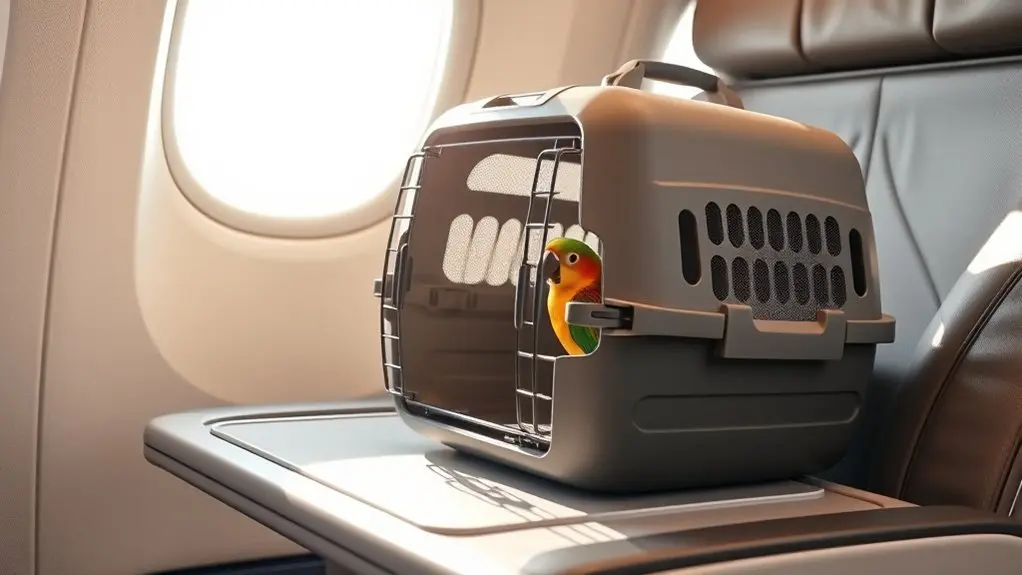
You’ll need an airline-approved carrier that fits completely under the seat—usually around 16″ x 10″ x 11.5″. It’s a good idea to pick a carrier that has plenty of ventilation, so your bird can breathe easily during the flight.
Also, think about security and comfort. Carriers with features like perches or room for familiar toys can really help keep your bird calm and less stressed.
And don’t forget to check the specific rules for the airline you’re flying with. Every airline has its own size and design requirements, so make sure your carrier ticks all their boxes before you travel.
Carrier Size Requirements
How can you guarantee your bird’s carrier meets airline size requirements? Start by focusing on bird carrier dimensions that comply with airline regulations. Typically, carriers must fit entirely under the seat, around 16″ x 10″ x 11.5″ or smaller, ensuring airline compliance.
First, measure your carrier to confirm it fits within the airline’s specified under-seat dimensions. Then, choose a lightweight, secure carrier that prevents escapes during travel. Also, make sure it has proper ventilation with mesh sides or vents for good airflow.
If your bird is larger, consider an airline-approved cage checked as cargo. This cage should meet size and safety standards.
Following these steps helps ensure your bird’s carrier meets airline size requirements, keeping your pet safe and compliant during flights.
Carrier Comfort Features
Once you confirm your bird carrier fits airline size requirements, the focus shifts to making sure your pet stays comfortable throughout the flight. Choose a carrier with good ventilation and secure perches to help your bird stay stable.
Adding some bird toys inside can reduce anxiety and keep your feathered friend entertained during travel.
Including familiar items encourages feather grooming, which helps your bird stay calm and healthy. Don’t forget to pack easily accessible food and water bowls filled with treats, millet, and fruits to keep your bird hydrated and nourished.
It’s best to pick an airline-approved carrier like the Celltei In-Cabin Airline Carrier. These are easy to clean and compressible, making travel more convenient.
Try getting your bird used to the carrier with short trips before the flight. This will help reduce stress and make the whole flying experience more positive.
Airline Carrier Regulations
Although choosing a bird carrier might seem straightforward, adhering to airline regulations is essential to guarantee smooth travel. The right carrier guarantees your bird’s safety while maintaining cabin ambiance and minimizing disruption to in-flight entertainment.
Consider these key points when selecting a carrier:
- Size: Must fit entirely under the seat (approx. 16″ x 10″ x 11.5″) and compress if required.
- Construction: Airline-approved, durable, ventilated, with secure closures and easy to clean.
- Comfort: Include treats, toys, and water bowls to keep your bird calm during the flight.
- Protection: Use a caged carrier inside a larger bag to prevent chewing, or check larger birds as cargo in temperature-controlled environments.
Following these guarantees compliance and maintains a peaceful cabin ambiance for all passengers.
Key Airline Policies for Flying With Birds
When flying with your bird, you’ll need to follow specific airline pet travel rules. One important thing is making sure your bird’s carrier meets the approved size requirements so it can fit under the seat in front of you.
It’s a good idea to book your flight well in advance because airlines usually limit how many pets can be on each flight.
Plus, they often charge a fee that ranges from about $50 to $110 each way.
Since every airline has different policies, it’s really important to double-check all the rules before you book.
That way, you won’t run into any unexpected issues at the airport.
Airline Pet Travel Rules
When traveling with birds, airlines enforce specific rules that vary widely depending on the carrier and bird size. Your bird species and flight duration affect whether your bird can join you in the cabin or must go in cargo. Most airlines require advance reservations due to FAA limits on pets in the cabin. Fees typically range from $50 to $110 each way.
Key rules include:
- Small birds fitting under the seat often travel in cabin; larger or noisier species usually go cargo.
- Fees apply per flight segment and are payable at check-in.
- Disruptive birds might be denied cabin access.
- Health certificates and proper carriers may be mandatory for compliance.
Understanding these policies helps ensure smooth travel for you and your feathered companion. So, it’s a good idea to check with your airline before you fly to avoid any surprises.
Carrier Size Requirements
How do airlines determine if your bird’s carrier qualifies for in-cabin travel? Most require the bird cage to fit entirely under the seat in front of you, with typical dimensions near 16″ x 10″ x 11.5″. The carrier must be compressible or designed compactly to meet these size restrictions.
Weight limits usually range from 17 to 20 pounds, including both bird and bird cage. Airlines favor travel accessories made of lightweight, airline-approved materials that provide ventilation and are easy to clean.
Before you travel, verify the specific size and weight requirements of your airline. Selecting the right bird cage and travel accessories assures compliance, comfort for your bird, and smoother security checks during your journey.
Booking And Fees
What should you expect regarding booking and fees when flying with your bird? Airlines typically require advance reservations for in-cabin bird travel, often by phone, due to limited space. Fees usually range from $50 to $110 each way and are payable at check-in.
Policies vary widely based on bird species and flight duration, so confirming details with your airline is essential. Note some airlines, like American Airlines, prohibit birds onboard entirely.
- Reserve early, as bird spots are limited and prioritized by the carrier.
- Expect fees between $50-$110 per flight segment.
- Pet carriers count as a carry-on and must fit under the seat.
- Confirm individual airline policies, especially for longer flight durations and specific bird species.
Adhering to these rules guarantees smooth travel with your feathered companion.
How to Prepare Your Bird for a Flight
Although traveling can be stressful for birds, you can ease the process by gradually acclimating your bird to its travel cage well before the flight. Let your bird sleep and spend time in the airline-approved carrier for several weeks. Make sure it’s well-ventilated, lightweight, and fits under the airplane seat.
Gradually acclimate your bird to a well-ventilated, lightweight travel cage well before your flight.
Maintain strict cage hygiene by cleaning the carrier regularly to prevent illness.
Manage your bird’s dietary needs by packing familiar food and water. Offer small amounts during travel to keep your bird hydrated and comfortable.
Clip your bird’s wings if possible to limit flight within the carrier.
Introduce short trips in the carrier to reduce stress and build positive travel associations.
Including familiar toys and treats further comforts your bird, promoting a safer, calmer flight experience.
Airport Security Tips for Flying With Birds
When you reach airport security, you’ll need to remove your bird from its carrier to prevent exposure to X-rays. Different bird species may face specific flight restrictions, so it’s important to let TSA agents know about your bird. Always ask for a handsearch for both your bird and its carrier to avoid the X-ray machine.
Here are some key tips to keep in mind:
- Clearly notify TSA personnel about your bird and any species-specific requirements.
- Request manual inspection of the carrier outside your bag.
- Be prepared for TSA to swab or physically check the carrier.
- Hold your bird securely or place it in a designated area during inspection, as directed.
Just stay calm and cooperate to make sure the security process goes smoothly. This way, you’ll help everyone follow safety protocols and flight restrictions involving birds.
Managing Layovers and Connecting Flights With Birds
After maneuvering airport security with your bird, the next challenge is managing layovers and connecting flights. Confirm airline policies for pet travel on each leg, as they can vary widely. Keep your bird in a secure, well-ventilated carrier during layovers and try to minimize handling to reduce stress.
Make sure you allow plenty of transfer time to handle security checks, possible delays, and rechecking procedures. If you have a long layover, consider arranging airport accommodations or pet-sitting to keep your bird comfortable.
Keep a close eye on your bird’s diet, offering food that matches the flight duration so they don’t get hungry or have digestive issues. Always have essential documents like health certificates and vaccination proof handy to make transitions smoother.
Traveling With Birds: Cargo vs. Cabin
How do you decide whether your bird should travel in the cabin or the cargo hold? First, think about your bird’s behavior and dietary needs. Birds in the cabin experience a controlled environment, which helps reduce stress and temperature fluctuations.
That said, size and airline restrictions often determine if your bird qualifies for cabin travel or has to go in cargo. So, it’s a good idea to check the airline policies for cabin vs. cargo transport before making any plans.
- Verify airline policies for cabin vs. cargo transport.
- Assess your bird’s size, noise level, and behavior.
- Ensure an airline-approved carrier that matches size and ventilation standards.
- Account for your bird’s dietary needs during the trip.
Cargo holds can expose birds to temperature extremes and more handling, so you’ll need specialized carriers for that.
How to Handle Common Challenges When Flying With Your Bird
Choosing whether your bird travels in the cabin or cargo is just the start. Managing challenges during the flight is equally important. To reduce flight anxiety, acclimate your bird to its airline-approved carrier ahead of time. Include familiar objects or treats to keep your bird comfortable.
Make sure the carrier fits under the seat, is secure, well-ventilated, and positioned where you can easily access it. When going through TSA inspections, ask for a hand search to avoid X-ray exposure.
Prioritize your bird’s nutrition by feeding light, familiar meals before travel to prevent digestive issues. Booking early and confirming airline policies on in-cabin bird transport helps you avoid last-minute complications.
These steps help minimize stress and logistical obstacles. They ensure your bird’s safety and well-being throughout the journey.
Tips for Keeping Your Bird Comfortable and Safe During the Flight
When you prepare your bird’s travel cage well in advance, you considerably reduce its stress during the flight. Acclimating your bird to the carrier by using it as a sleep space and offering treats can ease anxiety. Maintaining your bird’s diet and feather grooming routine before travel supports overall health.
Follow these tips to keep your bird comfortable and safe:
- Place the carrier in an aisle seat for easy monitoring and minimal disturbance.
- Include familiar toys, treats, and a small amount of water or juice to keep your bird calm and hydrated.
- Cover the carrier with a light cloth to create a dark, cozy environment that reduces anxiety.
- Ensure the carrier is well-ventilated, secure, and spacious enough for standing and turning comfortably.
Frequently Asked Questions
Can Birds Carry Diseases That Affect Airline Staff or Passengers?
Yes, birds can carry diseases that affect airline staff or passengers, which can impact flight safety. Bird migration plays a big role in spreading these pathogens.
Because of this, it’s really important to have proper health checks and quarantine measures in place. Doing so helps minimize risks during air travel and keeps everyone on board safe.
Are There Quarantine Requirements for Birds Arriving in Different Countries?
Like a bird’s migration guided by avian navigation, you’ll face quarantine requirements when importing birds. Countries enforce strict health inspections, permits, and variable quarantine lengths to prevent disease spread. This helps ensure safe and legal avian travel.
It might seem like a lot, but these rules are there for good reasons. They protect both the birds and the local wildlife from potential illnesses. So, it’s important to follow them carefully when bringing birds into a new country.
How Do Airlines Handle Bird Allergies Among Passengers?
Airlines don’t have specific policies for bird allergies, but you should definitely notify them in advance.
They’ll try to seat you away from bird habitats or areas affected by bird migration dander. This is to make sure you stay comfortable and safe during your flight.
It’s always a good idea to mention your allergy when you book your ticket or check in. That way, the airline can be prepared to accommodate your needs as best as possible.
What Documentation Is Needed for Exotic Bird Species?
You’ll need a health certificate from a vet, CITES permits for protected species, and import or quarantine clearances. Documentation should reflect your bird’s habitat and migration patterns to meet airline and country regulations.
It’s important to have everything in order before you travel. Airlines and countries can be pretty strict about these rules, so double-checking helps avoid any last-minute issues. Plus, keeping your bird’s safety and legal status in mind is always a good idea.
Can Emotional Support Birds Include Bird Species Other Than Dogs?
You can bring emotional support bird species beyond dogs, like parrots or cockatiels. These feathered companions symbolize freedom and comfort, but acceptance depends on airline policies and proper documentation from mental health professionals.
Conclusion
So, yes, birds can fly on planes, literally. Just remember, your feathered friend isn’t exactly a frequent flyer. So pack patience, a sturdy carrier, and maybe some bird-sized noise-canceling headphones.
Airlines have rules, security’s a hurdle, and layovers might test your sanity. But with the right prep and a dash of humor, you’ll both survive the journey.
After all, if birds can migrate thousands of miles, a plane trip should be a breeze, right?