
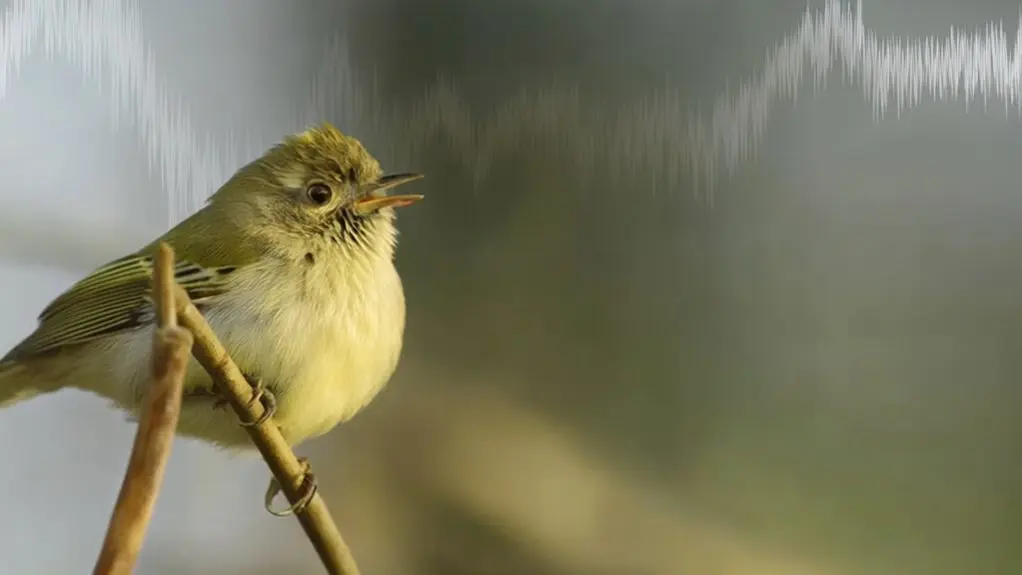
You can’t hear ultrasonic frequencies, and neither can birds, since their hearing generally tops out below 20 kHz. Birds primarily detect sounds within 1-4 kHz, with some species reaching up to 20 kHz. Ultrasonic sounds above that threshold are outside their auditory range and don’t influence their behavior.
Because of this, ultrasonic bird deterrents are often ineffective. If you want to understand why and explore more effective bird control methods, the following information will clarify these points.
What Is Ultrasonic Sound in Bird Control?

Although ultrasonic sound waves exceed 20,000 Hz and lie beyond human hearing, you might expect them to affect birds similarly. However, most birds hear only up to 4-20 kHz, which limits the effectiveness of ultrasonic devices in bird control.
Ultrasonic frequency refers to sound waves above this human-audible threshold. These frequencies are commonly used to deter pests like insects and rodents.
In bird control, devices emit ultrasonic frequencies aiming to create discomfort or confusion without disturbing humans.
Yet, because bird hearing typically doesn’t extend into ultrasonic ranges, these sounds often go unnoticed by birds, which reduces their deterrent impact.
Understanding this gap between ultrasonic frequency emissions and bird hearing is really important when thinking about how practical and effective these devices are for managing bird behavior.
What Frequencies Can Birds Actually Hear?
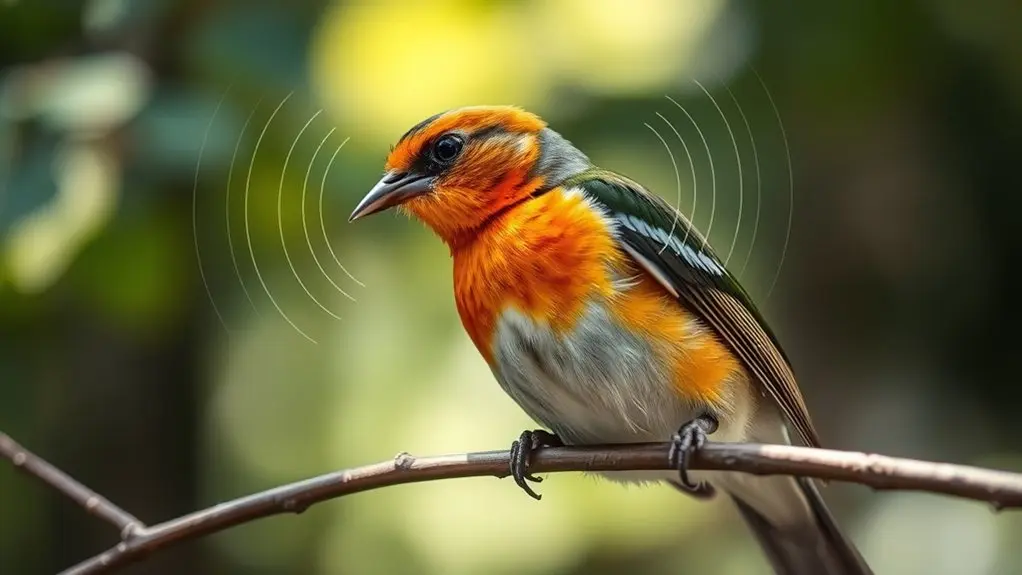
You can expect most birds to hear sounds between 1 and 4 kHz. Some species can even detect sounds up to 20 kHz.
But when it comes to frequencies above 20 kHz—those ultrasonic sounds—they usually can’t hear them.
Bird Hearing Frequency Range
While birds possess a hearing range that varies among species, most detect sounds between 1 and 4 kHz. This range aligns closely with the frequencies of bird vocalization, allowing you to perceive their calls and songs effectively.
Some species extend their hearing sensitivity up to about 20 kHz, though this remains below ultrasonic thresholds.
This sensory adaptation suits the ecological and communicative demands birds face, as their primary auditory signals lie within this band.
You won’t find birds responding to ultrasonic sounds above 20 kHz, which are generally inaudible to them.
Understanding this frequency range helps clarify how birds interact with their environment and communicate.
It emphasizes that their auditory system is finely tuned to relevant, biologically meaningful sounds rather than ultrasonic frequencies.
Ultrasonic Sound Detection
How well can birds detect ultrasonic frequencies? In reality, most birds hear sounds primarily within the 1 to 4 kHz range, with some extending up to 20 kHz, which sits just below ultrasonic levels.
Ultrasonic frequencies, those above 20 kHz, typically fall outside their auditory capabilities.
The evolution of hearing in birds has fine-tuned their sensitivity to frequencies integral to bird communication, rather than ultrasonic sounds.
While certain species like oilbirds and swiftlets use echolocation, their clicks remain within the audible range for humans, not ultrasonic.
Studies offer limited evidence that birds perceive ultrasonic sounds, and these frequencies don’t generally affect their behavior.
Audible Vs Ultrasonic Limits
Although some animals can detect ultrasonic frequencies, birds generally cannot hear sounds above 20 kHz. You’ll find that birds typically perceive frequencies between 1 and 4 kHz. This range aligns well with bird song, which is essential for communication and migration patterns.
Ultrasonic sounds, defined as those above 20 kHz, fall outside their auditory capabilities. That means devices emitting these frequencies are usually ineffective for bird deterrence.
| Frequency Range | Bird Hearing Ability |
|---|---|
| 1–4 kHz | Ideal range for bird song |
| 4–20 kHz | Upper limit, some birds can detect |
| Above 20 kHz | Ultrasonic, generally inaudible to birds |
This table highlights the clear boundary between audible and ultrasonic sound relative to avian hearing.
Do Any Birds Use Ultrasonic Sounds Naturally?
Do any birds naturally use ultrasonic sounds in their communication or navigation? The answer is no. Bird vocalization typically occurs within the 1–4 kHz range, with some species detecting sounds up to about 20 kHz. But ultrasonic frequencies above 20 kHz fall outside their hearing capacity.
While a few species, such as oilbirds and swiftlets, display echolocation behavior, their echolocation clicks are audible to humans and don’t reach ultrasonic levels. Scientific observations show birds neither produce nor rely on ultrasonic sounds in natural settings.
Ultrasonic frequencies don’t form part of bird communication or navigation systems. This highlights that birds’ sensory and vocal adaptations remain confined to audible sound ranges rather than extending into the ultrasonic domain.
Why Don’t Ultrasonic Sounds Affect Birds?
Because birds lack the sensory structures needed to detect ultrasonic frequencies, sounds above 20 kHz fail to register in their auditory system. Their hearing range typically spans 1 to 4 kHz, with some species detecting up to 20 kHz, but not beyond.
This limitation means ultrasonic sounds don’t influence bird migration or nesting behavior, as these activities depend on perceivable acoustic cues within their audible range.
Birds rely on natural calls and songs to navigate and communicate during migration and to coordinate nesting. Since ultrasonic frequencies produce no detectable responses, they remain ineffective stimuli.
Understanding this helps clarify why ultrasonic deterrents fail to impact birds. Their auditory system focuses on frequencies crucial to survival and reproduction rather than ultrasonic sounds outside their perceptual capabilities.
How Do Bird Distress Calls Deter Birds?
Ultrasonic sounds don’t affect birds because their hearing range is limited. That’s why other acoustic signals, like distress calls, work better to influence their behavior.
When you use bird distress calls, you’re basically mimicking natural predator sounds. This triggers instinctive defensive reactions in the birds.
Using bird distress calls mimics predator sounds, triggering birds’ natural defensive instincts to protect themselves.
During migration, these calls mess with their usual social communication.
Birds might approach and mob what they think is a threat, or if the call stops without any real predator showing up, they get confused and fly away. This helps keep nests safe by discouraging birds from settling or hanging around the area.
The key to making these calls work is how authentic they sound. They’ve to convincingly mimic danger to get birds to react protectively.
Do Ultrasonic Bird Repellent Devices Really Work?
You might think ultrasonic bird repellent devices would keep birds away, right? Well, the thing is, most birds can’t actually hear sounds above 20 kHz. So, these devices often don’t work as well as you might hope.
Studies have shown that these gadgets rarely change how birds behave or make them go elsewhere, especially when used outside where the sound fades quickly.
Instead, you’re usually better off using bird distress calls or visual scare tactics if you want a more dependable way to control birds.
Ultrasonic Device Effectiveness
Although many manufacturers claim ultrasonic bird repellent devices can deter birds, scientific evidence shows these claims rarely hold up. Birds generally can’t hear frequencies above 20 kHz, making ultrasonic signals ineffective as a deterrent.
Their vocal mimicry and migration patterns rely on sounds within their natural hearing range, so ultrasonic waves don’t trigger avoidance behaviors.
Environmental factors like open spaces and obstacles further reduce signal strength, diminishing any potential effect.
While these devices may target insects or rodents, they don’t reliably repel birds.
If you want to influence bird behavior, relying solely on ultrasonic sound won’t work. Instead, integrating visual stimuli or other deterrents is necessary.
Birds’ sensitivity to vocalizations and environmental cues plays a far greater role in their response than ultrasonic frequencies.
Alternative Bird Deterrents
Because birds typically can’t hear frequencies above 20 kHz, devices that emit ultrasonic sounds fail to influence their behavior effectively. Ultrasonic bird repellent devices target rodents and insects, not birds, which respond more to distress calls and predator sounds.
To manage bird migration and nesting habits, you’ll find combining visual deterrents with auditory cues more effective. Visual scare tactics trigger innate escape responses, disrupting nesting and migration patterns.
| Deterrent Type | Effectiveness on Birds |
|---|---|
| Ultrasonic Devices | Ineffective (inaudible to birds) |
| Distress Calls | Highly effective |
| Visual Decoys | Effective |
| Physical Barriers | Reliable |
Rely on proven methods rather than ultrasonic devices for managing bird presence.
Common Misconceptions About Ultrasonic Bird Deterrents
While ultrasonic bird deterrents have gained popularity as a humane method to keep birds away, they often fail to deliver the promised results because most bird species can’t hear sounds above 20 kHz.
You might assume these devices disrupt bird migration or nesting behaviors, but scientific evidence shows otherwise.
Birds rely on audible distress calls and predator sounds to modify their behavior, not ultrasonic signals. Expecting ultrasonic repellents to influence complex activities like migration or nesting is a common misconception.
Additionally, many commercial ultrasonic devices are designed for rodents or insects, not birds.
If you base your bird control strategy solely on ultrasonic deterrents, you’ll likely see minimal impact because these frequencies fall outside birds’ hearing range and consequently don’t effectively alter their natural patterns.
Best Sound-Based Methods to Deter Birds Successfully
Ultrasonic deterrents often fall short because birds have a limited hearing range. So, focusing on sounds within their audible spectrum usually gives better results. To deter birds effectively, use sound deterrents that mimic distress calls, predator noises, or species-specific alarms.
These sounds tap into birds’ natural responses during migration and nesting, which helps disrupt their settlement patterns. Combining audio signals with visual scare tactics like decoys or reflective objects really boosts your chances of success. Devices that broadcast multiple species’ calls and let you adjust volume and duration offer adaptable control tailored to your environment.
Proper placement of these deterrents matters a lot. You need to consider the size of the area and environmental conditions to get the best effect. For thorough bird management, it’s smart to combine sound-based methods with physical barriers. This way, you can protect your space effectively from persistent bird intrusions.
When and Where Are Ultrasonic Deterrents Useful?
If you want to maximize the efficiency of ultrasonic deterrents, you should deploy them in enclosed or semi-enclosed spaces such as warehouses, barns, or sheds where sound waves remain contained. These devices work best in controlled environments.
Open outdoor spaces and environmental factors like wind reduce their effectiveness.
Ultrasonic deterrents are especially useful when dealing with bird migration and nesting habits in areas where you want to prevent roosting. Think about using them in small to medium-sized areas under a few acres to ensure consistent sound coverage.
Ultrasonic deterrents effectively prevent roosting by targeting bird migration and nesting in small to medium areas.
They’re great for places with noise restrictions since ultrasonic sounds are inaudible to humans. Storage facilities, loading docks, and boats are ideal spots to discourage nesting and roosting behaviors.
This targeted use matches bird behavioral patterns and really improves how well the deterrents work.
Frequently Asked Questions
Can Ultrasonic Sounds Harm Birds’ Hearing or Health?
Ultrasound interference doesn’t harm birds’ hearing because their auditory limits exclude ultrasonic frequencies. You won’t find evidence showing ultrasound damages bird health, as their ears aren’t built to perceive or be affected by these high-frequency sounds.
Are There Bird Species With Exceptional Hearing Ranges?
You might think some bird species have exceptional hearing ranges for bird migration or nest building, but research shows their hearing stays within typical limits. They lack sensitivity to ultrasonic frequencies beyond 20 kHz.
This ensures precise navigation and communication. So, while their hearing is good, it’s not superhuman or anything like that. Birds get by just fine with the hearing range they have.
How Do Birds Communicate if They Can’T Hear Ultrasound?
You rely on bird vocalization within audible frequencies and visual signals, since birds don’t use ultrasonic communication. Their interactions depend on sounds between 1-4 kHz, ensuring effective mating, territory defense, and social coordination.
Birds really stick to these sound ranges because that’s what they can hear best. It helps them stay connected with others around them. Plus, they use visual cues to make their messages clear.
Can Birds Adapt to Ultrasonic Deterrent Devices Over Time?
You won’t see birds adapt to ultrasonic deterrents over time because their hearing doesn’t capture those frequencies.
During bird migration and nest protection, they respond more to audible threats, not silent ultrasonic signals.
What Are Alternative Non-Auditory Bird Control Methods?
Imagine vibrant feather coloration reflecting sunlight as you disrupt nesting habits with netting, spikes, and habitat changes. You’ll effectively deter birds by altering their environment, using visual deterrents and physical barriers tailored to their behavior and biology.
It’s all about making the space less inviting for them. When you change their surroundings, birds look for easier spots to settle. So, these methods work by encouraging them to move along rather than causing harm.
Conclusion
You might think blasting ultrasonic sounds would send birds flying, but ironically, they simply can’t hear those frequencies. While ultrasonic bird repellents promise silent solutions, birds remain blissfully unaffected. Instead, relying on natural distress calls or proven sound methods works far better.
So, if you’re aiming to outsmart birds, don’t bank on inaudible waves. They’re science’s way of reminding us that not all high-tech tricks truly reach feathered ears.