
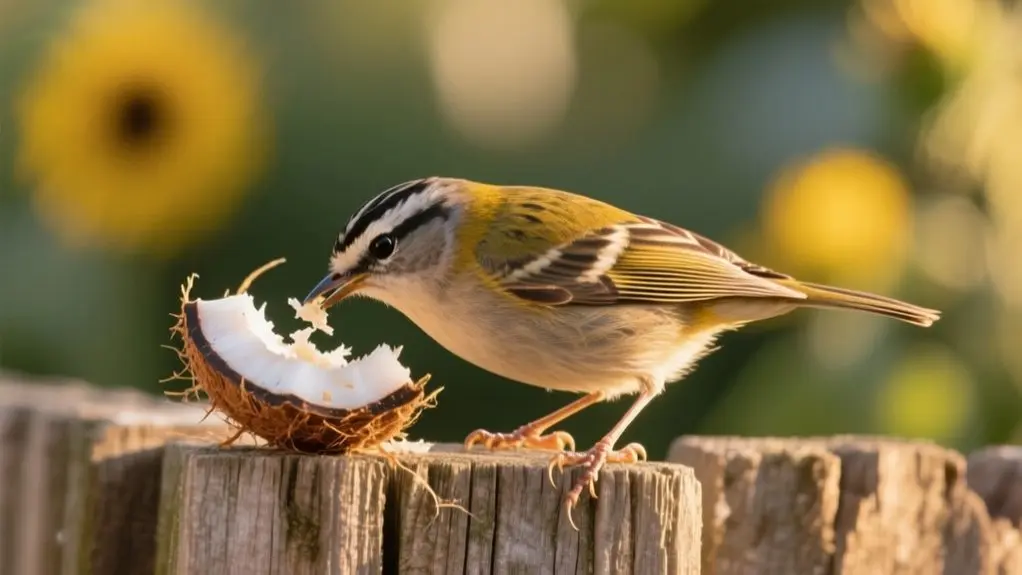
You can safely offer your birds dried coconut as a nutritious, energy-rich treat, but be sure it’s unsweetened and additive-free. It’s packed with healthy fats, fiber, and essential minerals that support digestion and feather health.
Just introduce it gradually and feed in moderation to avoid weight gain or digestive issues. Different birds benefit from different sizes, like flakes for parrots and finely shredded for finches.
Keep exploring to discover the best ways to serve it and which species enjoy it most.
What Is Dried Coconut and How Is It Made?
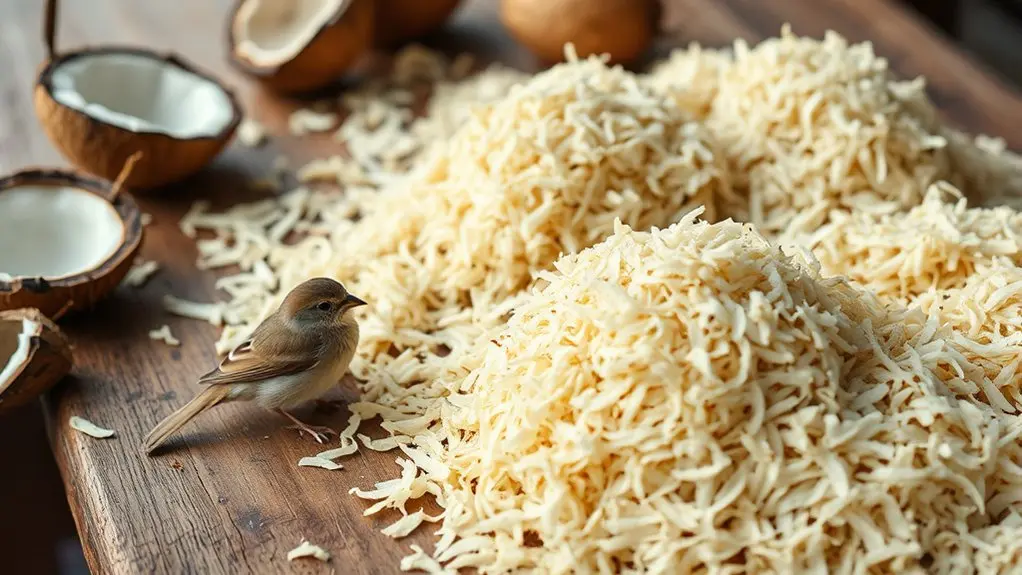
Dried coconut comes from fresh coconut meat that’s had its moisture removed, usually through air drying or dehydration. This process keeps the natural flavor and nutrients intact, making dried coconut a shelf-stable ingredient.
You’ll find it in forms like flakes, shreds, or chips, each with different textures.
When feeding your pet bird or even a wild bird, it’s vital to pick unsweetened and additive-free dried coconut to avoid harmful ingredients.
Because it’s high in fat and fiber, dried coconut provides energy and essential nutrients like manganese and copper.
Knowing exactly what dried coconut is and how it’s made helps you offer a safe, enjoyable treat for your feathered friends without compromising their health.
Why Is Dried Coconut Healthy for Birds?
Although many treats can seem tempting, coconut stands out as a nutritious option you can confidently offer your bird. Dried coconut is packed with healthy fats that provide essential energy, especially during colder months when food is scarce.
Coconut is a nutritious, energy-rich treat perfect for birds, especially in colder months when food is limited.
Its rich fiber content supports your bird’s digestion and helps maintain a healthy gut.
Plus, dried coconut supplies crucial minerals like manganese, copper, and potassium, which boost overall health and metabolic functions.
When you add dried coconut to your bird food mix, it not only introduces variety but also encourages natural foraging behavior.
Sourced responsibly, dried coconut is free from harmful chemicals, making it a safe and wholesome treat you can feel good about sharing with your feathered friend.
Which Birds Can Safely Eat Dried Coconut?
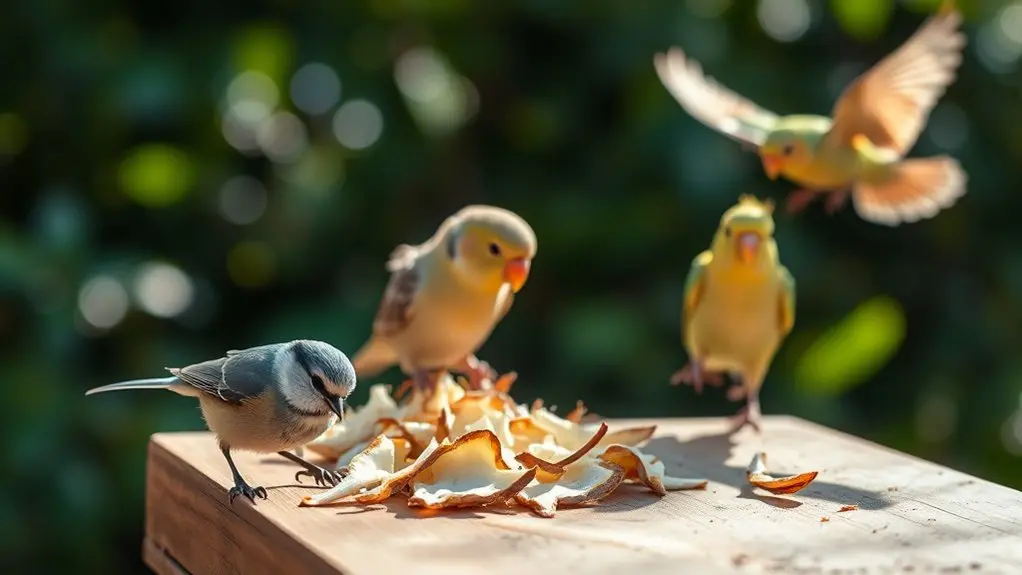
Which birds can enjoy dried coconut without any harm? Many species, including parrots, cockatiels, and finches, can safely eat dried coconut in moderation.
When considering parrot preferences, larger pieces suit their strong beaks, providing an energetic, fatty treat.
Cockatiel treats should be offered in smaller, manageable sizes, as these birds enjoy nibbling on shredded dried coconut.
For finch health, small amounts of finely shredded coconut work best, ensuring easy consumption without digestive issues.
Remember to always choose unsweetened, additive-free dried coconut to avoid health risks.
You should also watch your birds closely when introducing this new treat to spot any adverse reactions quickly.
How Does Dried Coconut Compare to Raw Coconut for Birds?
When you’re deciding between dried and raw coconut for your bird, it’s good to keep a few things in mind.
Raw coconut usually packs more nutrients and provides hydration, which is great for your feathered friend.
On the other hand, dried coconut tends to lose moisture during processing and sometimes has added sugars or preservatives.
These additives mightn’t be the best for your bird’s health.
So, it’s generally safer to offer raw coconut regularly.
You can give dried coconut too, but just in moderation to keep things balanced.
Nutritional Differences
Because dried coconut contains more fat than raw coconut, you should be cautious about offering it to your bird in large amounts to prevent excessive calorie intake.
Among coconut varieties, raw coconut offers better hydration benefits due to its higher moisture content, which dried coconut lacks.
Birds generally prefer raw coconut, finding it easier to digest and more palatable, which aligns better with their hydration needs.
Raw coconut also provides more fiber, protein, and essential minerals, while drying reduces some of these valuable nutrients.
You can offer dried coconut as an occasional treat, but it shouldn’t replace raw coconut in your bird’s diet.
Paying attention to your bird’s preferences and nutritional requirements guarantees they enjoy the benefits of coconut without compromising their health.
Feeding Safety Considerations
Although dried coconut can be a tasty treat for your bird, you should offer it cautiously since it lacks the moisture and some nutrients found in raw coconut.
While dried coconut benefits include being a convenient source of healthy fats, it’s lower in essential minerals and fiber.
Because of its concentrated sugar content, moderation importance is key to avoid digestive issues and dehydration. You should always choose unsweetened, additive-free dried coconut to keep your bird safe.
For bird diet integration, raw coconut remains the preferred option, providing better hydration and nutrients.
Use dried coconut sparingly as an occasional treat, ensuring your bird’s overall diet stays balanced with seeds, fruits, and vegetables for ideal health.
Can Birds Eat Dried Coconut Flakes or Shredded Coconut?
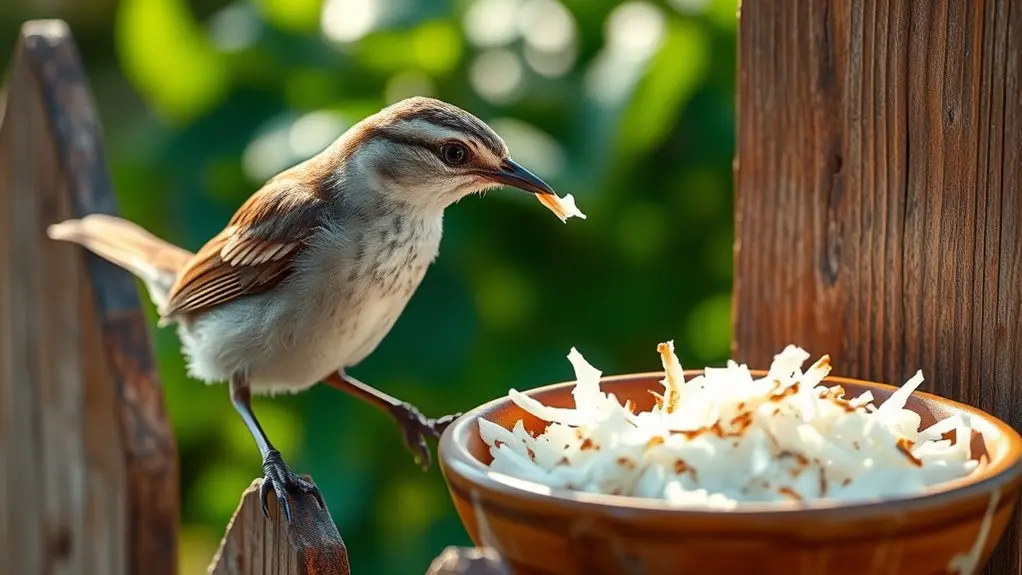
Wondering if you can offer dried coconut flakes or shredded coconut to your bird? Yes, you can, but make sure they’re unsweetened and free from additives to keep your feathered friend safe.
Dried coconut benefits include providing healthy fats and extra energy, which is ideal during colder months. However, keep in mind bird dietary preferences vary, so introduce coconut gradually to monitor their reaction and avoid digestive issues.
Dried coconut offers healthy fats and energy, perfect for winter—introduce slowly to prevent digestive upset.
Moderation is essential; too much dried coconut might cause weight gain. While dried coconut flakes are a convenient treat, fresh coconut generally offers more nutrition.
Follow coconut feeding tips by offering small amounts occasionally to complement your bird’s regular diet without overdoing it. This way, you’ll enjoy the benefits without risking your bird’s health.
Is Dried Coconut Oil Safe and Beneficial for Birds?
You can safely add dried coconut oil to your bird’s diet, but remember to do it in moderation. It provides essential fatty acids and important nutrients like lauric acid.
Just make sure to choose pure, unsweetened oil to avoid any unwanted additives.
Also, keep an eye on your bird for any adverse reactions when you introduce it.
When used properly, dried coconut oil can give your bird a nice energy boost, support its immune system, and help keep its feathers healthy and shiny.
Nutritional Value Overview
Dried coconut offers birds a rich source of healthy fats and essential nutrients like fiber, manganese, and copper that support their energy and overall health.
These coconut health benefits make it a valuable addition to your bird’s diet, providing energy and important minerals.
However, maintaining bird diet balance is essential. Dried coconut should complement, not replace, seeds, fruits, and vegetables.
To keep your bird healthy, follow feeding frequency guidelines by offering dried coconut in moderation, as too much can lead to unwanted weight gain due to its high-fat content.
Always choose plain dried coconut free from additives or sweeteners, ensuring your feathered friend enjoys the natural benefits without risks.
This approach helps you safely incorporate dried coconut into your bird’s nutrition plan.
Safety Considerations For Birds
Although coconut oil comes from dried coconut, it offers unique benefits when included sparingly in your bird’s diet. When choosing coconut varieties, opt for natural, additive-free options to avoid harmful sugars or preservatives.
Keep in mind that birds have different preferences, so introduce dried coconut and its oil gradually, observing how your bird reacts. Due to potential sensitivities, start with small amounts and monitor closely.
Feeding frequency should be limited; coconut oil and dried coconut are supplements, not staples, so they shouldn’t replace a balanced diet of seeds, fruits, and vegetables.
Benefits Of Moderate Use
Including coconut oil and dried coconut in your bird’s diet in moderation can offer several benefits. The coconut texture provides an enjoyable variety that aligns well with bird dietary preferences, encouraging natural foraging behaviors.
Dried coconut supplies healthy fats and fiber, supporting digestion and overall health. When compared to other energy sources, the high-fat content in coconut oil serves as a concentrated energy boost, especially useful in colder months.
This energy source comparison highlights coconut’s importance in maintaining your bird’s health without overloading their diet. Just introduce dried coconut gradually to avoid digestive upset and guarantee it’s free from additives or sweeteners.
What Are the Risks of Feeding Dried Coconut to Birds?
If you feed your bird too much dried coconut, the high fat content can quickly lead to obesity, which affects their overall health.
Nutritional concerns arise because dried coconut lacks some nutrients found in fresh coconut, so it shouldn’t replace a balanced diet.
Birds with digestive sensitivity may suffer gastrointestinal issues if they consume dried coconut in excess, so watch for any signs of discomfort.
Another risk involves ingredient safety: some dried coconut products contain additives or preservatives harmful to birds, so always check labels carefully before offering it.
To protect your bird’s wellbeing, use dried coconut sparingly and as part of a varied diet.
Avoid overfeeding to minimize risks and keep your feathered friend healthy and happy.
How to Offer Dried Coconut to Wild and Pet Birds
When you’re offering dried coconut to birds, it’s best to use small, unsweetened flakes without any additives.
You’ll want to start slowly, introducing the coconut gradually so the birds can get used to it.
Also, it’s important to offer it in moderation since too much fat isn’t great for their diet.
You can try sprinkling some flakes on the ground for birds that feed there, or hang little treats to safely attract wild birds.
It’s a simple way to share a tasty snack with your feathered friends!
Preparing Coconut For Birds
Although dried coconut can be a tasty treat for birds, you need to prepare it carefully to keep them safe and healthy. Start by choosing the right coconut types. Unsweetened and free from additives are best.
Break the dried coconut into small pieces so birds can easily handle and eat them. Keep bird preferences in mind. Some may prefer smaller bits, while others might enjoy slightly larger chunks.
Always offer dried coconut in moderation, adjusting feeding frequency to avoid overfeeding since it’s high in fat. Confirm the coconut is fresh and stored properly to prevent mold, which can harm birds.
Introduce dried coconut gradually, watching how birds react to avoid digestive problems and guarantee they enjoy this nutritious treat safely.
Feeding Methods And Tips
Because dried coconut offers a nutritious treat, you should offer it thoughtfully to both wild and pet birds.
For wild birds, scatter small pieces of unsweetened dried coconut on the ground or mix it with seeds to attract different species, considering their bird preferences.
When feeding pet birds, introduce coconut varieties gradually to watch for reactions and adjust feeding frequency accordingly.
Always choose additive-free dried coconut to keep it safe. Keep feeding frequency moderate since excess dried coconut fat might cause obesity.
Pair the coconut with fresh water to aid hydration and digestion, especially since dried foods can be dehydrating.
Safety And Moderation Guidelines
Offering dried coconut to birds requires careful attention to safety and moderation to keep them healthy. While dried coconut benefits include energy from its high fat content, you shouldn’t let it replace a balanced diet.
Follow these coconut feeding tips to maintain bird diet balance:
- Choose unsweetened, additive-free dried coconut to avoid harmful chemicals.
- Introduce dried coconut gradually and watch for any adverse reactions.
- Provide small pieces to wild birds to prevent overconsumption and encourage natural foraging.
- Always supply fresh water, since dried coconut lacks hydration.
- Use dried coconut as an occasional treat, not a staple food.
How to Store and Prepare Dried Coconut for Bird Feeding
When you prepare dried coconut for your birds, make certain it’s unsweetened and free from additives to keep it healthy.
For storage tips, keep the coconut in an airtight container placed in a cool, dry spot to maintain freshness and prevent spoilage.
Store dried coconut in an airtight container in a cool, dry place to keep it fresh and prevent spoilage.
Avoid cooked dried coconut, as cooking can reduce nutrition and introduce harmful substances.
Use simple preparation methods by cutting the dried coconut into small, manageable pieces, making it easier for your birds to consume.
As for serving suggestions, offer dried coconut in moderation and introduce it gradually to monitor your birds’ reactions and avoid digestive issues.
This careful approach guarantees your feathered friends enjoy a safe, tasty treat that supports their well-being.
How to Combine Dried Coconut With Other Bird Foods
After preparing dried coconut carefully, you can boost your birds’ enjoyment by mixing it with other foods. Using coconut seed blends and dried fruit combinations adds variety and nutrition, making your feeding routine more appealing.
Try feeding technique variations to find what works best for your local bird species. Remember to choose unsweetened, additive-free dried coconut to keep birds healthy.
Here are five ideas to combine dried coconut with other bird foods:
- Mix dried coconut flakes with sunflower hearts for extra energy.
- Blend with mealworms to attract insect-eating birds.
- Combine with mixed seeds to increase texture diversity.
- Add dried fruit combinations for enhanced flavor and vitamins.
- Gradually introduce these blends to monitor birds’ reactions and avoid digestive issues.
Seasonal Benefits of Feeding Birds Dried Coconut
Although natural food sources can dwindle during colder months, feeding birds dried coconut gives them a high-energy boost that helps them stay warm and active.
During seasonal feeding, dried coconut’s fat and fiber content supports birds’ dietary preferences for energy-rich foods, especially as they prepare for migration.
You’ll notice birds increasingly favoring high-fat treats like dried coconut in late summer and fall, fueling their long journeys ahead.
Offering dried coconut alongside other seasonal foods guarantees a balanced diet that meets their changing nutritional needs year-round.
By including dried coconut in your bird feeding routine, you not only help local birds survive harsh winters but also support their health during critical migration preparation periods.
This simple addition benefits both birds and bird watchers alike.
Where to Buy Safe Dried Coconut for Birds
Finding safe dried coconut for birds means choosing trusted sources to make sure the product doesn’t have harmful additives. When looking to buy, focus on stores and brands that care about avian health.
Choosing trusted sources ensures dried coconut for birds is free from harmful additives and supports avian health.
Always check the ingredients to confirm the coconut is unsweetened and free from preservatives. Organic options are best since they avoid pesticides and chemicals, which helps keep your bird healthy.
Here are some reliable places to find safe dried coconut:
- Specialty pet stores with an avian nutrition focus
- Online retailers offering organic dried coconut
- Bird supply shops carrying trusted brands
- Health food stores with organic snack sections
- Direct purchases from reputable bird diet brands
Frequently Asked Questions
Can Dried Coconut Cause Allergies in Birds?
Yes, dried coconut allergies can affect your bird, causing bird health concerns like respiratory distress or skin irritation.
You should watch for coconut digestion issues, as some birds might react differently to dried coconut.
To keep your feathered friend safe, introduce dried coconut gradually in small amounts and avoid additives or sweeteners.
How Often Should Birds Be Given Dried Coconut?
You should give birds dried coconut only once or twice a week to maintain a balanced bird diet variety.
While coconut offers nutritional benefits like healthy fats and fiber, too much can lead to weight gain.
Make sure the dried coconut preparation is unsweetened and free from additives.
Introduce it gradually to see how your bird reacts, and always prioritize fresh fruits and veggies for their daily meals.
Does Dried Coconut Affect Bird Feather Quality?
Like a brush painting vibrant strokes, dried coconut can enhance your bird’s feather health with its nutritional benefits. When you follow proper feeding guidelines, the healthy fats and minerals support shiny, strong feathers.
But don’t overdo it. Too much can cause imbalances that harm feather quality.
Pay attention to how your bird reacts so you can keep their plumage looking its best while enjoying the perks of dried coconut.
Can Baby Birds Eat Dried Coconut Safely?
Yes, baby birds can eat dried coconut safely if you follow proper preparation methods.
Make certain it’s unsweetened and free from additives to avoid harm.
The nutritional benefits include healthy fats that provide energy, but you should offer it in small, safe servings to prevent digestive issues or weight gain.
Introduce dried coconut gradually while monitoring your baby bird’s reaction to verify it suits their diet well.
Is Dried Coconut Good for Exotic Bird Species?
Yes, dried coconut is good for exotic bird species, especially tropical bird species. You’ll find it offers nutritional benefits like healthy fats and fiber that support their diet.
When feeding dried coconut, follow feeding guidelines by offering it in moderation and ensuring it’s unsweetened and additive-free.
Keep an eye on your bird’s reaction to make sure they tolerate it well. This way, you can safely include dried coconut as a tasty treat.
Conclusion
You now know that dried coconut can be a tasty, nutritious treat for many birds, especially parrots and cockatiels. Did you know that up to 60% of a bird’s diet can safely include coconut without health risks?
Just remember to offer it in moderation and choose unsweetened, preservative-free options. By adding dried coconut to their diet, you’re giving your feathered friends a healthy boost they’ll love year-round.