
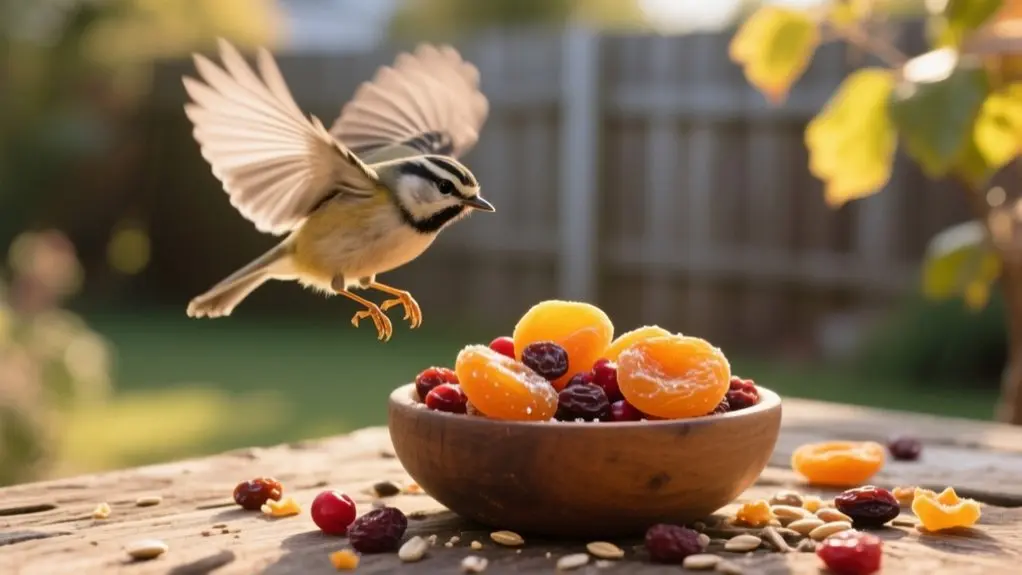
You can safely feed birds dried fruit, but only if you pick natural, additive-free options like raisins or dried apples. Birds love the sweet, concentrated flavors because it gives them quick energy, especially when fresh food is scarce.
Just keep dried fruit to about 10-15% of their diet and avoid varieties with added sugars or preservatives that can harm them. There’s more to know about how to offer it properly and watch your feathered friends’ health.
What Is Dried Fruit?
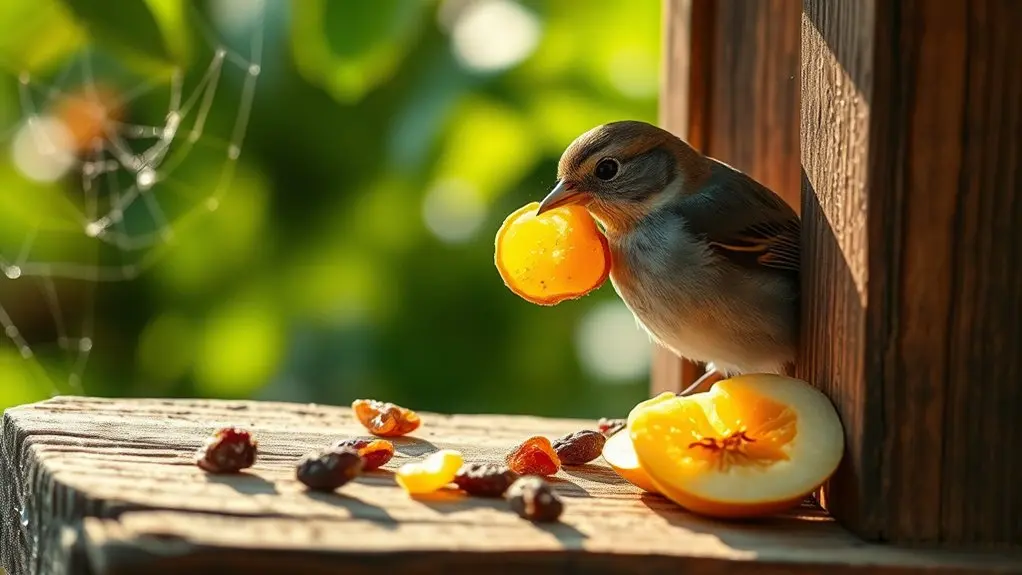
Dried fruit comes from fresh fruit that’s had most of its moisture removed, which makes its natural sugars and nutrients more concentrated. When you choose dried fruit, you’re picking options like raisins, cranberries, apricots, or apples. These are popular varieties among bird lovers.
You’ll appreciate that dried fruit usually lasts much longer than fresh fruit, cutting down on spoilage and mold worries.
However, it’s essential to select dried fruit without added sugars, preservatives, or sulfites to keep birds healthy.
You can offer dried fruit in different ways, such as scattering it on the ground or mixing it into homemade bird feed blends.
Understanding what dried fruit is helps you provide safe, nutritious treats for the birds you want to attract and care for.
Why Do Birds Like Dried Fruit?
Birds are drawn to the sweet, concentrated flavors found in dried fruit, which offer a quick energy boost, especially when fresh food is hard to find.
You’ll notice that birds prefer dried fruit like raisins and cranberries because these are easier to eat and digest compared to fresh fruit.
The drying process locks in essential vitamins and minerals while stopping moisture that could cause mold, keeping the fruit safe for birds.
When you provide dried fruit, you encourage natural foraging behaviors and attract a variety of bird species.
Offering dried fruit helps diversify their diet, meeting the needs of many fruit-loving birds.
Why Dried Fruit Is Good for Birds
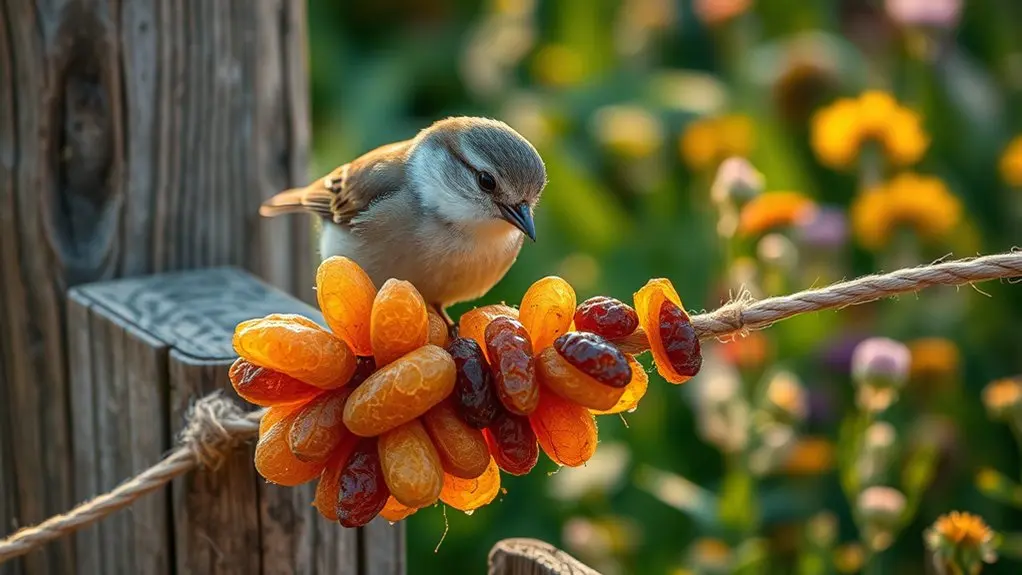
You’ll find that dried fruit gives birds important nutrients and the energy they need to stay healthy. It’s a great way to keep them fueled throughout the day.
And here’s another bonus—dried fruit is less likely to grow mold compared to fresh fruit, so it’s a safer option for your feathered friends.
On top of that, offering dried fruit can attract a wide variety of bird species to your feeders, making your backyard even more lively and fun to watch.
Nutritional Benefits Explained
Although fresh fruit offers many benefits, dried fruit packs a concentrated punch of essential vitamins and minerals that can boost your bird’s health and energy.
Because the dehydration process removes water, dried fruit retains antioxidants that help strengthen your bird’s immune system.
You’ll notice birds often prefer dried fruit like raisins and cranberries, which are tastier and encourage them to get a wider range of nutrients.
Plus, dried fruit introduces variety to their diet, attracting more bird species to your feeders.
Since dried fruit contains less moisture, it reduces the chance of spoilage, making it a safer choice overall.
Offering dried fruit can be a simple way to support your feathered friends’ nutrition and keep them active and healthy.
Mold Prevention Advantage
Since dried fruit contains less moisture than fresh fruit, it naturally resists mold growth, making it a safer option to offer your feathered visitors.
The lower moisture content in dried fruit means it spoils less quickly and limits the spread of harmful fungal spores that can affect birds’ health.
By providing dried fruit, you help maintain a cleaner feeding area, which reduces the frequency of cleaning and lowers disease risks.
Many birds, especially frugivores, benefit from the concentrated nutrients and energy in dried fruit without the worry of mold contamination.
Just keep an eye on the fruit and replace it regularly to guarantee your feathered friends enjoy safe, nutritious treats every time you feed them.
Attracting Diverse Species
When you offer dried fruit in your yard, you invite a wider variety of bird species to visit. Birds like orioles, tanagers, and robins are naturally drawn to dried fruit such as raisins and cranberries.
This not only boosts your backyard’s bird diversity but also encourages natural foraging behavior, which benefits their health.
Dried fruit provides essential nutrients, especially when fresh options are scarce during colder months. Plus, it’s less prone to spoilage and mold, making it a safer choice for feeding.
By incorporating dried fruit into your bird mixes, you create a lively, colorful environment that attracts more species and supports their well-being.
You’ll enjoy watching a richer array of birds right outside your window.
The Hidden Risks of Commercial Dried Fruit
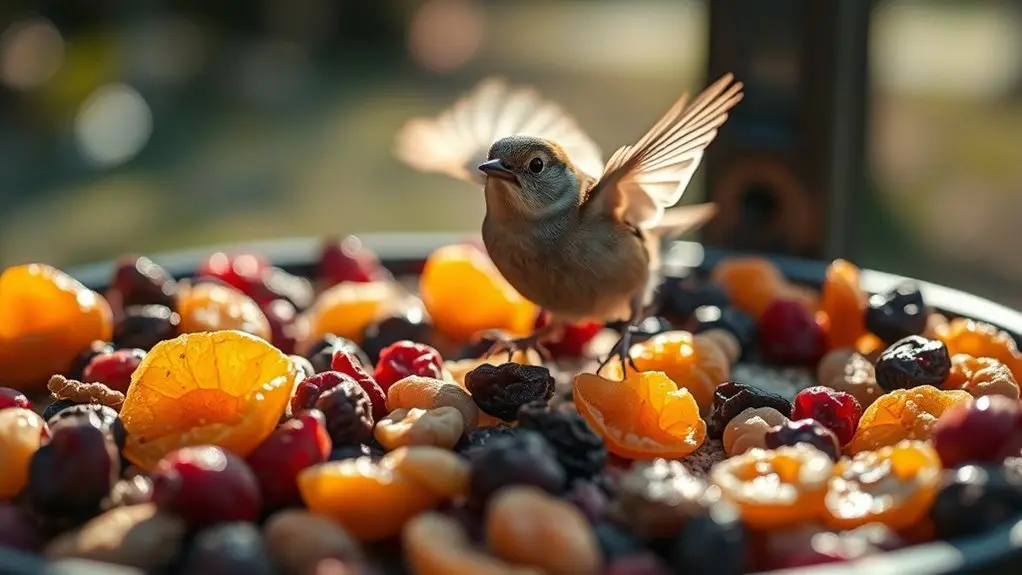
If you choose commercial dried fruit for your bird, be aware that many products contain added sugars and preservatives that can harm their health.
Dried fruit often has concentrated sugar levels because water is removed, which can lead to obesity and related issues if given too much.
Some brands use sulfites as preservatives, and these can be toxic to birds, so you should avoid them entirely.
Also, the drying process can reduce the fruit’s nutritional value, making it less beneficial than fresh or properly dried fruit without additives.
Always check labels carefully to guarantee the dried fruit contains real fruit without artificial flavorings or harmful additives.
Staying vigilant helps protect your bird while still offering a tasty treat.
How Sugars and Preservatives Impact Birds
Although dried fruits offer valuable nutrients and energy, the added sugars and preservatives in many commercial varieties can negatively affect your bird’s health. Added sugar in these fruits can cause obesity, disrupting your bird’s natural diet and leading to serious health problems.
Preservatives like sulfites may trigger allergic reactions or digestive issues, especially in sensitive bird species. To protect your feathered friends, avoid dried fruits with these additives. Instead, choose natural, unsweetened dried fruits to provide safe nourishment.
By doing so, you help maintain their well-being and support their nutritional needs without risking harm from harmful substances.
Common Myths About Birds Eating Dried Fruit
Because dried fruit often gets a bad reputation, you might hesitate to offer it to your bird. However, many common myths about birds eating dried fruit don’t hold up. For example, dried fruit isn’t unhealthy when it’s free from added sugars and preservatives. In fact, it provides essential nutrients and energy-rich sugars.
Dried fruit without added sugars offers essential nutrients and energy, debunking common myths about feeding it to birds.
You might worry it causes dehydration, but dried fruit retains moisture, helping with hydration when your bird has fresh water nearby.
Keep in mind, not all birds benefit from dried fruit equally; frugivores thrive on it, while others prefer seeds or nuts.
Also, dried fruit shouldn’t be your bird’s main diet but rather a nutritious supplement to a balanced mix of seeds, vegetables, and other foods.
Choosing Safe Dried Fruit Options for Birds
When you’re picking out dried fruit for your birds, it’s best to go with options made from real fruit ingredients—no added sugars.
Birds really don’t need those extra sweeteners, and they can actually be harmful to their health. So, always take a moment to check the label carefully.
You want to make sure the fruit is natural and safe for them to eat.
Real Fruit Ingredients
To keep your bird healthy, choose dried fruits made from real fruit without added sugars, preservatives, or artificial flavorings. These natural ingredients guarantee your feathered friend gets essential nutrients safely.
When selecting dried fruits, focus on:
- High fruit content on the label, ensuring natural nutrition.
- Options like raisins, cranberries, and dried apples, which are nutrient-rich and less prone to mold.
- Avoiding dried fruits with sulfites, as these preservatives can be toxic to birds.
For added safety, soak small dried fruits such as cranberries before offering them, making them easier to digest.
Sticking to dried fruits with genuine fruit ingredients helps you provide a wholesome treat that supports your bird’s well-being without unnecessary risks.
Avoid Added Sugars
Choosing dried fruits made from real fruit is a great start, but you also need to watch out for added sugars. Excess sugar in dried fruit can cause serious health problems for birds, like obesity and diabetes.
Always check labels to make sure the dried fruit contains no artificial preservatives or flavorings that might harm your bird’s health. Stick to options like raisins, cranberries, and apples, which offer essential nutrients without extra sugar.
Avoid dried fruit that looks overly sweetened or processed, as this can upset your bird’s balanced diet.
Introducing Dried Fruit Into a Bird’s Diet
Although dried fruit offers many benefits for birds, you should introduce it carefully to avoid any health risks. Start by selecting dried fruit without added sugars or preservatives, such as raisins, cranberries, or dried apples.
Next, cut the dried fruit into small pieces to make it easier for birds to eat and digest. You can also mix these pieces into their regular birdseed to encourage natural foraging behaviors.
Keep these steps in mind:
- Choose plain dried fruit free from harmful additives.
- Prepare small, manageable pieces to prevent choking.
- Monitor feeding areas for spoilage and clean regularly.
How Much Dried Fruit to Feed Birds
Feeding birds dried fruit can boost their diet with valuable nutrients, but you should limit it to around 10-15% of their total intake to avoid overloading them with sugar.
Dried fruit offers essential vitamins and minerals, serving as a concentrated energy source. However, it’s vital to make certain the dried fruit you provide contains no added sugars, preservatives, or artificial flavorings to keep its nutritional benefits intact.
You might want to soak dried fruit in water before feeding, making it easier and more appealing for birds to eat.
Keep an eye on how much dried fruit your birds consume and adjust accordingly, making sure it complements rather than replaces their regular diet.
Moderation helps maintain their health and energy balance effectively.
Effective Ways to Feed Dried Fruit to Wild Birds
When you’re feeding dried fruit to wild birds, it’s a good idea to pick feeders that can hold the fruit securely.
You can also scatter the fruit on the ground if you want to attract ground-feeding birds.
Before you put the fruit out, cut it into smaller, manageable pieces.
And make sure to place your feeders in clean, safe spots where the birds can easily find them.
Oh, and don’t forget to check and clean the feeders regularly.
This helps keep the fruit fresh and stops mold from growing.
Feeder Types for Fruit
If you want to attract a variety of wild birds with dried fruit, choosing the right feeder type is key. Different feeder types for fruit help you present dried fruit in ways that appeal to various bird species.
Here are three effective options to take into account:
- Platform or tray feeders let birds easily access dried fruit placed openly. This invites a wide range of visitors.
- Repurpose suet cages by filling them with larger chunks of dried fruit. They’re perfect for birds that prefer clinging while feeding.
- Scatter dried fruit directly on the ground to attract ground-feeding birds. This encourages natural foraging behavior.
Remember to keep feeders clean and check for mold regularly to provide a safe feeding environment.
These feeder types for fruit will help you enjoy more bird activity around your yard.
Preparing Dried Fruit
Choosing the right feeder type sets the stage, but how you prepare dried fruit makes a big difference in attracting and helping wild birds enjoy their snack. When preparing dried fruit, soak it briefly in water to soften it, making it easier for birds to eat.
Dried fruits like raisins and cranberries are ideal since they resist mold better than fresh fruit. Scatter the softened fruit on platform or tray feeders to attract ground-feeding species.
You can also mix dried fruit into homemade bird mixes to boost nutritional variety and draw more bird species.
Keep an eye on the fruit and replace it regularly to prevent spoilage, ensuring the health and safety of your feathered visitors.
Preparing dried fruit properly helps birds enjoy their treats safely and consistently.
Placement And Hygiene
Although dried fruit can be a delightful treat for wild birds, placing it correctly and keeping feeding areas clean are essential to guarantee their safety and enjoyment.
Proper placement prevents spoilage and attracts the right visitors. Here’s what you should do:
- Use feeders designed for dried fruit and place them in sheltered areas to protect the fruit from rain and harsh weather.
- Regularly clean feeders with a mild disinfectant to remove mold and bacteria, then rinse thoroughly.
- Avoid overfilling feeders to prevent waste and discourage unwanted wildlife.
You can also scatter small amounts on dry ground for ground-feeding birds.
How to Watch Your Birds’ Health When Feeding Dried Fruit
When you introduce dried fruit to your birds, keep a close eye on their health to guarantee they benefit from this treat without any issues. Since dried fruit is calorie-dense, monitor your birds for signs of obesity to prevent unhealthy weight gain.
Make sure the dried fruit you offer contains no added sugars, preservatives, or sulfites, as these can harm your birds. Gradually add dried fruit to their diet, watching for any digestive upset or allergic reactions.
Pay attention to changes in your birds’ droppings, as shifts in color or consistency may signal digestive problems.
To keep your feathered friends healthy, don’t hesitate to consult an avian veterinarian for personalized guidance on safely including dried fruit in their diet.
Alternatives to Dried Fruit for Bird Feeding
Since dried fruit can be high in sugars and calories, you might want to offer your birds fresh fruits like apples, berries, and bananas instead.
Fresh fruit provides hydration and essential nutrients, making it a healthier choice.
You can also diversify their diet by including vegetables and nuts. Here are three great alternatives to dried fruit for bird feeding:
- Leafy greens, carrots, and sweet potatoes offer varied nutrition and are often more accepted by birds.
- Nut mixtures with unsalted seeds and nuts provide high-energy options without added sugars.
- Homemade bird mixes combining whole grains, seeds, and fresh or frozen fruits create a balanced diet.
Using fresh fruit in foraging toys also encourages natural behaviors, keeping your birds both healthy and engaged.
Frequently Asked Questions
Can Dried Fruit Cause Allergies in Certain Bird Species?
Yes, dried fruit can cause allergy risks in certain bird species. You should watch for signs like feather plucking, digestive issues, or behavior changes when introducing dried fruit.
Birds with sensitive digestive systems are more prone to allergic reactions, especially if the dried fruit contains added sugars or preservatives.
You need to choose natural, additive-free dried fruit and monitor your bird closely to catch any allergy risks early and keep them healthy.
How Does Dried Fruit Affect a Bird’s Digestion?
You’d swear dried fruit supercharges a bird’s digestion like a turbo boost! Its concentrated sugars provide quick energy, while digestive enzymes break it down efficiently.
The lack of moisture means less chance for mold, easing digestive stress.
But don’t go overboard. Too much sugar can overwhelm those enzymes, causing tummy troubles.
In moderation, dried fruit supports gut health and keeps your feathered friend happily digesting with ease.
Are There Specific Bird Species That Should Avoid Dried Fruit?
Yes, you should avoid giving dried fruit to certain species due to species sensitivity.
Finches and budgerigars, for example, have sensitive digestive systems and may experience gastrointestinal issues.
Seed-eaters like canaries won’t get the nutrients they need from dried fruit, risking dietary imbalances.
Also, cockatiels and lovebirds are prone to obesity, so too much dried fruit can harm their health.
Always consider your bird’s species before offering dried fruit.
Can Dried Fruit Replace Fresh Fruit in a Bird’s Diet?
No, dried fruit can’t replace fresh fruit in a bird’s diet if you want to maintain proper nutritional balance.
While dried fruit offers essential nutrients and attracts birds, it has higher sugar and lacks hydration.
You should provide both fresh and dried fruit to guarantee birds get a variety of vitamins, minerals, and moisture.
This mix supports their natural foraging and keeps their diet well-rounded and healthy.
What Are the Signs of Dried Fruit Poisoning in Birds?
About 20% of bird poisoning cases involve toxic ingredients in dried fruit. You’ll notice signs like lethargy, lack of appetite, and diarrhea if your bird is affected.
Watch for abnormal droppings and dehydration symptoms such as excessive drinking or dry feathers.
Neurological issues like tremors or seizures might also show up if harmful additives are present.
If you spot these signs, get veterinary help immediately to protect your bird’s health.
Conclusion
If you think feeding dried fruit to birds will turn your backyard into a feathery paradise overnight, think again! While birds do love the sweet treat, too much or the wrong kind can send their health spiraling faster than a hummingbird on espresso.
So, keep it balanced and watch closely. Your feathered friends depend on you to be their fruit fairy godparent, not their sugar overlord. Happy feeding, and may your garden stay chirpy and bright!