
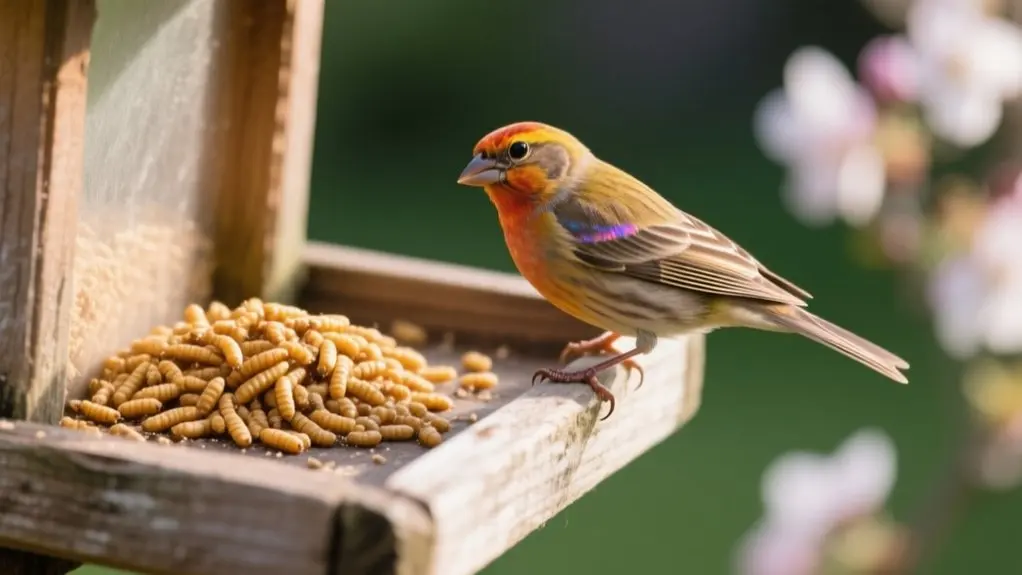
You can safely feed dried mealworms to birds as they offer a high-protein, energy-rich snack that supports their needs without causing digestive issues. Birds handle dried mealworms well, and there’s no need to soak them first.
While some species prefer live mealworms, many accept dried ones just fine. Portion control helps keep feeding balanced, and dried mealworms won’t disrupt breeding or chick health.
Explore further to understand their benefits and best feeding practices.
What Are Dried Mealworms And Why Feed Them?
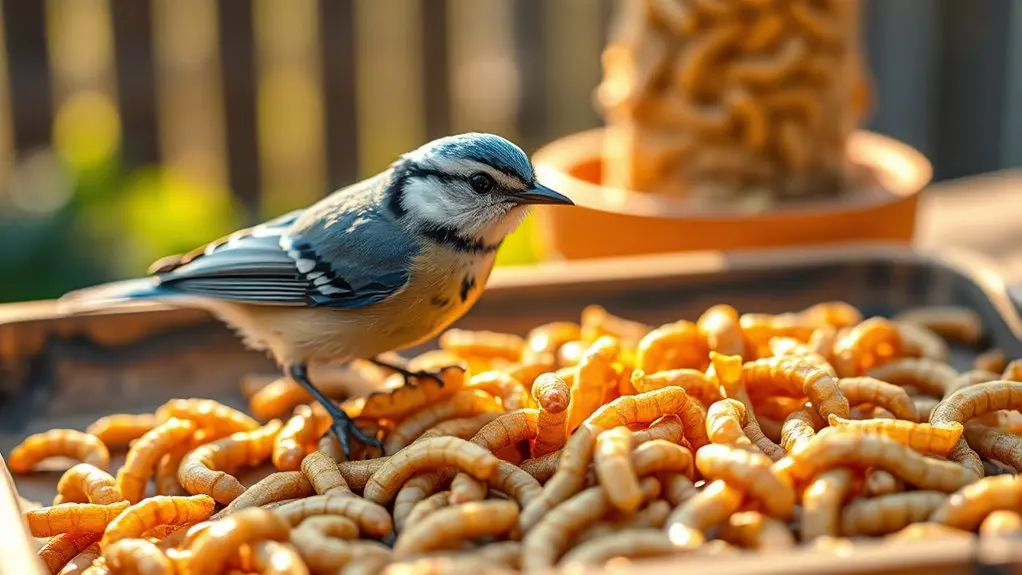
Dried mealworms are the dehydrated larvae of mealworm beetles, packed with about 53% protein and 28% fat. This makes them a nutritious treat for many birds.
Dried mealworms offer a protein-rich, nutritious snack perfect for supporting many bird species.
When you’re feeding birds, dried mealworms provide a convenient, long-lasting source of crucial nutrition, especially for insectivorous species like bluebirds and chickadees. You can even soak dried mealworms in water to rehydrate them, making them more appealing and easier for birds to eat.
Incorporating dried mealworms into a bird’s diet supports their energy needs, particularly during breeding or molting seasons.
However, remember that dried mealworms should complement, not replace, other foods to guarantee birds receive a balanced diet.
Are Dried Mealworms Safe For Wild Birds To Eat?
How safe are mealworms for wild birds to eat? You’ll be glad to know dried mealworms are completely safe and widely favored by birds like bluebirds, chickadees, and wrens.
Their rich nutrition, about 53% protein and 28% fat, makes them an excellent energy source, especially during breeding seasons.
Despite some concerns, there’s no scientific evidence that dried mealworms cause digestive compaction. Birds’ digestive systems handle them well without needing rehydration.
Offering dried mealworms provides a convenient, cost-effective way to support wild birds’ dietary needs.
To maximize benefits, consider mixing dried mealworms with live ones for variety, but rest assured, dried mealworms alone are a safe and nutritious choice that can help your backyard birds thrive.
How Do Dried Mealworms Compare Nutritionally To Live Ones?
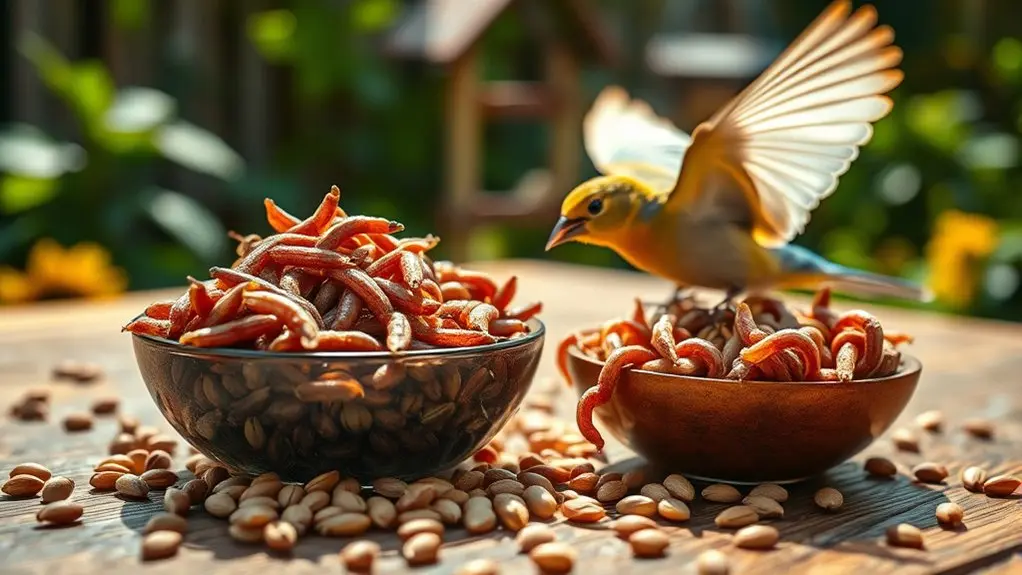
Although both dried and live mealworms provide valuable nutrition, their compositions differ markedly, affecting how they benefit birds.
Dried mealworms contain about 5% moisture, 28% fat, and 53% protein, making them nutrient-dense but low in hydration.
Dried mealworms offer high protein and fat with minimal moisture, delivering concentrated nutrition for birds.
In contrast, live mealworms have 62% moisture, 13% fat, and 20% protein, offering less concentrated nutritional value but providing essential hydration. This makes live mealworms especially suitable for young birds that need moisture alongside nutrients.
While dried mealworms are convenient and appeal to birds requiring higher fat, live mealworms deliver fresher nutrients and a natural feeding experience.
To maximize benefits, you might mix both types, ensuring birds get a balanced intake of nutrients and hydration from their meals.
Can Dried Mealworms Cause Digestive Problems In Birds?
When you offer mealworms in their dried form, you don’t need to worry about digestive issues in birds. Their digestive system is well-equipped to handle dried mealworms, safely processing even the hard parts without trouble.
Here’s why dried mealworms are safe for birds:
- Birds naturally form indigestible materials, like exoskeletons, into pellets they later regurgitate, preventing stomach compaction.
- Their digestive system efficiently manages dry foods, so rehydration of dried mealworms isn’t necessary.
- Studies confirm birds thrive on a varied diet that includes dried mealworms without digestive problems.
Do Birds Need Dried Mealworms Rehydrated Before Feeding?
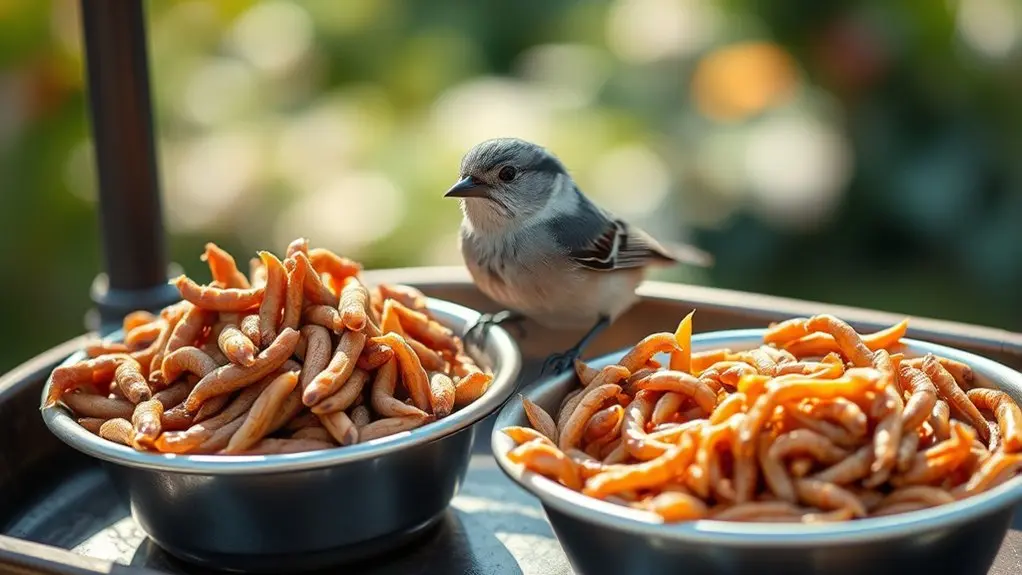
You don’t need to rehydrate dried mealworms before feeding them to birds. Their digestive systems handle the dry texture just fine.
The natural digestion process actually rehydrates the mealworms internally, so birds can absorb the nutrients effectively.
Plus, dried mealworms are a super convenient, high-protein food option that you can offer without any extra prep.
It’s an easy way to give your feathered friends a nutritious snack!
No Rehydration Required
Since birds can digest dried mealworms without any issues, you don’t need to rehydrate them before feeding. Birds naturally manage the rehydration process internally during digestion, so pre-soaking dried mealworms is unnecessary.
Many birds, especially songbirds, are adapted to consume dry foods like seeds and dried mealworms with ease.
Here’s why you can feed dried mealworms directly:
- Dried mealworms provide a convenient protein source without extra preparation.
- Birds’ digestive systems handle dryness well, ensuring proper nutrient absorption.
- Research confirms dried mealworms don’t cause dehydration concerns in birds.
Natural Digestion Process
Although dried mealworms contain only about 5% moisture compared to 62% in live ones, birds easily digest them without needing you to rehydrate them first. Birds’ digestive systems naturally rehydrate dried mealworms during digestion, so you don’t have to worry about their moisture content.
Their systems are designed to handle dry foods like seeds and dried insects efficiently. Species like chickadees and bluebirds thrive on dried mealworms without any hydration issues.
| Aspect | Details |
|---|---|
| Moisture Content | 5% in dried vs. 62% in live |
| Digestive Ability | Birds naturally rehydrate food |
| Species Examples | Chickadees, Bluebirds |
| Hydration Need | No pre-feeding rehydration needed |
You can confidently feed dried mealworms knowing birds digest them well as is.
Dry Mealworm Benefits
When feeding birds dried mealworms, you don’t need to rehydrate them beforehand because birds’ digestive systems handle their dry texture naturally.
Dried mealworms are an excellent bird food, offering a high protein content that makes them a valuable source of nutrition.
Here are three key benefits of feeding dried mealworms:
- Convenience: You can store and serve dried mealworms easily without worrying about spoilage.
- Nutrition: With about 53% protein, they support birds’ energy and muscle development effectively.
- Digestibility: Birds can digest dried mealworms well despite their low moisture content, so rehydration isn’t necessary.
Incorporating dried mealworms into your bird feeding routine adds variety and boosts nutrition without extra prep work.
Which Birds Prefer Live Or Dried Mealworms?
You’ll notice that birds like bluebirds and thrushes often prefer live mealworms because they’re fresh and moving around.
Chickadees and titmice? Well, they’re not too picky and don’t mind whether the mealworms are live or dried.
Bird Preferences Overview
Birds show clear preferences between live and dried mealworms based on their species and feeding habits. Understanding these bird preferences helps you provide the best food options to attract different species.
- Many birds like bluebirds, chickadees, thrushes, and titmice prefer live mealworms because their movement signals nutritional freshness.
- Robins and sparrows often eat dried mealworms, especially when live ones aren’t available, showing some flexibility in their diet.
- Wrens and nuthatches accept both live and dried mealworms, adapting easily to what you offer.
While live mealworms generally appeal more due to their freshness, dried mealworms remain a valuable supplement.
You can cater to various birds by offering both types to meet their preferences.
Live Vs. Dried
Understanding which mealworm type appeals more to different bird species can help you tailor your feeding strategy. Many birds, like bluebirds and chickadees, prefer live mealworms because their movement and moisture attract them more effectively than dried mealworms.
However, dried mealworms remain a convenient, cost-effective option and pose no health risks when offered as a supplemental food source. Birds such as robins and sparrows will eat both, though they often prioritize live ones.
To make dried mealworms more appealing, you can soak them in lukewarm water, increasing their palatability.
While live mealworms are generally favored, incorporating dried mealworms guarantees you provide a reliable food source without compromising bird health or your feeding routine’s convenience.
How Should You Offer Dried Mealworms To Backyard Birds?
Offering dried mealworms to backyard birds is best done using platform feeders or shallow dishes, which keep the mealworms contained and easy for birds to access.
Before you feed mealworms, consider rehydrating them; soaking in lukewarm water for a few minutes improves texture and appeal.
Here’s how to offer dried mealworms safely:
- Use a mealworm feeder or shallow dish placed near shrubs or trees to provide shelter and reduce stress for birds.
- Avoid scattering dried mealworms on the ground to prevent waste and deter unwanted wildlife.
- Provide dried mealworms as a supplement to a balanced diet, ensuring birds get diverse nutrition.
How Much Dried Mealworm Should You Feed At Once?
Although dried mealworms are a nutritious treat, you should limit each feeding to about 10-15 worms to avoid overwhelming the birds’ diet. Controlling portion size guarantees birds enjoy a balanced diet without overconsumption.
Offer dried mealworms as a supplement, not a main food source. Use a shallow dish or platform feeder to manage portions and reduce waste. Monitor the feeding area and adjust the amount based on bird activity. If mealworms disappear quickly, you can increase the portion gradually.
Avoid excessive feeding to prevent nutritional imbalances or health issues over time.
| Feeding Scenario | Recommended Portion Size |
|---|---|
| Single bird visit | 10-15 dried mealworms |
| Multiple birds present | Increase slightly |
| Waste prevention | Use shallow dish |
Do Mealworms Affect Bird Breeding Or Chick Health?
You might be wondering if feeding dried mealworms has any impact on bird breeding or the health of their chicks.
Well, here’s the good news—birds are pretty smart about what they feed their young. They naturally regulate their diet to make sure the chicks get balanced nutrition.
Breeding Behavior Impact
While mealworms provide extra nutrition, they don’t affect bird breeding behaviors, which depend mainly on day length rather than food availability. When you offer dried mealworms to breeding birds, you’re simply supplementing their diet, not altering their natural rhythms.
Here’s what you should know:
- Breeding birds regulate their feeding behaviors naturally and won’t overconsume dried mealworms, as they need a varied diet for themselves and their chicks.
- Birds digest indigestible material efficiently; concerns about mealworms causing stomach issues have been debunked.
- Feeding dried mealworms supports nutrition but doesn’t trigger or delay breeding since environmental cues drive those behaviors.
Chick Health Concerns
Because dried mealworms fit well into a varied diet, they don’t pose health risks to chicks or interfere with their development. When you include dried mealworms as a supplement, you provide essential proteins and nutrients that support chick health without overwhelming their digestive systems.
Studies show no evidence that mealworms cause mortality or nutritional deficiencies in young birds. Since birds naturally balance their nutritional needs by eating diverse foods, overfeeding dried mealworms is unlikely.
Their digestive systems process mealworms easily, preventing compaction or other issues. Overall, dried mealworms are safe for birds and can enhance the diet of breeding pairs and their chicks, ensuring proper growth and health without adverse effects.
Including them thoughtfully helps support chick health reliably and safely.
Parental Feeding Regulation
Although some worry that feeding birds dried mealworms might disrupt their breeding or harm chick health, research shows these concerns are unfounded. Birds naturally regulate their diets, including dried mealworms, ensuring their nutritional intake stays balanced.
When it comes to parental feeding regulation, here’s what you need to know:
- Birds like chickadees provide thousands of caterpillars to their chicks, making overfeeding with dried mealworms nearly impossible.
- Dried mealworms serve as a supplementary bird food, complementing rather than replacing the varied diet essential for chick growth.
- Breeding behaviors depend largely on day length, not food availability, so dried mealworms don’t influence breeding rates or chick health.
You can confidently offer dried mealworms without worrying about negative effects on breeding or chick development.
What Are Common Myths About Feeding Mealworms To Birds?
Why do so many myths surround feeding dried mealworms to birds? One common misconception is that dried mealworms cause digestive compaction. In reality, birds naturally regurgitate indigestible material as pellets, so mealworms don’t harm their digestion.
Many believe dried mealworms cause digestive issues, but birds safely regurgitate indigestible parts as pellets.
Another myth claims mealworms trigger excessive breeding behaviors, but breeding is mainly driven by environmental factors like day length, not food source availability.
Some think mealworms must be rehydrated before feeding, yet birds can digest them perfectly dry.
Others worry that feeding mealworms leads to chick mortality or depletes local bird populations; however, mealworms are just one part of a varied diet, and they don’t influence population dynamics.
Understanding these myths helps you feed birds confidently and safely.
How To Choose And Store High-Quality Dried Mealworms
Now that you understand the common myths about feeding dried mealworms to birds, it’s important to focus on selecting and storing high-quality mealworms to keep your feathered visitors healthy.
When choosing dried mealworms, look for a high protein content (around 53%) and low moisture (about 5%) to guarantee ideal nutrition. Always buy from reputable suppliers to avoid contamination.
Here are three tips to help you:
- Check packaging for expiration dates and quality assurance labels to ensure freshness.
- Store dried mealworms in airtight containers in a cool, dry place to prevent moisture absorption.
- Before feeding, rehydrate the mealworms by soaking them in lukewarm water to make them more appealing.
What Other Foods Complement Mealworms In A Bird’s Diet?
Since birds thrive on variety, you should complement dried mealworms with other nutritious foods like seeds, fruits, and natural insects to meet their dietary needs and keep them coming back to your feeder.
Adding suet pellets, peanuts, and seeds provides essential nutrients and energy to balance the mealworms’ protein and fat content.
Fresh fruits such as berries, apples, and oranges enrich a bird’s diet with vitamins while attracting diverse species.
Including natural insects like crickets or grasshoppers alongside mealworms offers additional protein sources birds naturally seek.
Mixing sunflower or nyjer seeds introduces healthy fats, supporting overall nutrition.
Offering this combination of foods encourages healthy feeding habits and guarantees your bird enjoys a balanced diet throughout the seasons.
Frequently Asked Questions
Can Dried Mealworms Attract Unwanted Pests or Predators?
Yes, dried mealworms can attract unwanted pests or predators if you’re not careful. To prevent this, focus on proper dried mealworm storage and use covered feeders when attracting backyard birds.
Follow pest prevention tips like cleaning feeding areas regularly and controlling feeding frequency recommendations to guarantee mealworms don’t linger and draw rodents or larger animals.
Are Dried Mealworms Safe for Pet Birds Like Parrots or Finches?
Yes, dried mealworms are safe for pet birds like parrots and finches. You’ll enjoy their nutritional benefits, especially the high protein content, which supports your bird’s health.
However, you should manage feeding frequency to avoid overfeeding. Since bird preferences vary, watch how your pet responds.
If they don’t like mealworms, consider alternative options like fresh insects or protein-rich pellets to keep their diet balanced and exciting.
How Long Can Dried Mealworms Be Left Outside for Birds?
You shouldn’t leave dried mealworms out for ages like they’re a never-ending buffet! The ideal feeding times are usually 4-6 hours in cool, dry weather to keep their nutritional value intact.
If moisture sneaks in, cut that down to about 30 minutes to avoid mold. Always consider weather conditions.
Extreme heat or sunlight can ruin their quality fast. Refresh them regularly so your feathered friends get the best, safest snack possible.
Can Feeding Dried Mealworms Cause Allergies in Birds?
You won’t find evidence that feeding dried mealworms causes allergy symptoms in bird species. Birds’ digestive systems handle these insects well, and their nutritional impact is mostly positive, offering protein and fat.
However, if you notice any unusual behavior or health changes, reduce feeding frequency and observe closely.
Generally, dried mealworms are safe, and allergic reactions in birds are extremely rare, making them a reliable food choice for your feathered friends.
Do Dried Mealworms Need Special Packaging for Outdoor Feeders?
Yes, dried mealworms need special storage when used in outdoor feeders. You’ll want packaging that guarantees moisture control to keep them dry and fresh.
Look for containers offering UV protection to prevent nutrient loss from sunlight.
Pest prevention is also essential, so airtight or covered feeders help keep rodents and insects away.
Using terracotta dishes with hardboard covers or specially designed feeders can make a big difference in maintaining mealworm quality outdoors.
Conclusion
Picture a lively garden where birds enthusiastically peck at dried mealworms, their tiny wings fluttering with delight. You can safely offer these nutritious treats without worry. They’re a convenient, protein-packed snack that supports healthy feathers and happy chicks.
Just remember to store them right and serve alongside varied foods for balanced meals. With dried mealworms in your feeding routine, you’re inviting vibrant life and joyful songs to your outdoor space every day.