
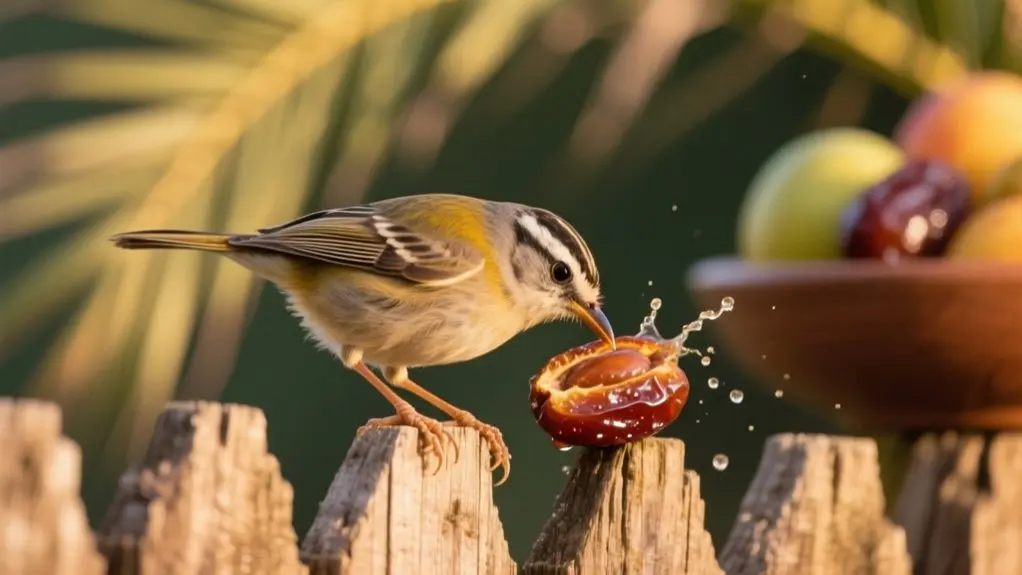
You can safely feed dates to many bird species, but always remove the pits to avoid choking hazards. Dates offer fiber, potassium, and antioxidants, giving your bird a nutritious energy boost.
Just don’t overdo it. Too many dates can cause digestive upset and weight gain because of their high sugar content. Serve them in small, manageable pieces and watch for any signs of discomfort.
Keep exploring to discover creative feeding tips and healthier alternatives.
Can Birds Eat Dates Safely?
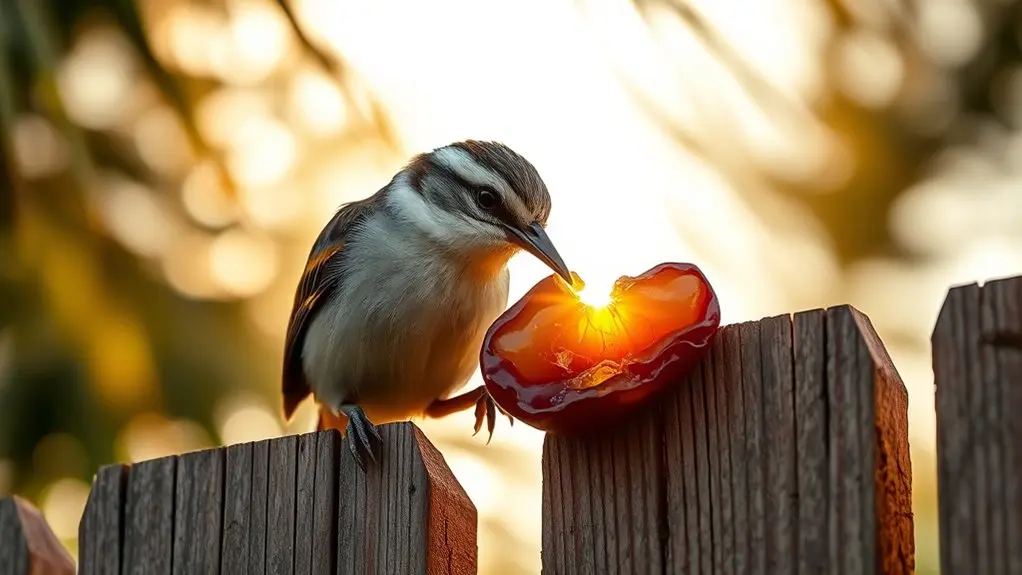
Many bird species can safely enjoy dates as a nutritious treat, but you should always remove the pits first to prevent choking. When you wonder, “can birds eat dates,” the answer is yes. They provide fiber, potassium, and antioxidants that benefit your feathered friends.
However, feed them pitted dates in small amounts to avoid digestive upset and excessive sugar intake. Fresh dates are better than dried because they contain less sugar, reducing the risk of obesity.
Remember to introduce dates gradually into your bird’s diet to monitor for any adverse reactions. Dates should complement a balanced diet and never replace primary food sources.
Why Remove Date Pits Before Feeding
Because date pits present several risks to birds, you should always remove them before feeding. Date pits pose a choking hazard, especially for smaller birds, making them unsafe as bird food in their whole form.
Their hard texture can also damage your bird’s beak if it tries to crack them open. Furthermore, birds may struggle to digest whole date pits, potentially causing digestive issues.
By removing the pits, you eliminate these dangers and let your bird safely enjoy the sweet, nutritious flesh of the dates. Feeding dates without pits guarantees safer consumption and promotes better overall health for your feathered friend.
What Nutrients Do Dates Provide Birds?
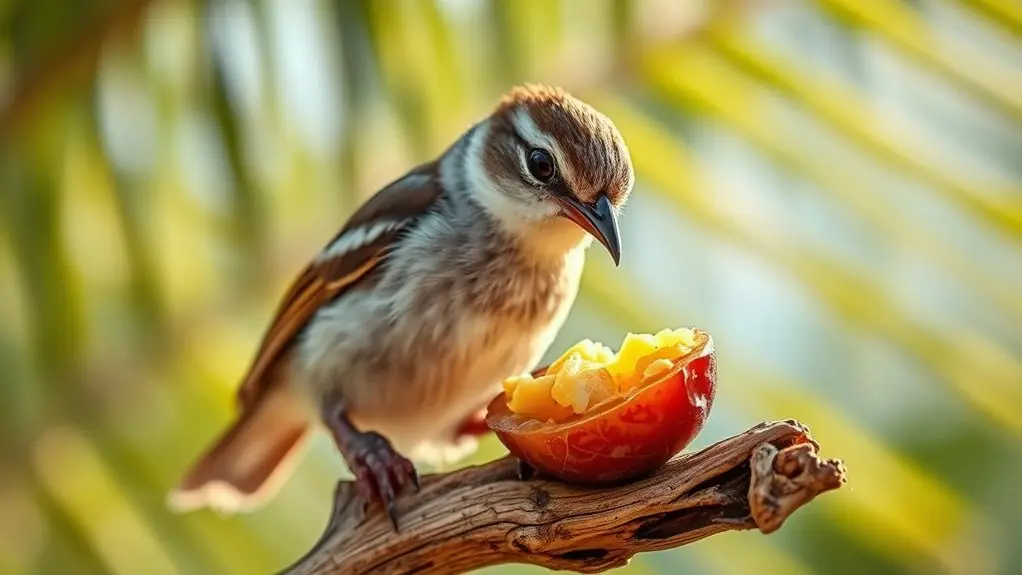
While dates may seem like just a sweet treat, they actually provide your bird with several important nutrients. This fruit is rich in dietary fiber, which supports healthy digestion.
Dates also contain antioxidants that strengthen your bird’s immune system and help protect cells from damage. Plus, they’re high in natural sugars, giving your bird a quick energy boost.
Beyond these benefits, dates supply essential minerals like potassium, magnesium, and copper, which aid metabolism and overall health.
Feeding dates adds variety to your bird’s diet with their unique texture and sweetness, making mealtime more enjoyable.
Including this nutrient-packed fruit in moderation can enhance your bird’s well-being while offering a tasty, beneficial treat.
Risks of Overfeeding Dates to Birds
If you feed your bird too many dates, you risk causing health problems like obesity and blood sugar spikes. Dates are a dried fruit high in sugar and calories, so giving your bird much fruit at once can lead to dangerous fluctuations in blood sugar levels and excessive calorie intake.
Always offer dates in small pieces to help control portions and reduce choking hazards. Overfeeding dried fruit like dates might also cause digestive upset due to their high fiber content, especially if introduced too quickly.
Plus, relying too heavily on dates may cause your bird to miss out on essential nutrients, creating imbalances in their diet.
To keep your bird healthy, limit dates to occasional treats, balanced with a variety of other foods.
Which Bird Species Enjoy Dates Most?
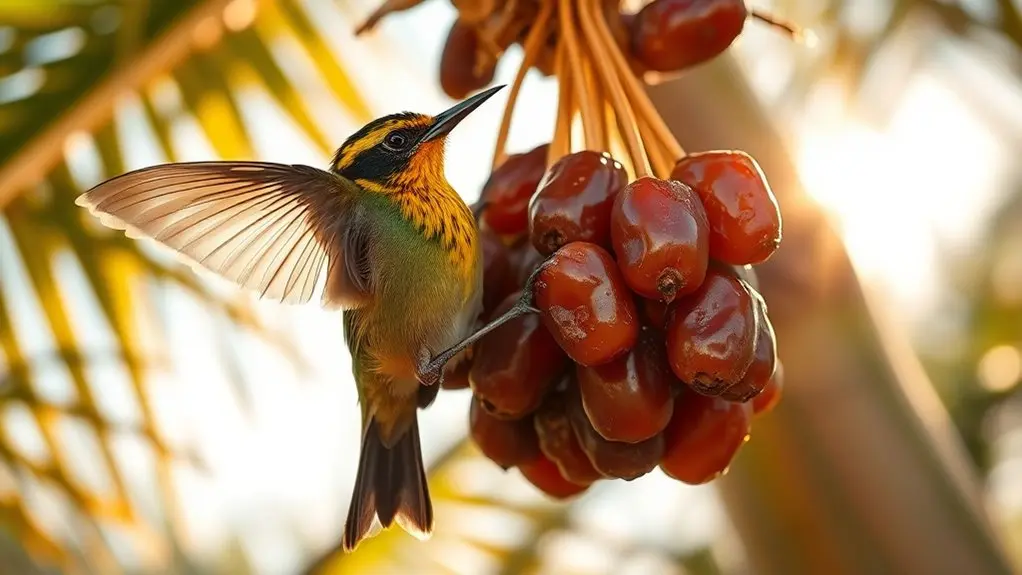
You’ll notice that lots of birds, like parrots, finches, and starlings, really love dates because they’re sweet and full of energy.
Then there are fruit-eating birds, like Orioles and Woodpeckers, who especially enjoy the soft texture and the nutrition dates provide.
Fruit Preferences By Species
Because of their sweet taste and chewy texture, many bird species like Cardinals, Finches, Nuthatches, and Chickadees enjoy eating dates. When offering dates, make sure you remove the pits to avoid choking hazards.
Dried dates are generally preferred because they resist spoilage better than fresh ones, making them safer for outdoor feeding. These birds appreciate the high sugar content, especially during colder months when energy is essential.
However, moderation is key since dates are calorie-dense and too much can harm birds’ health. Different species show varying preferences, but these four commonly favor dates.
Birds Attracted To Dates
Many birds like Cardinals, Finches, and Chickadees show a strong preference for dates, especially during times when they need extra energy.
During breeding season, their energy needs increase, making dates a crucial part of bird feeding.
The high sugar content offers quick fuel, which active species like Woodpeckers and Nuthatches appreciate.
You’ll notice dried dates attract more birds since they’re less prone to spoilage and easier to eat.
If you want to cater to smaller birds, chopping dates into bite-sized pieces improves accessibility.
Understanding these seasonal preferences helps you provide the right food at the right time, supporting birds’ nutritional demands effectively.
How to Prepare Dates for Backyard Birds
When preparing dates for your backyard birds, start by removing the pits to prevent choking hazards, especially for smaller species. Use proper date preparation techniques by dicing pitted dates into small, manageable pieces to make feeding safer and easier.
For larger birds, you can serve dates whole, letting them peck and enjoy the treat. Mixing dates with other bird-friendly foods like seeds or nuts enhances appeal and nutrition. Always monitor freshness and discard uneaten dates after a few hours to keep the feeding area clean.
| Bird Size | Preparation Method |
|---|---|
| Small Birds | Dice pitted dates |
| Large Birds | Serve whole dates |
| All Birds | Mix with seeds or nuts |
These bird feeding tips guarantee your feathered friends enjoy safe, tasty snacks without risk.
Fresh Dates vs. Dried Dates: Which Is Better?
Wondering whether fresh or dried dates make a better snack for your backyard birds? Fresh date benefits include higher moisture and nutrients, making them a healthier choice. They provide essential hydration and dietary fiber, helping keep birds energized and comfortable.
Just remember to remove the pit to avoid choking hazards.
Dried dates, however, come with drawbacks. They contain more sugar, which can cause weight gain and health issues if overfed.
To keep your birds safe and healthy, serve fresh dates whole or chopped and dried dates in small pieces.
Regardless of the type, moderation is key. Pay close attention to feeding frequency to prevent digestive upset and weight problems.
This way, your feathered friends can enjoy dates as a tasty, balanced treat.
How Much and How Often to Feed Dates to Birds?
How often should you offer dates to your birds to keep them healthy? You need to use portion control strategies and treat introduction methods carefully to maintain bird diet balance. Here’s how to do it:
- Introduce dates gradually, starting with small amounts to watch for digestive reactions.
- Limit dates to 10-15% of your bird’s overall diet to avoid excess sugar intake.
- For smaller birds, give only a few tiny pieces; larger birds can handle slightly bigger portions.
- Prefer fresh dates over dried ones, but if using dried, reduce the frequency even more.
Signs Birds May Have Digestive Issues From Dates
You might notice your bird showing signs of digestive distress, like diarrhea or bloating, after eating dates.
It’s important to pay attention to any changes in behavior too. For example, if your bird seems lethargic or isn’t interested in eating, that could be a sign something’s wrong.
Digestive Distress Symptoms
Although dates can be a healthy treat in moderation, feeding them too quickly or in large amounts may cause digestive distress in your bird.
Because dates are high in fiber, a sudden introduction or excess can upset your bird’s digestive health. To avoid problems, introduce dates gradually and monitor your bird’s reaction closely.
Watch for these digestive distress symptoms:
- Diarrhea or bloated abdomen, indicating gastrointestinal upset.
- Lethargy or decreased energy levels, showing discomfort.
- Reduced appetite, signaling digestive issues.
- Changes in droppings, such as looseness or unusual color.
If you notice any of these signs, cut back on dates and consult an avian vet to protect your bird’s digestive well-being.
Behavioral Changes Noted
Digestive distress from dates often shows up not just in physical symptoms but also through noticeable changes in your bird’s behavior.
Through careful behavioral observations, you might notice reduced activity or lethargy, signaling digestive reactions caused by dates.
Your bird may vocalize excessively or show reluctance to eat other foods, reflecting shifts in feeding habits.
Diarrhea or unusual droppings often accompany these signs, making it clear that dates could be upsetting your bird’s digestive system.
Overconsumption might also lead to weight gain, decreasing mobility and overall energy.
Keeping a close eye on these behavioral changes after introducing dates allows you to catch digestive issues early and adjust feeding habits accordingly to keep your feathered friend healthy and comfortable.
Creative Ways to Feed Dates to Birds
When feeding dates to birds, cutting them into small, diced pieces makes it easier for your feathered friends to eat safely and enjoy the sweet treat.
To boost bird engagement and encourage natural foraging activities, try these creative methods:
- Mix diced dates with seeds or nuts in a foraging tray to stimulate foraging activities and provide variety.
- String dates on feeders or skewers at your feeding stations, allowing birds to pick at them gradually.
- Offer whole dates during colder months when birds need high-energy foods, attracting more visitors.
- Monitor portions carefully to avoid overfeeding, as dates’ high sugar content should remain part of a balanced diet.
Using these ideas, you’ll create enjoyable, engaging feeding stations that keep birds active and healthy.
Sweet Fruit Alternatives to Dates for Birds
If you want to offer your birds a variety of sweet treats beyond dates, several delicious fruit alternatives can keep them interested and healthy.
Fruit variety options like apples, bananas, and berries provide essential nutrients and hydration that many birds love.
You can also try dried fruits such as raisins and cranberries, which offer high fiber and resist spoilage better than fresh ones.
Fresh fruits like peaches and pears encourage natural foraging behavior when cut into bite-sized pieces.
Citrus wedges, including oranges and grapefruits, diversify feeding habits while delivering vitamin C.
Seasonal fruit benefits come from treats like summer cherries and fall pomegranates, boosting nutritional intake throughout the year.
These nutritional comparisons help you select well-rounded options to keep your birds happy and nourished.
Balancing Dates in Your Bird’s Diet
Although dates offer valuable nutrients like fiber and potassium, you should feed them to your bird in moderation to avoid excess calorie intake.
Balancing dates in your bird’s diet means paying attention to diet variety, portion control, and introducing them gradually to keep your feathered friend healthy.
- Introduce dates slowly by mixing small pieces into regular meals to prevent digestive upset.
- Always remove pits and cut dates into manageable sizes for safety.
- Use portion control by limiting dates to occasional treats because of their high sugar content.
- Keep diet variety by balancing dates with vegetables, seeds, and other nutrient-rich foods.
Following these steps helps make sure your bird enjoys dates safely without compromising overall nutrition.
Frequently Asked Questions
Can Baby Birds Eat Dates Safely?
Yes, baby birds can eat dates safely if you follow feeding recommendations carefully. You need to remove the pits and cut dates into small pieces to prevent choking.
While dates offer fiber and energy, they shouldn’t replace staple baby bird nutrition because of high sugar content. Always choose safe food options and introduce new foods gradually.
Consulting an avian vet guarantees you’re meeting your baby bird’s nutritional needs properly.
Do Dates Affect a Bird’s Feather Quality?
Yes, dates can affect your bird’s feather quality. When you include dates in moderation, their antioxidants and fiber support feather nutrition and overall health.
But if you rely too much on dates, you risk missing out on diet diversity, which is essential for vibrant feathers.
Encouraging natural foraging helps your bird get a balanced mix of nutrients, promoting strong, healthy feathers and preventing issues linked to an imbalanced diet.
Are There Seasonal Concerns When Feeding Dates to Birds?
Feeding dates to birds is like tuning a clock; you need to respect seasonal availability and adjust feeding guidelines accordingly. Their nutritional value peaks when birds need extra energy, especially during migration or cold months.
You shouldn’t offer dates year-round without checks. Fresh dates spoil quickly in warm weather, so replace them often.
Can Birds With Diabetes Eat Dates?
Birds with diabetes shouldn’t eat dates regularly because their high sugar content can disrupt diabetes management.
If you want to offer dates, do so very sparingly and watch for any blood sugar spikes.
Instead, focus on alternative fruits low in sugar, like berries or apples, which support better health.
Always consult your avian vet before introducing new foods to guarantee you’re managing your bird’s condition safely and effectively.
How Do Dates Impact Wild Bird Populations?
Dates deliver deliciously dense nutrition, driving diverse foraging behavior in wild birds. When you offer dates, their digestion provides essential fiber, potassium, and antioxidants, boosting their health and energy.
This nutritious nibble supports survival during scarce seasons, encouraging birds to explore feeders more frequently.
However, you should monitor intake carefully; too many sugary snacks can disrupt their diet.
Conclusion
Now that you know birds can enjoy dates safely, just be sure to remove the pits. You’re ready to treat your feathered friends.
Dates offer great nutrients, but don’t overdo it. Too many could cause digestive troubles.
Whether you’re feeding a parrot or a finch, balance dates with other fruits for a healthy diet. Think of it like tuning a vintage gramophone. Getting the mix just right brings harmony to your bird’s well-being.