
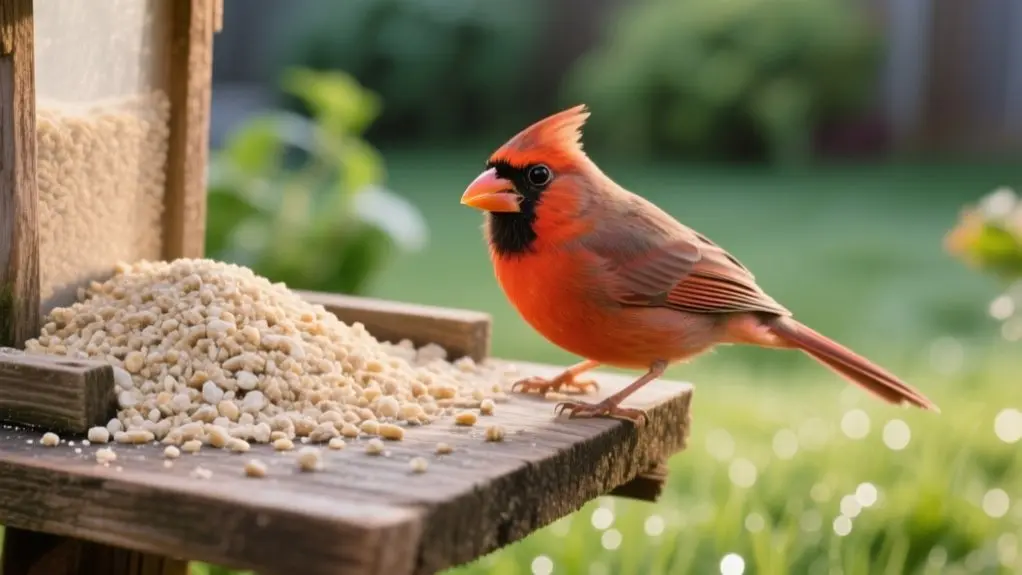
You shouldn’t feed birds dry grits because uncooked grits can expand in their stomachs, causing blockages and digestive issues. Birds need grit to help grind food, but dry, uncooked grits lack moisture, making them hard to digest and risky.
Instead, offer cooked grits or natural options like crushed oyster shells in moderation. Knowing the right type and amount is key to supporting your birds’ digestive health and overall well-being, especially during winter months.
Discover more ways to keep your feathered friends healthy and safe.
What Are Dry Grits?
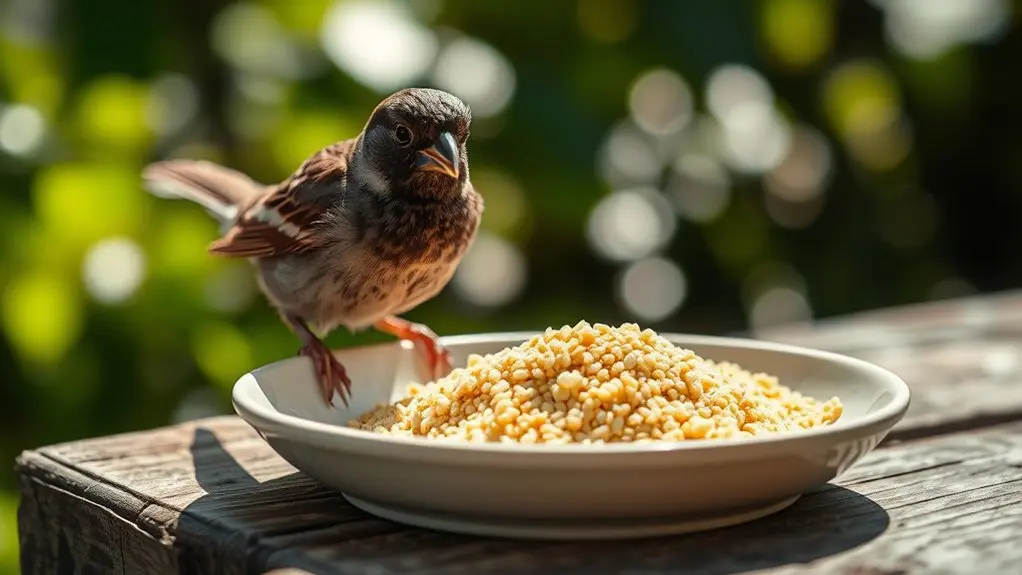
Dry grits are ground corn commonly eaten as a breakfast food, but they need to be cooked before you serve them to birds. Unlike typical bird seed mixes, dry grits are mostly carbohydrates and can provide energy if prepared properly.
However, uncooked dry grits aren’t safe because they expand when they absorb moisture, which might cause digestive issues. If you’re starting a new account for bird feeding, it’s important to avoid offering dry grits directly.
Instead, stick with safe, additive-free options and always guarantee the grit you provide has no salt, butter, or sugar.
Cooking the grits first makes them safer and more digestible, but raw dry grits should generally not be part of a bird’s diet.
Why Do Birds Need Grit for Digestion?
You might be wondering, why do birds even eat grit?
Well, grit actually helps grind up tough seeds and food inside their gizzards. This makes digestion a lot easier and more efficient.
Grit’s Role In Digestion
Although birds don’t have teeth to chew their food, they rely on grit, tiny particles like sand or small stones, to grind seeds and hard items in their gizzards. This gizzard function is essential for breaking down food mechanically, which improves digestion and nutrient absorption.
You’ll find grit sources naturally outdoors, but during scarce times, providing grit supports digestive benefits. Without enough grit, birds may face digestive issues like impaction.
| Gizzard Function | Grit Sources |
|---|---|
| Grinds hard food | Sand and small stones |
| Aids nutrient absorption | Natural environment |
| Prevents digestive issues | Provided grit |
| Supports seed digestion | Seasonal availability |
Types Of Digestive Grit
Now that you understand how grit helps birds grind their food in the gizzard, it’s important to recognize that not all grit is the same. Birds rely on different grit sources depending on their species and dietary needs.
Some birds prefer coarser grit texture to break down tough seeds, while others opt for finer particles that suit their digestive system better. These grit preferences guarantee peak digestion since birds don’t have teeth to chew food.
Granivorous birds, which eat mainly seeds, especially benefit from grit to access essential nutrients. During winter, when natural grit sources become scarce, providing supplemental grit can be crucial.
Paying attention to the right grit type helps maintain birds’ digestive health and overall well-being year-round.
How Do Dry Grits Compare to Natural Grits?
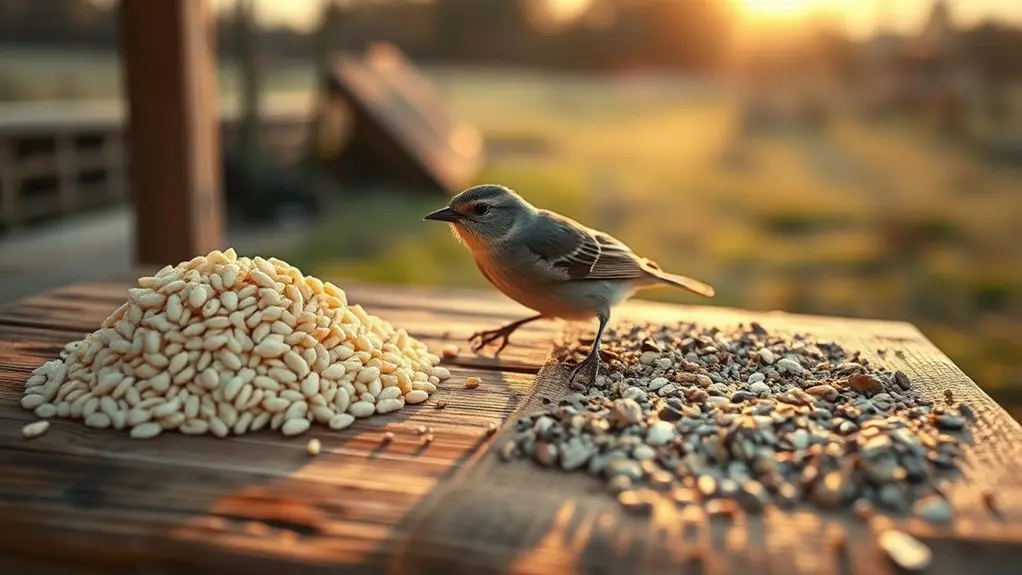
When comparing dry grits to natural grit, it’s clear that dry grits fall short in supporting birds’ digestion. Using grit comparison methods reveals natural grit’s small stones and minerals better aid birds in breaking down food within their gizzards.
Nutritional value assessment shows dry grits, made from ground corn, lack essential minerals found in natural grit, which are vital for a balanced diet.
Dry grits lack the essential minerals present in natural grit, crucial for maintaining a balanced avian diet.
Digestive health implications become evident since dry grits can expand when hydrated, potentially causing digestive issues, unlike the stable natural grit.
Especially during winter, when natural grit sources dwindle, providing natural grit guarantees birds avoid nutritional deficiencies and digestive problems.
Can Birds Safely Eat Dry Grits?
You shouldn’t feed birds dry grits because they can swell in their stomachs and cause blockages. That’s definitely something you want to avoid.
Instead, think about giving them safer options like cooked grits—but only in moderation. Another good choice is bird-specific grit, which actually helps with digestion.
Just remember to introduce any new foods slowly and keep an eye out for any signs that the bird might be uncomfortable. It’s all about keeping them safe and happy!
Risks Of Dry Grits
Although dry grits might seem like a simple treat, they can pose serious risks to birds because they expand when hydrated, potentially causing digestive blockages. Different grit types have unique textures and sizes, but dry grits share a common hazard: without proper hydration, they swell inside a bird’s digestive system, leading to discomfort or even dangerous blockages.
Understanding the importance of hydration is essential. Birds can’t safely digest dry grits as they lack the moisture needed to soften them. Feeding dry grits compromises digestive health and may cause distress or injury.
To protect birds, you should avoid offering uncooked or dry grits. Their expanding nature can harm rather than help, so it’s important to follow safe feeding practices.
Safe Feeding Alternatives
Because dry grits can swell and cause blockages, you shouldn’t feed them to birds. Instead, prioritize safe nutrition by choosing proper grit alternatives that support digestion without health risks.
For responsible bird feeding, consider these safe options:
- Natural grit like crushed oyster shells or small pebbles, which aid grinding in the gizzard.
- Cornmeal or cooked grits in small amounts, avoiding additives like salt or milk.
- Homemade suet mixtures that provide energy and nutrients during colder months.
What Risks Do Uncooked Grits Pose to Birds?
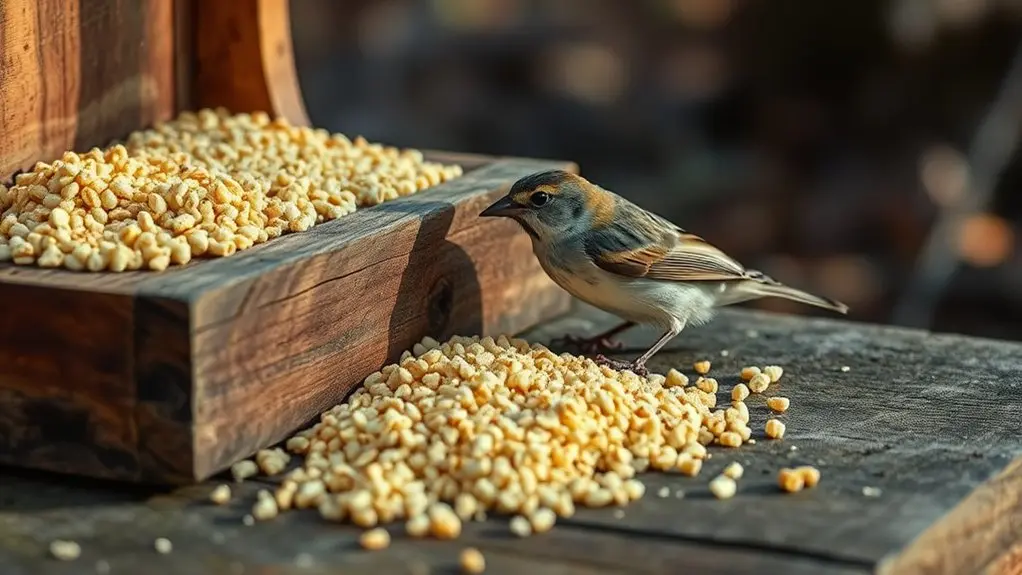
When uncooked grits come into contact with moisture, they can swell and cause digestive blockages in birds, posing serious health risks. You should be aware of uncooked grits dangers, as birds lack the enzymes needed to break down these dry particles effectively.
Uncooked grits swell with moisture, causing dangerous digestive blockages in birds lacking the enzymes to digest them.
This can disrupt bird digestive health, leading to discomfort or even life-threatening issues. Unlike cooked grits, uncooked versions don’t provide essential nutrients, potentially causing nutritional deficiencies if fed regularly.
Following proper grit feeding guidelines means avoiding uncooked grits altogether and opting for safer alternatives.
Always monitor birds for signs of distress after feeding, since early detection of adverse reactions can prevent severe problems.
Protect your birds by understanding these risks and choosing their diet wisely.
When Should You Offer Grits to Wild Birds?
Wondering when to offer grits to wild birds? Timing is key to match their dietary needs and guarantee grit availability aligns with natural scarcity.
You should focus on seasonal feeding strategies, especially during colder months when natural grit is limited.
Here’s when to offer grits: provide cooked, plain grits during winter to aid digestion, particularly for seed-eating species.
Offer small amounts as a supplement, not a replacement, to maintain a balanced diet.
Monitor birds’ reactions and adjust grit quantities to avoid digestive issues.
Preparing Grits Safely for Pet Birds
To keep your pet bird healthy, always offer cooked grits rather than dry ones. Uncooked grits can expand in their digestive system and cause serious problems. Use proper grit preparation techniques by cooking plain grits without salt, butter, or sugar to respect bird diet considerations.
Introduce grits gradually and in small portions. Practice safe feeding habits to avoid digestive distress.
| Preparation Step | Important Note |
|---|---|
| Cook plain grits | Avoid additives to maintain health |
| Introduce gradually | Monitor for any digestive reactions |
| Serve small portions | Prevent overfeeding and related issues |
If you’re uncertain, consult your veterinarian to verify that grits suit your bird’s diet safely.
Alternatives to Dry Grits for Bird Feeding
If you want to avoid the risks associated with dry grits, there are plenty of safer options to offer your birds.
Using effective bird feeding techniques, you can guarantee they get the nutrients they need without hazards. Paying attention to seed variety importance helps maintain a balanced diet, while nutritional content analysis guides you in choosing healthier alternatives.
Consider these options:
- Cornmeal provides carbohydrates safely and is easier to digest than dry grits.
- Homemade suet delivers essential fats and energy, especially useful in cooler months.
- Small seeds like millet or sunflower seeds attract diverse species and offer balanced nutrition.
Why Birds Need More Grit in Winter
Because winter limits natural grit availability, you’ll need to provide extra grit for birds during the colder months. Frozen ground and snow cover reduce access to natural grit, which birds rely on to grind seeds and grains in their gizzards.
Winter’s frozen ground limits natural grit, so offering extra grit helps birds digest seeds and grains effectively.
Their seasonal diets shift toward energy-rich foods to help maintain body heat, increasing their need for grit. Bird behavior changes accordingly; species that depend on grit are more likely to frequent areas where it’s available.
By offering grit, you support their digestive health and energy demands, boosting their survival through harsh weather.
Understanding birds’ grit preferences helps you select the right grit type, encouraging a variety of species to visit your feeder during winter’s challenges.
Signs of Digestive Issues From Grit Consumption
You’ll want to watch for signs like lethargy, loss of appetite, or unusual droppings because these could signal digestive trouble from dry grits.
Since grits expand when they get wet, they might cause blockages or discomfort in your bird’s stomach.
Symptoms Of Digestive Distress
When birds consume dry or uncooked grits, they might show clear signs of digestive distress, such as vomiting, lethargy, or refusal to eat.
These symptoms often indicate that their digestive enzymes are struggling to break down the grits properly.
Paying close attention to behavioral observations is essential. Changes in activity or appetite can signal discomfort or digestive issues.
You should also watch for signs like abdominal swelling or unusual droppings, which point to grit-related problems.
To manage this, consider making dietary adjustments to prevent further distress.
Common symptoms include:
- Vomiting and refusal to eat
- Lethargy and reduced activity
- Abdominal swelling or abnormal droppings
Noticing these early helps you intervene before serious digestive blockages develop.
Grit Expansion Risks
Although birds might seem curious about dry grits, feeding them this way can cause serious digestive issues since dry grits expand when they absorb moisture inside a bird’s digestive system.
This expansion can lead to blockages, creating significant grit digestion challenges for your feathered friend.
Birds can’t effectively break down dry grits, so hydration effects make the situation worse by causing the grits to swell and potentially obstruct their digestive tract.
To meet bird dietary needs safely, it’s best to avoid dry grits altogether and choose alternatives that don’t pose these risks.
Being aware of these grit expansion risks helps you protect your bird from gastrointestinal complications and guarantees their digestive health remains stable.
Monitoring Bird Behavior
Anyone caring for birds should closely watch their behavior after grit consumption to catch early signs of digestive trouble. Monitoring behavioral indicators can help you detect stress responses or digestive discomfort early.
Pay attention to changes in feeding habits, vocalization, and activity levels. Key signs include abnormal droppings in color, consistency, or frequency, which can signal digestive upset.
Look for lethargy, loss of appetite, or increased vocal distress, as these may indicate discomfort. Also, avoidance of feeding areas or unusual perching behavior can point to digestive pain.
If you notice regurgitation or vomiting after grit intake, it’s essential to consult an avian veterinarian promptly.
Regular health check-ups can prevent severe complications by identifying issues related to grit before they escalate.
Staying attentive to these signs keeps your bird healthy and comfortable.
Best Practices for Feeding Grits to Backyard Birds
Since birds benefit from grit for digestion, you should offer dry grits sparingly and guarantee they’re plain, without any additives like salt or butter.
Store your grit in a dry, airtight container to prevent moisture buildup and spoilage.
Keep feeding frequency low. Offer grits as an occasional treat rather than a daily staple to avoid digestive issues.
Watch bird behavior closely after introducing grit. If you notice any signs of distress, reduce or pause feeding and consult a vet.
During winter, when natural grit is scarce, you can increase availability slightly but still maintain moderation.
Other Ways to Support Bird Health Beyond Grit
While grit plays an important role in bird digestion, you can support their health in many other ways.
Offering seed diversity guarantees birds get essential nutrients that grit alone can’t provide. Fresh water sources are essential, especially heated ones during winter, to keep birds properly hydrated. Homemade suet offers a high-energy boost, significant when natural food is scarce.
To boost bird health beyond grit, focus on providing a mix of seeds, fruits, and nuts to enhance nutrition.
Maintain clean, accessible water sources year-round. Also, offer homemade suet as a rich energy supplement in cold months.
Together, these steps help create a balanced, nourishing environment that supports your backyard birds’ well-being all year long.
Frequently Asked Questions
How Much Dry Grit Should I Offer to Birds Daily?
You should offer birds only a small daily serving of dry grits, about a teaspoon per bird, to guarantee proper portion control.
Following feeding guidelines helps prevent digestive issues and keeps dry grits as a treat, not a staple.
Remember to monitor their reactions and provide fresh water alongside the grits.
Stick to occasional daily servings, and consult an avian specialist for advice tailored to your bird’s species and nutritional needs.
Can Dry Grits Attract Unwanted Pests or Predators?
Yes, dry grits can attract unwanted pests or predators if you’re not careful. To avoid this, use proper bird feeding practices like cleaning feeders regularly and offering food in feeders designed to limit spillage.
Employ pest control methods such as placing feeders away from the ground to reduce access for rodents and larger wildlife.
Following these wildlife attraction tips helps keep your bird feeding area safe and enjoyable for birds without inviting trouble.
Are There Specific Bird Species That Prefer Dry Grits?
Picture a tiny seed nestled in a bird’s beak. This symbolizes grit consumption shaped by bird preferences. You’ll notice species differences play a big role here.
Doves, pigeons, ground finches, and sparrows often favor dry grits, especially when other foods are scarce.
If you want to feed birds effectively, understand that not all species prefer dry grits.
Knowing these preferences helps you meet their digestive and nutritional needs wisely.
How Long Can Dry Grits Be Stored Safely?
You can safely store dry grits for up to two years if you maintain proper storage conditions.
Keep them in an airtight container, away from moisture and strong odors to preserve their shelf life.
Moisture control is essential because damp grits can spoil or grow mold, which is harmful to birds.
Regularly check your grits for signs of pests or spoilage before feeding them to guarantee they remain safe and fresh.
Can Dry Grits Be Mixed With Other Bird Feed Types?
Mixing dry grits with other bird feed types is like adding the right spice to a recipe; you need balance.
You can combine them, but keep an eye on grits’ nutritional benefits and avoid overdoing it to prevent digestive trouble.
Use plain, unseasoned grits, and consider grits feeding methods that suit your bird’s preferences.
Conclusion
So, can birds eat dry grits? Yes, but with caution! Think of grit as a tiny kitchen helper. They grind up food, making digestion easier.
However, dry grits aren’t always the best choice since they lack the natural variety birds need. Too much or uncooked grit can cause trouble.
To keep your feathered friends happy and healthy, offer grit thoughtfully and remember: a well-rounded diet beats grit alone every time!