
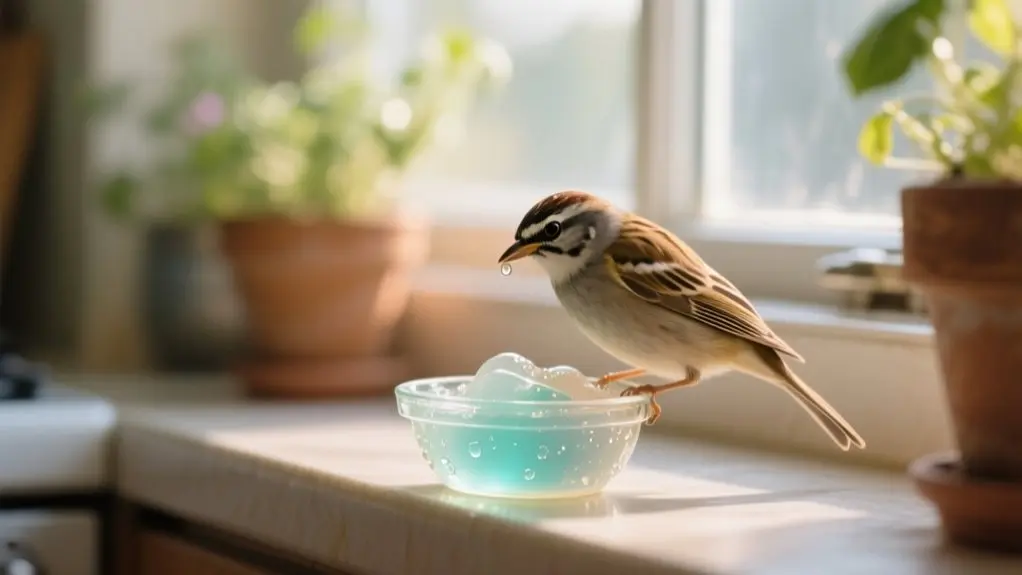
Yes, you can safely feed birds plain, unflavored gelatin since it provides valuable protein and essential nutrients without harmful additives. It acts as a natural binder for DIY bird treats, helping keep birds hydrated and attracting various species like finches and woodpeckers, especially in colder months.
Avoid flavored gelatin, as its sugars and artificial ingredients can harm birds. Keep gelatin treats for cooler weather to prevent spoilage.
There’s plenty more to explore about gelatin’s benefits and safe usage for wild birds.
What Is Gelatin and Where Does It Come From
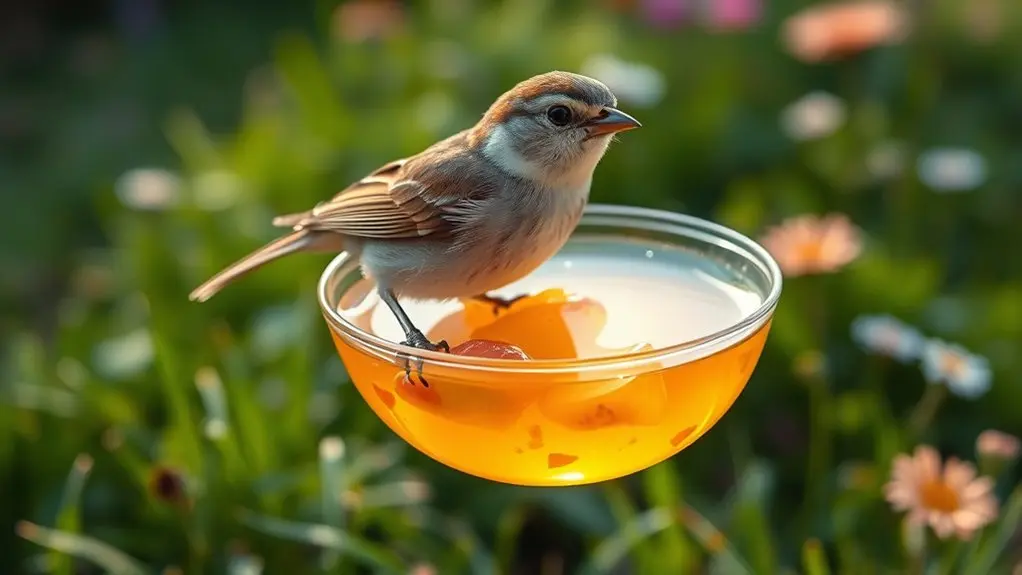
Although you mightn’t realize it, gelatin is a common ingredient derived from collagen found in animal bones and skin. It’s made by boiling down parts like bones and connective tissues, mainly from cows and pigs, to extract collagen, which is then dried into powder or sheets.
Gelatin, made from boiling animal bones and skin, is a common ingredient derived from collagen.
You’ll often find gelatin in foods like desserts, marshmallows, and yogurts because it acts as a gelling agent.
For birds, gelatin can be interesting since it provides protein, about 7 grams per tablespoon, and is flavorless and colorless, so it doesn’t alter the taste of foods.
Understanding what gelatin is and where it comes from helps you see why it’s used widely in food and consider how it might fit into the diets of birds before exploring its safety.
Is Plain Gelatin Safe for Wild Birds?
Now that you know what gelatin is and where it comes from, you might wonder if it’s safe to offer plain gelatin to wild birds. The good news is that unflavored gelatin is generally considered safe for wild birds.
Organizations like the Cornell Lab of Ornithology recommend using plain gelatin in bird feeder recipes because it acts as a natural binding agent without harmful sugars or additives.
When you prepare birdseed ornaments with unflavored gelatin, you provide birds with energy and essential nutrients.
However, it’s important to avoid flavored gelatin varieties, as they often contain sugars and additives that could harm birds.
While long-term effects haven’t been extensively studied, using unflavored gelatin in moderation remains a widely accepted, safe choice for wild bird treats.
Benefits of Feeding Gelatin to Birds
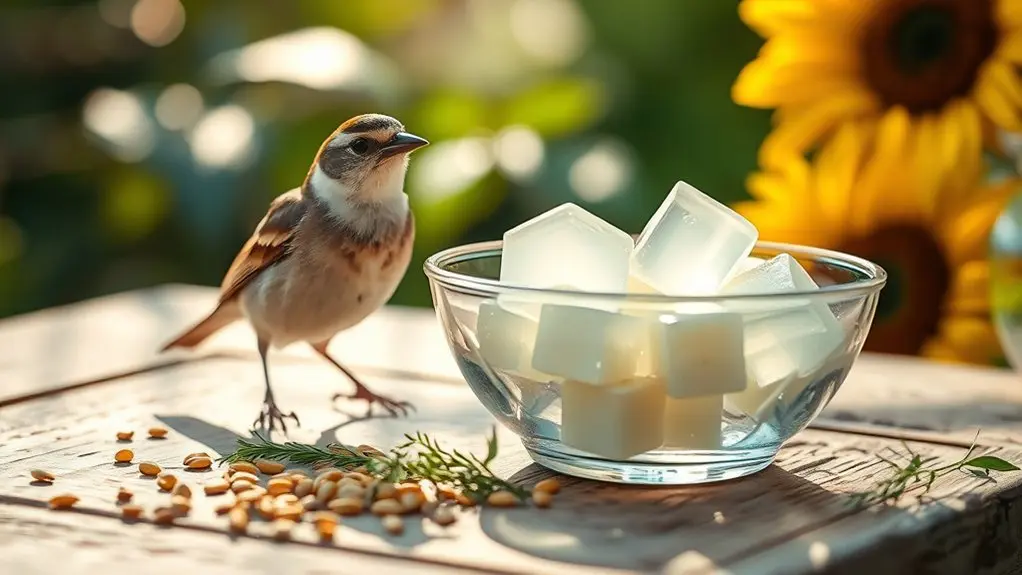
When you feed birds gelatin, you provide them with valuable protein and essential amino acids that support their health and feather growth.
Using a gelatin mixture for feeding birds offers several benefits you’ll appreciate:
- It acts as a natural binder, letting you create DIY treats by combining seeds and fruits into shapes birds find irresistible.
- The gelatin mixture helps keep birds hydrated, especially when water is scarce or during dry weather.
- Unflavored gelatin contains no harmful additives, making it a safe supplement for wild birds.
- Feeding birds with gelatin treats can attract a wider variety of species, enriching your birdwatching experience.
Dangers of Flavored Gelatin for Birds
You really shouldn’t offer flavored gelatin to birds. It contains harmful additives like artificial colors and preservatives that aren’t good for them.
Plus, the high sugar content—often from corn syrup—can mess with their digestion and lead to serious health issues.
Harmful Additives In Flavored Gelatin
Although flavored gelatin might seem like a tasty treat, it often contains added sugars, artificial flavors, and preservatives that can harm birds. When you offer flavored gelatin to birds, you expose them to harmful additives that may cause various health problems.
Here are four key harmful additives to watch out for in flavored gelatin:
- Added sugars can lead to obesity and metabolic disorders.
- Artificial flavors may cause toxic reactions in birds.
- Preservatives and colorings pose risks of toxicity and allergic responses.
- Artificial sweeteners like aspartame are particularly dangerous and should be avoided.
To keep your birds safe, stick to unflavored gelatin, which doesn’t contain these harmful additives and is a safer option for bird treats.
Sugar Risks For Birds
Flavored gelatin often contains high levels of sugar, which poses serious risks to birds. You should avoid offering flavored gelatin because the sugar risks include obesity, diabetes, and metabolic disorders that can impair a bird’s ability to forage and survive.
Many flavored varieties also contain additives that are harmful or even fatal to birds. Instead, you can safely use unflavored gelatin if you want to include gelatin in bird feeder recipes.
The Cornell Lab of Ornithology recommends unflavored gelatin precisely to prevent the dangers associated with sugars and additives.
While flavored gelatin may attract birds initially, it compromises their health over time.
To keep birds healthy and safe, stick to natural, sugar-free options like unflavored gelatin, avoiding the sugar risks flavored gelatin poses.
How Gelatin Benefits Bird Treats
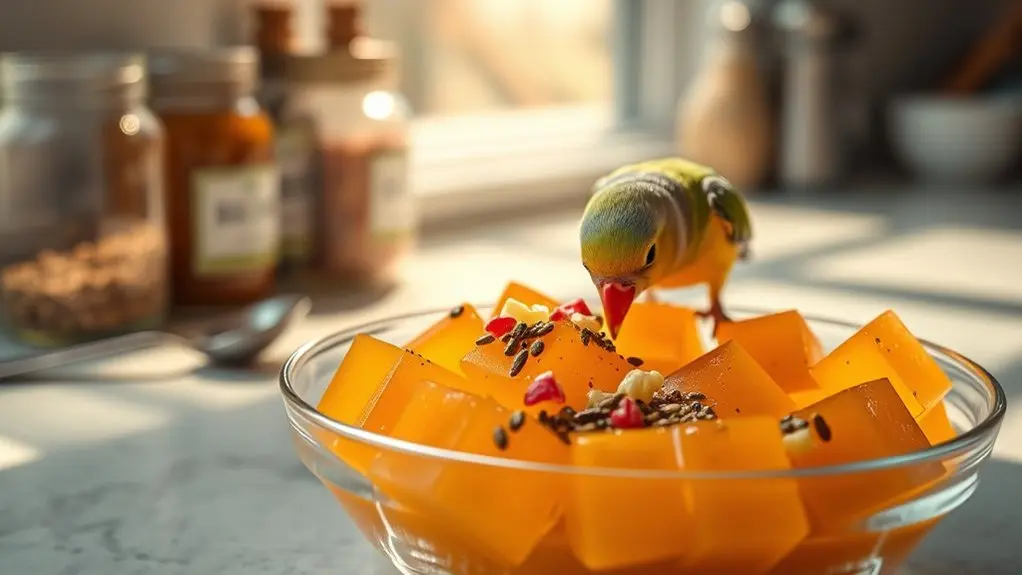
You’ll find that gelatin not only boosts your bird’s nutrition with valuable protein, but it also works as a natural binder in treats.
So, you can whip up healthy snacks that stay together without needing any added sugars or fats.
Plus, using gelatin makes preparing bird treats easier and better for their overall health.
It’s a simple way to keep your feathered friend happy and healthy!
Nutritional Support Role
When you include gelatin in bird treats, you provide more than just a tasty snack. It acts as a natural binder that holds seeds and ingredients together without harmful additives.
Gelatin offers essential nutritional support by supplying protein and collagen, which boost feather health and overall wellness. Plus, it’s low in sugar, making it a safer choice than many sweet alternatives.
Here’s how gelatin benefits your feathered friends:
- Provides protein and collagen for strong feathers and healthy skin
- Retains moisture, helping birds stay hydrated, especially in dry seasons
- Acts as a natural, additive-free binder for treat ingredients
- Recommended by experts like Cornell Lab of Ornithology for safe, nutritious treats
Incorporating gelatin in bird treats supports their well-being while keeping snacks wholesome and enjoyable.
Binding Agent Advantages
Gelatin doesn’t just add nutrition to bird treats. It also plays a key role in holding everything together. When you use gelatin as a binding agent, it helps keep seeds and other ingredients intact, so your bird feeders maintain their shape even when hung outdoors.
This means the treats won’t crumble or fall apart easily, making feeding time less messy. Plus, gelatin is low in sugar and easily digestible, providing birds with protein and essential amino acids without harmful additives.
By choosing unflavored gelatin, you guarantee your bird feeders stay safe and natural, following expert guidelines.
Gelatin also lets you create fun, creative shapes that make your bird treats visually appealing. This attracts birds and makes birdwatching more enjoyable for you.
How to Make Gelatin Birdseed Ornaments
Making gelatin birdseed ornaments requires just a few simple ingredients and steps. To make birdseed ornaments, follow these steps:
Creating gelatin birdseed ornaments is easy and fun with just a few simple ingredients and steps.
- Mix one packet of unflavored gelatin with two tablespoons of cold water and let it sit for one minute.
- Then, add 1/3 cup boiling water to dissolve the gelatin.
- Combine this mixture with two cups of quality birdseed, making sure all seeds are evenly coated so the birdseed sticks together well.
- Press the mixture firmly into cookie cutters or molds, and insert a loop of twine into each ornament for hanging.
- Let the ornaments dry at room temperature for 24 hours.
- Once set, pop them out and hang outside to attract birds.
This simple process lets you create homemade birdseed treats that birds will enjoy.
Serving Gelatin Bird Treats Safely
Since birds are sensitive to additives, you should always use unflavored gelatin free from sugars and chemicals to keep your treats safe and healthy.
When you make gelatin bird treats, carefully mix the gelatin into a mixing bowl with warm water, then stir in the seeds to make seed-coated treats that birds will love.
Avoid flavored gelatin as it contains harmful sugars and additives.
Serve your gelatin treats in cooler temperatures, ideally below 50°F, to keep them firm and prevent melting.
After feeding, watch your birds for any sticky residue on their feathers or feet, which could affect their mobility.
Gelatin Alternatives for Homemade Bird Feeders
If you want to offer your birds a homemade feeder but prefer to avoid gelatin, there are several effective alternatives you can try.
These gelatin alternatives help you create safe, nutritious DIY bird feeders without compromising on quality.
- Natural peanut butter: Spread it on pinecones, then roll in birdseed for a high-energy treat.
- Agar-agar: A plant-based gelatin substitute that binds birdseed, perfect for vegan-friendly feeders.
- Cornstarch paste: Mix with water, boil, and use as a sticky medium for seeds.
- Flour and water paste: Works well but avoid using it in wet conditions to prevent mold.
Using these options guarantees your DIY bird feeder is safe and enjoyable for your feathered friends.
Which Bird Species Are Attracted to Gelatin Treats?
Although many bird species enjoy a variety of treats, gelatin-based snacks attract a unique mix of birds like finches, chickadees, and cardinals, especially during colder months when they need extra energy.
Gelatin snacks uniquely attract finches, chickadees, and cardinals, providing vital energy in colder months.
Orioles and woodpeckers are also drawn to gelatin birdseed ornaments, thanks to their frugivorous diets.
You’ll notice American Robins and Cedar Waxwings benefiting from these treats during migration, as birds love the boost gelatin provides.
Using unflavored gelatin guarantees safety, making it a trusted ingredient endorsed by the Cornell Lab of Ornithology.
If you want to attract a diverse range of birds to your backyard, offering gelatin treats mixed with birdseed is a smart way to do it because birds love the texture and taste.
Seasonal Factors for Gelatin Bird Feeder Use
You’ll want to use gelatin bird feeders mainly when temperatures stay below 50°F. This helps keep them from melting and spoiling.
It’s a good idea to choose seasonal ingredients that suit the weather because that helps maintain the feeder’s durability and keeps birds safe.
As the temperatures shift, just adjust your feeding strategy to make sure your gelatin treats last and stay healthy for the birds.
Temperature Impact on Durability
Because gelatin bird feeders thrive in cooler conditions, keeping them below 50°F helps maintain their shape and durability. Temperature plays a vital role in how long your gelatin feeder lasts outside. Here’s what you need to know:
- Above 50°F, gelatin feeders melt or break down quickly. So, place them in shaded areas to extend their life.
- In warm, humid weather, gelatin takes longer to set. Refrigerate feeders longer before use.
- In hot climates, expect gelatin feeders to last only a few days, making them less practical.
- To guarantee durability, monitor outdoor temperature closely and adjust feeder placement accordingly.
Seasonal Ingredients Considerations
Managing temperature is a key part of maintaining gelatin bird feeders, but the ingredients you choose also need to match the season. Gelatin works best in cooler weather, ideally below 50°F, because it holds its shape and provides birds with much-needed nutrition during winter when food is scarce.
However, in warmer months, gelatin can melt quickly and spoil, attracting pests. During spring and summer, you should switch to alternatives like peanut butter or seed mixtures, which handle heat better and don’t require refrigeration.
Also, remember that humidity affects gelatin’s setting time. Higher humidity means you’ll need to let feeders dry longer to avoid sogginess.
Common Mistakes to Avoid With Gelatin Treats
When making gelatin treats for birds, it’s important to avoid common pitfalls that can compromise their safety and quality. Here are four common mistakes to watch out for:
- Use only plain, unflavored gelatin. Flavored types contain sugars and additives that are harmful to birds.
- Don’t add sugars, corn syrup, or fats to your gelatin treats because these can negatively affect birds’ health.
- Mix the gelatin thoroughly with boiling water and birdseed to guarantee even coating and prevent crumbling.
- Avoid heat-sensitive materials that may melt or break down in warm temperatures so treats stay intact.
Expert Tips and Trusted Resources on Gelatin and Bird Feeding
Although gelatin treats can be a safe and enjoyable supplement for birds, you should follow expert advice to guarantee their health and safety.
The Cornell Lab of Ornithology recommends using only unflavored gelatin to avoid harmful sugars that can be dangerous or fatal to birds.
When making gelatin-based treats or birdseed ornaments, stick to natural ingredients and avoid additives.
Although research on long-term effects is limited, many bird enthusiasts successfully use gelatin in moderation to attract species like cardinals and chickadees.
For trusted guidance, rely on resources like the Cornell Lab of Ornithology, which offers science-backed tips on bird feeding.
Frequently Asked Questions
Can Gelatin Cause Allergies in Birds?
Yes, gelatin can cause allergies in birds, but it’s pretty rare.
If your bird has bird food allergies, you might notice gelatin allergy symptoms like feather plucking, respiratory issues, or gastrointestinal distress.
These signs often come from additives rather than gelatin itself, but you should watch your bird closely when introducing it.
If you spot any problems, stop feeding gelatin and consult an avian veterinarian to keep your bird safe and healthy.
How Often Can I Feed Gelatin to My Pet Bird?
You shouldn’t feed gelatin to your bird more than once a week. It’s like offering a tiny treasure chest of gelatin nutrition without overloading their system.
Birds have unique preferences, so mixing small amounts with other bird-safe foods keeps things exciting and nutritious.
Pay close attention to how your bird reacts and don’t push it if they’re not interested.
Moderation guarantees their diet stays balanced and their health stays excellent!
Does Gelatin Affect Bird Digestion or Gut Health?
Gelatin doesn’t typically harm your bird’s digestion or gut health when given in moderation. It offers benefits like protein and amino acids, supporting overall wellness.
However, because birds rely on digestive enzymes adapted for plant-based diets, too much gelatin could disrupt their natural digestion.
Can Gelatin Treats Be Stored for Long Periods?
Gelatin treats can’t be stored for long periods if you want them fresh and safe. Their treat shelf life is usually 1–2 weeks in cold weather, but storing them in the refrigerator can extend gelatin storage to about a month.
Make sure you hang treats in shaded areas to prevent melting and spoilage.
Always check for off smells or texture changes before offering them to your birds to keep them healthy.
Is Gelatin Safe for Baby or Juvenile Birds?
Think of gelatin types as building blocks for your baby bird’s growth; they’re safe when you choose unflavored options.
You’ll find gelatin offers nutritional benefits like protein and essential amino acids, crucial for juvenile birds.
Just keep treats moderate and additive-free.
You should introduce gelatin gradually to spot any digestive issues early.
Conclusion
So, can birds eat gelatin? Absolutely, but only plain, unflavored types. Think of gelatin as a simple gift from you to them, offering a unique protein boost without the harmful additives found in flavored versions.
Just like you wouldn’t serve a meal with poison, don’t feed birds anything unsafe. By choosing wisely, you’re not just feeding birds; you’re nurturing a delicate dance of nature that keeps your feathered friends healthy and happy.