
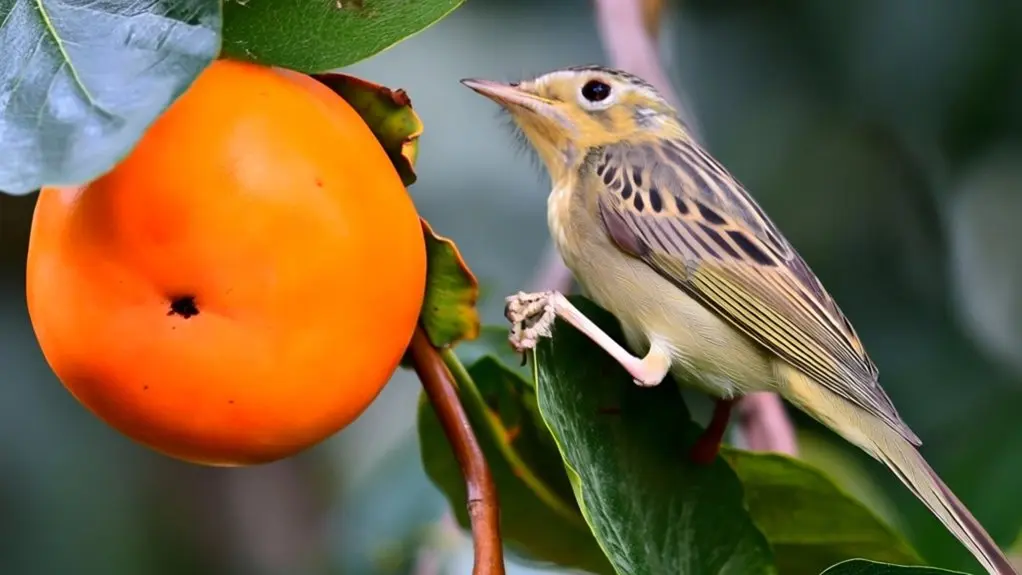
You can offer persimmons to birds only with caution. Unripe persimmons contain high levels of tannins that can cause toxicity, digestive blockages, and organ damage. Even ripe persimmons have some residual tannins and sugars that may disrupt nutrient absorption and digestion.
Many bird experts actually advise against feeding persimmons regularly because of these risks, especially for pet birds. That said, certain wild species naturally eat persimmons in moderation without any harm.
You’ll find more on how to prepare them safely and some alternative fruits ahead.
Are Persimmons Safe for Wild and Pet Birds?
Although wild birds often eat persimmons without obvious harm, you should still be careful when offering these fruits to pet or captive birds.
Persimmons contain tannins, which can cause health problems like bezoars, or indigestible masses that might block the digestive tract.
Persimmons have tannins that may lead to bezoars, causing dangerous digestive blockages in birds.
The amount of tannins varies depending on how ripe the persimmon is and its variety, so the risk of toxicity can be unpredictable.
There are also some reports linking persimmons to botulism and long-term health issues in birds.
While wild birds may handle these fruits okay, captive birds usually have different sensitivities and dietary needs, which can increase their risk.
Because of these concerns, most bird health experts suggest avoiding feeding persimmons to any birds.
It’s better to stick with safer, well-researched foods to keep your birds healthy and avoid any unnecessary risks.
Which Toxins in Persimmons Can Harm Birds?
You should know that persimmons contain tannins, like shibuol, which can cause digestive blockages called bezoars in birds.
These tannins might lead to toxicity and even organ damage, especially if birds eat persimmons often.
On top of that, fermented persimmons have been linked to botulism outbreaks, which is a serious health risk for birds.
Tannins And Shibuol
Because persimmons contain tannins like shibuol, they pose significant risks to birds by causing digestive complications. These tannins are plant polyphenols that become toxic when ingested in large amounts, particularly in unripe or overly ripe fruit.
Shibuol and related tannins can disrupt nutrient absorption, impairing a bird’s overall health. When birds consume persimmons, these compounds can lead to the formation of indigestible masses in the digestive tract, making digestion more difficult.
Tannins are naturally occurring defense chemicals in many plants, but their high concentration in persimmons specifically threatens avian species.
You should know that these toxins are the main reason persimmons are risky for birds, as they interfere with normal digestive processes and may cause long-term harm if exposure is frequent or substantial.
Bezoar Formation Risks
Tannins like shibuol in persimmons not only interfere with nutrient absorption but also contribute to the formation of bezoars. These are hard, indigestible masses that can accumulate in a bird’s digestive tract.
These bezoars can cause blockages, leading to severe gastrointestinal distress or even death, especially when birds consume unripe or excessive amounts of persimmons. Long-term ingestion increases the risk of digestive complications. Understanding which toxins cause these effects is critical for avian health management.
| Toxin Type | Impact on Birds |
|---|---|
| Tannins | Formation of bezoars |
| Shibuol | Contributes to bezoar mass |
| Unripe fruit | Higher tannin concentration |
| Excess intake | Increased blockage risk |
You should monitor persimmon ingestion carefully to prevent these health hazards.
Botulism And Toxicity
Although persimmons contain tannins like shibuol that cause gastrointestinal issues, their potential to induce botulism in birds comes mainly from fermentation and spoilage. When persimmons become overripen or start to spoil, bacterial growth, including Clostridium botulinum, can take place.
This bacterium produces botulinum toxin, which is a powerful neurotoxin posing serious health risks to birds.
Eating spoiled persimmons increases the chance of toxin ingestion, which can lead to paralysis and even death if left untreated. Unlike immediate poisoning, these toxins build up over time, causing chronic toxicity rather than sudden symptoms.
So, it’s best to avoid offering birds persimmons that are overripe or decomposing. Fresh fruit helps limit bacterial growth and lowers the risk of botulism.
Knowing these facts can help you keep birds safe from the harmful effects linked to persimmon spoilage.
Why Unripe Persimmons Are Harmful to Birds
You should avoid feeding birds unripe persimmons because they contain a lot of tannins, which can be harmful. These tannins might cause toxicity and even lead to digestive blockages.
Basically, the tannins can create something called bezoars—these are blockages in the birds’ gastrointestinal tract that make it hard for them to digest food properly.
Tannins And Toxicity
When birds consume unripe persimmons, they ingest high levels of tannins that can disrupt their digestive processes and lead to toxicity. These tannins bind with proteins and other compounds in the digestive tract, potentially causing the formation of bezoars, solid masses that block digestion and nutrient absorption.
Over time, excessive tannin intake may impair liver and kidney function, as these organs work to detoxify harmful substances.
Import importantly, tannin concentration markedly decreases as persimmons ripen, which reduces their toxicity.
Because of these effects, feeding unripe persimmons to birds is strongly discouraged. Understanding the chemical composition of unripe fruit helps explain why birds must avoid it and make sure they only consume ripe persimmons that pose minimal health risks related to tannin toxicity.
Health Risks For Birds
Because unripe persimmons contain high concentrations of tannins, feeding them to birds poses significant health risks. These tannins, including shibual (tannic acid), can cause severe digestive and systemic complications.
When you offer unripe persimmons to birds, you risk the formation of bezoars, which block their digestive tract. This can lead to digestive distress and potential toxicity.
Plus, birds become more susceptible to botulism and bacterial infections.
Over time, exposure to tannic acid may cause long-term organ damage. Persistent ingestion of tannins can also result in chronic health problems for birds.
How Ripe Persimmons Affect Bird Health
Although ripe persimmons are more attractive to birds because they’re sweeter and softer, their higher tannin content can cause some serious digestive issues. When birds eat ripe persimmons, the tannins might lead to the formation of bezoars, which are indigestible masses that can block the digestive tract.
Even though fully ripened persimmons have lower levels of certain toxins compared to unripe fruit, they still carry risks due to residual tannins and other compounds. Plus, the increased sugar content in ripe persimmons can affect bird metabolism.
If birds eat too much, it could lead to health problems.
It’s important to remember that while overripe persimmons are a bit less toxic, they’re not completely safe. Keeping an eye on how much persimmon birds consume is key to avoiding digestive troubles and protecting their health.
What Bird Species Commonly Eat Persimmons?
Several bird species commonly consume persimmons, taking advantage of the fruit’s availability during its season. You’ll notice that many native and wild birds incorporate persimmons into their diet due to the fruit’s nutritional value and accessibility.
Key species include thrushes, which actively forage ripe persimmons in the wild. Cedar waxwings are known for their fruit-based diets, and northern cardinals often feed on both fallen and hanging fruit. Robins and blackbirds also exploit ripe or fallen persimmons seasonally. Finches and certain warblers selectively consume persimmons as part of their varied fruit intake.
Understanding these species helps you recognize which birds naturally rely on persimmons. However, not all birds tolerate persimmons equally, so knowing the common consumers aids in responsible feeding or habitat observation.
How Feeding Persimmons Impacts Bird Behavior and Diet
When you feed persimmons to birds regularly, you risk altering their natural foraging behavior and dietary balance. Birds may become reliant on these artificial food sources, which can reduce their innate ability to seek varied nutrition.
Also, persimmons contain tannins that can build up and cause digestive blockages, like bezoars, in some species. Wild birds usually eat persimmons in moderation without any problems. But frequent feeding can increase health risks and mess with their roles in the ecosystem.
| Impact Aspect | Description |
|---|---|
| Foraging Behavior | Decreased natural foraging efforts |
| Dietary Balance | Potential nutrient imbalance |
| Health Risks | Tannin-induced digestive blockages |
| Ecological Effects | Disruption of local food webs |
| Moderation Factors | Wild birds consume safely in limited quantities |
How to Safely Prepare Persimmons for Pet Birds
Because unripe persimmons contain high tannin levels that can harm birds, you should always serve fully ripe fruit after carefully removing the peel and seeds. These parts are difficult for birds to digest and may cause digestive issues.
To safely prepare persimmons for your pet bird, consider the following steps:
Remove the peel completely to avoid ingestion difficulties.
Extract all seeds to prevent choking hazards.
Cut the fruit into small, manageable pieces to facilitate swallowing.
Limit persimmon servings to occasional treats to reduce tannin exposure.
Monitor your bird closely for any adverse reactions post-feeding and discontinue if symptoms arise.
Following these precise steps minimizes health risks and guarantees your bird can safely enjoy persimmons as a treat.
Just keep an eye on your feathered friend and enjoy sharing this tasty treat responsibly!
Better Fruit Alternatives to Persimmons for Birds
Although persimmons can be offered occasionally, choosing native fruits like berries, figs, and small soft fruits better aligns with birds’ natural diets and nutritional needs. These fruits provide essential nutrients without the risks posed by persimmons’ tannins and other potentially harmful compounds.
You’ll find that fruits such as blueberries, oranges, melons, watermelon, grapes, and apples are safer and more widely accepted by many bird species. When selecting alternatives, make sure the fruits are ripe, fresh, and free from pesticides to optimize bird health.
Offering a diverse range of native, pesticide-free fruits supports a balanced diet and attracts a broader variety of birds. By prioritizing these safer options, you help maintain birds’ overall well-being more effectively than relying on persimmons alone.
Frequently Asked Questions
Can Persimmons Cause Allergies in Birds?
Persimmons can potentially cause allergies in birds due to tannins and other compounds, though documented cases are rare. You should introduce persimmons cautiously and monitor birds closely for any signs of allergic or digestive reactions.
This way, you can make sure they stay safe and healthy. It’s always better to be on the safe side when trying new foods with your feathered friends. Keep an eye out for any changes and act accordingly.
How Often Can Birds Eat Persimmons Safely?
You shouldn’t feed birds persimmons regularly, occasionally, or even semi-rarely. Because tannins and toxins risk digestive blockages, you must avoid persimmons entirely to keep birds healthy.
Following veterinary advice is really important here. It’s best to prioritize their safety over curiosity when it comes to feeding them anything unusual. So, just steer clear of persimmons to be on the safe side.
Do Persimmons Affect Bird Migration Patterns?
No, persimmons don’t affect bird migration patterns. You’ll find birds migrate primarily due to daylight and temperature changes, not food availability.
Persimmons may support local birds but don’t influence their seasonal travel behavior. So, while they’re a nice snack for some, they’re not the reason birds decide to head south or north.
Can Persimmons Be Used to Train Pet Birds?
You wouldn’t use a quill to text, so don’t use persimmons to train birds. They contain tannins that can cause digestive issues and bezoars.
Instead, pick safer fruits like berries or apples. These make for effective, healthy training rewards.
Trust me, your bird will thank you for choosing snacks that are both tasty and safe!
Are Persimmon Seeds Harmful if Ingested by Birds?
Yes, persimmon seeds can be harmful if crushed and ingested in large amounts because they release cyanogenic compounds.
But the good news is that birds usually swallow them whole, which keeps the risk pretty low. Still, it’s a good idea to be cautious to avoid any potential toxicity.
Conclusion
You can safely offer ripe persimmons to many bird species, but unripe ones contain harmful tannins that may cause digestive issues. Always prepare persimmons carefully by removing seeds and skin to minimize risks.
Remember, persimmons should be an occasional treat rather than a dietary staple. There are better fruit alternatives that provide more balanced nutrition.
Persimmons can nourish or harm, so use caution to keep your feathered friends healthy and thriving.