
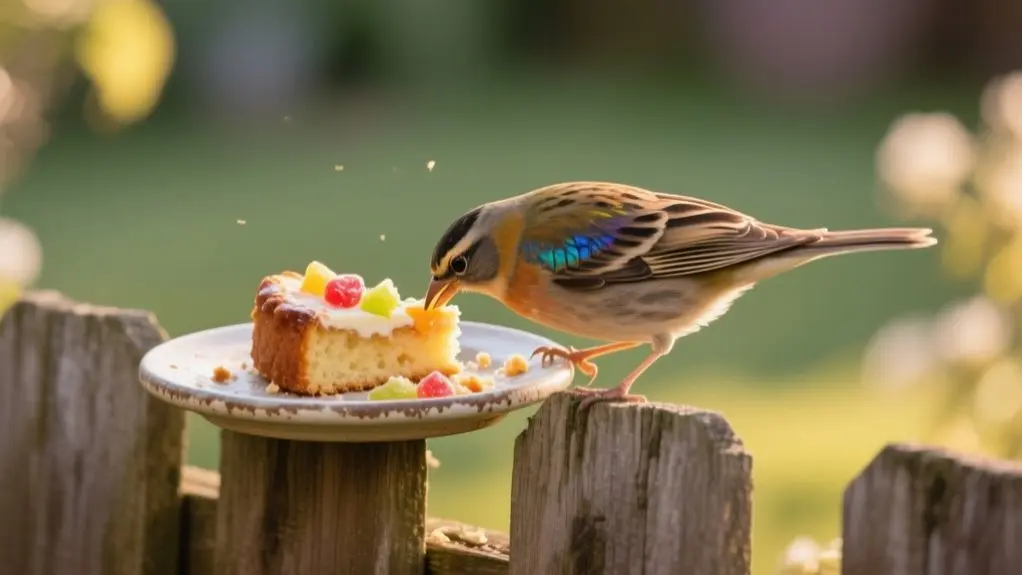
You shouldn’t feed fruit cake to birds because it contains high fat, sugar, alcohol, and toxic ingredients like raisins and certain nuts that can harm their health. These components can cause obesity, digestive problems, and even poisoning. The cake’s dense texture also poses choking risks.
Instead, offer safer fresh fruits and bird-friendly treats. Keep an eye on your bird’s health. If you want to learn how to protect your feathered friend, there’s more helpful information ahead.
Why Fruit Cake Is Tempting But Risky for Birds
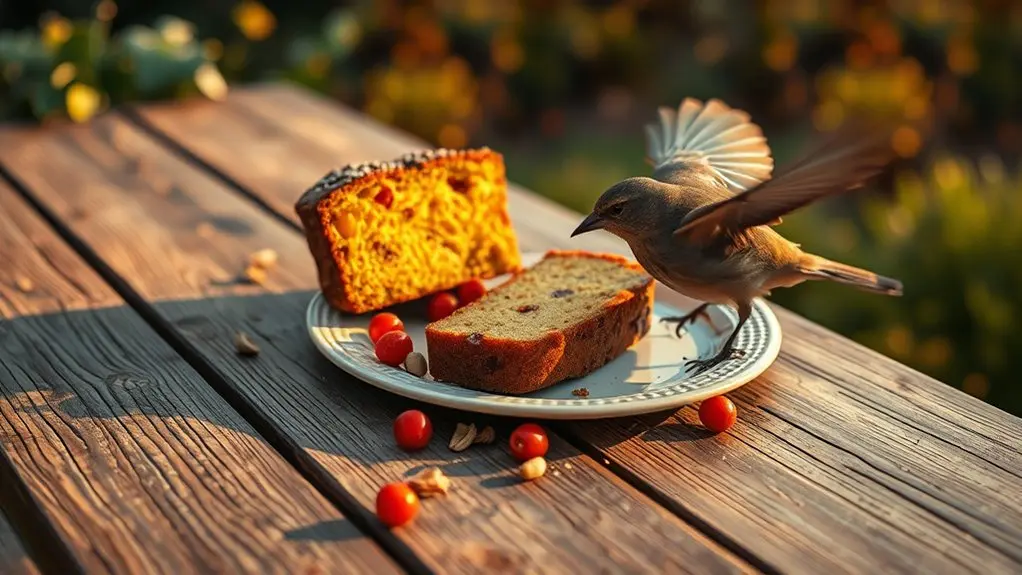
Although fruit cake may seem like a tasty treat you want to share with birds, it poses several risks to their health. Birds eat dried fruits and nuts found in fruit cake, which might seem natural, but these ingredients can cause digestive problems if eaten too much.
Commercial fruit cakes often contain sugar, alcohol, and artificial additives that aren’t safe for birds. The high fat content from butter or oils can lead to obesity and other health issues.
Even some fruits like raisins and currants, common in fruit cake, can be toxic to certain bird species when consumed in large amounts.
Plus, preservatives and sweeteners in fruit cake can upset birds’ natural diet, causing nutritional imbalances.
What Harmful Ingredients in Fruit Cake Affect Birds
You mightn’t realize it, but some of the fruits and nuts in fruit cake can be really harmful to birds.
On top of that, additives and spices don’t help their health at all.
And when you throw in the high sugar or alcohol content, it just makes things worse for our feathered friends.
Toxic Fruits And Nuts
When birds eat fruit cake, certain ingredients like raisins and sultanas can cause serious harm, including kidney failure.
These toxic raisins and similar dried fruits pose a real danger, so you should never offer them to birds.
Furthermore, harmful nuts such as macadamias, often found in fruit cakes, can lead to neurological problems in birds.
You also need to watch out for unsafe sweeteners like xylitol, which is extremely toxic and can cause liver failure.
While the fruit cake might seem harmless, these ingredients can severely impact a bird’s health.
Avoid feeding fruit cake to birds to protect them from these toxic raisins, harmful nuts, and unsafe sweeteners that can cause lasting damage or even be fatal.
Harmful Additives And Spices
Since fruit cakes often contain harmful additives and spices, feeding them to birds can pose serious health risks. You’ll want to avoid ingredients that can harm your feathered friends.
Here are three common dangers found in fruit cakes:
- Alcohol like brandy can intoxicate birds and damage their organs.
- Spices such as nutmeg may cause neurological and digestive problems.
- Artificial preservatives and high-fat additives disrupt digestion and overall health.
Instead of risking your birds’ well-being, opt for safe spice alternatives like cinnamon or ginger when baking bird-friendly desserts.
Exploring healthy cake recipes designed specifically for birds can keep them safe and happy. Remember, not all human treats are suitable, so always choose options that prioritize your pets’ health.
Effects Of Sugar Alcohols
Although fruit cakes might seem like a harmless treat, sugar alcohols such as xylitol and high sugar content can seriously harm your bird’s health.
Sugar alcohols toxicity can cause liver failure, making ingredients like xylitol extremely dangerous. High sugar levels also disrupt your bird’s digestive system, leading to bird digestive issues like obesity and metabolic problems.
Furthermore, fruits soaked in alcohol and preservatives in fruit cakes can worsen these effects.
To protect your feathered friend, avoid giving them fruit cake altogether. Instead, opt for safe ingredient alternatives like fresh fruits without added sugars or alcohol.
How Sugar and Alcohol in Fruit Cake Harm Bird Health
You mightn’t realize just how much sugar in fruit cake can harm birds. It can lead to obesity and cause all sorts of metabolic problems.
Plus, the alcohol soaked into the fruits is a serious concern. It can cause liver damage and even respiratory failure.
Sugar Impact On Birds
When birds consume fruit cake, the high sugar content can quickly harm their health by causing obesity, liver damage, and diabetes. Sugar disrupts their sugar metabolism, leading to serious avian health issues.
You should know that fruit cake’s dense calories and sugary ingredients clash with birds’ natural dietary preferences.
Here’s what happens when birds ingest too much sugar:
- Their digestive system struggles, causing gastrointestinal distress and discomfort.
- Excess sugar leads to fat accumulation, risking obesity and liver strain.
- Long-term sugar overload impairs insulin regulation, increasing diabetes risk.
Avoid offering fruit cake to birds, as it undermines their natural diet and health.
Instead, focus on fresh fruits and seeds that support healthy sugar metabolism and promote overall avian well-being.
Alcohol Toxicity Risks
Because fruit cakes often contain alcohol like brandy, feeding them to birds poses serious health risks that you need to be aware of.
Birds have high sensitivity levels to alcohol, meaning even small amounts can cause severe alcohol absorption impacts. This toxicity can lead to disorientation, lethargy, loss of coordination, respiratory failure, or coma.
Alongside alcohol, the sugar in fruit cake disrupts their digestive systems, compounding health risks.
If you suspect a bird has ingested fruit cake, recognizing symptoms early is critical. Immediate action and knowing emergency treatment options can save their life.
To protect birds, avoid offering any fruit cake or human foods with alcohol and excess sugar. This helps ensure you prevent these dangerous impacts altogether.
Long-Term Health Effects
Although fruit cake might seem like a harmless treat, its high sugar content and alcohol can seriously harm your bird’s health over time. Regular consumption disrupts dietary balance, leading to serious issues.
Here’s what you need to watch for:
- Excess sugar can cause obesity, diabetes, and long-term metabolic problems that shorten your bird’s lifespan.
- Alcohol toxicity can damage organs and may be fatal even in small amounts.
- Harmful ingredients like chocolate and certain nuts cause gastrointestinal distress and toxicity.
To protect your bird, focus on health monitoring and avoid feeding fruit cake altogether. Instead, offer safe treats designed to support their nutritional needs and maintain a balanced diet.
Keeping your bird healthy means steering clear of risky foods and sticking to options that promote well-being.
Why Fruit Cake’s Dense Texture Can Cause Choking Hazards
If you offer fruit cake to birds, you risk causing them serious choking hazards due to its dense texture.
Birds’ beaks aren’t designed to break down hard, compact foods like fruit cake, which can lead to blockages in their throats or digestive tracts.
Ingredients like nuts and dried fruits add to the risk because of their size and hardness.
To protect birds, you should focus on choking prevention methods by avoiding dense treats and opting for softer, easier-to-chew alternatives.
Practicing safe feeding means matching food to a bird’s natural diet, ensuring it’s digestible and safe.
Instead of fruit cake, consider alternative bird treats that support their health and reduce choking risks.
Prioritize safe feeding practices to keep your feathered friends healthy and happy.
Safe Fruit Alternatives to Offer Birds Instead of Fruit Cake
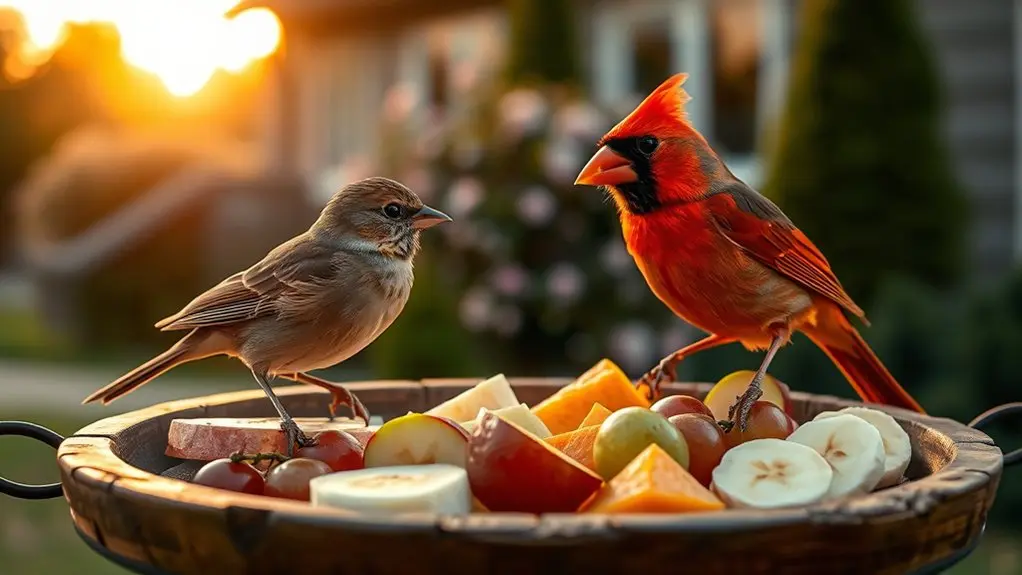
To keep birds safe from choking hazards posed by dense foods like fruit cake, you can offer a variety of fresh fruits that meet their dietary needs.
Embracing fruit variety benefits guarantees your birds get essential vitamins without added sugars or preservatives.
Offering a variety of fruits ensures birds receive vital vitamins naturally, without harmful additives.
Follow these bird feeding guidelines for safe treats:
- Choose fresh, organic fruits such as apples, berries, melon, and citrus, which provide hydration and vitamin C.
- Wash fruits thoroughly to remove pesticides and contaminants before serving.
- Chop fruits into small, manageable pieces to prevent choking and encourage trying new flavors.
How Balanced Pellets and Seeds Complement Safe Bird Treats
When you provide balanced pellets and quality seeds alongside safe fruit treats, you guarantee your bird receives a complete range of nutrients essential for its health.
Balanced nutrition strategies rely on high-quality pellets like Zupreem Fruit Blend, which offer a reliable nutritional base.
Adding seeds from reputable sources, such as Chuck at Reed Seed, introduces variety and stimulates natural foraging behavior benefits, keeping your bird mentally engaged.
These seeds complement safe treat alternatives, ensuring treats don’t replace essential nutrients but enhance dietary enjoyment.
By combining pellets, seeds, and safe fruit treats, you create a well-rounded diet that supports your bird’s wellbeing.
Monitoring your bird’s preferences helps maintain this balance, letting you adjust portions for ideal nutrition and happiness.
Introducing Fresh Fruits and Veggies to Picky Eaters
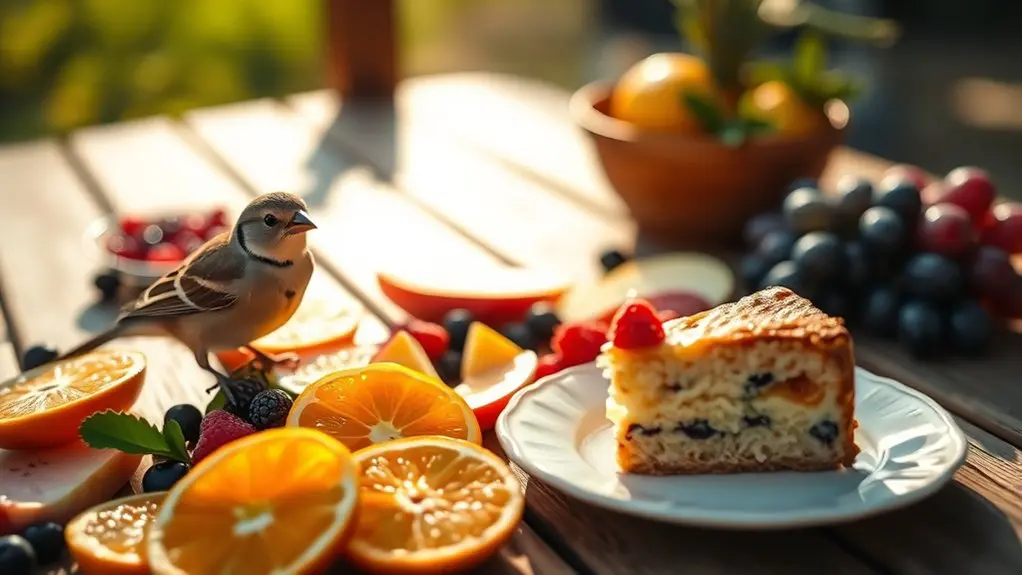
Although some birds can be picky eaters, you can encourage them to try fresh fruits and veggies by gradually mixing small amounts with their favorite pellets or seeds.
Using fruit exploration strategies helps spark curiosity. Try these steps:
- Offer colorful food presentations by arranging vibrant fruits and veggies side by side to catch their eye.
- Use texture variation techniques, like pureeing, dehydrating, or slicing fruits differently, to find what your bird prefers.
- Consistently provide small portions to build familiarity and acceptance over time.
Making Homemade Bird Treats Without Harmful Ingredients
Since you want to keep your bird healthy, you should skip harmful ingredients like refined sugars, artificial sweeteners, and preservatives when making homemade treats.
Focus on ingredient sourcing by choosing natural options such as oats, seeds, and unsalted nuts, which offer excellent nutritional benefits.
Prioritize natural ingredients like oats, seeds, and unsalted nuts for nutritious, wholesome bird treats.
Incorporate safe fruits like apples and berries in moderation to add flavor and nutrients without risks.
Avoid toxic fruits like raisins and sultanas, as even small amounts can harm your bird.
For treat presentation, shape your mixture into small, manageable portions that entice your bird while ensuring easy consumption.
Always verify ingredient safety through trusted avian nutrition sources or veterinarians to make sure your bird treats support their well-being and keep them happily snacking.
How to Recognize Signs of Digestive Distress From Fruit Cake
You’ll want to keep an eye out for digestive symptoms like abnormal droppings, vomiting, or swelling in the belly after your bird eats fruit cake.
Also, notice any changes in behavior, such as if your bird seems more tired than usual, gets irritable, or loses its appetite.
These signs can mean your bird is feeling uncomfortable and might need to see a vet.
Digestive Symptoms To Watch
When your bird eats fruit cake, watch closely for signs of digestive distress like lethargy, diarrhea, vomiting, or changes in appetite and droppings. These signs can indicate that the high sugar, fats, or toxic ingredients in fruit cake are affecting their system.
Here are three key symptoms to monitor:
- Lethargy or unusual tiredness, which signals discomfort or illness.
- Changes in droppings, such as diarrhea or abnormal color and consistency.
- Loss of appetite or vomiting, showing that their digestive tract is struggling.
For bird health tips, make sure fresh water is always available and offer safe snack options like fresh fruits and seeds instead of fruit cake.
If severe symptoms persist, consult a vet immediately to protect your bird’s health.
Behavioral Changes Indicating Discomfort
Watching for digestive symptoms like lethargy or changes in droppings is important, but paying attention to your bird’s behavior can reveal early signs of discomfort after eating fruit cake.
Behavioral indicators such as puffed feathers, decreased activity, or unusual agitation are discomfort signals you shouldn’t ignore.
Avian reactions like excessive vocalization, food avoidance, or sudden appetite changes also point to digestive distress.
You might notice regurgitation or vomiting, which clearly signals your bird’s digestive system is struggling with rich or sugary ingredients in fruit cake.
By recognizing these discomfort signals quickly, you can act promptly to adjust your bird’s diet or seek veterinary advice.
Staying alert to these behavioral indicators helps protect your bird’s health and wellbeing after consuming questionable foods.
How to Respond If a Bird Accidentally Eats Fruit Cake
If a bird accidentally eats fruit cake, keep a close eye on it for any signs of distress or unusual behavior. Ingredients like sugar and alcohol can harm its health.
Your emergency response should focus first on bird safety by removing any remaining fruit cake to prevent more ingestion.
Next, practice ingredient identification. Check the cake for harmful additives like preservatives in dried fruits.
Finally, observe the bird for symptoms such as lethargy, vomiting, or diarrhea. If you notice any of these, contact an avian veterinarian immediately for guidance.
Acting quickly helps protect the bird from potential toxicity and digestive issues, ensuring its well-being after accidental exposure to fruit cake.
Seasonal Feeding Tips to Avoid Unhealthy Treats
Accidentally feeding birds fruit cake highlights the significance of choosing safe, healthy options during seasonal feeding.
You should prioritize fresh fruits and vegetables over processed treats to support birds’ balanced nutrition.
Using bird friendly recipes like homemade seed cakes or dehydrated fruits guarantees they get essential nutrients without harmful additives found in fruit cake, such as sugar or alcohol.
Seasonal feeding also means monitoring local species’ dietary needs, so you avoid offering inappropriate human foods that could harm them.
Community education plays an important role here.
By spreading awareness about safe feeding practices, you help prevent accidental harm during festive seasons.
When you focus on these tips, you create a healthier environment for your feathered friends all year round.
Creating Bird-Friendly Snacks Without Toxic Ingredients
How can you create bird-friendly snacks without risking their health? Focus on nutritional balance and safe ingredient swaps to make creative treat ideas that your birds will love.
Start by using fresh, organic fruits like apples and bananas, avoiding harmful pesticides.
Then, incorporate these three key steps:
- Choose dried fruits, nuts, and whole grains free from preservatives and artificial additives.
- Avoid toxic ingredients like chocolate, caffeine, onions, garlic, and spices.
- Introduce new foods gradually to monitor your birds’ reactions and preferences.
Frequently Asked Questions
Can Fruit Cake Affect Different Bird Species Differently?
Yes, fruit cake ingredients affect bird species differently.
You’ll find that birds have unique dietary needs, so what’s safe for one might be harmful to another.
The high sugar content in fruit cake can cause sugar toxicity, especially in species sensitive to it.
Nuts, dried fruits, and alcohol often found in fruit cake can also pose risks.
Always consider your bird’s specific needs before offering any treats like fruit cake.
Is Fruit Cake Safe for Baby or Juvenile Birds?
Think of fruit cake as a candy-coated trap for baby birds. You shouldn’t feed fruit cake to baby or juvenile birds because its nutritional content is unbalanced and the sugar levels are way too high for their developing bodies.
Instead, focus on safe alternatives like fresh fruits, vegetables, and specially formulated bird diets that support healthy growth.
These choices provide the nutrients they need without risking their health or well-being.
How Long Does It Take for Fruit Cake Poisoning Symptoms to Appear?
You’ll usually see fruit cake poisoning symptoms in birds within a few hours to a few days after they eat it.
Toxic reactions depend on the fruit cake ingredients, like alcohol or certain dried fruits, which increase bird health risks.
Keep a close eye on your bird for lethargy, vomiting, or changes in behavior.
If you notice any signs, get veterinary help immediately to protect your bird’s health.
Are There Any Bird Species That Can Metabolize Alcohol Safely?
Think of bird digestion like a delicate clockwork; even a small grain of sand, like alcohol, can jam its gears.
You won’t find any bird species that can safely metabolize alcohol. Their systems can’t handle fruit toxicity from fermented sugars, and alcohol metabolism is especially tricky for them.
Can Feeding Fruit Cake to Birds Impact Their Reproduction or Lifespan?
Yes, feeding fruit cake to birds can negatively impact their reproductive health and lifespan. The high sugar and fat content disrupts their nutritional balance, leading to hormonal imbalances that harm breeding cycles.
Toxic ingredients like chocolate and certain nuts further threaten their well-being.
If you want to support a bird’s reproductive success and longevity, avoid making fruit cake a regular part of their diet.
Focus on species-appropriate, balanced nutrition instead.
Conclusion
So, next time you’re tempted to share fruit cake with your feathered friends, remember it’s more foe than friend, like giving them a rotary phone in a smartphone world. Instead, stick to safe, natural fruits and bird-friendly snacks.
Keeping their diet healthy helps them soar through seasons without digestive distress or choking risks. You’ve got the power to protect your birds and keep them chirping happily for years to come!