
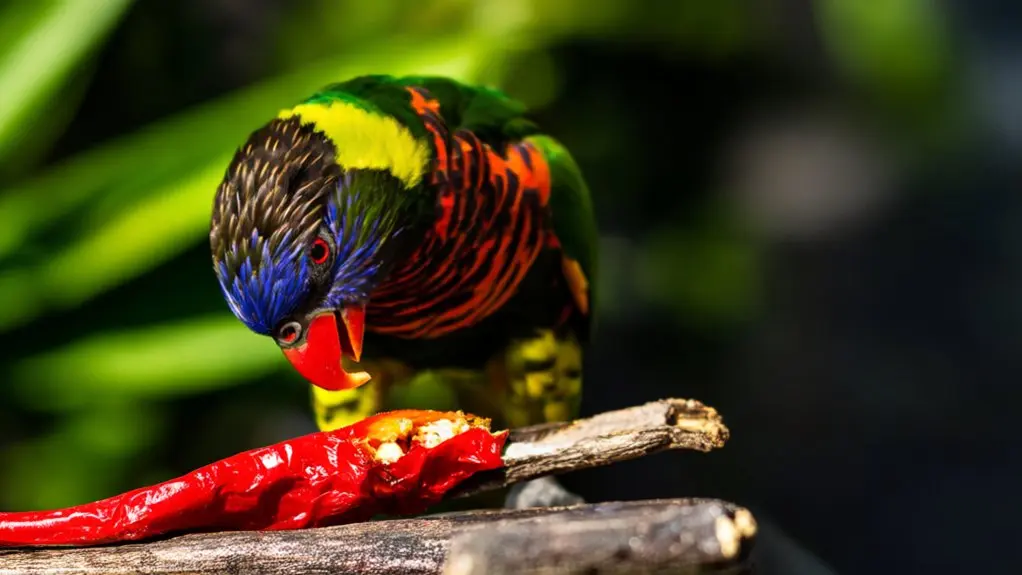
Yes, you can safely feed peppers to birds because their biology doesn’t register capsaicin as heat or pain like mammals do. Birds’ lack of specific pain receptors lets them enjoy even very spicy peppers, which also benefit their nutrition with vitamins A and C.
When birds eat peppers, they help spread seeds, aiding plant growth. Meanwhile, mammals feel discomfort, so spicy peppers keep them away. It’s pretty cool how this difference impacts wildlife and gardening strategies.
Why Birds Can Eat Peppers Without Feeling the Heat
Although humans and most mammals experience intense burning when they eat hot peppers, birds can consume them without any discomfort because they lack the pain receptors that respond to capsaicin. Capsaicin activates pain nerves in mammals, producing that characteristic burning sensation.
But birds’ sensory systems are different. While their taste receptors can detect capsaicin, these receptors don’t trigger pain or heat responses. This physiological difference means birds can eat peppers even at high Scoville Heat Units, like ghost peppers, without any irritation or distress.
This immunity actually plays an important ecological role. Birds can eat and spread hot pepper seeds effectively, which helps the plants reproduce.
If you watch birds eating spicy fruits, you’ll notice they don’t avoid them at all. That just shows how uniquely tolerant they’re to capsaicin compared to mammals.
What Nutritional Benefits Do Peppers Offer to Birds?
You’ll notice that peppers give birds an important boost of Vitamin A, which directly improves their feather quality and coloration.
Plus, the antioxidants and Vitamin C found in peppers help strengthen their immune systems. This means less cellular damage and a healthier bird overall.
All these nutrients work together to keep birds strong and resilient in their environments.
Vitamin A Benefits
How exactly do peppers benefit birds nutritionally? Peppers are rich in Vitamin A, primarily from beta-carotene, which birds convert efficiently. This nutrient is essential for maintaining sharp eyesight and preventing respiratory problems.
Additionally, Vitamin A supports feather health, enhancing coloration and shine. It also aids in overall growth and immune function, which are indispensable for birds’ vitality.
| Nutritional Benefit | Impact on Birds |
|---|---|
| Vitamin A (Beta-carotene) | Maintains healthy eyesight |
| Feather Health | Enhances coloration and shine |
| Respiratory Support | Prevents respiratory issues |
| Growth and Development | Supports overall physical growth |
| Immune Function | Strengthens immune defenses |
Including peppers enriches your bird’s diet with essential nutrients, boosting their health and appearance. It’s a simple way to help your feathered friends thrive!
Antioxidants and Immunity
Because peppers contain a high concentration of antioxidants, including Vitamin C and beta-carotene, they play an essential role in enhancing birds’ immune systems. These antioxidants reduce oxidative stress, which otherwise damages cells and impairs immune function.
Vitamin C specifically boosts the immune response, helping birds resist infections and recover faster.
Additionally, the rich Vitamin A content supports healthy feathers and overall immunity, contributing to better vitality and reproductive success.
By incorporating peppers into their diet, birds gain access to natural compounds that strengthen their defenses and promote longevity.
If you watch birds eating peppers, you might notice improved plumage coloration and vigor. This is a clear sign of the nutritional benefits at work.
How Birds Help Spread Pepper Seeds and Benefit Plants
You might’ve noticed that when birds eat peppers, they tend to swallow the whole fruit. Later on, they excrete the seeds in different places, which helps spread the plants around.
What’s really interesting is that this process doesn’t just move the seeds—it actually boosts their chances of germinating by over 300%! That’s because passing through the bird’s digestive system somehow makes the seeds more likely to sprout.
Birds As Seed Dispersers
Although pepper plants rely on various methods for seed dispersal, birds play a crucial role by swallowing whole fruits and later excreting viable seeds. When you observe birds consuming ripe peppers, their attraction to the fruit’s bright red and ultraviolet signals is clear. They efficiently locate these fruits for nourishment.
Because birds are immune to capsaicin, they eat spicy peppers without discomfort, making them reliable seed dispersers. As the seeds pass through their digestive systems, they remain intact and protected from fungi and pathogens. This protection really boosts their chances of successful germination.
You’ll also notice that birds can carry seeds over long distances, which promotes genetic diversity. This allows peppers to colonize new areas, ultimately benefiting the plants’ propagation and the overall ecosystem dynamics. It’s pretty amazing how much these little birds help out!
Seed Germination Enhancement
When birds swallow whole pepper fruits, they play an essential role in enhancing seed germination through their digestive process. As seeds pass through the bird’s gut, the pulp is removed, which increases the likelihood of successful sprouting.
This natural cleaning process also boosts seed resistance to fungal infections and other pathogens, further improving germination rates.
Remarkably, seeds that transit a bird’s digestive system germinate about 370% better than those that don’t.
Additionally, the widespread dispersal of seeds by birds allows peppers to colonize new habitats efficiently. You can appreciate this process through three key observations:
- Digestive abrasion removes inhibitory pulp, promoting seed sprouting.
- Gut passage enhances seed defense against pathogens.
- Seed dispersal across varied locations supports species expansion.
Plant-Bird Mutual Benefits
Birds don’t just improve seed germination through digestion; they actively shape pepper plant populations by dispersing seeds across diverse environments. When birds swallow whole peppers, the seeds pass intact through their digestive systems, which boosts germination rates by around 370%.
The peppers’ bright red color and ultraviolet reflectance act as signals, guiding birds to ripe fruits ready for dispersal. Because birds aren’t affected by capsaicin’s heat, they freely consume spicy peppers and transport seeds over long distances.
This mutualism benefits pepper plants by spreading seeds far beyond the parent plant’s location, increasing genetic diversity and colonization opportunities.
Additionally, digestion helps seeds resist fungi and pathogens, enhancing survival chances once dispersed.
Why Capsaicin Keeps Mammals Away But Not Birds
Because mammals have pain receptors that capsaicin activates, they feel a burning sensation when eating hot peppers. This burning sensation discourages them from eating more.
Mammals sense capsaicin’s burn, deterring them from eating too many hot peppers.
You’ll notice birds don’t feel this heat because they lack these specific pain receptors.
Although birds have taste receptors sensitive to capsaicin, these receptors don’t cause pain or discomfort. This means birds can eat hot peppers without any negative feeling.
Mammals’ pain receptors are widespread, which causes a strong aversive reaction to capsaicin. Birds have limited receptor distribution, so they don’t get that burning sensation.
This allows them to enjoy spicy fruits without any trouble.
This selective sensitivity benefits plants by keeping mammals away while encouraging birds to spread their seeds efficiently. Understanding this difference helps explain why capsaicin is such an advantage in plant-animal interactions.
How Hot Peppers Stop Squirrels From Raiding Bird Feeders
Capsaicin’s effect on mammals goes beyond just stopping them from eating spicy fruits. It also plays a big role in protecting bird feeders. When you coat bird seed with hot pepper extract, the capsaicin activates pain receptors in squirrels. This causes a burning sensation that makes the seeds really unpleasant to eat.
Unlike birds, squirrels feel intense discomfort. That’s what keeps them from coming back to feeders treated this way. Commercially prepared hot seed mixes have concentrated capsaicin, so squirrels avoid the seeds without harming the birds.
Using these spicy blends is a smart way to cut down on squirrel raids at your feeders. It lets birds feed peacefully without interruption. This trick works because mammals and birds sense pain differently, making it a practical and chemical-free way to keep squirrels away from your feeders.
How to Protect Pepper Plants From Bird Damage
When you grow pepper plants, protecting them from bird damage requires some smart strategies to prevent fruit loss and keep your plants healthy. Birds love ripe peppers, so using physical and visual deterrents is really important. You can cut down on damage by putting up barriers and choosing the right spots to plant.
Here are some ideas to try:
Use bird or butterfly netting with small holes to keep birds out but still let light and air flow through. Reflective deterrents like shiny balloons, wind chimes, or fake predators can help scare birds away. You can also install protective barriers such as chicken wire or draped netting during times when birds are most active.
Make sure to check these protections regularly and tighten them if needed. Placing your plants near your house or inside a greenhouse can also keep birds at bay, giving you healthier, undamaged peppers.
Frequently Asked Questions
Can Birds Eat All Types of Peppers Safely?
You can let birds eat most peppers safely, but avoid extremely hot varieties like ghost peppers. Their intense capsaicin might cause aversion.
Birds tolerate mild to moderate heat well and gain nutritional benefits from peppers. So, it’s usually fine to share those colorful peppers with your feathered friends. Just keep the super spicy ones out of reach to keep them happy and healthy.
Do Peppers Affect Bird Digestion or Health?
Like a Phoenix thriving on fire, your bird digests peppers without distress. Capsaicin doesn’t harm them.
You’ll find peppers may boost their health, offering nutrients. Their digestive systems handle spicy compounds efficiently and without discomfort.
Are Certain Bird Species More Attracted to Peppers?
Yes, you’ll notice species like thrushes and tanagers are more attracted to peppers because of their feeding habits and the visual cues they pick up on. These birds tend to go for peppers that stand out in color and shape, making them easier to spot.
Birds with less sensitive receptors, such as Micronesian Starlings, also prefer hotter varieties. This preference helps with seed dispersal since the birds eat the peppers and spread the seeds around. It’s pretty interesting how their taste buds and behavior influence what types of peppers they choose!
Can Eating Peppers Alter a Bird’s Behavior?
Imagine a bird hesitating, wings fluttering after tasting fiery pepper; you’ll see its behavior shift. Over time, repeated exposure to capsaicin subtly rewires its feeding habits, making it avoid spicy seeds instinctively.
It’s like the bird learns to steer clear of the heat. You can actually notice how its preferences change with each encounter. Pretty fascinating, right?
How Do Birds’ Beaks Handle Spicy Pepper Skins?
You’ll find birds’ beaks handle spicy pepper skins because their keratinized surface resists capsaicin’s effects. Without pain receptors for capsaicin, their beaks peel and bite peppers without discomfort.
This lets them enjoy spicy peppers safely. Birds don’t feel the burn like we do, so they can chow down without any trouble. Pretty cool, right?
Conclusion
You might be surprised to learn that birds can eat peppers without any discomfort because they lack the receptors that sense capsaicin’s heat. This means they enjoy the nutritional benefits, like vitamins A and C, while helping spread seeds and aiding plant reproduction.
Significantly, studies show birds consume up to 95% of wild chili seeds. This highlights their essential role in ecosystems.
By understanding this, you can better protect your pepper plants while supporting wildlife naturally. It’s a win-win!