
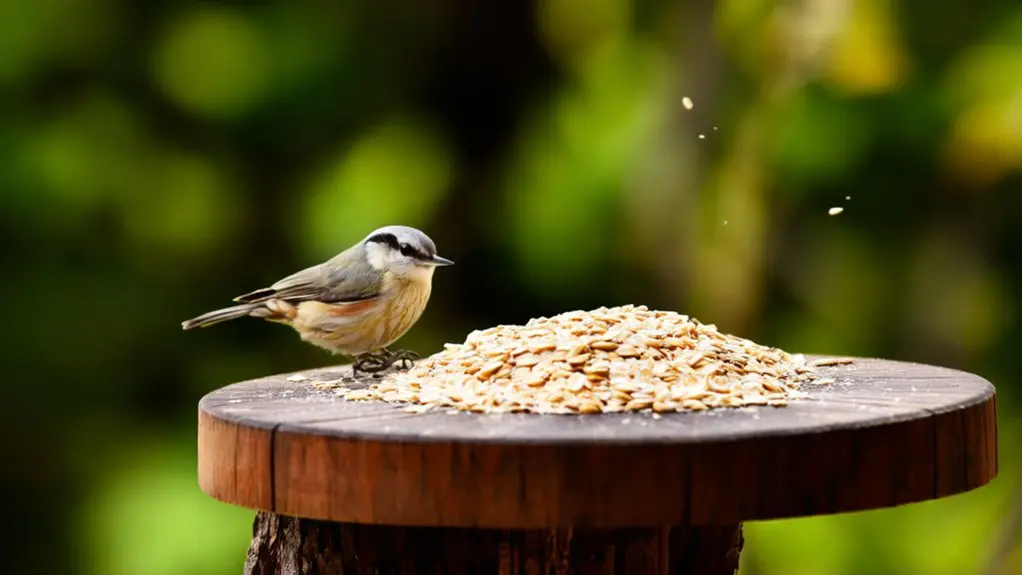
You can safely feed your bird old fashioned oats in moderation. It’s best to cook them to improve digestibility, especially for birds with sensitive digestion or weaker beaks. Oats provide complex carbohydrates, protein, fiber, and essential minerals like magnesium and phosphorus that support energy and overall health.
Just make sure to avoid any oats with additives, sugar, or mold, because these can harm your bird. Proper portions will vary depending on the size of your bird to prevent any digestive issues. Keep exploring to understand the best practices, species-specific benefits, and helpful feeding tips.
Can Birds Safely Eat Raw or Cooked Oats?
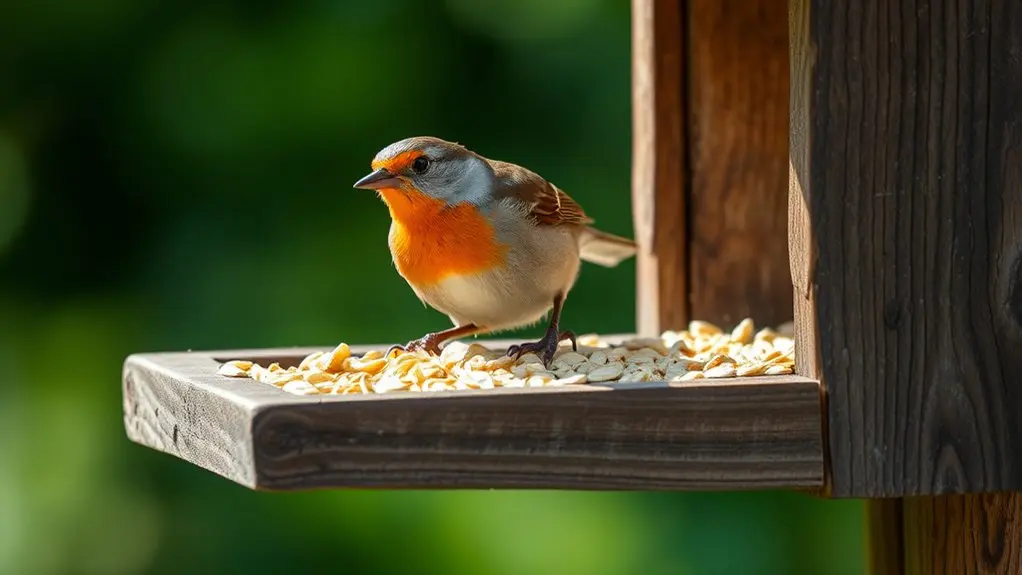
Although birds can safely eat raw oats in moderation, cooking them often helps improve digestibility. This is especially true for species with weaker beaks or sensitive digestive systems.
Cooking oats enhances digestibility for birds, especially those with delicate beaks or sensitive digestion.
You should always serve oats plain. Avoid any sugar, salt, or flavorings because these additives can harm birds.
Raw oats provide fiber and important nutrients, but too much can lead to digestive upset or nutritional imbalance. So, moderation is key.
Before offering oats, make sure they’re free from seasonings, additives, or contaminants to prevent any adverse effects.
By providing clean, unseasoned oats in appropriate amounts, you support birds’ health without compromising their digestive efficiency or overall well-being.
Whether raw or cooked, oats can be a safe supplement to a balanced avian diet when handled responsibly.
What Nutrients Do Oats Provide Birds?
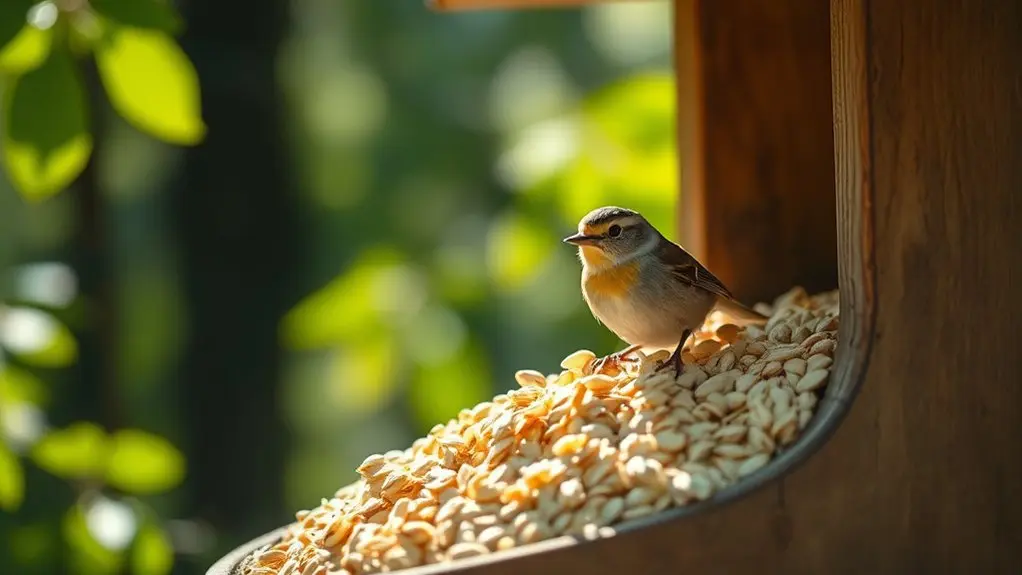
When you offer oats to birds, you provide them with a rich source of complex carbohydrates that deliver steady energy essential for their daily activities. Oats also supply moderate protein levels, which support muscle development and feather growth.
In addition, these grains contain essential minerals like manganese, phosphorus, and magnesium that contribute to overall bird health, including bone strength and metabolic balance. Dietary fiber found in oats aids digestion and maintains intestinal health, promoting nutrient absorption.
Moreover, oats provide important B-vitamins such as thiamine and niacin, which facilitate energy metabolism and neurological function. By including oats in a bird’s diet, you guarantee they receive a balanced combination of macronutrients and micronutrients necessary for ideal physiological functioning.
Which Bird Species Benefit Most From Oats?
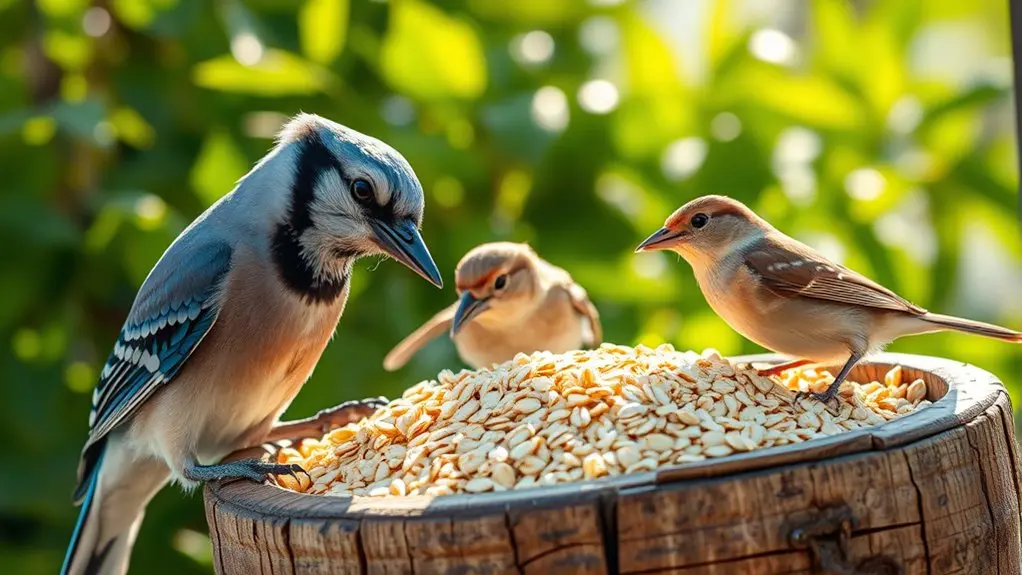
Understanding the specific bird species that gain the most from oats helps you tailor your feeding practices effectively. Wild birds like sparrows, finches, and juncos benefit from oats due to their high carbohydrate and fiber content, providing essential energy.
Songbirds such as chickadees and nuthatches often incorporate oats into their diet, especially during winter when energy demands increase.
Ground-feeding birds, including mourning doves and quail, can safely consume oats in moderation.
Migratory birds also rely on oats for sustained energy during long flights and cold periods.
Additionally, backyard species like bluebirds and robins may forage oats occasionally, particularly when other food sources are limited.
Offering oats to these specific species supports their nutritional needs and natural foraging behaviors. It’s a simple way to help your feathered friends stay healthy and active throughout the year.
How Much Oats Should You Feed Your Bird?
Since oats are high in carbohydrates but low in essential nutrients, you should feed them to birds only in small amounts and as an occasional treat. Generally, 1-2 teaspoons of plain, old-fashioned oats per day are enough, depending on the bird’s size.
Overfeeding can cause a nutritional imbalance, so oats shouldn’t replace the primary bird-specific foods. Always serve oats without any additives like sugar or salt. When introducing oats, keep an eye on your bird to see if there are any digestive reactions.
| Bird Size | Recommended Oat Amount | Feeding Frequency |
|---|---|---|
| Small (e.g., finches) | 1 teaspoon | 2-3 times per week |
| Medium (e.g., parakeets) | 1-2 teaspoons | 3-4 times per week |
| Large (e.g., cockatiels) | 2 teaspoons | 4-5 times per week |
| Extra Large (e.g., macaws) | Up to 2 teaspoons | 5 times per week or less |
What Are the Health Risks of Feeding Oats to Birds?
When you feed oats to birds, it’s important to keep an eye out for possible digestive problems, like crop impaction or upset stomachs. These issues can make your feathered friends uncomfortable or even sick.
Another thing to watch for is mold. If oats are damp or old, they might grow harmful fungi that can really affect bird health.
Knowing about these risks helps you choose safer food options and keep your birds happy and healthy.
Potential Digestive Issues
Although old fashioned oats can provide nutritional benefits to birds, feeding them improperly prepared or excessive amounts may lead to digestive problems. You should be aware of specific issues related to oat feeding:
First, added sugars or artificial ingredients in processed oats can disrupt a bird’s gut flora, causing digestive distress. Overfeeding oats, because of their high fiber content, may result in gastrointestinal upset or blockages, especially in small birds with limited digestive capacity.
And some birds just struggle to digest oats fully, which can cause nutritional imbalances and discomfort.
To minimize these risks, offer plain, properly portioned oats and keep an eye on your bird’s response. Avoid feeding oats that might stress their digestive system or go beyond what they can naturally handle. It’s all about balance and paying attention to what your bird needs.
Risk of Mold Exposure
If you feed birds oats that have developed mold, you risk exposing them to harmful mycotoxins that can cause severe health problems. Moldy oats produce these toxins, which are toxic to birds and can lead to respiratory issues, digestive disturbances, and neurological symptoms.
Consuming moldy oats weakens their immune system, increasing susceptibility to infections and potentially resulting in fatal outcomes. To protect birds, never offer old-fashioned oats showing any signs of mold.
Proper storage is essential to keep oats mold-free and safe for bird consumption. If you notice mold growth, discard the oats immediately to prevent exposure.
How to Start Feeding Oats to Your Bird
Before introducing oats to your bird’s diet, start with small amounts to monitor acceptance and digestion closely. Begin with plain, unflavored old-fashioned oats, avoiding any additives like sugars or salts. To ease consumption, soak the oats in water, which softens them and enhances digestibility.
Start with small amounts of plain, soaked oats to ensure easy digestion and acceptance by your bird.
You can gradually increase the portion while observing your bird for any adverse reactions.
Follow these steps for a smooth progression:
- Introduce soaked oats mixed with other bird-safe foods to provide nutritional variety.
- Observe your bird’s behavior and droppings closely for any signs of intolerance.
- Adjust the quantity accordingly based on tolerance and preference, guaranteeing oats remain a supplement, not a staple.
This approach guarantees safe, effective integration of oats into your bird’s diet.
Frequently Asked Questions
Can Oats Cause Allergies in Birds?
Yes, oats can cause allergies in birds, though it’s pretty uncommon. You should introduce oats gradually and keep an eye out for any itching or respiratory issues.
If you notice any allergic symptoms, make sure to consult a veterinarian. This way, you can ensure your bird’s health and safety. Just a little caution goes a long way!
Are Steel-Cut Oats Safe for Birds?
Yes, steel-cut oats are safe for birds when cooked plain and served cooled. They’ll provide beneficial fiber and energy. Just make sure to offer small portions to avoid choking or digestive issues.
Also, steer clear of added sugar or salt. Birds don’t need that extra stuff, and it could harm them. So, keep it simple and healthy!
Can Baby Birds Eat Old Fashioned Oats?
Yes, you can feed baby birds old fashioned oats if you grind them finely to prevent choking. Make sure the oats are plain, introduce them gradually, and monitor for any digestive issues or allergic reactions carefully.
It’s important to take it slow and watch how the baby birds respond. If you notice anything unusual, it’s best to stop and consult a wildlife expert. Keeping their diet safe and healthy is the priority.
How Do Oats Compare to Other Grains for Birds?
You’ll find oats offer higher fiber and easier digestibility than many grains, supporting bird digestion and energy.
Compared to corn or millet, they’re softer, lower in fat, and provide balanced nutrients without preservatives. This makes them great for various bird species.
Can Oats Help With Bird Feather Health?
You know what they say: “You are what you eat.” Oats provide essential protein, iron, and carbohydrates that actively support feather growth, repair, and sheen.
Feeding oats in moderation can really help maintain your bird’s plumage health. It’s a simple way to keep those feathers looking their best. Just remember, balance is key!
Conclusion
You can safely offer your bird old fashioned oats, raw or cooked, as a nutritious treat packed with essential vitamins and fiber. Just remember to feed oats in moderation. Overdoing it could turn their diet upside down!
Species like finches and parakeets especially benefit from this addition. Start gradually to monitor their reaction, and always make certain the oats are plain and unsweetened. When done right, oats can be a powerhouse supplement for your feathered friend’s health.