
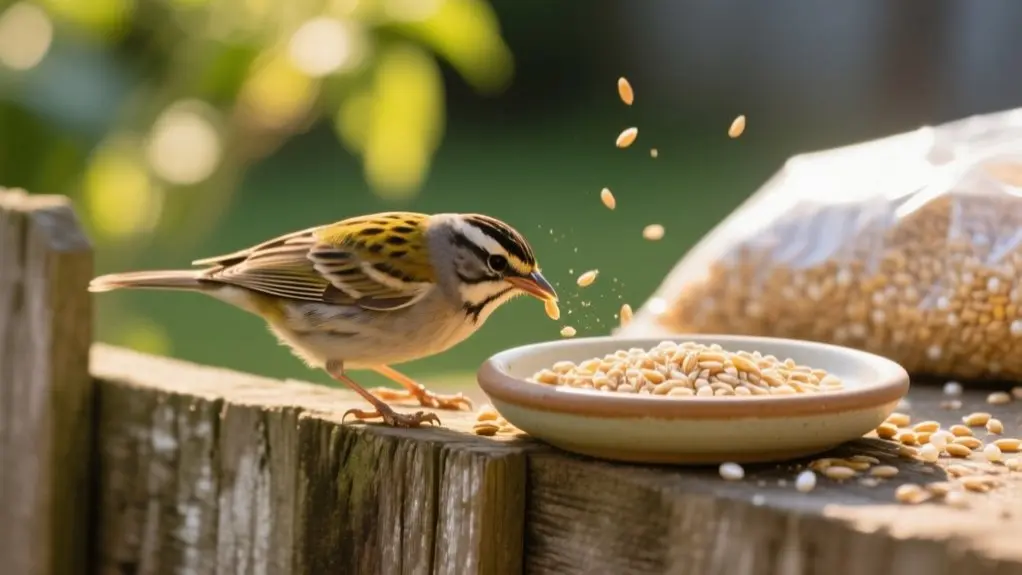
You can feed birds cooked farro safely in moderation, as it offers protein, fiber, and vitamins that support their health. However, raw farro may cause digestive problems and block nutrient absorption due to its toughness and anti-nutrients.
Always cook and cool farro before serving. Introduce it gradually, and monitor your bird’s response.
If you want to provide balanced nutrition or explore suitable feeding methods, there’s more helpful info ahead to guide you.
Is Farro Safe for Birds?
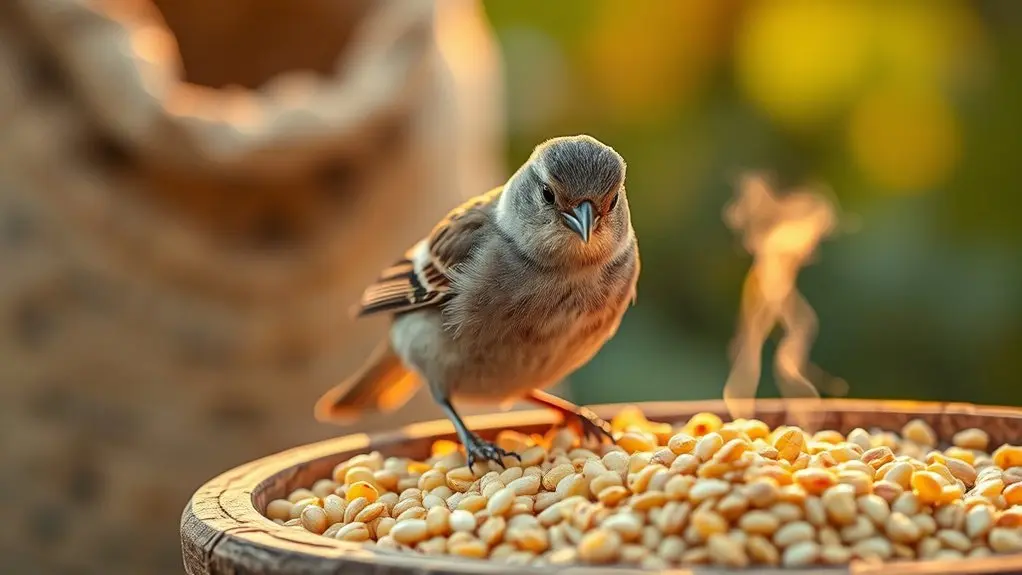
Although farro isn’t toxic to birds, you should be cautious when offering it, as feeding uncooked farro can cause digestive problems.
Uncooked grains like farro have low digestibility for a wild bird’s digestive system, which may lead to discomfort or blockages.
To improve digestibility, cook or soak farro before feeding it to birds. This process softens the grain, making it easier for them to digest and absorb nutrients.
Cooking or soaking farro softens it, enhancing digestibility and nutrient absorption for birds.
While farro contains beneficial nutrients, you shouldn’t rely on it as a sole food source. Instead, offer farro in moderation alongside a variety of safe grains and fresh foods to meet a wild bird’s dietary needs.
Always observe how individual birds respond to farro, as not every species will accept or benefit from it.
Is Feeding Raw Farro to Birds Risky?
Feeding raw farro to birds can lead to digestive issues because uncooked grains are tougher to break down and may contain compounds that block nutrient absorption.
When you feed birds dry grains like raw farro, they might struggle to access essential amino acids due to these anti-nutrients.
Birds digest cooked or soaked grains more easily, which helps release nutrients and reduces the risk of digestive upset.
Introducing raw farro suddenly can shock their system, causing discomfort or nutrient deficiencies.
If you want to feed birds farro safely, consider preparing it by cooking or soaking to improve digestibility.
Always check that the grains are fresh and free from mold, as spoiled dry grains could harm your feathered friends.
What Is Farro?
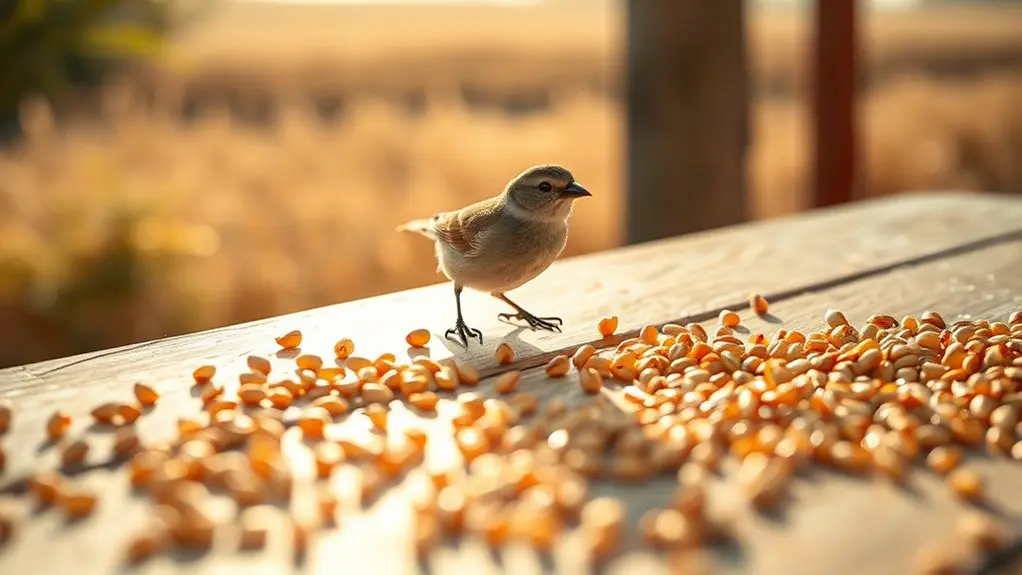
Farro comes from three types of ancient wheat, with Emmer being the most common you’ll find in stores.
It’s packed with nutrients like protein, fiber, and important vitamins that support overall health.
Knowing the different types and benefits of farro can really help you figure out if it’s a good fit for your bird’s diet.
It’s worth considering if you want to add something nutritious and wholesome.
Farro Types Overview
Ancient wheat grains like Einkorn, Emmer, and Spelt form the core of farro, a nutritious whole grain that’s been enjoyed since Mesopotamian times.
You’ll find three main types: Einkorn, prized for its nutritional density and touted for Einkorn benefits like high protein and antioxidants.
Emmer, often used in traditional recipes, stands out for its versatility and Emmer uses in breads and soups.
Spelt, meanwhile, invites Spelt comparisons as it resembles modern wheat but offers a nuttier flavor and chewier texture.
Each type requires cooking until soft and chewy, similar to barley.
Knowing these differences helps you choose the right farro for your meals, whether you want a richer nutrient profile or a specific texture.
Nutritional Profile Summary
Although you might be more familiar with grains like rice or quinoa, farro offers a unique combination of nutrients and flavors that make it a great addition to your diet. Originating from ancient wheat varieties, farro’s nutty taste and chewy texture stand out.
Its cooking methods, typically boiling or simmering, preserve its rich nutrient content. Birds also show preferences for farro due to its digestible protein and fiber.
| Nutrient | Benefit | Bird Preferences |
|---|---|---|
| Zinc | Immune support | Attracts seed-eating birds |
| Magnesium | Muscle function | Preferred for energy |
| Vitamin B3 | Metabolism boost | Enhances digestion |
| Dietary Fiber | Digestive health | Helps regulate intake |
| Complete Protein | Muscle repair | Supports growth |
Farro’s balanced nutrition benefits both you and birds alike.
Why Feed Farro to Birds?
You’ll find that feeding farro to birds is a great way to give them essential amino acids and antioxidants.
Plus, it’s a smart move if you want to cut down on food waste, especially when you don’t eat farro yourself.
Nutritional Value Benefits
Farro offers birds a variety of nutritional benefits that support their overall health and vigor. Its fiber benefits promote healthy digestion and help birds feel fuller longer, reducing overeating.
Farro also contains essential amino acids and protein, which are crucial for muscle repair and maintaining strength. Furthermore, its rich antioxidant properties boost the immune system and contribute to healthier skin and feathers.
Beyond these, farro supplies minerals like zinc and magnesium, supporting various bodily functions and overall well-being.
Because farro has a low glycemic index, it helps stabilize blood sugar levels, making it a balanced energy source for birds.
Including farro in your bird’s diet can enhance their nutrition in a natural, wholesome way.
Minimizing Food Waste
Since farro provides birds with valuable nutrients, it makes sense to put any unused grains to good use rather than letting them go to waste. Feeding leftover farro to birds helps minimize food waste by turning pantry surplus into a nutritious meal for local wildlife.
This practice supports bird feeding efforts in a sustainable way, reducing the environmental impact of discarded food. By offering farro, you contribute to the well-being of birds, especially during harsh weather when natural food sources are scarce.
Using farro for bird feeding not only cuts down on food waste but also encourages sustainable practices in your daily routine.
Plus, it deepens your connection with nature by promoting awareness of what birds need to thrive.
Supporting Wild Bird Health
Although wild birds have diverse diets, offering them farro can greatly support their health and well-being. Farro’s high fiber content aids digestion and stabilizes blood sugar, while its antioxidants boost immune function.
By incorporating farro into their bird diet diversity, you provide essential amino acids that support muscle repair, especially during migration. Using seasonal feeding strategies, you can supply farro when natural food is scarce, helping birds through tough conditions.
Cooked or soaked farro improves digestibility, preventing digestive issues.
Combined with habitat enhancement techniques, farro acts as a valuable supplement, mitigating habitat loss effects. Feeding farro thoughtfully guarantees you’re promoting wild bird health effectively while enriching their natural diets.
How to Prepare Farro for Birds
Before offering farro to your birds, you’ll want to cook it thoroughly to make it easier for them to digest and to eliminate any potential toxins found in raw grains. Start by rinsing the farro thoroughly to remove any debris or contaminants.
For farro preparation methods, boil the grains in water for 20-30 minutes until tender but still chewy. This texture is ideal for birds. As a cooking tip, avoid overcooking to maintain nutritional value.
Once cooked, let the farro cool completely to prevent burns.
For serving suggestions, offer farro in moderation, mixing it with other safe grains and fresh vegetables to provide a balanced diet. These steps guarantee your birds enjoy farro safely and healthfully.
How Much Farro Should You Feed Your Bird?
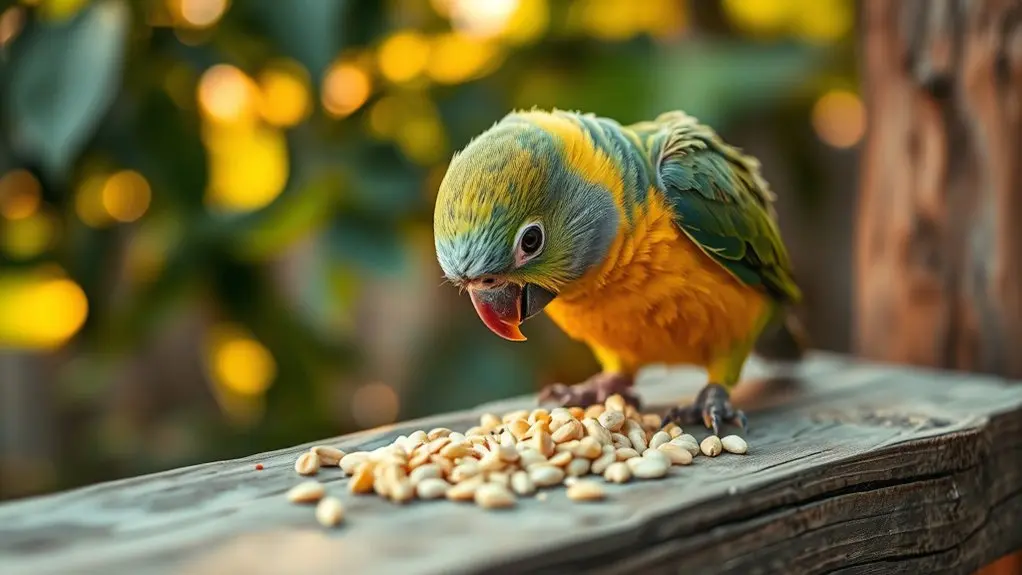
You should feed your bird farro in small portions—usually just a few teaspoons per serving. This helps avoid overfeeding.
It’s a good idea to offer it a few times a week as part of a varied diet, which keeps their nutrition balanced.
And of course, always keep an eye on how your bird reacts to new foods and adjust the amount if needed.
Portion Size Guidelines
Since farro is high in fiber, start by offering your bird a small portion, about a teaspoon, to see how they tolerate it. Use portion control strategies to introduce this grain gradually, respecting your bird’s dietary preferences.
Cook farro before serving to aid digestion and avoid digestive issues. Introduce farro as an occasional treat rather than a staple, keeping intake below 10% of their diet.
Monitor their reaction over several days and adjust portions accordingly to guarantee variety and prevent selective eating.
| Portion Size | Purpose |
|---|---|
| 1 teaspoon | Initial introduction |
| 1-2 teaspoons | If tolerated well |
| Up to 10% of daily diet | Maximum to avoid digestive upset |
| Cooked farro | Preferred preparation method |
| Occasional treat | To complement balanced diet |
Frequency Of Feeding
Regularly offering small amounts of cooked farro a few times a week allows you to observe how well your bird tolerates and enjoys this grain. Following feeding frequency guidelines, start with about one teaspoon per serving, ensuring the farro is well-cooked and cooled for easy digestion.
Pay close attention to your bird’s response, adjusting the frequency if you notice any digestive upset. Remember, moderation importance is key—farro should complement your bird dietary habits, not replace a balanced diet.
Incorporate farro alongside fruits, vegetables, and other grains to provide a well-rounded nutritional intake.
How Farro Helps Your Bird Stay Healthy
Although many grains offer nutritional benefits, farro stands out for its unique ability to support your bird’s health in multiple ways.
The farro benefits include its high dietary fiber content, which improves bird digestion and helps maintain a healthy weight. This fiber also enhances nutrient absorption, ensuring your bird gets the most from its diet.
Moreover, farro contains essential amino acids that promote muscle repair and overall wellness. Its rich antioxidants, like polyphenols, boost immune function and contribute to healthy skin and feathers.
Significant minerals such as zinc and magnesium further support bodily functions. By including farro in your bird’s meals, you help regulate blood sugar and cholesterol levels, supporting long-term health and well-being.
Which Birds Can Digest Farro Easily?
Farro offers many health benefits, but knowing which birds can handle it well helps you choose the right additions to their diet.
Parrot preferences lean toward cooked farro since their adaptable digestive systems manage softened grains easily, boosting their nutrition.
Similarly, pigeon health benefits from farro’s fiber and protein, supporting balanced diets, especially during active periods.
When it comes to finch diets, farro can be introduced gradually, as these seed-eaters might struggle with raw grains.
Cooking farro softens it, making digestion smoother for finches and other small birds.
Remember, moderation is key. Offering farro as part of a varied diet prevents digestive issues and guarantees your feathered friends get a nutritious boost without complications.
Always tailor farro inclusion to your bird’s specific needs.
Farro vs. Other Safe Grains for Birds
When choosing grains for your birds, you’ll find farro stands out for its rich nutrient profile compared to more common options like rice or oats. This farro grain comparison highlights its higher fiber, antioxidants, and essential amino acids, which can better support your bird’s digestion and overall health.
Considering bird dietary preferences, you’ll want to offer a variety of grains to keep their diet balanced and interesting. Proper grain preparation methods, like cooking or soaking farro, improve digestibility and nutrient absorption, reducing digestive issues.
Keep these points in mind:
- Farro’s whole grain benefits surpass refined grains in nutrition
- Variety in grains, such as quinoa and buckwheat, suits diverse bird tastes
- Preparing grains correctly guarantees safe, effective feeding
This approach helps you provide a wholesome, enjoyable diet for your feathered friends.
Tips for Introducing Farro Without Selective Eating
Since birds can be picky eaters, you’ll want to introduce farro gradually to prevent selective eating.
Start by mixing farro with familiar grains like quinoa or oats to ease your bird into the new texture preferences.
To make the dish more enticing, use a colorful presentation by adding finely chopped vegetables.
This helps mask farro’s presence and encourages birds to sample everything without picking favorites.
You can also incorporate farro into homemade birdie bread or a bird chop mix, rotating it with other grains to keep variety and interest.
Keep a close eye on your bird’s reactions, adjusting the mix as needed to ensure they get a balanced diet without developing selective eating habits.
How to Store and Handle Farro Safely
To keep your bird’s farro fresh and safe, proper storage and handling are key. Following farro storage tips guarantees the grain stays fresh and prevents spoilage.
Proper storage and handling are essential to keep your bird’s farro fresh and prevent spoilage.
Always store dry farro in an airtight container placed in a cool, dark spot to support farro freshness maintenance.
When handling farro, rinse it before cooking to remove any debris or contaminants. After cooking, refrigerate farro and use it within 2 to 3 days to keep it safe for your bird.
Also, apply farro handling precautions by discarding any farro that smells sour or shows mold. Remember, keep cooked farro out of the birdcage longer than 4 hours to avoid spoilage.
- Store dry farro airtight in a cool, dark place
- Rinse before cooking to remove impurities
- Refrigerate cooked farro; discard if sour or moldy
Alternatives to Farro for Feeding Birds
Although farro offers many nutritional benefits, you might want to try other grains that provide similar or even enhanced health advantages for your bird.
Quinoa benefits include being a complete protein with all nine essential amino acids and a high magnesium content, making it a top alternative.
Oats nutrition supports sustained energy through soluble fiber while remaining easy to digest, perfect for active birds.
If you’re considering buckwheat alternatives, know that buckwheat is gluten-free and rich in antioxidants and essential minerals, promoting heart health.
These options, along with amaranth and rice, offer diverse nutrients and digestibility, ensuring your feathered friend enjoys a balanced, varied diet without relying solely on farro.
Exploring these grains can keep your bird healthy and energized.
Frequently Asked Questions
Can Farro Cause Allergies in Birds?
Yes, farro can cause allergies in birds. You should watch for farro allergy symptoms like feather plucking, skin irritations, or digestive issues.
Since birds have specific dietary restrictions, it’s essential to introduce new grains cautiously.
If your bird reacts negatively to farro, stop feeding it immediately. Instead, try safe grain alternatives such as quinoa or millet, which are less likely to trigger allergic reactions and support your bird’s health.
Does Farro Affect Bird Digestion Speed?
Yes, farro affects bird digestion speed because its high fiber content slows farro digestion.
Since your bird’s metabolism works quickly, raw farro’s tough bran can delay grain absorption and cause digestive discomfort.
To help your bird digest farro efficiently, you should cook or soak it first.
This softens the grain, making it easier for your bird’s system to break down and absorb nutrients without stressing their metabolism.
Can Baby Birds Eat Farro Safely?
You shouldn’t feed farro to baby birds because their digestive systems can’t handle it well.
For proper baby bird nutrition, focus on species-specific formulas or soft foods instead.
If you want to try grains, look for alternative grains that are easier to digest and prepare them thoroughly.
Always verify farro preparation is safe by cooking it fully, but consult an avian specialist before introducing any new food to keep your baby bird healthy.
Is Farro Suitable for Wild Bird Feeding Stations?
Farro isn’t the best choice for your wild bird feeding stations. While it has nutritional benefits, many wild birds prefer seeds like sunflower or millet, which better match their natural diets.
Offering farro mightn’t attract as many visitors to your feeder.
Instead, stick to alternatives like safflower seeds or mixed birdseed blends that cater to wild bird preferences and keep them coming back happily.
Does Farro Impact Bird Feather Quality?
You mightn’t expect farro to turn your bird into a feathered fashion icon overnight, but it does support feather growth thanks to its nutritional benefits.
The amino acids, zinc, and magnesium in farro quietly boost feather quality, though you’ll need to mind feeding frequency to avoid overdoing it.
Conclusion
Now you know farro can be a nutritious treat for your feathered friends when prepared properly. Notably, wild birds consume a variety of grains, with studies showing up to 70% of their diet in some areas comes from seeds and grains.
By introducing farro carefully and cooking it well, you provide a safe, healthy option alongside other grains. Just remember to store it properly and watch for any selective eating habits to keep your birds happy and healthy.