
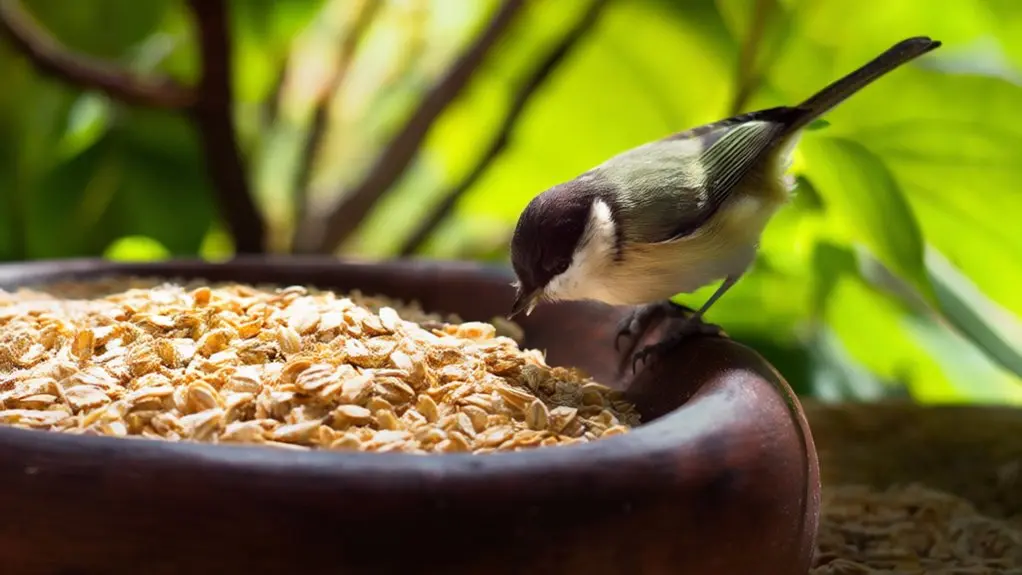
You can safely feed birds plain oat bran as a nutritious supplement that supports digestion and overall health. It’s rich in soluble fiber, essential vitamins, minerals, and protein, which help with energy, feather growth, and immune function.
Serve it dry and in moderation, introducing it gradually to avoid digestive issues. Make sure to avoid additives or mold to keep it safe.
If you want to understand the best serving methods and precautions, there’s more helpful information ahead.
What Nutrients Make Oat Bran Good for Birds?
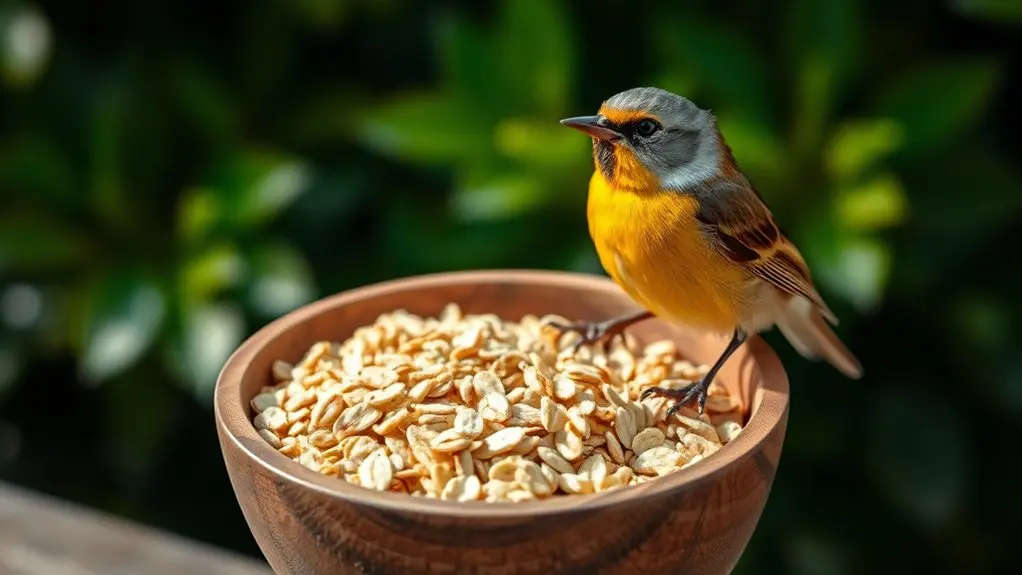
Although oat bran might seem like a simple food, it offers birds a complex mix of nutrients essential for their health. You’ll find it rich in soluble fiber, which supports healthy digestion by regulating gut function.
Oat bran also supplies B-vitamins that play a pivotal role in energy metabolism and maintaining overall vitality.
Additionally, it contains important minerals like magnesium, iron, and zinc, each indispensable for enzymatic reactions and immune support.
The high protein content promotes feather growth and muscle development, ensuring birds maintain strength and proper plumage.
Furthermore, beneficial fats in oat bran provide sustained energy, especially important during cold seasons or migration.
Including oat bran in a bird’s diet can therefore contribute considerably to their physiological well-being. It’s a simple addition that makes a big difference!
Is Oat Bran Safe for All Birds?
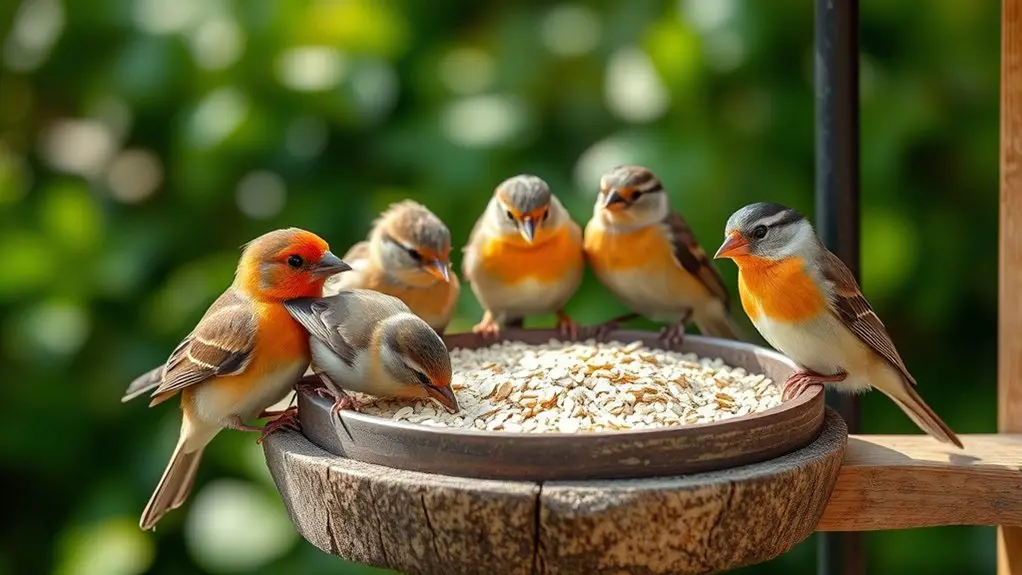
When you offer oat bran to birds, you’ll find it’s safe for most species as long as you serve it plain and in moderation.
Oat bran contains soluble fiber, which supports avian digestive health and is generally well tolerated. Its fine texture can be especially suitable for small birds, who may struggle with whole oats or larger grains.
However, you should avoid additives such as sweeteners, flavors, or preservatives, as these can harm birds.
Although oat bran is safe for many species, introducing it gradually is essential to prevent digestive upset.
Remember that oat bran should complement a varied diet to meet all nutritional needs.
How Should You Serve Oat Bran to Birds?
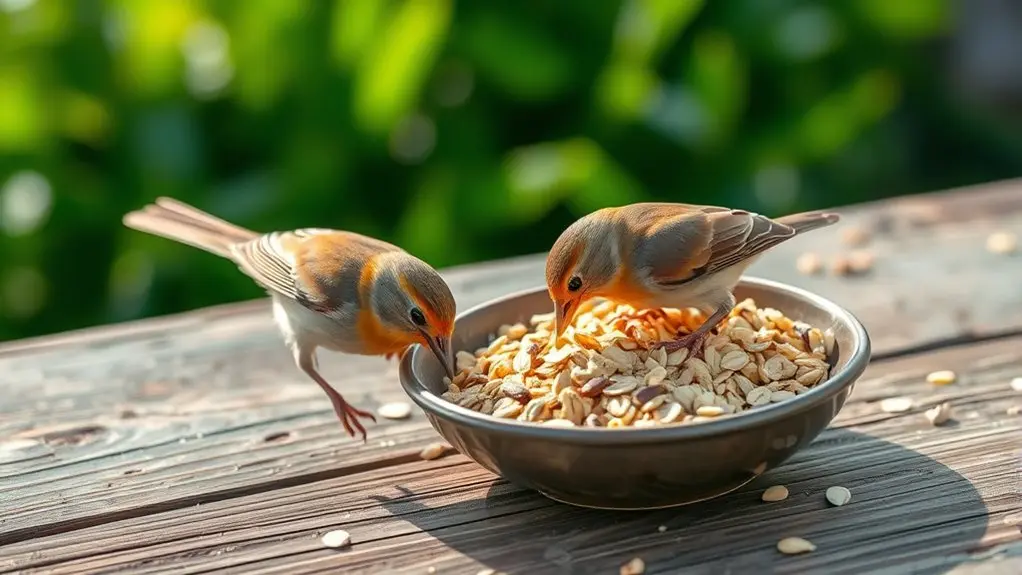
If you want to serve oat bran to birds effectively, you should offer it in small, dry portions to keep it fresh and prevent spoilage. Avoid adding flavors or sweeteners because pure oat bran is the safest and most nutritious option. You can sprinkle oat bran on existing feeders or mix it with other bird foods.
Using shallow dishes or platform feeders works best, especially for ground-feeding species, since it makes access easier for them. Always keep oat bran dry and free from mold to preserve its quality.
| Serving Method | Purpose |
|---|---|
| Small, dry portions | Prevent spoilage |
| Shallow/platform feeders | Ease of access for birds |
| Pure oat bran (no additives) | Maintain nutritional value |
Can Birds Digest Oat Bran Easily?
Serving oat bran properly guarantees birds receive its nutritional benefits, but you might wonder how well they can digest it. Birds can digest oat bran efficiently due to its high fiber content, particularly soluble fiber, which regulates intestinal movements and supports gut health.
The soft texture of oat bran enhances its digestibility, making it suitable for many bird species when introduced gradually.
However, digestive efficiency varies among species, depending on their natural diets. Some birds adapt more easily to oat bran, while others may require a slower introduction to avoid digestive upset.
How Much Oat Bran Should You Feed Birds?
Although there isn’t a specific recommended quantity of oat bran for birds, you should offer it in moderation as part of a balanced diet. Overfeeding can cause nutritional imbalances, so treat oat bran as an occasional supplement rather than a staple.
To feed oat bran safely, follow these guidelines:
- Provide a small handful or a few teaspoons per feeding session.
- Mix oat bran with other foods to maintain dietary variety.
- Introduce it gradually to monitor acceptance and avoid digestive upset.
- Offer in small amounts to keep it fresh and minimize waste.
How to Mix Oat Bran With Other Foods for Bird Nutrition?
When you mix oat bran with other foods for bird nutrition, you create a more balanced and varied diet that supports their health. Start by combining oat bran with birdseed or cracked grains to enhance nutritional variety. Introduce oat bran gradually in small amounts to prevent digestive upset and monitor acceptance.
To boost energy, especially in colder months, mix oat bran with natural fats like suet or peanut butter. Avoid adding sweeteners or artificial flavorings, as these can harm birds. Make sure the overall diet stays diverse by including seeds, insects, and fruits alongside oat bran.
This way, you provide essential nutrients while keeping dietary balance. It’s a simple approach that supports birds’ health and well-being effectively.
How to Tell If Birds Like Oat Bran
If you want to determine whether birds like oat bran, observe their feeding behavior closely at your feeders. Birds’ interest varies by species, so careful observation is essential.
Use these indicators to assess their preference:
- Note if birds peck directly at oat bran or spend more time near feeders offering it.
- Observe if they return quickly and repeatedly to feeders containing oat bran.
- Measure the amount of oat bran consumed compared to other seeds or grains offered.
- Watch for increased activity or feeding behavior around oat bran, indicating acceptance.
Keep in mind that birds often consume oat bran alongside other foods, showing partial preference rather than exclusive liking. So, it’s not always about them loving oat bran outright but maybe just enjoying it as part of their mix.
These behaviors scientifically suggest whether oat bran is a favored addition to their diet.
Which Foods Should You Avoid Feeding Birds?
Understanding which foods birds enjoy, like oat bran, helps you provide a balanced diet. But it’s just as important to know what you should never feed them. Avoid offering moldy, spoiled, or old foods because these can cause serious illness or even death.
Also, stay clear of salty and processed human foods like bacon and chips. These are toxic and may lead to poisoning. You want to keep your feathered friends safe, so skip anything with artificial sweeteners, colorings, or additives. These ingredients can be harmful to birds.
Dairy products, such as milk, are tough for birds to digest and might cause digestive issues. And watch out for certain fruits like avocados—they contain toxins that can damage bird organs.
How Oat Bran Helps Keep Birds Healthy All Year
You’ll find that oat bran’s rich dietary fiber really helps birds with their digestion.
Plus, the vitamin B in it supports their nervous system and gives them energy.
It also contains essential minerals like magnesium and iron, which contribute to overall health and even feather growth.
On top of that, oat bran provides antioxidants that help strengthen birds’ immune systems.
Nutritional Benefits Of Oats
Because oat bran contains high levels of soluble fiber, it plays an essential role in supporting healthy digestion in birds. This fiber also aids in regulating blood sugar, ensuring steady energy release. Additionally, oat bran supplies vital nutrients that contribute to overall bird health.
You can rely on oat bran to provide magnesium, iron, and B vitamins essential for metabolic functions. It also supports muscle and feather development through beneficial protein and fats.
Plus, oat bran helps maintain stable blood sugar levels, preventing energy crashes.
It’s great for supplementing dietary needs, especially during periods of increased energy demand. Incorporating oat bran into your bird’s diet offers a scientifically backed blend of nutrients and fiber that supports digestion and physiological health efficiently.
Year-Round Health Support
Although birds face varying environmental challenges throughout the year, incorporating oat bran into their diet consistently supports digestive health and energy regulation. Oat bran’s high soluble fiber content promotes efficient digestion, preventing gastrointestinal issues across seasons.
The magnesium and B vitamins found in oat bran enhance immune function and overall health, helping birds resist seasonal illnesses. Plus, oat bran aids in regulating blood sugar levels, providing birds with steady energy essential for migration, molting, or breeding periods.
Its antioxidant properties reduce oxidative stress, which supports longevity in both wild and domestic birds. By regularly including oat bran in their balanced diet, you help maintain your birds’ ideal weight and metabolic health year-round. That way, they thrive despite environmental fluctuations.
How to Introduce Oat Bran Without Upsetting Bird Digestion
You should start by mixing just a small amount of oat bran with the birds’ regular seed. This gives their digestive systems time to get used to the new ingredient.
Keep a close eye on how they react — watch out for any signs of digestive upset or if they refuse to eat.
Then, gradually increase the oat bran over the course of a few weeks. Taking it slow like this helps make sure the dietary change goes smoothly without upsetting their digestion.
Gradual Diet Transition
When introducing oat bran to your birds, start by mixing small amounts with their current food to minimize digestive disturbances. Follow these steps for a smooth dietary transition:
- Begin with a teaspoon of plain oat bran mixed into their regular seed or food.
- Gradually increase the quantity over several days or weeks, allowing their digestive system to adapt.
- Ensure the oat bran contains no added sugars, salts, or flavorings that could harm digestion.
- Continue offering a variety of natural foods like seeds, fruits, and insects to maintain balanced nutrition.
This gradual approach helps prevent digestive upset, such as diarrhea or lethargy. It supports your birds’ overall health while introducing oat bran safely.
Monitor Bird Reactions
Since introducing oat bran can affect your birds’ digestion, closely monitoring their reactions is essential. Start by mixing a small amount of oat bran with their regular seed to gauge acceptance and tolerance. Observe for any signs of digestive upset, such as regurgitation, lethargy, or refusal to eat.
If no adverse reactions appear, gradually increase the oat bran proportion, but keep it a minor part of their diet. Provide oat bran in a clean, accessible feeder to encourage cautious exploration.
Remove the oat bran immediately if you notice any distress or if the bran shows spoilage or mold.
Careful observation during this shift helps prevent digestive disturbances and guarantees your birds safely adapt to the new food source. So, keep an eye on them and adjust as needed to make sure they’re comfortable with the change.
Frequently Asked Questions
Can Oat Bran Attract Specific Bird Species to My Garden?
Oat bran won’t effectively attract specific bird species to your garden because most prefer whole seeds like sunflower or millet. Its fine texture and processed form make it less appealing compared to natural, preferred food sources.
Birds usually go for seeds that are easy to pick up and eat. Oat bran, being more powdery, just doesn’t do the trick. So, if you want to see certain birds visit, you’re better off sticking with their favorites.
Is Oat Bran Suitable for Baby Birds or Only Adults?
You might think oat bran suits baby birds, but it doesn’t. Their delicate systems struggle with processed grains.
Only adult birds tolerate it well, so avoid giving oat bran to nestlings without expert guidance. This helps prevent digestive issues.
How Does Oat Bran Compare to Other Grains for Birds?
You’ll find oat bran offers less protein and fat than millet or sunflower seeds, providing fewer calories and energy. While it adds fiber, it’s less nutritionally dense, so it shouldn’t replace more nutrient-rich grains in bird diets.
It’s kind of like a filler—good for variety but not the main meal. Birds need those richer grains to stay healthy and energized. So, think of oat bran as a supplement rather than a staple.
Can Feeding Oat Bran Affect Birds’ Feather Quality?
You’ll find that feeding birds excessive oat bran, which contains over 10% fiber, can negatively affect feather quality by causing nutrient imbalances and poor protein absorption.
Are There Any Seasonal Considerations for Offering Oat Bran?
You should offer oat bran mainly in colder months to boost energy and fat reserves.
During spring and summer, limit its use to avoid disrupting natural foraging and nutrient balance. Adjust based on seed availability and freshness. It’s all about keeping things balanced with the seasons.
Conclusion
You can safely add oat bran to your bird’s diet, but moderation is key. It’s not a magic bullet, just a helpful supplement. Packed with fiber, vitamins, and minerals, oat bran supports digestion and overall health.
But overfeeding can cause issues. So, introduce it gradually to avoid upsetting their system. Think of oat bran as a building block in their nutritional puzzle, enhancing their diet without replacing essential variety.
Always prioritize balanced feeding for ideal bird wellness. It’s all about keeping things varied and nutritious to keep your feathered friend happy and healthy.