
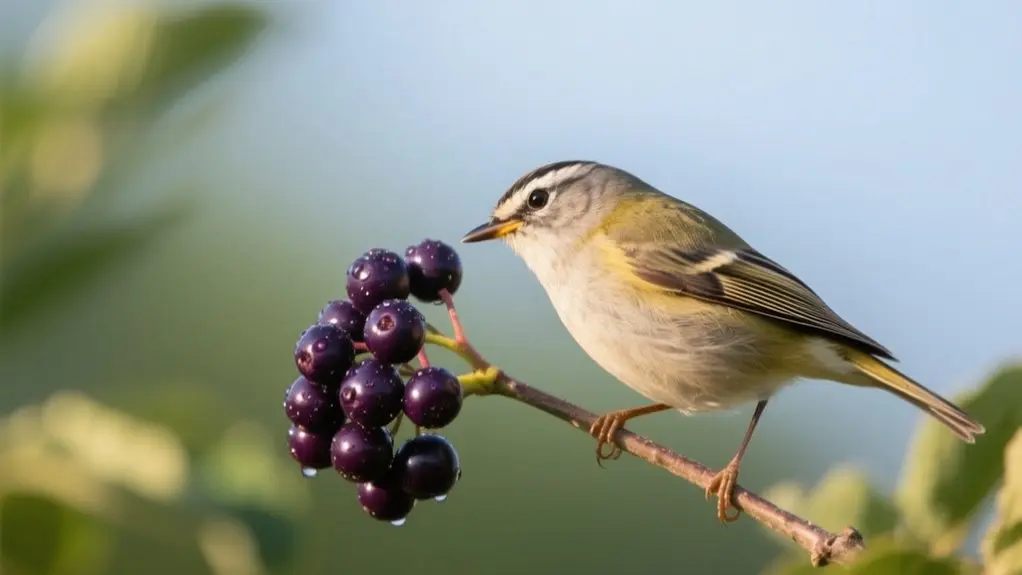
Yes, birds can safely eat elderberries, and they actually thrive on these nutrient-rich fruits. Elderberries provide essential energy, especially during migration, and attract over 120 bird species like robins and bluebirds.
The berries ripen in late summer and offer antioxidants that boost bird health. Birds also help spread elderberry seeds, supporting ecosystem balance. Plus, elderberry plants create great shelter and nesting spots.
Keep exploring to see how elderberries benefit birds and local habitats even more.
Reasons Birds Are Attracted to Elderberries
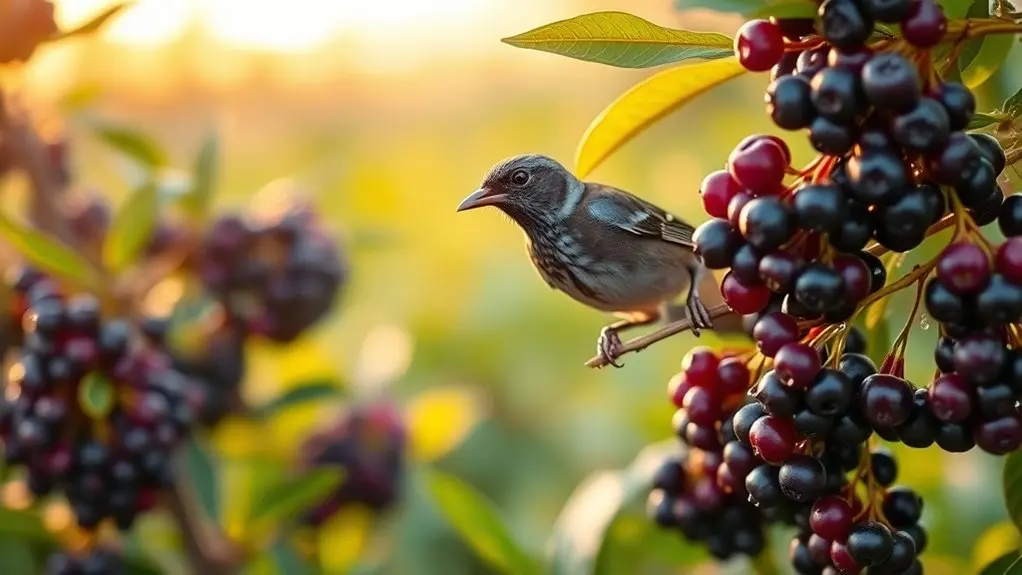
Although many fruits attract birds, elderberries stand out because they offer a rich source of nutrients and antioxidants that appeal to over 120 bird species, including robins and bluebirds.
You’ll notice these berries ripen just in time for migrating birds like rose-breasted grosbeaks, who depend on them for energy.
Elderberries grow in large clusters, making it easy for birds to grab a quick, abundant meal.
Beyond food, elderberry plants provide shelter and nesting spots, encouraging more bird species to settle nearby.
By attracting diverse bird species, elderberries play an essential role in boosting local biodiversity.
When you see elderberry bushes thriving, you’re witnessing a natural hub supporting a healthy, interconnected ecosystem.
Which Bird Species Eat Elderberries Regularly
You’ll often see robins, bluebirds, and rose-breasted grosbeaks munching on elderberries.
These birds really count on elderberries, especially during migration when they need an extra boost of energy.
Knowing which species regularly eat elderberries helps you appreciate how important these berries are for supporting bird populations.
Common Elderberry Consumers
When you spot elderberries in the wild, know that over 120 bird species, including robins and bluebirds, rely on these berries as an essential food source during migration and breeding seasons. Sambucus canadensis, commonly known as American elderberry, supports birds by providing nutritious fruit and shelter.
A field guide with rights reserved images often highlights how crucial elderberries are for species like rose-breasted grosbeaks, which depend on them heavily. The antioxidants in elderberries boost birds’ immune systems, making these berries a superfood during peak foraging.
| Bird Species | Reason for Consumption |
|---|---|
| American Robin | Primary food source |
| Eastern Bluebird | Energy during breeding |
| Rose-breasted Grosbeak | Migration sustenance |
| Cedar Waxwing | Antioxidant intake |
| Northern Mockingbird | Nesting near elderberry |
Migration Dependency Birds
Because elderberries offer rich nutrients and energy, many migrating birds rely on them regularly to fuel their long journeys. Species like rose-breasted grosbeaks consume these berries along key migration routes, meeting their high nutritional needs during this demanding period.
You’ll also find robins and bluebirds feeding on elderberries consistently, as these fruits fit well within their habitat preferences.
Elderberry plants not only supply essential nutrients but also attract insects, providing extra food sources that support birds during migration.
By eating elderberries, these birds help disperse seeds, promoting elderberry growth along migration corridors.
How Elderberries Benefit Birds’ Health and Nutrition
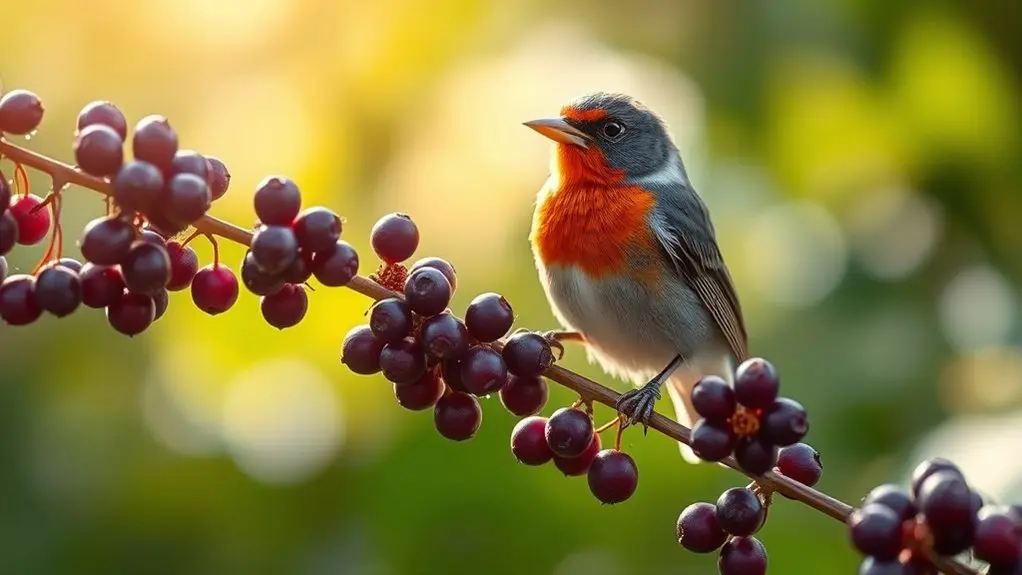
Although elderberries might seem like just another plant in the garden, they play an essential role in supporting birds’ health and nutrition.
Elderberry nutrition is rich in antioxidants, which boost bird immunity and help keep them resilient against diseases.
When you see birds like robins or bluebirds enjoying these berries, you’re witnessing a significant source of energy and vitality they depend on, especially during demanding periods like migration.
Beyond individual health, elderberries contribute to ecosystem balance by attracting pollinators that increase insect populations, providing more food for birds.
Plus, birds help spread elderberry seeds, promoting new plant growth that sustains local habitats.
When Are Elderberries Ripe and Ready for Birds to Eat
Elderberries provide birds with valuable nutrition, but you might wonder how to tell when these berries are ready to eat. Understanding the ripening timeline helps you recognize the best time for berry harvesting and supports avian feeding habits.
Elderberries offer vital nutrition to birds; knowing their ripening timeline aids harvesting and supports feeding.
Elderberries typically ripen in late summer, becoming an essential food source for over 120 bird species.
Look for these signs to know when elderberries are ripe and ready:
- Deep purple-black color indicates peak ripeness.
- Berries are often consumed before they fall naturally from the plant.
- Migration periods increase birds’ reliance on ripe elderberries.
Can Birds Safely Eat Raw Elderberries and Seeds?
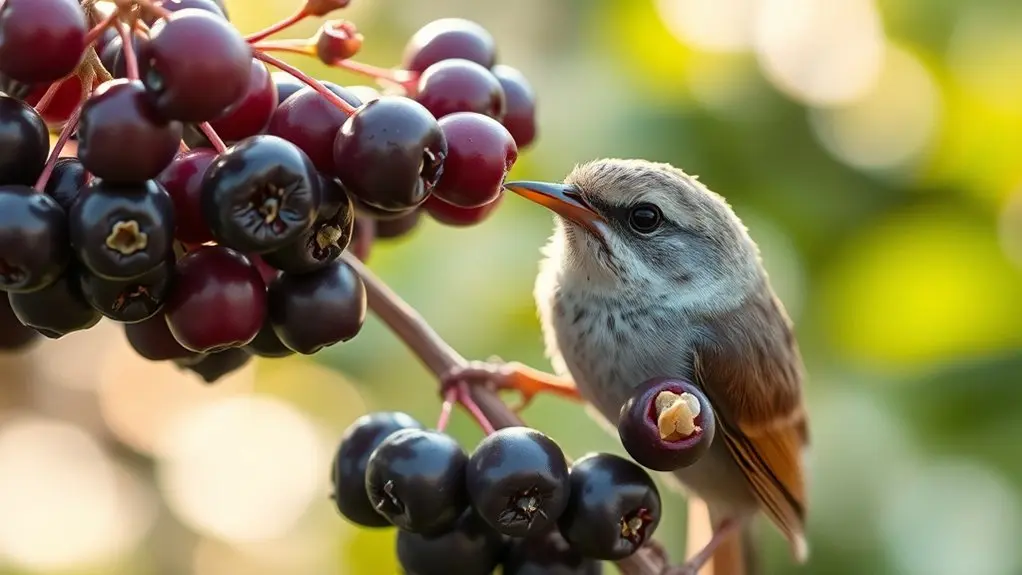
How can birds safely enjoy raw elderberries and their seeds when these berries are toxic to humans? The key lies in bird digestion. Unlike humans, birds can break down the compounds responsible for berry toxicity, allowing them to consume ripe elderberries without harm.
These berries provide essential nutrients and antioxidants that boost their health during migration and daily activities.
When birds eat the berries, they also ingest the seeds, which pass through their digestive system intact. This natural process aids in seed dispersal, helping new elderberry plants grow and supporting ecosystem biodiversity.
How Birds Help Spread Elderberry Seeds in the Wild
When birds eat elderberries, they don’t just get a nutritious meal. They also play a big part in spreading the seeds far and wide. As birds consume the fruit, the seeds pass through their digestive systems unharmed, maintaining seed viability.
This natural process helps elderberries colonize new areas, supporting habitat connectivity. Thanks to birds’ migratory patterns, these seeds can travel long distances. This allows elderberry plants to thrive in diverse environments.
Here’s how birds aid seed dispersal:
- Carry viable seeds across vast landscapes, promoting ecosystem resilience
- Link fragmented habitats by depositing seeds in new locations
- Support biodiversity by enabling elderberry growth in varied regions
How Birds and Wildlife Affect Elderberry Seed Availability
You’ll notice that lots of birds and other wildlife eat elderberries, which means fewer seeds stay on the plants.
Because these animals munch on the berries, it changes how and when the seeds are spread around.
When you understand this, it’s easier to see the balance between how many seeds are available and the feeding habits of the wildlife.
Wildlife Seed Consumption
Although elderberries are a valuable food source for over 120 bird species like robins and bluebirds, their consumption considerably reduces the availability of seeds in local ecosystems.
You’ll notice that birds use various seed predation strategies tied to their avian feeding habits, which shape ecological interactions around elderberry plants.
Wildlife often consumes seeds before they even fall, impacting seed availability directly.
Consider these points about wildlife seed consumption:
- Birds’ feeding habits influence seed survival and distribution.
- Seed predation strategies vary among species, affecting how many seeds persist.
- Ecological interactions between birds and elderberries maintain local biodiversity but reduce immediate seed availability.
Understanding these dynamics helps you appreciate how wildlife consumption shapes elderberry seed presence in the environment.
Seed Dispersal Impact
Birds don’t just consume elderberries; they also help spread their seeds across different areas. Through natural seed dispersal mechanisms, birds like robins and bluebirds eat ripe elderberries, passing viable seeds through their digestive tracts and depositing them far from the parent plant.
This process boosts habitat connectivity by enabling elderberry plants to colonize new locations, supporting ecological balance. When you observe birds feeding on elderberries, you’re witnessing a crucial interaction that maintains local biodiversity and strengthens ecosystems.
However, heavy wildlife consumption can reduce seed availability on the ground, influencing elderberry regeneration patterns. Overall, the relationship between birds and elderberries highlights how wildlife activities directly shape seed distribution and contribute to the health and resilience of natural habitats.
Which Elderberry Varieties Do Birds Prefer?
When you explore which elderberry varieties birds prefer, you’ll find that the American elderberry (Sambucus canadensis) stands out because it’s native to North America and plentiful. It offers a dependable food source.
Bird behavior shows they also favor European elderberries (Sambucus nigra) for their larger, juicier fruits, rich in nutrients.
Blue elderberries (Sambucus cerulea) attract birds in their native regions, supporting local biodiversity.
Understanding elderberry preferences through nutrient analysis reveals why these varieties are popular among over 120 bird species, including robins and bluebirds.
Nutrient insights explain why over 120 bird species, like robins and bluebirds, prefer these elderberry varieties.
- American elderberries provide reliable, native nourishment.
- European elderberries offer juicy, nutrient-dense fruits.
- Blue elderberries support regional bird populations.
These varieties play an essential role in avian diets and migration nourishment.
How Elderberry Plants Support Bird Habitats and Nesting
Since elderberry plants offer dense foliage and sturdy branches, they create ideal shelter and nesting sites for smaller bird species. You’ll find these shrubs perfectly align with birds’ nesting preferences by providing protection from predators and harsh weather.
When you plant elderberries, you actively support habitat creation that benefits a variety of birds, including robins and bluebirds. The shelter benefits also encourage birds to raise their young safely.
| Aspect | Benefit |
|---|---|
| Nesting Preferences | Dense branches support secure nests |
| Habitat Creation | Provides food and shelter for birds |
| Shelter Benefits | Protects from predators and weather |
| Bird Species | Robins, bluebirds, rose-breasted grosbeaks |
This way, elderberry plants foster a thriving bird community right in your yard.
Pollinators That Visit Elderberry Flowers With Birds
Although elderberry flowers primarily attract bees and butterflies, they also create a vibrant environment where birds like robins and bluebirds thrive.
You’ll notice these pollinators play an essential role in elderberry interactions, boosting fruit production and supporting pollinator benefits across your garden.
Pollinators are vital for elderberry growth, enhancing fruit production and enriching your garden’s ecosystem.
Birds contribute by feeding on insects, helping maintain ecosystem balance. Together, they form a dynamic community that keeps elderberry plants healthy and productive.
Consider these key points about pollinators and birds around elderberries:
- Bees and butterflies pollinate flowers, increasing fruit yield for birds and other wildlife.
- Birds indirectly support pollinators by controlling harmful insect populations.
- A thriving pollinator population guarantees a sustainable ecosystem where elderberries benefit both insects and birds.
You can see how these interactions create a balanced, flourishing habitat.
Myths and Facts About Birds Eating Elderberries
You might think elderberries are harmful to birds, but actually, many species like robins and bluebirds enjoy eating them without any problems.
These berries are packed with essential nutrients that help birds during migration.
So, the common belief that elderberries are toxic to birds isn’t quite true.
Knowing which birds eat elderberries not only clears up this confusion but also shows just how important these berries are in the ecosystem.
Common Bird Consumers
When birds like robins, bluebirds, and rose-breasted grosbeaks feast on elderberries, they gain essential nutrients that support their health and migration.
Understanding their bird behavior and foraging habits reveals why elderberries are a seasonal feeding favorite, especially in late summer and early autumn.
These berries provide antioxidants that boost immunity during colder months, making them a vital food source.
If you want to attract these common bird consumers, consider adding elderberry plants to your garden.
Here’s what you should know about their feeding patterns:
- Robins often eat elderberries during migration for energy.
- Bluebirds rely on these berries for breeding season nutrition.
- Rose-breasted grosbeaks include elderberries in their late summer diet.
You’ll see how elderberries enhance local biodiversity by supporting these birds.
Toxicity Myths Debunked
Birds like robins and bluebirds thrive on elderberries, but some myths about the fruit’s toxicity might make you hesitate to plant them. Let’s clear up those elderberry myths.
While elderberry seeds contain cyanogenic compounds linked to seed toxicity, birds have evolved to digest these safely, so you don’t need to worry about their nutrition.
In fact, over 120 bird species depend on elderberries as a nutritious food source during migration and breeding.
Humans must cook elderberries to avoid toxicity, but birds handle them just fine.
By feeding on elderberries, birds also help spread the seeds, supporting local biodiversity.
How to Plant Elderberries to Attract Birds and Pollinators
Planting elderberries in early spring, after the last frost, sets the stage for a thriving garden that attracts both birds and pollinators.
Use proper elderberry planting techniques by spacing plants at least 5 feet apart to support their shallow roots.
Choose varieties like American or European elderberries to maximize attracting garden wildlife, especially diverse bird species. These plants thrive in sun or partial shade with medium-to-wet soil, requiring minimal care.
To enhance biodiversity benefits, remove flowers in the first year to help the plant focus on growth, leading to better fruit production later. Elderberries also draw essential pollinators like bees and butterflies, boosting your garden’s productivity.
Remember these tips:
- Space plants properly for healthy roots
- Select bird-friendly elderberry varieties
- Maintain soil moisture for ideal growth
Frequently Asked Questions
Can Elderberries Cause Allergic Reactions in Birds?
Yes, elderberries can cause allergic reactions in birds. You should be aware of elderberry toxicity risks, especially if your bird eats large amounts of raw berries.
Research on allergic reactions shows some birds might experience digestive distress or changes in behavior.
To protect bird digestive health, watch for signs like dull feathers or upset stomach.
If you notice these symptoms, limit their access to elderberries and consult a vet.
Do Elderberries Affect Bird Migration Patterns?
Elderberries act as migration triggers, like lanterns guiding birds through the night. You’ll notice their seasonal availability shapes your feathered friends’ routes, offering essential nutrient benefits that fuel long flights.
When elderberries ripen, they signal birds to prepare, influencing timing and destinations.
How Do Elderberries Compare to Other Berries Birds Eat?
Elderberries stand out among berries you offer birds because of their impressive nutritional value, packed with antioxidants that boost avian health.
Birds often show clear preferences for elderberries, especially robins and bluebirds, thanks to these elderberry benefits.
Compared to other berries, elderberries are larger and more energy-rich, making them a preferred choice during critical times like migration.
When you provide elderberries, you help birds meet their dietary needs more effectively.
Can Feeding Elderberries Attract Unwanted Pests to Bird Feeders?
Feeding elderberries can open Pandora’s box of pests at your bird feeder. Their sweet scent acts like a neon sign for fruit flies and ants, turning your feeder into a pest playground.
To keep these uninvited guests at bay, you’ll want to practice strict bird feeder sanitation and adjust feeding frequency.
Regular cleaning and prompt removal of spoiled berries are your best pest control methods to maintain a healthy, inviting space for birds.
Are Elderberry Bushes Safe for Pets Around Birds?
Yes, elderberry bushes are generally safe for pets around birds if you follow pet safety guidelines.
You’ll want to watch out for elderberry toxicity levels by preventing your pets from eating raw berries or leaves, which can cause digestive issues.
When setting up bird feeding practices, encourage birds to enjoy the ripe berries while keeping pets supervised.
This way, you protect your pets and support a healthy habitat for local birds.
Conclusion
Now that you know birds can safely enjoy elderberries, you’re ready to welcome these feathered friends into your yard. Remember, “a bird in the hand is worth two in the bush.” Plant elderberries thoughtfully to attract and nourish them.
By providing ripe berries and supporting pollinators, you create a thriving habitat that benefits both birds and your garden. So go ahead, grow elderberries and watch nature’s charm unfold right outside your window!